Playing in Woods with Fairies - Celtic Folklore

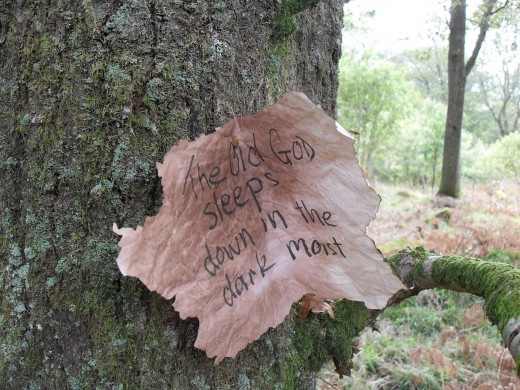
Playing in Woods with Fairies
As an actress, I often find myself playing in interesting ways and situations. Playing in woods with fairies is a prime example of this - in just one day I became the land engulfing a man, an earth creature set on flying, a soul-stealing spirit, a suicidal tree, and an academic claiming to have found THE stone that once held Excalibur!
All of this - in aid of developing a site-specific piece of theatre - took place in a glorious Scottish wood. It was a magical time, and the magic began even before setting out for the site: I loved the Celtic folklore I explored in my research.
As a result, I am writing this series on Celtic lore, which also includes information on trees, animals and festivals.

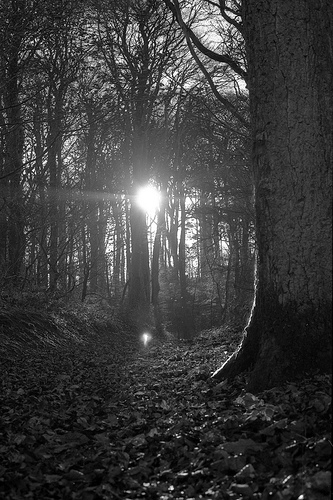

- Celtic Tree Folklore
Associations of various trees in Celtic lore
Robert Kirk
Robert Kirk was a 17th century minister who lived in the area I visited to play in the woods (near Aberfoyle in Scotland's Trossachs). The Reverend was also a 7th son and, it seems, communed with the faeries. In 1691 his book on their nature and social structure was published under the title The Secret Commonwealth of Elves, Fauns and Fairies. On the 14th of May, 1692, Robert Kirk went for his usual constitutional walk. His body was later found on Doon Hill.
Locals soon spoke of the fairies having taken his spirit, and legend has it that he appeared to a family member, saying that he would return during a service, at which point a knife was to be thrown over him (some say by his wife, others by his cousin). This was to release his spirit from the fairy hill. Sure enough, as promised, he manifested - but the shock was too much and the task went unfulfilled. It is believed that Reverend Kirk still bides on the hill, trapped in a pine there, and that he may also be a mediator between our world and that of the fairies.


The Lord of the Wild Hunt
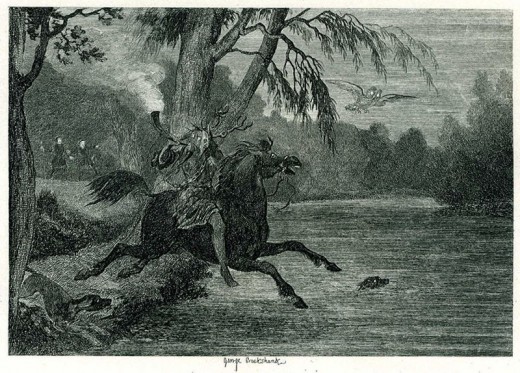
'The Lord of the Wild Hunt' occurs in folklore around the world, riding down the spirits of the dead and leading them into the Otherworld, often accompanied by a pack of 'demon' hounds. In Celtic traditions, he appears in various forms and can be connected to the Horned One, the male counterpart to the Goddess in Wicca and associated movements. (More about this below, in The Lady.)
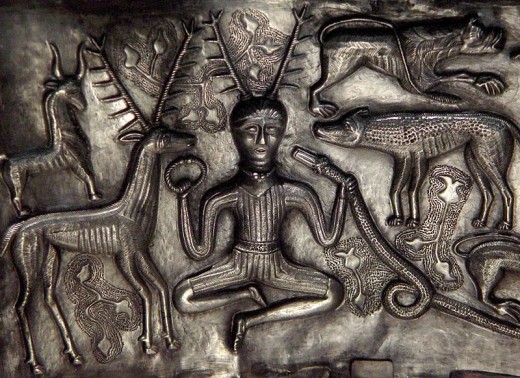
Cernunnos, whom many connect to the Gundestrup cauldron pictured above right, is associated with fertility (and therefore sexuality), hunting and culling. Another hunt leader is Herne the Hunter, coming from English folklore - a character that Falstaff impersonates in Shakespeare's Merry Wives of Windsor. In Wales he is known as Gwyn ap Nudd and his hounds are white with red-pointed ears, and he is still popular in fiction today, as in Diana Wynne Jones' The Merlin Conspiracy.

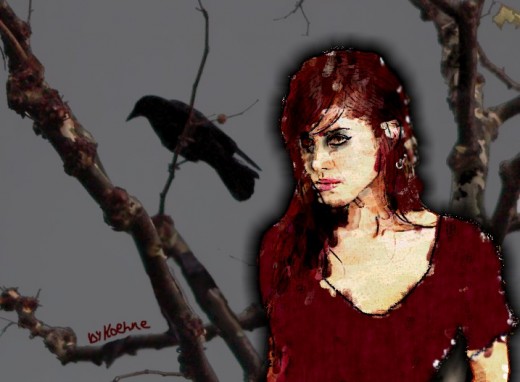
- Celtic Animal Folklore
Associations for various birds and beasts in Celtic lore
The Morrigan
The Morrigan is an ancient Celtic goddess of destruction, sovereignty and the land. She is often thought of as the Goddess in her death aspect, connected to the Crone (see The Lady below).
The Morrigan frequents the battlefield and has the gift of prophecy, particularly for destruction. She is associated with crows, or ravens, and connected to the 'Washer at the Ford', known in Scottish Gaelic as the 'bean nighe', who washes bloodstained clothing as an omen of approaching death in the area.
The Morrigan appeared to various Celtic heroes. If she offered herself and was rejected, she would cause the hero grave difficulties, but if she was welcomed she would assist.
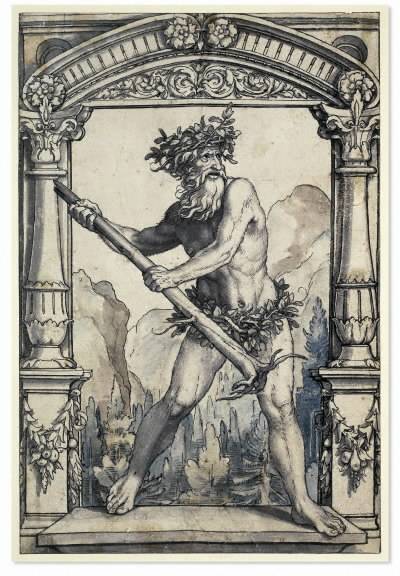
The Wildman
The Wildman, also associated with the Holly King and the Green Man, signifies prosperity, growth, abundance, survival and renewal. He is the 'Lord of the Plant Kingdom', the 'Spirit of the Land', and represents the natural cycle of seasons. In this way he connects to the 'Lord of the Wild Hunt', particularly in Wicca, where all gods are the one god (the Horned One) and all goddesses the Goddess.
(There is more about the seasonal cycle at Celtic Festival Folklore.)
The Wildman appears in his Green Man aspect in the Arthurian tale of Gawain and the Green Knight, bearing a club of holly and a holly crown - he is the midwinter challenge.
The Lady
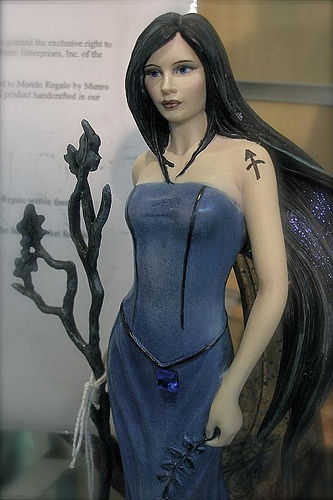
Many deities are known as The Lady (thoughout the world, as well as in Celtic traditions) and some group them all as aspects of the one Goddess, nature / the land herself, just as male deities all become the Horned One. Similarly, the Goddess appears in different aspects through the year.
Another very common aspect is her triple nature of maid, mother and crone. Bride (or Brighde) is a maiden goddess, associated with fire and healing. Danu is famous as a mother figure, the Tuatha de Danann (some say) being her children. Legend tells that they retreated into the land and became the Sidhe, or the fairy folk. The Cailleach is the crone figure, very popular in Scottish folklore, and associated with rocks, the earth and the winter months. (Interesting article on the cailleach)

Further Exploration
There are, of course, a great many other beings in the rich Celtic lore - as well as more information available for the ones I have mentioned. This is but a drop in the ocean, connected to the deities I was asked to research.
If you are interested in knowing more about Celtic folklore, you may wish to look up the work of Caitlin and John Matthews and that of Philip and Stephanie Carr-Gomm (often illustrated by the beautiful art of Will Worthington).
Diana Wynne-Jones is a brilliant writer of fiction which draws on Celtic mythology, and - of course - J K Rowling's books contain a few nods in this direction too. There are also some connected books visible to the right, available at Amazon.
Should you wish to read further in the Playing in Woods with Fairies series, the following are available right here, at Hubpages:
Related
My Photographic Fairy Art: A Magical World Revealed

Spirits of the Forest: The Huldra, Leshy, Moss People, and Wood Wives of Northern European Mythology and Folklore
Brigid: Celtic Goddess and Catholic Saint
Ceol-Sidhe: the Music of the Sidhe, Fairies, and the Tylwyth Teg
The Queen of Spades, Russian Sister of Bloody Mary