Playing in Woods with Fairies - Celtic Festival Folklore

Playing in Woods with Fairies
- Celtic Folklore
Introduction to the series, including Lords and Ladies of the Land - Celtic Animal Folklore
- Celtic Tree Folklore
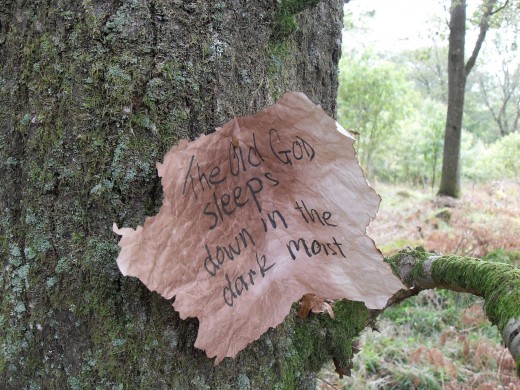
As an actress, I often find myself playing in interesting ways and situations. Playing in woods with fairies is a prime example of this – a day in aid of developing a site-specific piece of theatre where I found myself in a glorious Scottish wood, exploring themes from Celtic folklore.
It was a magical time, and the magic began even before setting out for the site: I loved the discoveries I made in my research.
As a result, I am writing this series, and this hub is about the Celtic festivals, celebrating the changing year, which I was asked to research.
Samhuinn
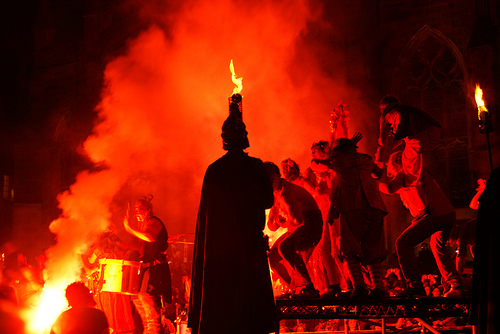
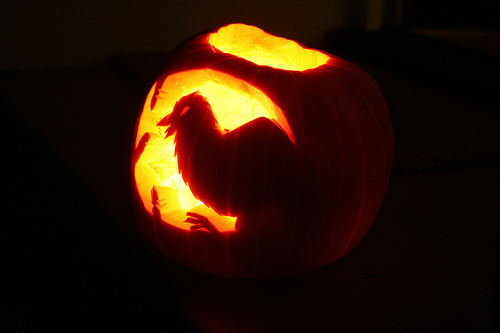
Samhuinn, or Sawain (reflects pronounciation), is connected to the first half of November and has become the popular Hallowe'en festival on 31st October. It is the pagan new year, and so divination is popular at this time, especially trying to find out who will be your future spouse.
Samhuinn is also the start of the dark half of the year and winter. Here, the veil between our world and the under world is at its thinnest. The Horned One is sacrificed, being sent to the under world, and it becomes the time of the Crone. (More on both of these at Celtic Folklore - Introduction.) A place may be set for the departed, and tales of ancestors told by the fire.
The Scottish Unseelie Court comes into its own in the dark part of the year, as do the crone or hag fairies (the cailleach) too. Fairy mounds open and the Unseelie Court may just welcome you in - as new fodder with which to play!
If you wish to remain safe during this time, you can try going masked, which protective action connects to Hallowe'en disguises.
In calendar associations, Samhuinn can fall between the Stag (2nd half of October) and the Crow (2nd half of November). (More on both of these at Celtic Animal Folklore.)

Imbolc
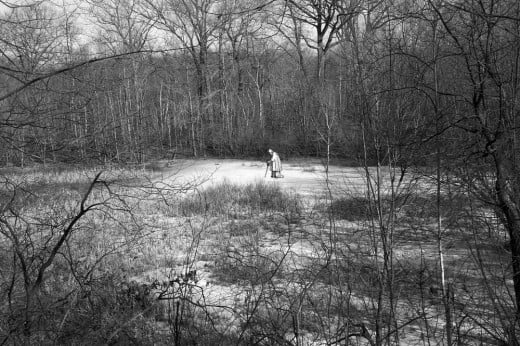
Imbolc marks the start of the end of winter. In Scottish tales, the cailleach or crone of winter gathers firewood at this time if she intends the winter to last a lot longer. This means that good weather for Imbolc (early February) is bad news, as the cailleach has made the weather fair in order to gather wood. Bad weather means she sleeps, and winter is dwindling.
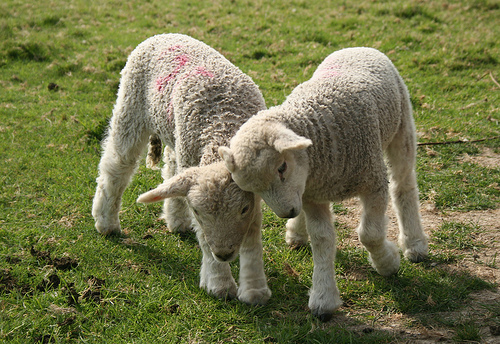
Imbolc is associated with lambs - connected to the Gaelic word oimelc, meaning 'ewes' milk'. It occurs around the time of St Brigid's Day (Christian celebration), and is also known in Scotland as Là Fhèill (feast) Brìghde. (See Celtic Folklore: The Lady for a little more on the Celtic Brìghde.)
In calendar associations, Imbolc can fall between the Bear (2nd half of January) and the Cat (2nd half of February).

Beltane
At Beltane the Cailleach Bheur, a Scottish winter hag, is said to admit defeat in her fight against summer, flinging her staff against a holly tree and shrinking to a grey stone until her season comes again.
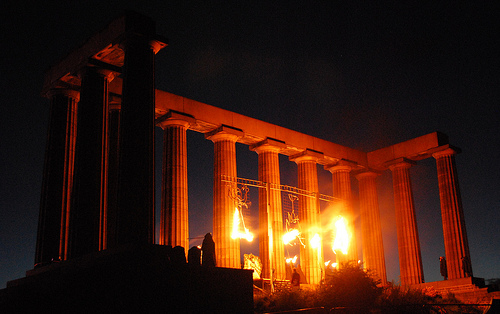
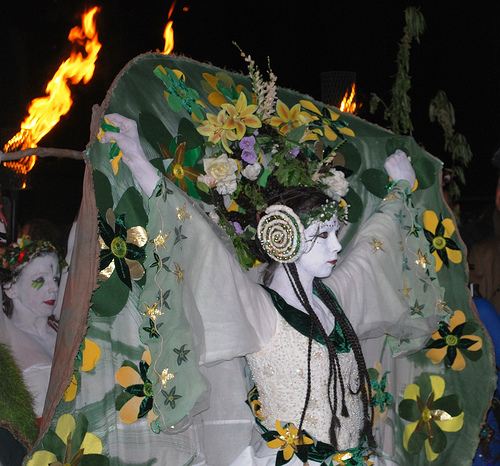
Celebrations for May Day (1st of May) start on its eve; spring is truly here and Beltane sees the May Queen (Great Goddess in her maiden aspect) accept the Green Man (Horned One in his young man aspect) as her consort. Various traditions have grown around this, including the Beltane Fire Festival in Edinburgh, Scotland, created by the Beltane Fire Society every year - their (copyrighted) pictures can be viewed at Flickr.
Washing one's face in the dew first thing on May Day is a common tradition, said to restore beauty. Also popular at this time is the Maypole, but this is less of a Celtic tradition.
In calendar associations, Beltane can fall between the Otter (2nd half of April) and the Hawk (2nd half of May).

Lughnasadh
Lughnasadh - also known as Lammas, and as Lunasdál in Scotland - sees the Horned One start as the Summer God, but his 'reaping' approaches.
Lughnasadh is a harvest festival, marking the end of summer and the approach of autumn. It is celebrated at the start of August and connects to the god Lugh, one of the Tuatha de Danann. In Irish tales, Lugh honoured his mother with this festival when she died from exhaustion after clearing the ground of Ireland for agriculture. Lugh's own story includes his death in a fight over his bride, and ritually this is the time of the end of the Horned One's strength - the time of his 'reaping'. However, Lugh - and the Horned One - are destined to return later, as part of the yearly cycle.
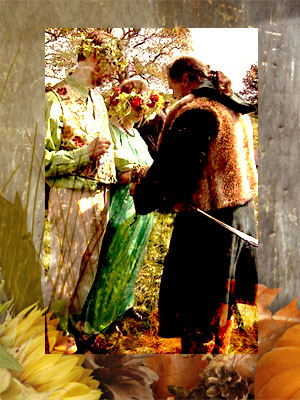
Temporary unions can be entered into at this time, as was common in Kirkwall on the Orkney Isles, but this is also a time for long-term 'handfasting' too, lasting a year and a day. These unions often led to full marriages - a way to test the waters and make sure the relationship is strong.
In calendar associations, Lughnasadh can fall between the Badger (2nd half of July) and the Horse (2nd half of August).
Further Exploration
Tha above are the Celtic quarter days - fire festivals which I was asked to research, which are known as Sabbats in Wicca. There is a lot more information about them out there, of course, should you wish to explore further.
You may also be interested in these other festivals:
Yule, winter - rebirth of the God of Light, the Horned One in this aspect. (Between Samhuinn and Imbolc.)
Ostara, early spring - associated with the hare and the Green Man or woodwose as vegetation spirit. Now known as Easter. (Between Imbolc and Beltane.)
Litha, midsummer - the Horned One if full possession of power and strength as a man. (Between Beltane and Lughnasadh.)
Mabon, end of harvest time - the Great Goddess pregnant with the young Horned One. (Between Lughnasadh and Samhuinn.)
If you wish to follow the Wiccan seasonal path, you might like the connected Llewellyn books shown on the right.
If you are interested in knowing more about Celtic folklore, you may wish to look up the work of Caitlin and John Matthews and that of Philip and Stephanie Carr-Gomm (often illustrated by the beautiful art of Will Worthington).
Should you wish to read further in the Playing in Woods with Fairies series, the following are available right here, at Hubpages:
Celtic Folklore – an introduction to the series, including some Lords and Ladies of the Land, as mentioned above