Epiphone Guitars

For guitar players (and music fans who paid a bit of extra attention to instruments) the name and style of Epiphone guitars is special. However, many modern-day musicians don’t realize that the company history stretches back more than 130 years, when Anastasios Stathopoulo first made lutes, violins and traditional Greek instruments. Family members continued the business into the 20th century, and family members moved to New York.
The company name comes from the shortened version of Epimanondas (Epi), a son of Anastasios. Another son, Orpheus (Orphie) was involved in the business as well. Company history notes that Epi took over the business at age 22, when his father died prematurely. He brought banjos to the fore as an Epiphone instrument. The name eventually was a combination of Epi and “a derivation of the Greek word for sound.” In the 1920s, the banjos produced in the shop were so desired that the company was known as the Epiphone Banjo Company. At first, it was not possible to buy an Epiphone guitar. Guitars became part of the catalog in the late 1920s.
Epiphone guitars
Some people who keep an eye on the vintage and classic guitar world think of Epiphone archtop guitars as the epitome of the company’s production. That is at least partly true, according to company history and such respected collections as the Blue Book of Electric Guitars and Gruhn’s Guide to Vintage Guitars. For the most part, Epiphone acoustic was the instrument offered. The archtop model Ephiphone, called the Masterbilt series, was introduced in 1931.
The intention of Epiphone was to make war on Gibson. When Gibson introduced the huge Super 400, Epiphone made the Epiphone Emperor. The company operated at the highest levels of business and society, with endorsements by some of the leading musicians of the day. The company brought out an electric version of the guitar in the mid-1930s, partially spurred by competition with another guitar company, Rickenbacker. The Electar, an Epiphone electric guitar, was the name given this early product.
When discussing Epiphone bass, at least in the early years, it was the upright bass that helped maintain the company's reputation. In fact, getting back into the upright bass business was the primary reason for Gibson buying the Epiphone bass operation. According to company history, the price of $20,000 was paid in 1957, and the first ties of Gibson/Epiphone were centered around bass.
It wasn't long before the Gibson company brought the Epiphone name back into prominence, at least for awhile, with the Gibson Epiphone. According to the Blue Book of Electric Guitars (S.P. Fjestad, Blue Book Publications, Inc.), Epiphone instruments have been produced in Korea since 1983, with Epiphone electric guitars being a division of Gibson Musical Instruments. The Blue Book and company history note that some special editions of Epiphone instruments were produced in Nashville, Tennessee up to about 1994.
Gibson Epiphone
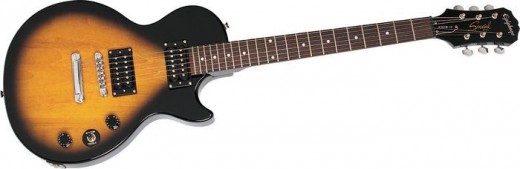
There was a time in the late 1950s, right after the purchase of the bass division, that the Epiphone electric was a higher-priced guitar than a similar Gibson. In the early 1960s and for a few years after, Epiphone guitars were much in demand. The Epiphone Casino, from about 1965, was used by the three guitar-playing Beatles. Various catalogs and histories record prices of $1,600 to $2,300 for the original Epiphone electric Casino (1961-1965). In 1999, Gibson built a replica John Lennon "1965" Casino, with a suggested retail price of about $3,000.
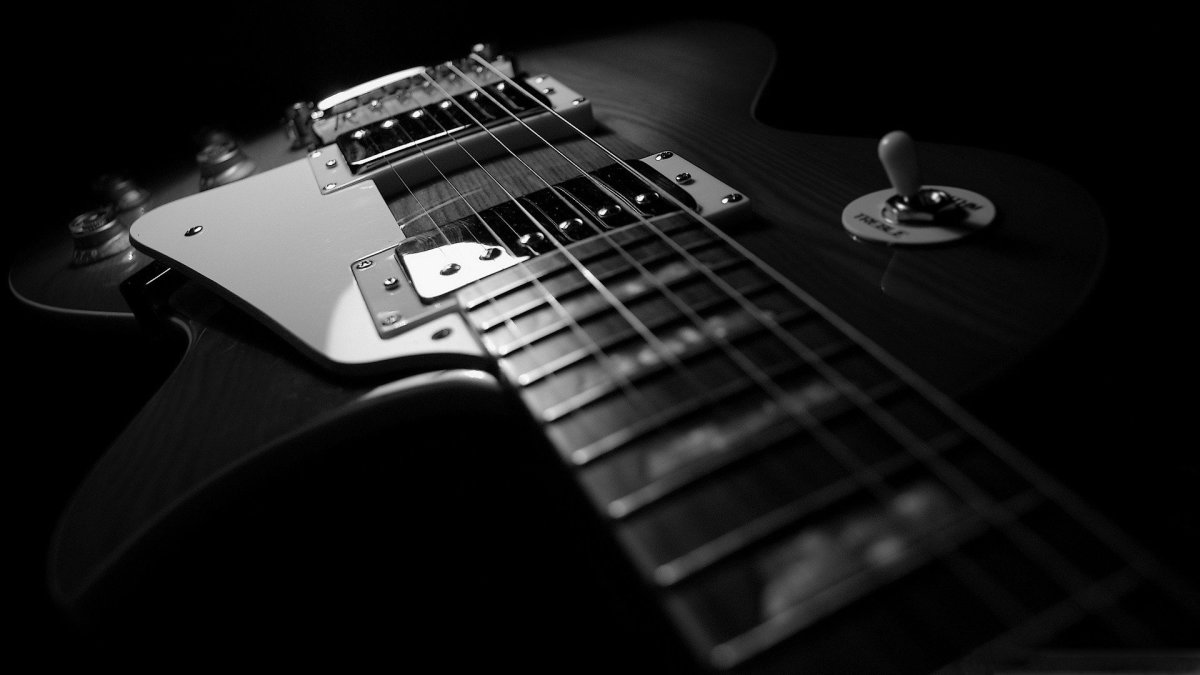
A decline in quality, along with competition from less-expensive guitars made outside the United States, led to the move to Japan. A company there simply re-labeled some of its guitars and sent them out into the world. The Epiphone operation moved to Korea in 1983. Changes at Gibson led to a revival for both Gibson and its Epiphone operations. After 1988, the company produced several Gibson "clones" or "copies." It was possible to get a good Epiphone Les Paul or Epiphone SG during this time. In fact, retailers currently offer a very good Epiphone Les Paul guitar, such as the Standard "plus top" for around $700. The Epiphone Dot goes for around $400, or slightly more.
Epiphone Gibson Les Paul Headstock
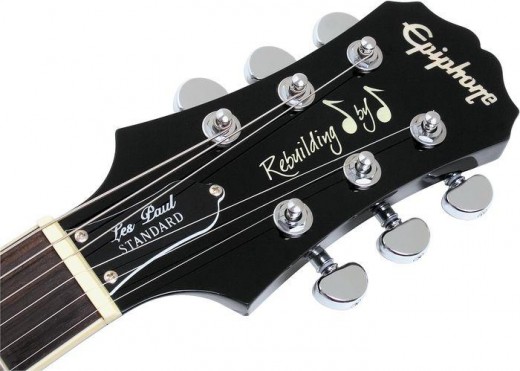
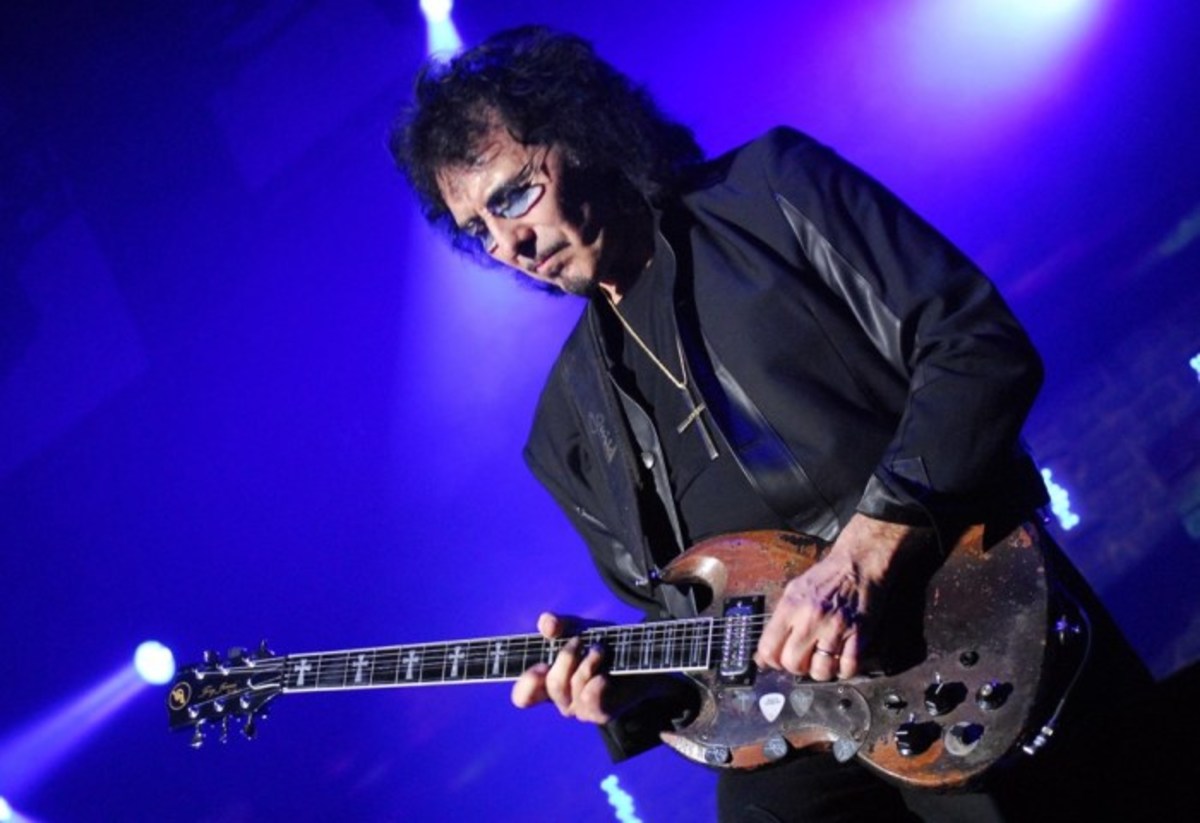
Epiphone opened a factory in China just a few years ago, under the supervision of U.S. managers and guitar makers. One of the key elements to the connection between Gibson and Epiphone remains the affordable Epiphone models of some of the world's great electric guitars, such as the Gibson Les Paul and the Gibson SG. Some observers of the guitar scene believe that the Epiphone line, under the Gibson umbrella, allows the traditional company to be a bit more of a chance-taker and innovator.
Among the more famous, and more talented players, who made extensive use of Epiphone guitars were: The Beatles, of course; Edge, from U2, uses an Epiphone Casino; Joe Pass uses an Emperor, for which there is a Joe Pass signature model; country legend Ernest Tubb used Epiphone acoustics. It has been shown that the great Les Paul used some Epiphone guitars for recording, even after his own name appeared on Gibson guitars. Zakk Wylde, and others, have guitars that are considered Epiphone custom instruments.
Epiphone Coronet
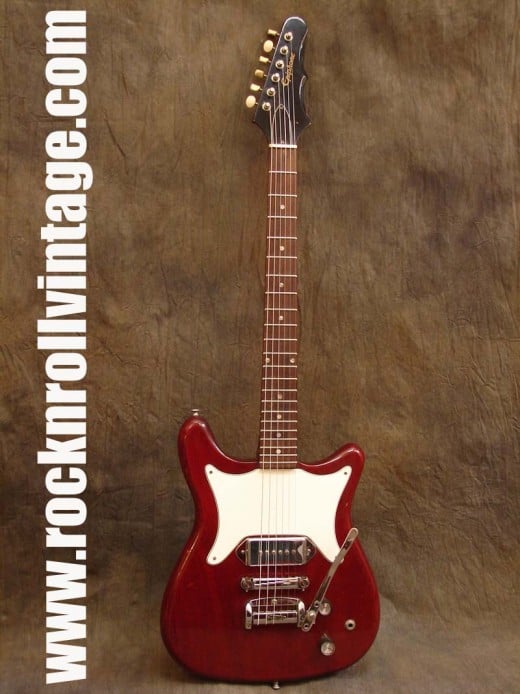
Some players and collectors find the Coronet a very interesting solid-body electric from Epiphone. This style was made from 1958 to 1992. It had square body edges, one pickup and dot inlay. The model was reintroduced as the USA Coronet in 1990. A U.S.-made Coronet, made from 1958 to 1969 can bring $1,200 or more in mint condition. The USA Coronet will probably cost about $700 in perfect condition. Some Epiphone instruments have been manufactured in Nashville, including the USA Coronet, the USA Pro and the Special.
If you are looking for a used Epiphone, there are probably some nice, affordable models available. For example, the Howard Roberts series was a single cutaway with arched spruce top. Produced from 1964 to 1970, a mint-condition Howard Roberts Standard can now bring $2,000 or more. If you can find an Epiphone Riviera from 1962 to 1970, a near-perfect model may be purchased for $1,200 or a bit more. Some of the solid-body electrics, such as the EM series, can be had for $400 to $600 (if you can find one.)
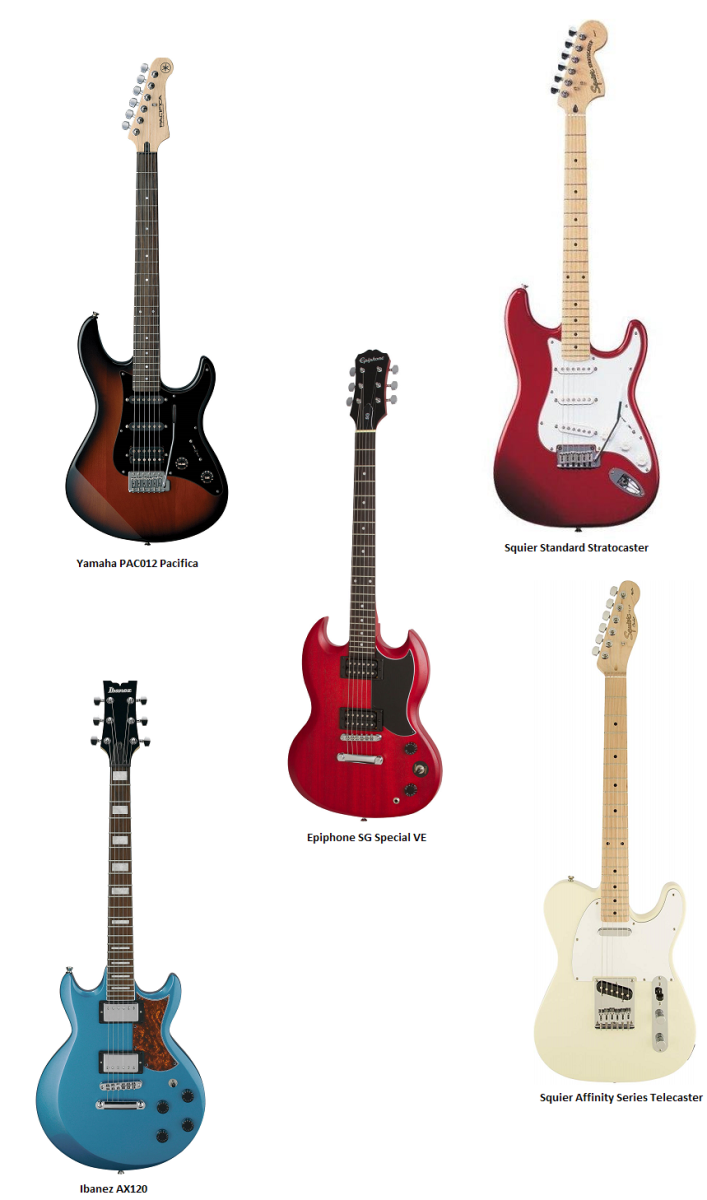
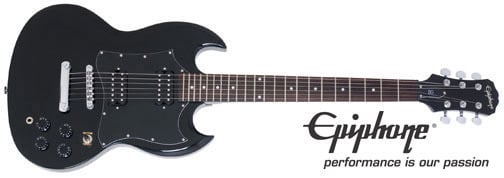
Epiphone also made a Flying V copy and a popular SG copy. A few years ago, some local bass players were making good use of the SG-style bass made under the Epiphone name. Others have an interest in the 1960-era Rivoli bass, with a body that looks much like the familiar Gibson ES-335 series. These can be worth $1,000 in great condition.
For those who are really interested in uncovering an "ancient" Epiphone, an acoustic from the 1930s will have a serial number starting at about 1000 and running up to 14300 or so. Electrics of the same vintage have serial numbers beginning with 000 and continuing to about 3499.
Epiphone guitars of U.S. make, from 1977 to the present have a serial number of eight digits, with the first and fifth digits indicating the year. This is similar to some Gibson guitars. Foreign made guitars from 1970 on have a seven-digit serial number, but Gruhn's Guide to Vintage Guitars notes that a number list is not available.
- Royston Records
Highly recommended recording and production studios.
Are Epiphone as good as a more expensive "real" Gibson?
This hub brought to you...
by Julie-Ann Amos, professional writer, and owner of international writing agency www.ExquisiteWriting.com
Why not create your own HubPages? It's fun and you can make revenue from Adsense and other revenue streams on your pages. JOIN HUBPAGES NOW - SIMPLY CLICK HERE... (or contact me to write one for you!)
This work is licensed under the Creative Commons Attribution-Non-Commercial-No Derivative Works 3.0 Unported License. To view a copy of this licence, visit http://creativecommons.org/licenses/by-nc-nd/3.0/ or send a letter to CreativeCommons, 171 Second Street, Suite 300, San Francisco, California94105, USA.