Add Grass and Leaves to Your Compost Pile

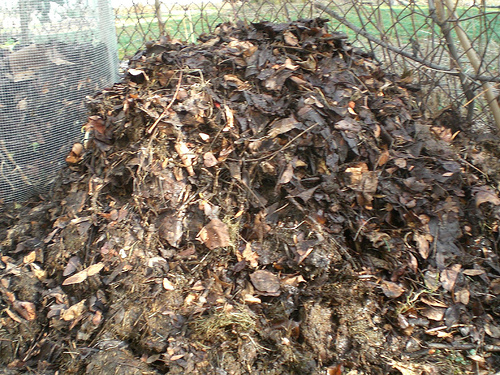
Leaves in Compost
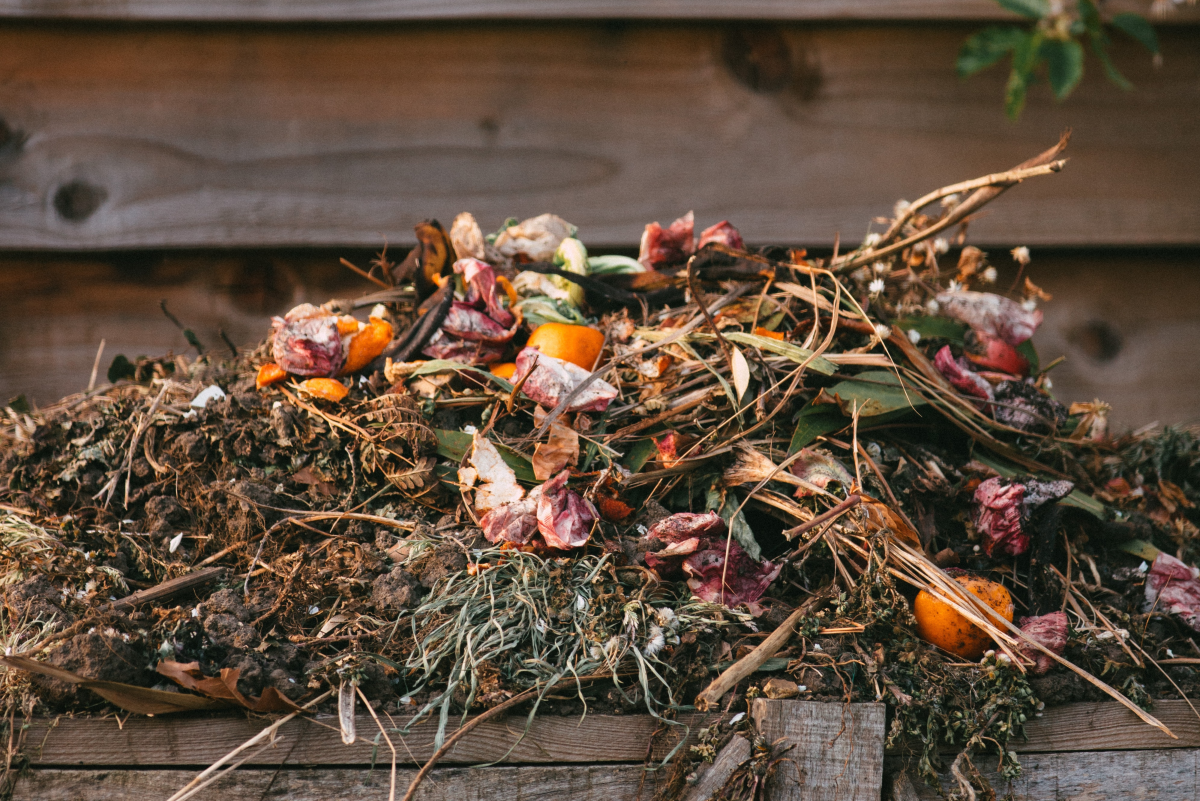
When making compost, you'll probably find it easy to just add your kitchen garbage to the compost bin, but healthy compost is at its best when you add natural, organic matter to the mix. By adding leaves, you'll find that your compost will be rich and dark. If you mix just kitchen garbage, eventually there will be an odor that won't be very pleasant when you go outside. If you have a varied compost, the smell will be much less noticeable than if you have a compost pile of all grass clippings or all kitchen extras.
Your kitchen scraps, lawn clippings, and other garden plants make up your nitrogen-rich materials, which is important to any compost, but this alone isn't going to make very healthy compost. You'll want to include dry, carbon-rich matter as well, which are your leaves.
Fall leaves are cheap and easy to come by, and they're packed with trace minerals and nutrients. Rake up your leaves and shred them. By shredding them, you're speeding up the break down process, as leaves can take a while to decompose, and by shredding the leaves, they will mat together and form a tarp over the rest of your compost. If you don't shred the leaves, they'll just sit there and can potentially prevent the composting process.
You can easily shred the leaves by using the reverse option on the leaf blower. As you shred the leaves, you'll realize that when you shred them, you'll lose volume. Leaves only fall once a year, and you'll make waste year round, so you'll want to make sure that you have enough to last you all year round.
After shredding, bag up all the leaves. You don't want them just sitting on the ground. Remember shredding the leaves will make them decompose faster.
Leaves are great to alternate between layers of other compost matter, and more than likely you'll run out by the summer season. You'll still need to use some dry matter as an alternative to the leaves. One option is straw, but it's hard to shred, and straw doesn't contain nearly as much nutrients as brown leaves. Plus, you have to buy the bales of straw, whereas leaves are free.
There really isn't a good, dry, brown alternative to leaves, so make sure that you don't waste any. Ask your neighbors for their leaves if they're not using theirs for their own compost pile. I'm sure your neighbors wouldn't mind you cleaning up their yard.
As mentioned, brown leaves are going to be your best bet for carbon-rich matter, but because you're likely to run out, it's good to have options,
- Straw (NOT hay)
- Browned remains of the previous year's dead garden plants (browned leaves and stems of perennials, such as black-eyed Susan, Echinacea, ornamental grasses, hostas, etc.)
- Wood shavings and saw dust (higher in carbon than leaves, so must be added in lower doses. Try about 1-2 cups of wood shavings per 10 gallons of garbage versus 4 parts leaves to 1 part garbage.)
Grass in Compost
Because you don't want your compost all one matter and not enough of another, you want to make sure that you do include the brown leaves for your dry, carbon-rich matter, but you also want to make sure that include moist, nitrogen-rich matter, such as grass clippings.
There is a nice ratio that's good to achieve of leaves and grass, but as long as you have plenty of leaves, the grass isn't as big of a concern. You just want to make sure that you don't have grass alone or more grass than leaves, as a kitchen waste and grass alone or as the majority will sit and start to smell.
You just want to be cautious if you use herbicides. Although herbicides aren't recommended, as they are a potential threat to your family, pets, and the environment, but you can still use the clippings. If you use herbicides on your lawn, you can ONLY use the compost made from clippings covered in herbicide on your lawn. You can't use it anywhere else safely.
Let the grass clippings dry before adding them to your compost, especially if the grass is herbicide-free. If the clippings are added to the pile as is, they will clump and create a sticky mass. By drying them out, you can potentially lessen the clumping factor. You don't want to throw huge handfuls in the compost, unless you're using a closed compost system, such as compost bins that spin or turn.
If you can't give the compost bin a simple spin each day, you'll want to blend the grass clippings with the leaves before adding them together to the compost.