Tips for Health Workers Safety

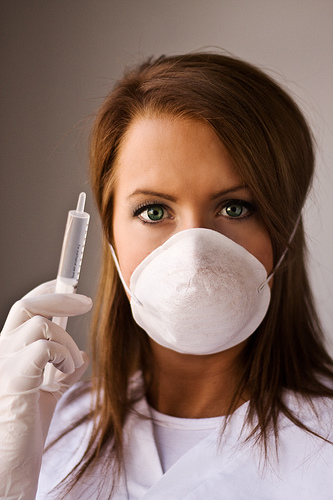
Doctors and medical personnel safety
Doctors and health care workers are exposed to the danger of getting infected or injured almost every day at work. The rules and precautions are simple, but sometimes the health worker is just too busy to remember that he should keep himself safe and the importance of the very simpe safety protocols.
A long list of diseases can be transmitted to (and from) medical and paramedical personnels. They get in contact with patients skin, wounds, secretions and it's very often that you may just forget or sometimes you are too lazy to do a simple thing such as wearing a glove. Blood borne pathogens are considered the most dangerous threat to health workers.
So here are some tips for doctors to stay safe and avoid infections :
Precautions for health workers
- Wear gloves whenever you are examining a patient and in case of direct contact when touching a patientm specially when examining skin infections, any wounds with discharge and secretions from the patient.
- A mask/respirator is essential when dealing with respiratory tract infections and patients with droplet borne infections.
- Use a separate glove for each patient and wash your hands after you take it off, every time.
- Make sure to wear the appron/gown during surgery as well as the mask, gloves, etc.
- Make sure to use sterile equipments only.
- Any waste product (used materials) specially those containing blood or patients fluid should be put in safety boxes imediately.
- Use special care when dealing with any patients samples. Once a blood or fluid sample is spilled on the ground/clothes, all sterilization techniques should be used to clean the area.
- Make sure to use disposable equipments for each patient and to sterlize equipments and matresses that will be used for multiple patients.
- Take all vaccines for health workers specially for diseases that are endemic in your area.
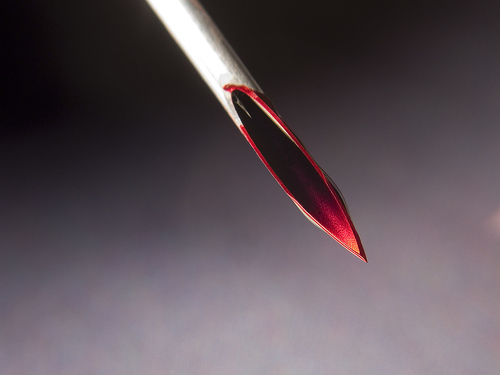
Avoiding needle stick (percutaneous) injuries
A needle stick injury is a major risk for any doctor and can cause many blood transmitted diseases, including hepatitis B, C and HIV. Here are some safety tips to avoid needlestick injuries:
- Avoid recapping/resheathing needles. A used needle must be disposed in plastic container which is (punture resistant) and fluid proof. Recapping a needle puts you at risk of injuring yourself and getting infected.
- Always wear gloves if contact with blood or fluids is anticipated.
- Never use a needle for more than one person (it's obvious, I know). In some places, the single-use needles and sharp instruments are not available (due to economic or other causes), if this is the case, all these instruments should be sterilized carefully.
- All needles and sharp instruments should be disposed/discarded in a puncture resistant (puncture proof) container and not to be mixed with other waste that are put in bags or non puncture resistant boxes. These should be disposed daily.
- Disinfection of any contaminated instruments that are going to be used again.
- In case you get a needlestick injury, serilize the wound and get Hepatitis B immunoglobulin (if the blood is infected with hepatitis B) with a booster dose of the hepatitis B vaccine, if you already received vaccination. If you haven't, the ful course of the vaccine should be administered. Follow the post exposure prophylaxis (PEP) specific for each disease.
- Use injections only when necessary.
Just remember that your health is important and that you too can get sick. Applying these standard and very basic precautions is good for you, the patients and the community. The risk of disease transmission by needle stick injuries is :
30% for Hepatitis B
3% for Hepatitis C
0.3% for HIV (AIDS)
Photo credits:
The first photo. - The second photo.
This article is part of the weekly hubmob contest. Here are more hubs on the same topic:(health and safety):