Mediterranean Diet For Fitness, Staying In Shape And Losing Weight

The Mediterranean Diet
When you think of the Mediterranean what comes to mind? For a lot of people, the food is what people think of. But there is a lot more to Mediterranean food than just Italian, French, Spanish, and Greek Cuisine. There are other nations that hug the Mediterranean such as Morocco and Turkey and their cuisines all hold the core characteristics of the region.
But when most people think about Mediterranean food, they don’t think of it in terms of the differences from one country to the other. For them, they are mainly concerned with the health benefits - and with good reason. The Mediterranean diet is one of the healthiest in the world.
If you look at a chart that indicates the life expectancy averages in certain countries, many of the Mediterranean countries have made it into the top ten. This means that the citizens of those nations are all doing something right. For most this entails a combination of the healthy eating, physical exercise, and other factors that help enhance greater health. The most important factor of these is the diet - the Mediterranean Diet.
What Exactly Is The Mediterranean Diet?
The Mediterranean diet is one that is traditional of the Mediterranean region. That’s the simple definition. However, each country offers up different flavors, ingredients, and traditions that help add variety. Yes, the ingredients are similar throughout the region. But there is such a large variety – not only from country to country but even locally. Different villages and cities can have different customs and traditions concerning the kids of foods they like to eat.
Also, thanks to countless studies that have been done on the topic, the Mediterranean diet holds the ultimate prescription for better health. It presents one of the most ideal ways to manage weight and deal with health problems such as heart disease and diabetes. When people stick to the diet, they experience better health.
Most of what we understand about the Mediterranean Diet and its health benefits took place because of a study done on Crete in the 1960’s. The study began with the purpose of finding ways to improve the diet in that region. The opposite was found – the diet on Crete in that time period is a model for what a near-ideal diet should look like.
Although the diet of Crete is often looked at as the model, the different regions in the area exhibit similar characteristics and utilize similar ingredients in their diets. The Mediterranean diet as a whole is nutrient dense. This means that calorie for calorie; the Mediterranean diet holds a high nutrient value. Feed the body the right things and your reward will be good health.
What Makes the Mediterranean Diet So Healthy?
There are several factors that ultimately make the Mediterranean diet so healthy. It is important to note that in addition to incorporating these elements in their diet, daily exercise and strong interpersonal relationships are other things that can help contribute to better health. However, as mentioned above, the diet is amongst the most important.
If we are going to continue using Crete as the model, it is important to understand what their diet was like in the 1960’s. Though things have changed a little over the years, a lot of the same things still hold true today. And bear in mind that these things are characteristic in the majority of the Mediterranean cuisines, not just the food on Crete. The basic elements of the diet include:
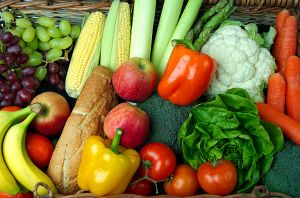
- Plenty of fresh fruits and vegetables
- Healthy grains
- Olive oil provides the main dietary fat source
- Cheese and yogurt are consumed as the main source of dairy – and this is often from sheep and goat, not cow.
- They don’t eat a lot of red meat.
- Poultry and fish are consumed more often than red meat.
- A few eggs per week are fairly typical.
- Almost daily consumption of small amounts of wine.
It is important to note that fruits, vegetables, and healthy grains and legumes form the main ingredients in the diet. Also, understand that this is just a rough checklist. There may be differences in what gets consumed from one family to the next. But as a whole, the well studied Mediterranean diet that took place in Crete is a good guide.

Focus on Fresh Ingredients
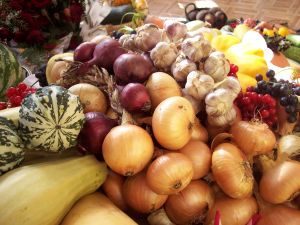
One thing that is important across the region is the focus on choosing fresh ingredients. In the United States, the notion of seasonality of ingredients is practically non-existent. Sure, we understand that tomatoes taste best out of the garden or when they are ripe – but how many of us truly shop with that in mind?
In the Mediterranean, this is essential. When shopping for the home, cooks think about what is in season and what looks the best. If the lettuce looks less than perfect but the tomatoes look wonderful, the cook may purchase the tomatoes and center the meal on them. This is an important thing to keep in mind as you begin to prepare Mediterranean inspired foods.
When searching for recipes, a good first step is to think about what is in season for the time of year. Find recipes that center around these ingredients. For example, in the fall in certain parts of the country, squash is in season. Summer brings the main harvest filled with pepper, tomatoes, cucumbers, cantaloupe, watermelon, etc. Once you learn about the agriculture in your area you’ll be able to find the right recipes.
Medical Benefits of the Mediterranean Diet
There is a long list of studies substantiating claims that the Mediterranean Diet has a lot of health benefits. These can be fully referenced at Oldways.
Apparently, the Mediterranean Diet can:
- Lengthen lifespan
- Protect from some chronic diseases
- Help fight cancer
- Reduce blood pressure
- Reduce "bad" cholesterol levels
- Reduce the risk of heart disease
- Reduce the risk of diabetes
- Help with weight loss and weight maintenance
- Help avoid depression
- Reduce the risk of Alzheimer's disease
- And Parkinson's disease
- Improve rheumatoid arthritis, and
- Help with breathing
For the medical evidence to substantiate these claims, do refer to Oldways for a full list.
Also check the news feed at the bottom of this page for the latest scientifc news and studies on the Mediterranean Diet.
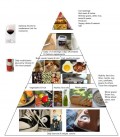
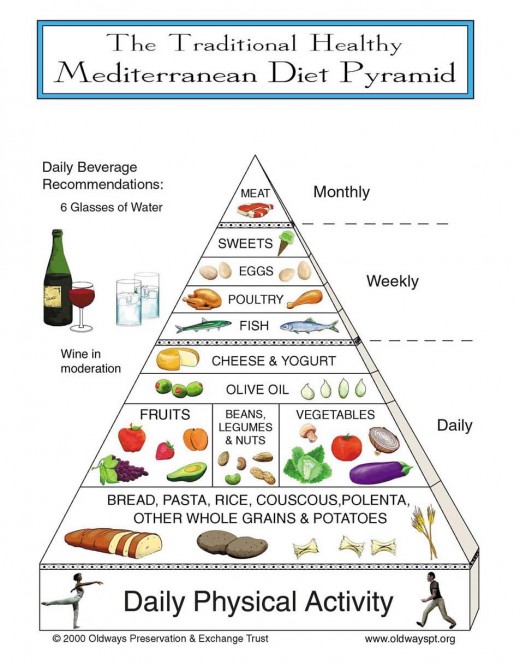
Mediterranean Diet Food Pyramid
The United States government has its own version of the Food Pyramid. A panel of experts such as nutritionists put it together to assist the nation in building better health. Well, according to proponents of the Mediterranean Diet, this pyramid is lacking a few key elements. Or, some of the elements are not in the right balance.
In answer to the government’s food pyramid, the Oldways organization put together a Mediterranean food pyramid of their own. It lists exactly what you need to eat and in what amount in order to follow the Mediterranean diet. You can either use that or common sense and the rough guidelines listed above in order to help get you on track.
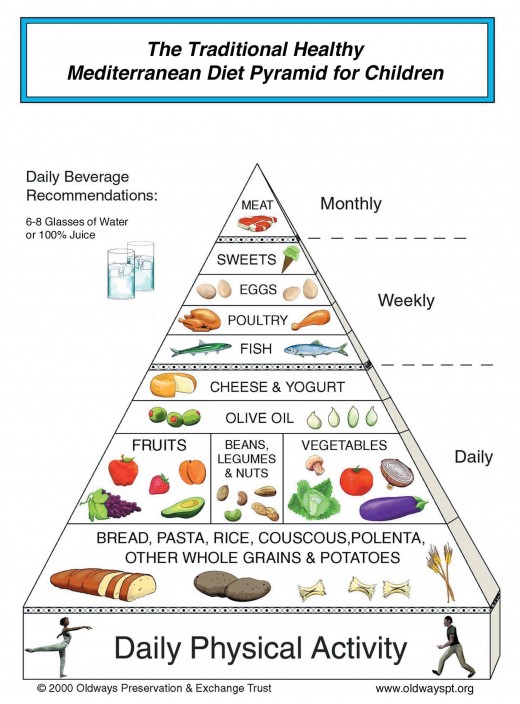
There is also a separate Pyramid for Children.
Mediterranean Diet Pyramid (used with permission)
Mediterranean Diet Pyramid For Children (used with permission)
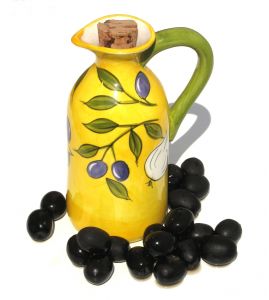
olive oil
The Magic of Olive Oil
People who have observed and studied the Mediterranean diet have noticed one thing – that even though the diet is made up of a surprisingly high percentage of fat (as much as 40%) heart disease and other health problems still remains low. This is because the chief fat source in the diet is olive oil. But not just any olive oil – cold pressed olive oil is common and one of the healthiest fats there is.
Olive oil has several important health benefits that are responsible for making it a key component to a healthy Mediterranean diet. It contains important essential fatty acids which are needed by the body to perform certain functions.
Unlike saturated fat sources such as butter, olive oil actually helps lower cholesterol, for example. Other health benefits include: keeping the skin and hair healthy, helps treat high blood pressure by bringing the levels back to normal, and also helps lower sugar levels in the blood.
red wine

Health Benefits of Wine
Wine is another key ingredient in the Mediterranean diet because people drink ample amounts of it on a weekly basis. Keep in mind, however, that just because wine has health benefits it does not mean that everyone should drink it. If you have health problems such as liver problems, diabetes, kidney problems, etc you should definitely stay away from wine. Consult with your doctor to see if it is safe for you to drink. Even if it is okay for you to drink, you should still drink it in moderation.
The main reason why wine works to help enhance health is because it contains what are known as flavonoids. Flavonoids are potent antioxidants which help the body resist disease and ward off free radical damage. For example, red wine has received a lot of press for helping to prevent heart disease. It has also been said to help people lose weight. It is important to note, however, that you can receive similar benefits by drinking dark grape juice. It is high in sugar but does not have an alcohol content like wine does.
Easy Ways to Eat a Mediterranean Diet
Eating a Mediterranean diet is about more than just preparing recipes from the Mediterranean cuisines. It’s about understanding what makes them tick. When they go to the store, what are they thinking?
First of all, most people in the Mediterranean eat fresh produce that originated a lot closer to home. If you are trying to embrace this lifestyle, a good bet for you would be to visit the farms directly or purchase things from farm stands and farmers markets.
In fact, most people seem to grow their own fruits and vegetables. Often, if a region uses a lot of olives in their cooking it likely means that they grow a lot of olives in that region. In the United States, we get our produce from all over the country. Strawberries that were grown in California, for example, may show up in stores in New Hampshire.
Because everything is fresh, cooks really pay attention to what’s in season. In fact, in some places in the Mediterranean it is impossible to find things in the stores when they are out of season. Asparagus, for example, is a late spring/early summer enjoyment. After that time period, you can’t really find it in the stores unless it was frozen or canned.
Closing Thoughts
Yes, the Mediterranean diet is a healthy one. However, it only really works if you practice moderation and don’t overeat. No matter what cuisine you follow, if you eat too much food you’ll get overweight. And even though the Mediterranean diet is known for helping people manage their weight and control conditions such as diabetes and heart disease, the extra pounds can undermine the health benefits of the diet. Just make sure to keep your weight under control by eating only when hungry.
Just remember to eat when you are hungry and stop when you’re full. And don’t worry about your eating habits. Just enjoy life and enjoy what you’re eating – as long as it is within the guidelines set by the Mediterranean diet. If you do, you’ll be a lot healthier. If you need help getting started with following this diet, you can use the food pyramid that Oldways put together. If you are starting to feel a little overwhelmed by the prospect of change, start with baby steps. Replace all butter in your diet with olive oil. Make it a point to add one new fruit or vegetable each day. The great thing is that following the Mediterranean diet is not only a good health move, but it can be fun.
This hub brought to you...
by Julie-Ann Amos, professional writer, and owner of international writing agency www.ExquisiteWriting.com
Why not create your own HubPages? It's fun and you can make revenue from Adsense and other revenue streams on your pages. JOIN HUBPAGES NOW - SIMPLY CLICK HERE...
This work is licenced under the Creative Commons Attribution-Non-Commercial-No Derivative Works 3.0 Unported License. To view a copy of this licence, visit http://creativecommons.org/licenses/by-nc-nd/3.0/ or send a letter to Creative Commons, 171 Second Street, Suite 300, San Francisco, California 94105, USA.
Other useful hubs...
- Book Review: The Miami Mediterranean Diet
Are you wondering if it's true that following a Mediterranean diet is a good way to lose weight or reduce your risk of developing heart disease and other serious illnesses? You can learn more about what... - The Mediterranean Diet: Phytochemicals In Citrus
Citrus fruits have been acknowledged since the earliest times in antiquity to have a significant amount of health benefits. In the age of the first sail powered ocean crossings, sailors would often fall ill... - The Mediterranean Diet: Walnuts & Cholesterol
Even among Americans who think they eat like Mediterraneans, few consume as many walnuts as real Mediterraneans. Walnuts are a truly basic staple in the traditional Mediterranean diet and are very widely used... - The Mediterranean Diet: Lower Rates Of Cancer
Olive oil and the Mediterranean diet are also associated with lower rates of cancer. There are many explanations for why this might be so and it seems that a phytochemical called squalene may provide yet... - The Mediterranean Diet: Phytochemicals In Olive Oil
Olive oil has been the cornerstone of the Mediterranean diet since the Bronze age. Olives and/or olive oil have been featured in literature since records have been kept. Hippocrates prescribed olive oil to... - The Mediterranean Diet: Health Benefits Of Olive Oil
Remarkably, there is a clinical link between onions, olive oil and blood pressure Like garlic, onions may contribute more than mere taste to the Mediterranean diet. A group of researchers have found that... - Mediterranean Diet Plan for Long Life and Excellent ...
Find out about the Mediterranean diet plan and how it can help you live longer and healthier. You will certainly lose weight! Also learn how you can cut your risk for certain diseases following the Mediterranean diet. These simple diet tips can great

Related

The Healthiest Food Guide Pyramid: MyPyramid, Healthy Eating Pyramid and The Healing Foods Pyramid
A Primer On Healthy Eating for Kids- Tips for a Balanced Diet for Children

Common Sense Tips for Losing Weight

Magnesium Chloride Flakes - 5 Ways to Use Them to Transform Your Health

The Dangers of MSG and Aspartame in Your Food