The "Best" French Toast

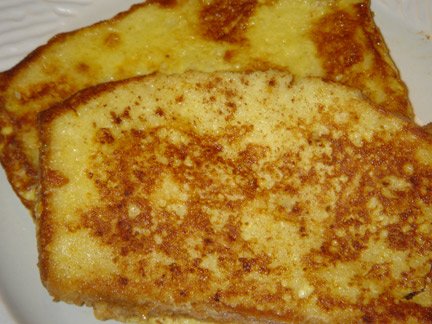
French Toast
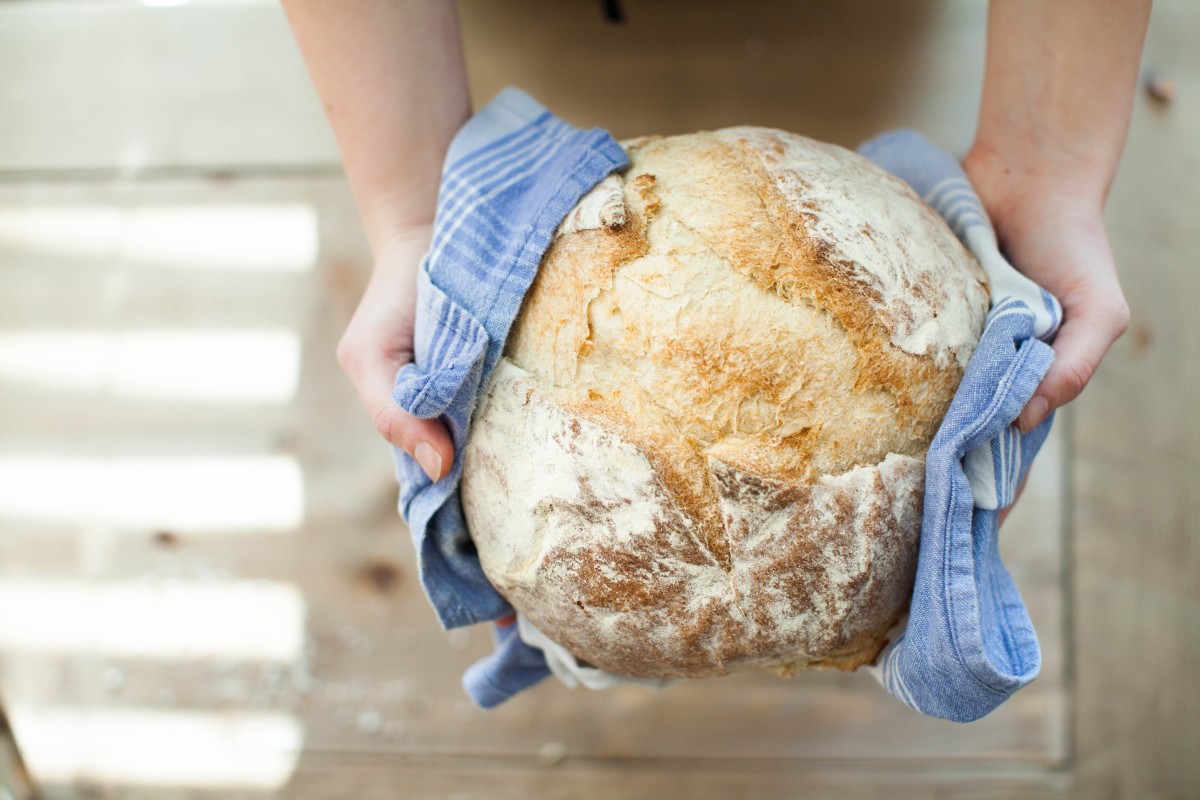
French toast is a ready remedy for stale bread. After all, french toast (a misnomer apparently) is simply stale bread battered with eggs then fried.
French toast is not actually French in origin. The earliest known recipe is from a 4th century Roman cookbook which describes soaking bread in milk and then frying it followed by "dousing" it in honey before serving.
Many countries around the world have their own versions of this dish. In Britain the dish is called "eggy bread" or "Gypsy toast." In Spain it is called torrijas (toast). In Hong Kong it is referred to as "Western toast," in Germany Arme Ritter (poor knights), in the Netherlands Wentelteefjes (toast), in Hungary Bundáskenyér (coated bread), and in the Congo it is called perdu (lost bread).
In fact the most popular recipe may be German (German toast) in origin, but renamed to "French Toast" during World War One.
This particular recipe is distinctive in it's preparation. The idea is to ensure that the outside is crisp and the inside as much like custard as possible.
I and my friends love the stuff and I try to make it with stale "Texas Toast" instead of the standard "twenty slice per loaf" thickness so popular in most breads.
Cook Time French Toast
Tools
You will need the following at a minimum for this dish:
- Oven set to 375º F
- Medium mixing bowl
- Pie pan or shallow dish for bread to soak in egg custard
- Cooling rack with wax paper underneath
- Griddle or sauté pan
Ingredients
- 8 Slices Bread, Oven dried
- 1 Cup Half and Half
- 3 Eggs, large
- 2 Tablespoons Honey
- 1/4 teaspoon salt
- 4 Tablespoons Butter
Bread Preparation
I used to recommend drying the bread overnight by letting it sit out. This does dry the bread, but it also allows the gluten to undergo a change which makes the bread less likely to soak up the custard. I found this out by trying another recipe for bread pudding. That recipe recommends oven drying the bread. So, I tried it with my whole bread slices and got much better results. Please note that the bread should not be "toast" dry, but "stale" dry. There should be some moisture left in the bread, just not as much as a fresh slice.
It is better to dry the bread in an oven at very low heat (150°~ 200° F) for half an hour to forty-five minutes. You do not need to let the dried bread cool, in fact it's better to use it right out of the warm oven.
Directions
- In a medium mixing bowl, whisk or mix together the half-n-half (or milk), eggs, honey, and salt. You may do this the night before and refrigerate in a sealed container.
- When ready to cook pour the custard mixture into a pie pan and set aside.
- Preheat your oven to 375º F
- Put one or two slices of bread in the mixture. Soak for 30 seconds (or more if necessary) on each side. You want to insure the custard soaks to the center.
- Remove to a cooling rack with wax paper of plastic wrap under it as the bread will drip. Allow to sit for at least two minutes. This allows the custard to soak to the center.
- Over medium heat melt one Tablespoon of butter in a 10" saute pan or griddle.
- Place two (or more as room allows) slices of the bread onto the pan and cook until golden brown (about two to three minutes per side).
- Remove from pan and place in the preheated oven for at about five minutes. This step may be unnecessary; try it. Repeat with all six (or eight) slices.
Substitutions
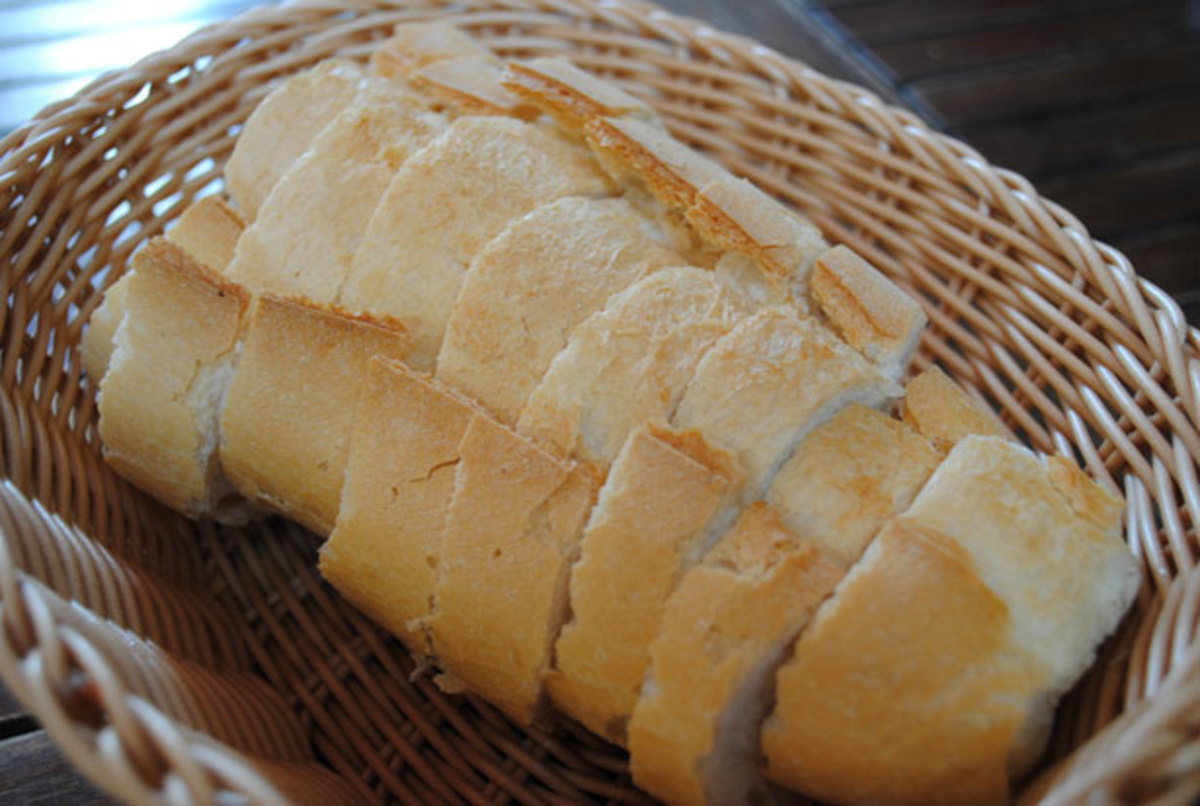
You can use French baguette, sourdough, or any bread you like for flavor variations. Try placing ham and cheese between two slices of French Toast. Adding honey to the batter will give you a nice flavor variation; so will adding 1/4 teaspoon of vanilla.
This dish can be served with (toppings) jam, butter, peanut butter, honey, Marmite, vegemite, maple syrup, fruit syrup, molasses, applesauce, beans, beef, lard, whipped cream, fruit, tomato ketchup, chocolate, sugar, yogurt, powdered sugar, marmalade, bacon, duck fat (in Northern Ireland), treacle, cheese (often with ham), gravy or various nuts such as pecans. (paragraph source Wikipedia)
This dish has versions in;
Belgium: (verloren brood), Brazil: (rabanada), Bulgaria: (părzheni filii), Bosia (prženice), Canada (pain doré), Denmark and Norway: (arme riddere), England: (eggy bread), Estonia: (pillud), Finland: (köyhät ritarit), Greece: (αβγόφετα), Israel: (פרנץ׳ טוסט), Macedonia: (Пржено лепче), Malaysia: (Roti telur), Mexico: (pan francés, torreja), The Netherlands: (wentelteefje), Norway: (Arme riddere), Pakistan: (meetha thoasth), Philippines: (cheesy french toast), Romania: (frigănele), Russia: (гренки - grěnki), Serbia: (prženice), Scotland: (Gangsta Bread), Southern India: (Bombay toast), Spain: (torrija), Slovakia: (chlieb vo vajíčku), Sweden: (fattiga riddare), Switzerland: (Fotzelschnitten), and Turkey: (yumurtalı ekmek).
Ingredient Substitutions
You do not need to add salt if on a salt-free diet, sugar can be substituted for honey, milk can be substituted for half-n-half, egg-beaters for eggs, vanilla is certainly optional as is any sweetener at all.
Notes
As with any bread french toast can be frozen for up to two (2) weeks. The custard for French Toast may be refrigerated for twenty-four (24) hours.
French Toast Nutrition
| Nutrition Facts | |
|---|---|
| Serving size: 1 | |
| Calories | 356 |
| Calories from Fat | 171 |
| % Daily Value * | |
| Fat 19 g | 29% |
| Saturated fat 8 g | 40% |
| Unsaturated fat 9 g | |
| Carbohydrates 36 g | 12% |
| Sugar 0 g | |
| Fiber 0 g | |
| Protein 10 g | 20% |
| Cholesterol 116 mg | 39% |
| * The Percent Daily Values are based on a 2,000 calorie diet, so your values may change depending on your calorie needs. The values here may not be 100% accurate because the recipes have not been professionally evaluated nor have they been evaluated by the U.S. FDA. | |