Radio Controlled Models - How Does Radio Control (rc) Work?

At first glance, the principles of radio control can seem quite complex. With a little fundamental information about the basics, however, you will quite soon be able to enjoy building and operating your first radio controlled model - be it a car, plane, boat, or perhaps even a radio controlled truck or tank.
Radio controlled models obviously appear quite different in design and size but at their core are the same radio control principles of transmitter, receiver, aerial or antenna, servos, batteries, etc. With some knowledge of how these components fit together, it is much simpler to understand how to build your first radio controlled model. Just the same way that radio stations operate on designated frequencies, the radio frequencies for radio control are allocated by the various authorities from country to country. The frequency bands are carefully allocated to ensure that there is no possibility of interference with frequencies used by public services such as air traffic control or the emergency services.
Radio Controlled Channels
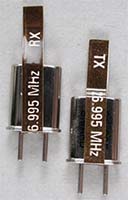
Several different models can be running at the same time because the allocated frequencies are further sub-divided into channels, or frequency bands, one of which is used by each model according to the crystals that are fitted to transmitter and receiver. The frequencies used by radio control enthusiasts vary from country to country but usually, if buying a model to operate in a particular area, it will come with radio control gear suitable for that country. Some care should be taken though if you import equipment directly, to make sure that it will operate safely in the country where it will be used.
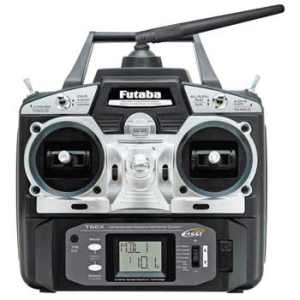
The transmitter is the radio set, or control box, held by the operator to control the model and the receiver is the control box in the model that receives the transmitted signal. Control is nearly always proportional, which means that the further the control lever is pushed on the transmitter, the further the servo on the model moves. So, for example, full control movement on the transmitter will give full rudder movement on a radio controlled model boat.
As mentioned above, at the heart of the transmitter and receiver system is the pair of crystals (Xtals) fitted to the transmitter and receiver. Without getting into to much technical detail, the transmitting crystal vibrates at high frequency when energised and, along with the other circuitry, forms the radio signal that is transmitted through the aerial. The aerial on the model picks up this signal and the reverse happens. The crystal vibrates and with its circuitry generates the electrical current to operate the servos. The transmitter crystal is marked TX and the receiver crystal marked RX, and additionally they are both marked with the channel number - the number has to be the same for the crystals to be a matched pair and for the transmitter to receiver system to work successfully. All crystals can be removed and changed quite easily so that there is no interference between models operating at the same time in the same area. Enthusiasts simply compare crystal markings and if they find that there is a clash between radio controlled models, a pair of crystals can be changed to avoid interference.
Radio Controlled Servos
The servo is a key piece of equipment in the radio control model. It usually is a small black box with a control arm and linkage or pushrod on its top or side. The servo moves on command from the receiver and through the control linkage moves the throttle or control surface, or whatever, on the model. Usually one servo is used for each control function. They come in a very large variety of shapes and sizes depending on the force they need to provide. Electronic speed controllers on electric rc cars are similar to servos but instead of having a control linkage to control the throttle, electronic circuitry is used directly to control the motor speed.
All this electronic equipment needs power to operate. The transmitter does not take that much power and has its own small batteries to power it. The radio control model needs power to operate and the most usual source of power is a rechargeable Ni-Cad battery pack. An electric car will need a sizeable pack to provide a reasonable running time, but a nitro powered model does not need the power to drive an electric motor so battery packs can be smaller.
Much more could be written about radio control but with this basic information you should be able to understand enough about the parts of the system to get started without too much confusion!
- RC Gas Powered Trucks
RC gas powered trucks and cars are not toys. Learn about these incredible radio control trucks. How rc nitro engines can be tuned and gas powered trucks raced over exciting, difficult tracks. - Radio Control Cars, Trucks, Monster Trucks, - For Sale By Auction
Hints and tips for radio control cars, radio control trucks and monster trucks. Buy radio control cars, trucks and buggies at great prices. - The Excitement Of Gas Powered Remote Control Cars
Gas powered remote control trucks and cars are no longer toys. Learn about these incredible radio control models, costing $100s, and how rc nitro engines can be tuned and the trucks raced over exciting, difficult tracks. - Futaba 2.4GHz FASST Radio Control Systems
Futaba 2.4GHz FASST Radio Systems are available in three channel to fourteen channel versions.
Related

How to Design a Glider Plane Model at Home?
How to Set Up the Spektrum DX6i Transmitter to control a V-Tail Radio Control Glider
Building your Own PIRATE FM RADIO BROADCASTING Transmitter SETUP
Radio-Controlled Cars: Brushed Motor to Brushless Motor Conversion Guide
A review and analysis of "Resistance to Civil Government" by Henry David Thoreau