Dizzy, Yardbird and the Prince of Darkness

Dizzy Gillespie
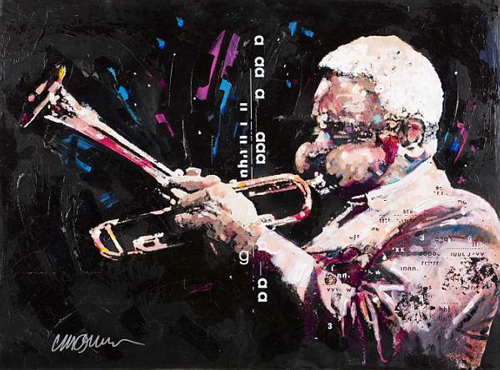
Dizzy
In 1945, a group called Charlie Parker and His Re-Boppers performed a jazz composition called "Billie's Bounce." The original lineup of the group featured Charlie "Yardbird" Parker on the alto saxophone, Miles "Prince of Darkness" Davis playing trumpet, John Birks "Dizzy" Gillespie on the piano, Dillon "Curley" Russell with the string bass and Maxwell "Max" Roach on the drums.
John Birks Gillespie was the early strong influence in a creative revolution, that like hip hop today, challenged the mainsream of music and stretched the boundaries of arrangement and rhythm of the swing bands of the thirties. When he was thirteen, he started playing a friend's trumpet. One night he heard Roy Eldridge playing trumpet over the radio. Roy was a member of Teddy Hill's Orchestra who was being broadcast from the Savoy Ballroom in New York City. Dizzy fell in love with Eldridge's playing and from that night on, he dreamed of becoming a jazz musician.
Gillespie got his nickname ‘Dizzy’ as a young trumpeter in swing bands in the 1930s by his showmanship, his antics and his lighthearted personality. Using a non-classical technique, he blew out his cheeks like balloons which has been drawn and photographed into icon status. He was instantly recognizable because he wore a beret and horn-rimmed specs, and with his pouched cheeks, played a strange trumpet of his own bent-angle design. Gillespie played piano as well as trumpet, and he studied harmony closely, even as a young man for scales and phrases that might work with the different chords.
The young Gillespie soon got bored with his jobs in the big-bands. The music was popular with audiences, but didn’t stretch him, or provide an outlet for his new ideas. In the early 1940s in New York, he began to meet other jazz musicians of his own age who felt the same way he did – including the saxophonist Charlie Parker.
"He
had just what we needed. He had the line and he had the rhythm. The way he got from
one note to the other and the way he played the rhythm fit what we were trying
to do perfectly. We heard him and knew the music had to go his way…. He was the
other half of my heartbeat."
~ Dizzy Gillespie
They started to meet late at night, after their
regular gigs were over, in a Harlem nightclub called Minton’s. There, they
developed a new way of playing – and because it was fast, tended to use a lot
of notes, jerky lines and strange melodies by the standards of the popular
music of the day, they called it rebop, or bebop.
"Charlie Parker showed Dizzy a way of
playing that almost eliminated that swing feel that Dizzy had in the early
'40s, but that also incorporated those harmonic ideas that they both created.
So I think the way of getting from one note to the next was very much Charlie
Parker's influence on Dizzy. But if Charlie Parker was the stylist, Dizzy was
sort of the architect that taught the musicians how to build the music … Dizzy
said that Charlie Parker used to come over to his house, and Dizzy's wife Lorraine
wouldn't let him in, so Charlie Parker would be in the hallway playing and
Dizzy would write it down, and then show it to the other musicians. So Dizzy
took the things that Charlie Parker got off the top of his head...and he would show other musicians."
~ Jon Faddis
Dizzy and Satchmo
The Genius of Charlie Parker
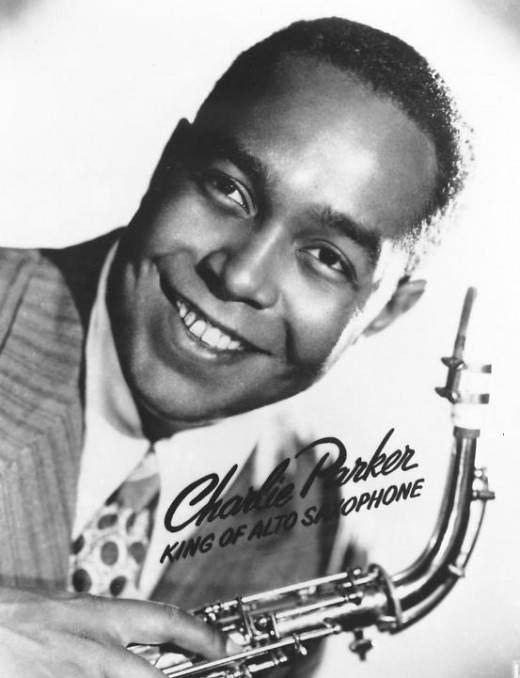
Yardbird
Charlie "Yardbird" Parker was one of the most influential improvising soloists in jazz, and a central figure in the development of bebop in the 1940s. A legendary figure in his own lifetime, he was idolized by those who worked with him, and he inspired a generation of jazz performers and composers.
"Louis
Armstrong, Charlie Parker."
~ Miles Davis
summarizing the history of jazz
He was bored with the stereotyped changes that were being used then. He said, "I kept thinking there's bound to be something else…. I could hear it sometimes, but I couldn't play it." At Don Walls' Chili House, in jam sessions with guitarist Bill "Biddy" Fleet, Parker found that by using the higher intervals of a chord as a melody line and backing them with appropriately related changes he could play what he had been "hearing."
"Bird's
mind and fingers work with incredible speed. He can imply four chord changes in
a melodic pattern where another musician would have trouble inserting
two."
~ Leonard Feather
"Music is your own experience, your own thoughts, your wisdom. If you don't live it, it won't come out your horn. They teach you there's a boundary line to music. But, man, there's no boundary line to art." ~ Charlie "Yardbird" Parker
In the early forties Parker regularly participated in after-hours jam sessions at Minton's Playhouse and Monroe's Uptown House in New York, where the informal atmosphere and small groups favored the development of his personal style and of the new bop music. Although he was arguably jazz's foremost innovator, he was brilliant at improvising changes to such standards as his showpiece "Cherokee." He also was deeply interested in the modern symphonic works such as Igor Stravinsky and Bela Bartok. Like many of the musicians he performed with, he pursued a self-destructive lifestyle and heroin addiction which led to a breakdown and hospitalization. Afterward, however, he was able to record his most famous and influential works. His career spanned the decade from 1945 to 1955, and despite his self-destructive lifestyle and early death, Parker remains one of the twentieth century's most innovative instrumentalists and composers. Many feel that his tunes "Ko Ko" and "Billie's Bounce" single-handedly gave rise to bebop.
“The greatest feeling I ever had in my life – with my clothes on – was when I heard Diz and Bird back in 1944. I’ve come close to matching the feeling of that night, but I’ve never quite got there. I’m always looking for it, trying to always feel it in and through the music I play…” ~ Miles Davis
Cool and Stylish Miles Davis
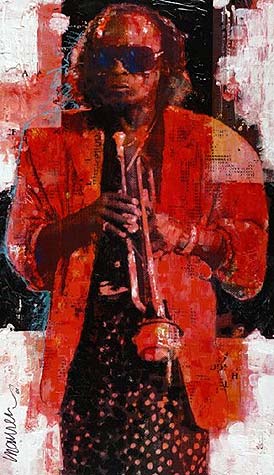
Prince of Darkness
Miles Dewey Davis was
born on May 26, 1926, in Alton, Illinois. His family moved to East St.
Louis
shortly thereafter, by the age of thirteen he received a
professional-grade
trumpet as a birthday gift. He would often cross the river and listen
to the famous jazz musicians who came through on the riverboats. It was
in St. Louis he met Charlie Parker and Dizzy Gillespie.
After
high school, Miles wanted to be in New York where the jazz action was
and so he enrolled in Juilliard. He roomed with Charlie Parker and
together they played the clubs at night and attended school by day. He
learned to combine the classical training with the wild and exciting
relationships of notes and rhythms he encountered with Bird in the
clubs. Gradually Miles began to get away from the super quick tempo
bebop and began experimenting with smoother, softer styles which led to
his release of the album "Birth of the Cool" in 1950.
Like his idol Charlie Parker, Miles had battles with drug addiction that threatened to destroy his career. When he realized the addiction was ruining his life, Miles went to his father's farm and decided to quit "cold turkey."
Miles Davis was the most successful jazz artist of his time. He recorded and released over 100 albums, including "Birth of the Cool," "Kind of Blue," "Workin," "Relaxin," "Steamin," "Sketches of Spain," "Bitches Brew," "On the Corner and Live at the Plugged Nickel. " He often turned his back on the audience, much like a conductor, and this led people to believe he was arrogant, but he related it was just a better way to give cues and lead the music direction. He set styles in music, fashion and the social set. Shortly before his death in 1991, he was working on a synthesis of the cool with rap called "Doo Bop." One of the best and most authentic biographies is one called "The Autobiography" by Quincy Troupe which was made entirely from audio comments of Miles about his life and then transcribed. (Davis, M & Troupe, Q, 1989, Miles: The Autobiography, Picador, Great Britain.)
Don't play what's there, play what's not there. ~ Miles Davis
Dizzy, Bird and Miles
History of Jazz
- How did jazz begin? Part one of a history of jazz
Jazz was born out of the pain of slavery and the clash between the cultures of West Africa and the Protestant ethos of the Southern states of the United States. This is a first article in a series looking at the history of jazz through an examination
PBS Jazz Lounge
- PBS - JAZZ A Film By Ken Burns: Jazz Lounge
You can listen to Music 101 and then to the Jazz Lab to see how Jazz breaks the rules. The site also has many great biographies and links.
Miles "Round Midnight"
Related

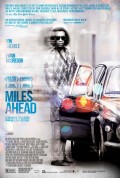
Miles Davis Biopic Chronicles the Lost Years of the Jazz Genius
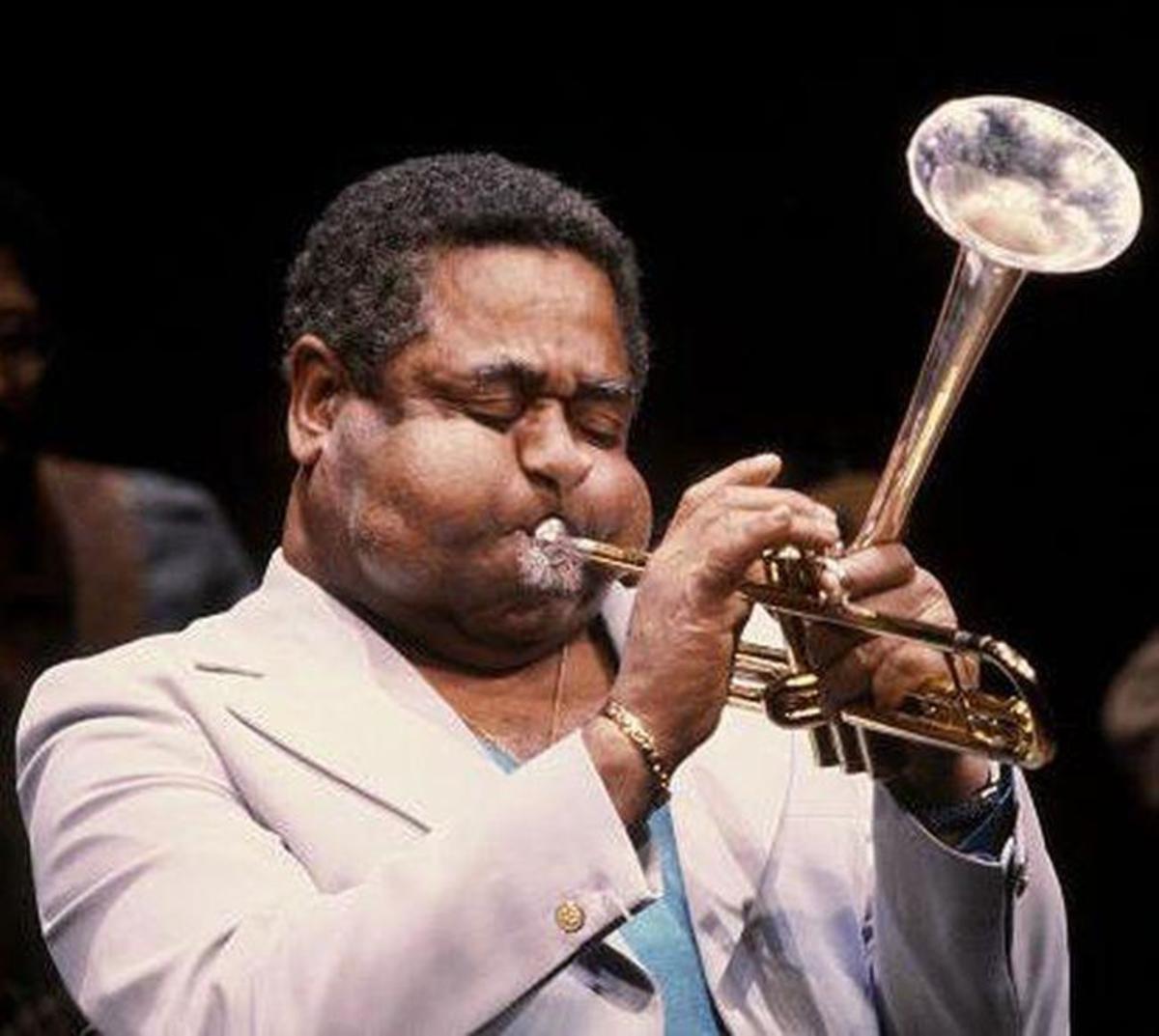
Dizzy Gillespie: The Ambassador of Jazz
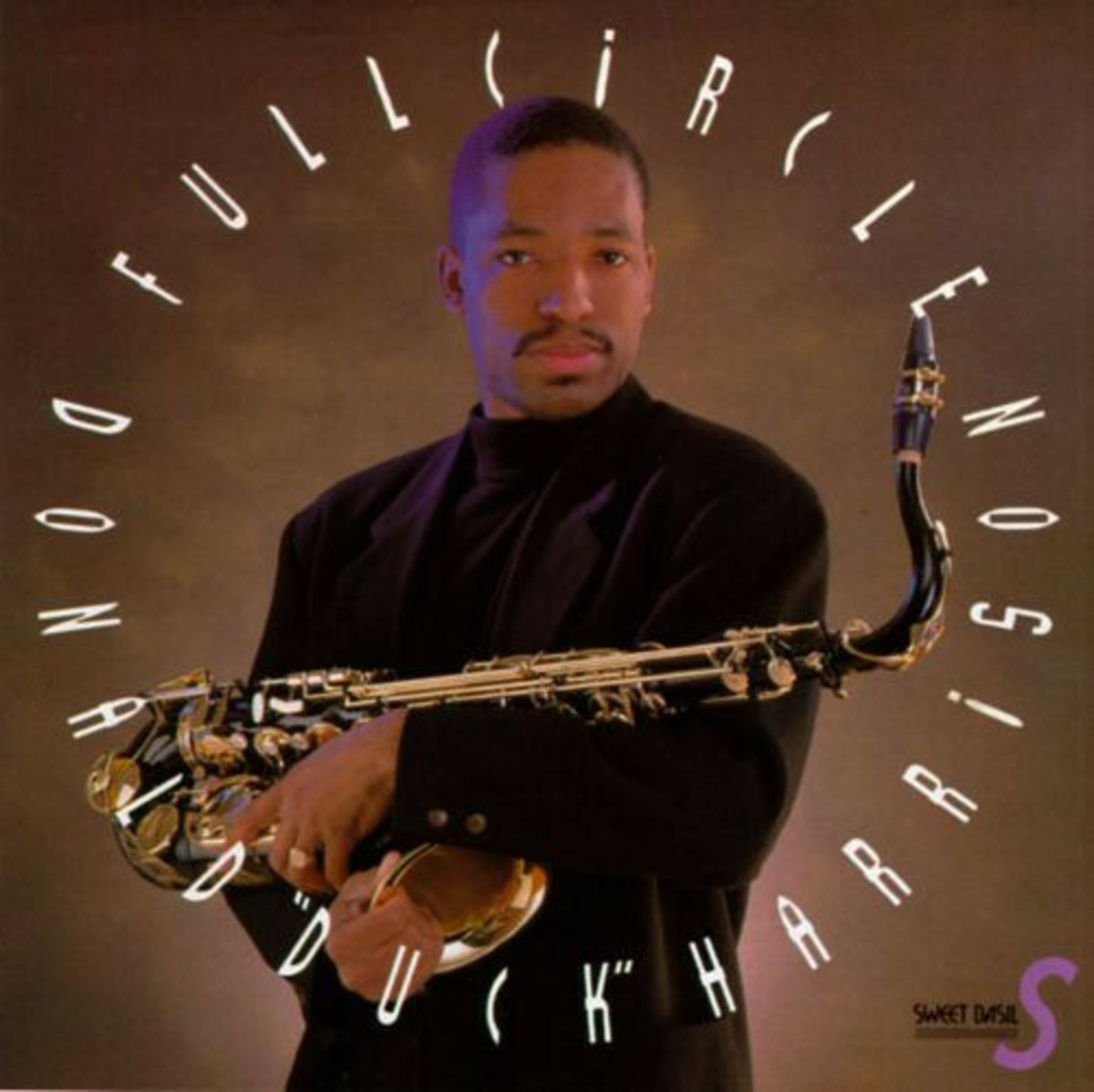
Donald Harrison ~ The Art, Music & Passion
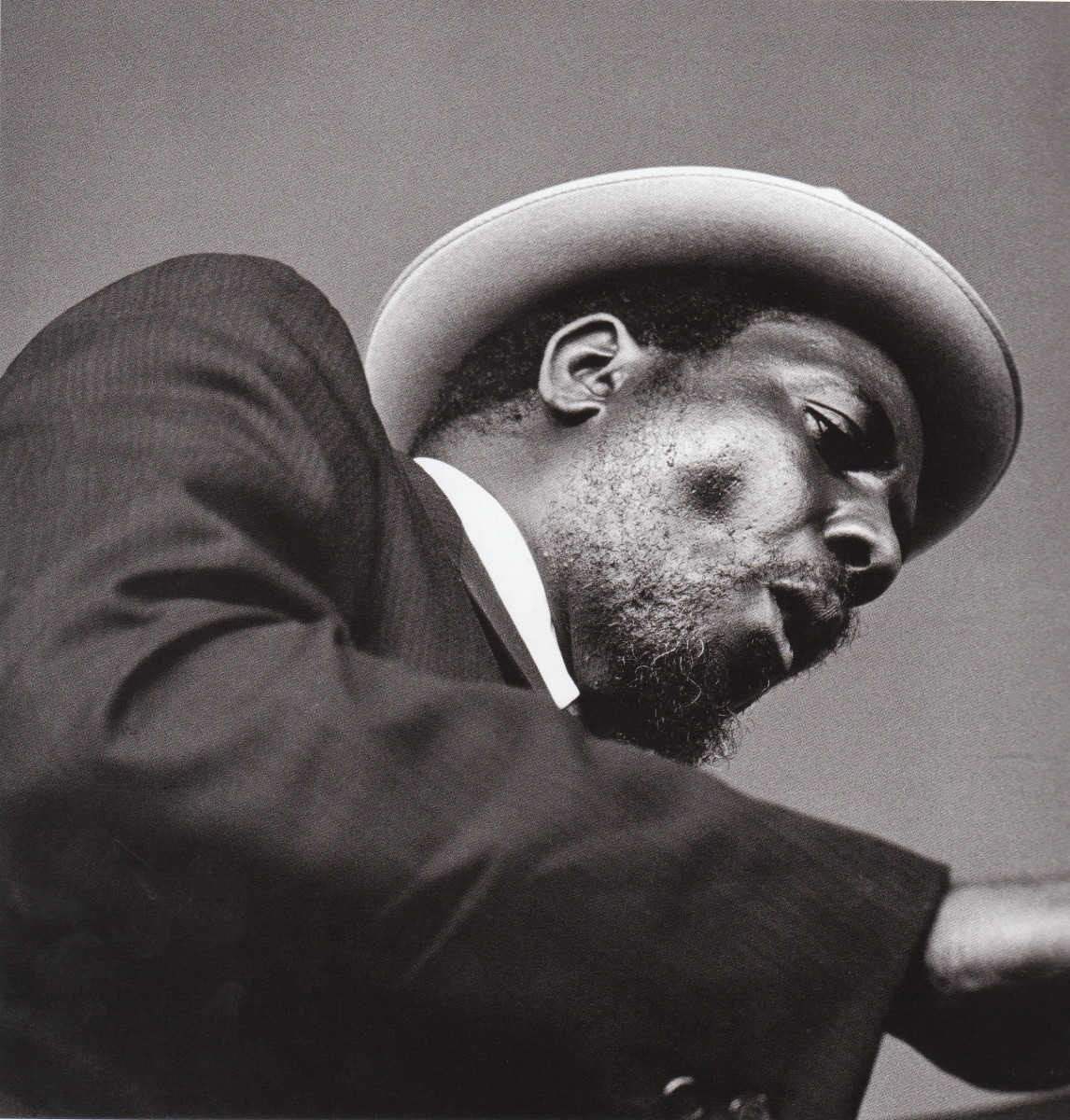
Stolen Moments: A Pictorial Essay of the Greatest Jazz Giants of our Times
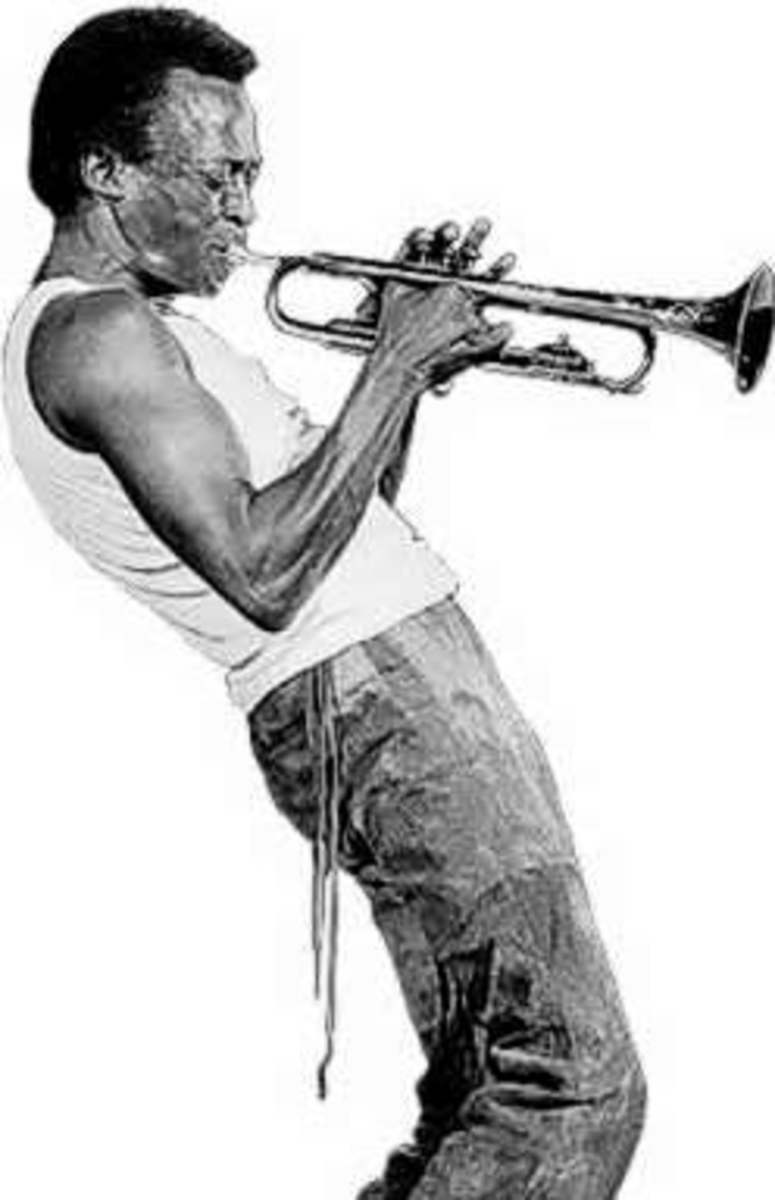
Modern Jazz Standards: Music with Culturally Converging Melodies, Harmonies and Riffs