Film Review: M
M (Lang, 1931)
As Fritz Lang’s first sound film, it is not only his best; it is one of the greatest films of all time. It marks a point cinematic beauty, combining German Expressionism, realism and the creative use of sound in dynamic ways. This film would be one of Lang’s last in Germany before he fled to the US after the Nazis gained control of Germany. It is a subtle statement of that era and marks a moment when sound became something more than a spectacle whose only use was to feature song and dance numbers.
M is one of the inspirations for film noir (popular in the 1940s), because of its dark theme and look. It is about a serial killer who attacks children and terrifies the city’s citizens so much both cop and crook search for him.
Lang creates an ambiance so thrilling it puts you at the edge of your seat for most of the movie. The film features a constant juxtaposition: from cop to crook, from good to bad, from light to dark. Not only does that keep the pace going, it creates moments of humor in a film that is for the most part intense and dark. Lang also uses the mise-en-scene to structure a scene within a scene creating a ‘trapped in’ feeling while also using shots of open cityscapes to show the vast space the town encompasses. The skill Lang uses will amaze you.
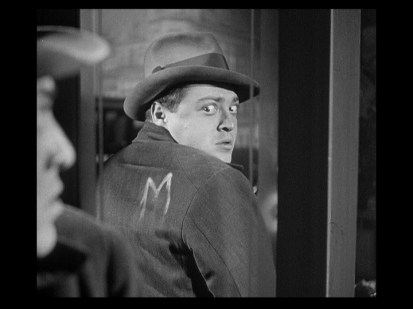
Though this is an ensemble piece, the clear break out star is undeniably Peter Lorre, who plays Hans Beckert. He finds a way to be both scary and sympathetic without losing any realism. He is brilliant and so is this film. If you haven’t watched M, do so as soon as possible. You won’t be let down!
The Trailer below is in German, but no translation is needed. You'll also get a taste for how sound is used during the film. Brilliant indeed.
The M Trailer
Fun Facts
- Lang is the first to feature sound bridges, or using sound in one scene then carrying it over to the next. This technique would not become commonplace until modern Hollywood.
- Lang is one of the first to use voiceover narration.
- Lang uses sound as hints throughout the film.
- The tune whistled is "In the Hall of the Mountain King" from the "Peer Gynt" suite by Edvard Grieg.
- Lorre couldn't whisle, so the person you hear is Lang.
- Lang doesn’t use any nondiegetic music, only dialogue and sound effects.
- Lang insisted on using real criminals and most were arrested at least once during filming.
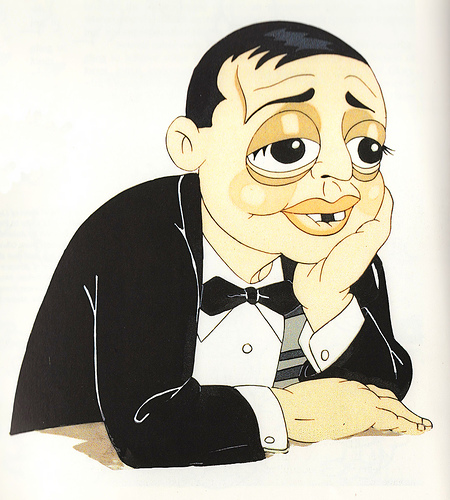
- I’ll always remember Peter Lorre from Bugs Bunny cartoons.
- Lorre, who was Jewish, fled Germany right after the movie’s released. Lang, who was half Jewish, fled two years later.
- The Nazi’s banned the film in 1934.
- Thea von Harbou, Lang’s wife, wrote the script. She was a Nazi sympathizer who stayed in Germany after Lang fled.
- Lorre had a successful career in Hollywood after leaving Germany. He had parts in The Maltese Falcon (Huston, 1941), Casablanca (Curtiz, 1942) and Arsenic and Old Lace (Capra, 1944) just to name a few.
- German Cinema: What You Need to Know About the Silent Era
This is an overview of Germany's silent era from 1912-1929. It highlights some of the classic films of that era and provides some information about the two more popular film movements on the time. Don't think these movies are all outdated because the
- German Cinema: Talkies and You
This is an overview of the emergence of talkies in Germany. It highlights some of the classic films that arose from the coming of sound. The German film industry takes the technology and makes it their own; which is something entirely different from