German Cinema: Talkie Movies and You
German Cinema Part Two
In an overview of early German Cinema, it is important to look closely at the arrival of sound. It truly marks the end of an era: the silent film, the German Expressionist movement and the directors’ freedom. The time sees the rise of the Nazis, but since there is a lack of overall domination; directors still have the ability to put out work of their own choosing. This is an overview of that period and some of the notable films that became classics.

Talkies and You
Germany had the ability to use sound during film pretty early on. The Tri-Ergon system was invented in 1918, but because of a financial crisis the industry, Ufa, was unable to utilize it. After the end of World War I and the immense popularity of The Jazz Singer (Crossland) in 1927, the smaller companies, including Tri-Ergon, battled it out in court to create Tobis-Klangfilm sound studios. Ufa signed with them and soon they began to patent their sound system across Europe. Apparently, Tobis-Klangfirm liked court battles, so much so, they sued Hollywood studios claiming an infringement of their sound system patents. The US responded by banning German films and Germany responded in the like.
The first German talkie, The Land without Women (Gallone), came out in 1928 and was successful enough that by 1935 almost all the theaters in the country were wired for sound. Seeing the money to be made, Hollywood’s sound system and Tobis-Klangfilm battled out distribution rights, manufactured equipment rights and licensing fees and finally came to an agreement, creating a worldwide film sound cartel. In short, Ufa played chicken with Hollywood bigwigs and won.
The Jazz Singer's Announcement
![M (The Criterion Collection) [Blu-ray]](https://m.media-amazon.com/images/I/31fe+mmP59L._SL160_.jpg)
- Film Review: M
This is a film review for Fritz Lang's classic "M" Read about the movie, learn some interesting facts about the actor, director and era then watch the original trailer before watching this outstanding movie.
Keep Your Jazz Hands to Yourself
The most difficult transition during this period was how to utilize sound within the film medium. Hollywood tended to veer towards song and dance numbers as is famously depicted in the film Singing in the Rain (Donen, 1952). Germany, on the other hand had a bullpen of directors that had a very different perspective. German Expressionism and Kammerspiel films did not lend themselves to singing and jazz hands. Instead, directors used sound in the same way they used the German Expressionist art; as a way to create emotion and suspense.
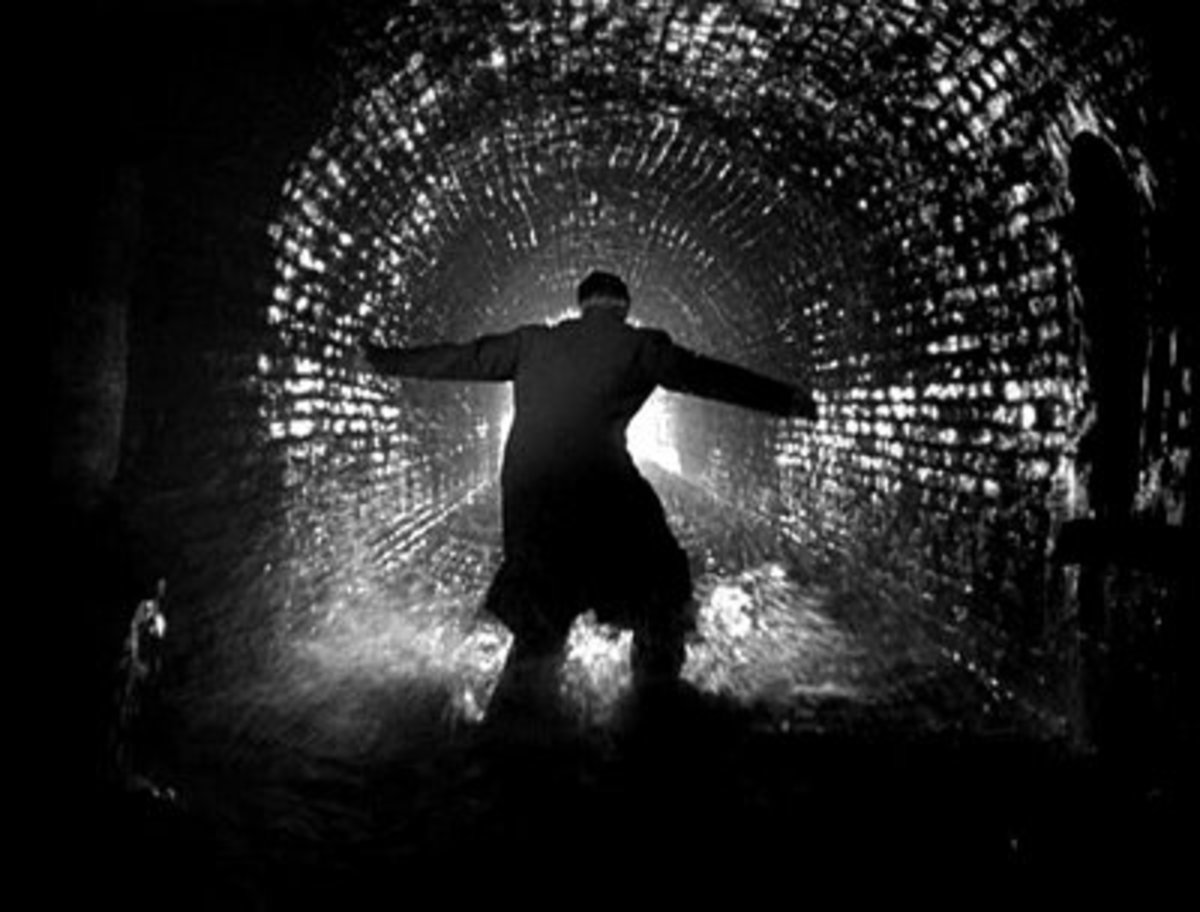
Fritz Lang (Metropolis) was one of the key directors in the German Expressionist movement and brought that idealism to his first talkie, M (1931) and followed that with a sequel to Dr. Mabuse, the Gambler (1922), The Testament of Dr. Mabuse or Das Testament des Dr. Mabuse ( (1933). These movies continue the dark trend of Expressionism; however with the use of sound, the exaggerated acting was toned down and the pacing sped up since more could be conveyed using dialogue with movement.
Das Testament des Dr. Mabuse

Marlene Who?
There were also musicals in Germany, but there were far different from Hollywood. Josef von Sternberg directed The Blue Angel (1930), a musical about a professor who falls in love with a lounge singer. Professor Rath is portrayed by Emil Jannings (The Last Laugh) who had just returned to Germany since he could no longer find work in Hollywood with the arrival of talkies. His love interest, Lola, is played by Marlene Dietrich, who marks this film as her first leading role. The movie has music, song and dance, but it veers towards a seedier side and does not have the same vibrancy that its counterparts in Hollywood had.

Directors Can Still Speak their Minds
The dark tones that had flourished in German films only got darker with the rise of the Nazis and some directors made their statements abundantly clear on celluloid. G.W. Pabst made three pacifist films: Westfront 1918 (1930), The Threepenny Opera (1931) and Kamaradschaft (1931). The most famous of these, Westfront, shows realistic depictions on a battlefield and makes a clear anti-war stance. It is no wonder Pabst ended up making movies out of France during the Nazi regime.
Germany had a very specific perspective during the transition from silent to sound. The most popular films tended to be dark and they were afraid of an unhappy ending. This was also the last period directors had complete control of the films they created until after the Nazis lost World War II.