- HubPages»
- Family and Parenting»
- Kids»
- Children's Growth & Development
Nurturing Curiosity In Children—5 Ways To Inspire The Pursuit Of Discovery


Newborns follow new faces, bright colours, loud sounds and peculiar objects with their eyes. Babies put toys into their mouth to see what it does. Toddlers shift chairs to reach for distant objects seated onmantles and countertops. Pre-schoolers play ‘pretend’ games to find out how it feels to be in the other person’s shoes. Why?
Because children, fascinated by the outside world, are curious to know how things function. It isn’t unnatural. Every child is born curious. Curiosity—the innate desire for seeking knowledge, is a precursor to child development and growth.
Why Is It Important For Children To Be Curious?
- Curiosity stimulates visual, sensory, cognitive and physical development, which is why when babies turn their heads to look at their surroundings, they start exerting control on their neck muscles and recognise colours, shapes, shadows, etc., in their mind.
- Curiosity fuels the desire to explore, learn and discover, which is why packing/ unpacking stuff at home is a usual occurrence for kids. Some might brush it off as naughty behaviour, but it’s a trigger for children to uncover mysteries.
- A tot's curiosity shifts from home to the surrounding environment as they grow. It enables them to observe things independently.
- Curiosity spurs autonomy and inquisitiveness in children. Therefore, their conversations start with a question every time. The solutions we provide motivate them to seek out new challenges and experiences, which leads to greater success over time.
“Why do we need to eat? What’s the difference between a girl and a boy? How does a clockwork? Why? What? How? When? Where?”
Children’s world is full of wonders where there’s no end to their queries.
Nonetheless, there comes a stage when questions stop coming. Are they out of questions? Most likely not. Kids constantly demand answers. However, vague instructions, unrealistic expectations and constant supervision undermine their autonomy, competency and inquisitive nature.
We snub children for asking questions because we either get irritated or run out of answers. Sometimes, it gets awkward. The other times, we’re too cautious for safety reasons and probably can’t think of a valid reason to give. Here, we must remember-
“When we handle a child’s curiosity with honesty and care, they develop a keen interest in learning new things. On the contrary, kids who’re ridiculed for asking questions, tend to lose interest in learning, and stop being inquisitive.”
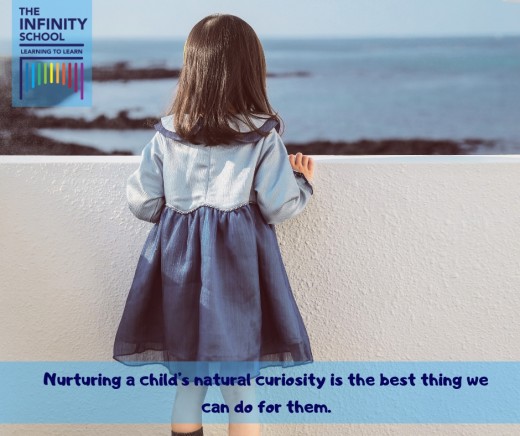
Nurturing Curiosity In Children—What to do?
1) Acknowledge their questions by posting questions back at them
Acknowledging children’s questions doesn’t mean providing them with answers. Rather, we should sustain a child’s curiosity by answering their questions with open-ended or yes/no questions. It encourages them to think and construct their own knowledge, and they gain a fresh perspective. Also, it gives us a window into their life. So, the next time when your child asks, ‘Why can’t I have a dessert for breakfast?’ probe them to think—What do you think will happen if you have too much sugar in the morning?
Besides, before answering any question, we must first understand what they’re trying to ask. For instance, a 12-year-old once asked his mother, “Where did I come from?” and the mother stumbled while explaining the process of reproduction. After she was finished, the child quizzically responded, “I meant to ask did I come from Gujarat like daddy or Delhi like you.” Poor mom was red with embarrassment. So, it’s important to be sure of what they want to know.
If you don’t know an answer, explore it together with your child. This turns on their little brain to access more resources, and they enjoy your companionship.
2) Give them time to introspect
What happens when a child experiences information-overload? They fail to organise their thoughts and get confused. Therefore, we need to ‘focus on depth, not breadth’. Giving them time to process our explanations and reflect on answer fuels their curiosity further and empowers them to seek more knowledge on a topic. This develops competence and self-motivation for future learning.
3) Create a safe learning environment
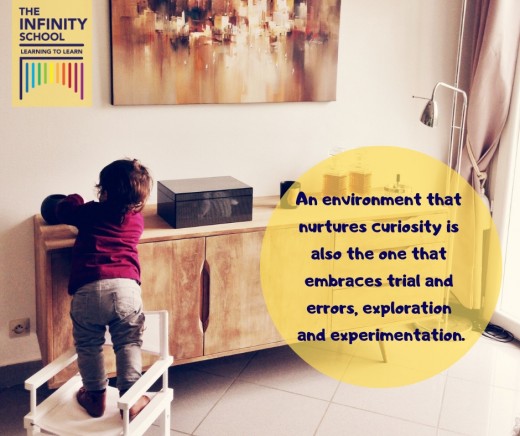
Did you know children spend one/fifth of their waking hours on focused observation? Placing learning materials within their reach encourages stimulates flexibility in terms of selection of objects. With experimentation, they discover more than one application of a single tool. As elders, it’s our duty to create a safe environment for nurturing innate curiosity rather than preventing kids from touching objects.
4) Let them pursue their interests under the vigilance
Children learn a lot through imagination, testing, and trial. They take a great deal of interest in ‘handyman' tasks, like cookery, cleaning, and repair. Sometimes, they love to create unimportant stuff like old calendars, coins, scraps of paper, etc. Why? Probably because their imagination runs wild and they may come up with more interesting ways to use seemingly dull-looking objects. Sometimes, we should just leave them to explore their interests, providing occasional companionship wherever necessary.
Munchkins learn a lot by following their natural instincts. So, don’t throw away old gadgets. Let them assemble/ disassemble them—we call it creative destruction, which is important for constructing new knowledge.
In short, we should start appreciating their curious actions and thoughts. The trick is to inspire them to act while keeping a watchful eye from a distance, to allow them to grow.
5) Deviate, don’t discourage
It gets easier to create a safe and acceptable way for children to explore when we know what’s attracting their interest, or what skill they’re trying to develop.
If your little one loves splashing water, put her in a backyard baby pool with lots of rubber duckies to play with. If she loves food, move her to the kitchen and let her oversee your cooking. If he loves plants, let him water them. Alternatively, you can offer a close alternative. Put some soil in a flower pot and fix a plastic plant in it. Let your child play and inspect. Encourage their curiosity!
Engaging kids in open-ended activities, enhance their creativity, problem-solving skills, and gives them a safe and acceptable way to pursue their interests.
As children grow older, they begin to lose their sense of curiosity due to performance-pressure, exhaustion, and monotony. By nurturing their curiosity at an early age, we equip them with life-long learning skills. Don’t you think so?
Let them be curious!