ArtsAutosBooksBusinessEducationEntertainmentFamilyFashionFoodGamesGenderHealthHolidaysHomeHubPagesPersonal FinancePetsPoliticsReligionSportsTechnologyTravel

Teaching children to speak: How to teach your child to talk

Updated on September 30, 2018

Teaching children to speak

Teaching children to speak is one of the main responsibilities of the parents. Babies spend almost all of their time with their mothers and fathers and they are the main source of learning and the most important persons to communicate with.

Children start to respond and communicate with the world since the first month were they can show response to light and loud sounds in the form of startling and moving. During the second and third months of the baby's life he starts to make voices and smiles. Cooing and laughing continue as his way to respond to attempts of communication until around 6-8 months of age.

By this time, he may be able to say very simple syllables such as "dada" and "mama". Gradually the baby starts to understand words, signs and meanings and simple orders. By the end of the first year, his dictionary is formed of 5-6 words and so on, until the third year when he can form simple sentences and can understand other better and starts asking and talking with people. Parents are the first teachers of their child and they can help him in his linguistic, social and mental development. Here are a few tips:

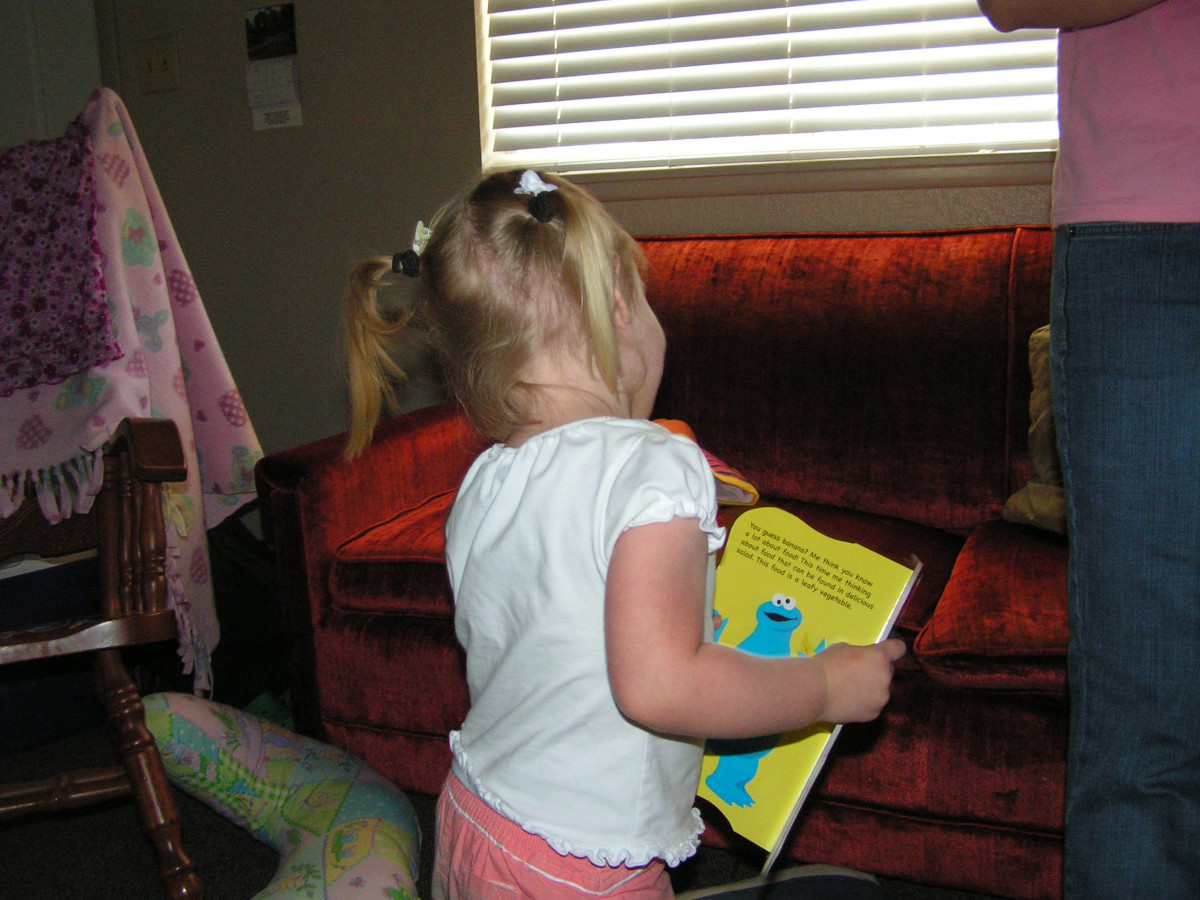
http://www.flickr.com/photos/telachhe/3459101299/
  • Enjoy the process of teaching your child how to speak and always communicate with him from the beginning and help him enjoy it, too. Not only by talking and making sounds, but also by touching, hugging, playing with him and be sure to make eye contact with him.

  • Talk to him about the things in his environment and the surroundings. Make sure you talk quietly and clearly and that letters are clear, don't speak too fast or use complex words. Use very simple words and repeat them nicely.

  • Provide him with toys, puzzles, books with images that are appropriate for his age. Help him discover his toys, games and his body parts and tell them their names. You should also talk to him in normal adults language and not "babies/monkeys language" all the time.

  • Reply to his cooing and voices, this helps him to communicate better with you. If he is trying to tell you something, try to understand him, this encourages him more to keep trying and talking. If he make mistakes pronouncing the words help him correct it by repeating these words in the right way so that he can imitate you.

  • Your conversations with your child should vary between questions, statements and comments.

  • Read to him daily. Stories contain ideas and meanings that he can understand and help his emotional, mental and linguistic development.

  • Both of you should do the talking, listen to him when he talk and respond, then let him reply and so on. Help him find his favourite toys and express his opinions and feelings about them and about the surroundings.

  • When he asks a question make sure that you answer him in a simple and honest way.

Don't forget that each child is unique. I hope the above tips has given you an idea about how to teach children to talk but keep in mind that the milestones can be different according to each kid. A pediatrician can help you to know if the delay in your baby's speech abilities is normal (within the normal range) or not.


working

This website uses cookies

As a user in the EEA, your approval is needed on a few things. To provide a better website experience, hubpages.com uses cookies (and other similar technologies) and may collect, process, and share personal data. Please choose which areas of our service you consent to our doing so.

For more information on managing or withdrawing consents and how we handle data, visit our Privacy Policy at: https://corp.maven.io/privacy-policy

Show Details
Necessary
HubPages Device IDThis is used to identify particular browsers or devices when the access the service, and is used for security reasons.
LoginThis is necessary to sign in to the HubPages Service.
Google RecaptchaThis is used to prevent bots and spam. (Privacy Policy)
AkismetThis is used to detect comment spam. (Privacy Policy)
HubPages Google AnalyticsThis is used to provide data on traffic to our website, all personally identifyable data is anonymized. (Privacy Policy)
HubPages Traffic PixelThis is used to collect data on traffic to articles and other pages on our site. Unless you are signed in to a HubPages account, all personally identifiable information is anonymized.
Amazon Web ServicesThis is a cloud services platform that we used to host our service. (Privacy Policy)
CloudflareThis is a cloud CDN service that we use to efficiently deliver files required for our service to operate such as javascript, cascading style sheets, images, and videos. (Privacy Policy)
Google Hosted LibrariesJavascript software libraries such as jQuery are loaded at endpoints on the googleapis.com or gstatic.com domains, for performance and efficiency reasons. (Privacy Policy)
Features
Google Custom SearchThis is feature allows you to search the site. (Privacy Policy)
Google MapsSome articles have Google Maps embedded in them. (Privacy Policy)
Google ChartsThis is used to display charts and graphs on articles and the author center. (Privacy Policy)
Google AdSense Host APIThis service allows you to sign up for or associate a Google AdSense account with HubPages, so that you can earn money from ads on your articles. No data is shared unless you engage with this feature. (Privacy Policy)
Google YouTubeSome articles have YouTube videos embedded in them. (Privacy Policy)
VimeoSome articles have Vimeo videos embedded in them. (Privacy Policy)
PaypalThis is used for a registered author who enrolls in the HubPages Earnings program and requests to be paid via PayPal. No data is shared with Paypal unless you engage with this feature. (Privacy Policy)
Facebook LoginYou can use this to streamline signing up for, or signing in to your Hubpages account. No data is shared with Facebook unless you engage with this feature. (Privacy Policy)
MavenThis supports the Maven widget and search functionality. (Privacy Policy)
Marketing
Google AdSenseThis is an ad network. (Privacy Policy)
Google DoubleClickGoogle provides ad serving technology and runs an ad network. (Privacy Policy)
Index ExchangeThis is an ad network. (Privacy Policy)
SovrnThis is an ad network. (Privacy Policy)
Facebook AdsThis is an ad network. (Privacy Policy)
Amazon Unified Ad MarketplaceThis is an ad network. (Privacy Policy)
AppNexusThis is an ad network. (Privacy Policy)
OpenxThis is an ad network. (Privacy Policy)
Rubicon ProjectThis is an ad network. (Privacy Policy)
TripleLiftThis is an ad network. (Privacy Policy)
Say MediaWe partner with Say Media to deliver ad campaigns on our sites. (Privacy Policy)
Remarketing PixelsWe may use remarketing pixels from advertising networks such as Google AdWords, Bing Ads, and Facebook in order to advertise the HubPages Service to people that have visited our sites.
Conversion Tracking PixelsWe may use conversion tracking pixels from advertising networks such as Google AdWords, Bing Ads, and Facebook in order to identify when an advertisement has successfully resulted in the desired action, such as signing up for the HubPages Service or publishing an article on the HubPages Service.
Statistics
Author Google AnalyticsThis is used to provide traffic data and reports to the authors of articles on the HubPages Service. (Privacy Policy)
ComscoreComScore is a media measurement and analytics company providing marketing data and analytics to enterprises, media and advertising agencies, and publishers. Non-consent will result in ComScore only processing obfuscated personal data. (Privacy Policy)
Amazon Tracking PixelSome articles display amazon products as part of the Amazon Affiliate program, this pixel provides traffic statistics for those products (Privacy Policy)
ClickscoThis is a data management platform studying reader behavior (Privacy Policy)