- HubPages»
- Books, Literature, and Writing»
- Commercial & Creative Writing»
- Creative Writing
Into the Great Unknown: Chapter Six

Author’s Note
Welcome back to my Oregon Trail tale. Since there is no way this will be a book, we will follow it to its natural conclusion, when our Party reaches the Oregon Territory. I hope I can keep you interested that long. I’m trying to make this as realistic as possible, so don’t plan on the misery ending anytime soon. The Oregon Trail, for most travelers, was a miserable experience. It was 2,000 miles of torture, the ultimate test of man’s will against all manner of hardships. The fictional family in this story has hope, they have dreams, and they have love, but that won’t in any way lessen the pain they are about to experience.
I just thought I’d warn you.
Let’s find out how Nebraska is treating them.
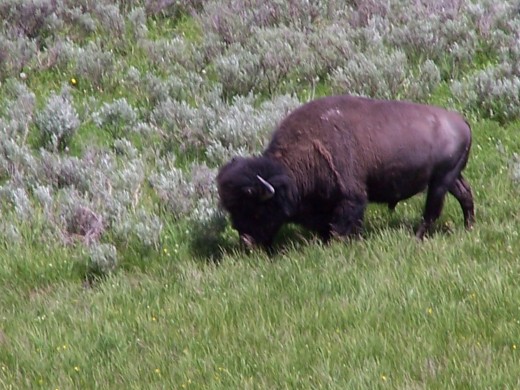

The Majestic Beasts
We had been following the Platte for two days when we saw our first bison. It was a hot morning, no wind to speak of, the dust from the wagons rising and then seeming to just float in the air, head high, making breathing a chore, everyone with their heads down, hoping to lessen the effect of it.
Laura was the first to spot it, a giant cloud of dust off to the south, maybe a mile away, maybe further, and the longer we looked at that cloud, the larger it became until we could see a black form under it, a moving black form, stretching for hundreds of yards in every direction. Jeremiah Jackson, our guide, halted the train, yelling up and down the formation to stay with the wagons, everyone up onto the wagons, no sudden moves now, easy as she goes, pilgrims, it will be all right, and then we saw them, thousands of bodies, maybe tens of thousands, racing towards us, that cloud following them, and then by God the ground started shaking under us, so great was the herd, so powerful they were, there seemed no stopping them as they came closer, two-hundred yards, one-hundred yards, fifty, moving faster than I thought possible for an animal that size.
Women started screaming, children crying, men grabbed their rifles and took aim, Jackson doing his best to calm our nerves, but calm was in short supply by that time. I could feel the fear in the air, thought to myself it was one hell of a place to die, twenty yards, and then some unheard message signaled to them all as they veered, as one, south, a majestic turn of majestic beasts, like a flock of geese in formation, the southern horizon blotted out by the mass, all screaming and crying silent as we collectively held our breaths, the cloud of dust washed over us, and then it was over.
My heart was in my throat. I willed myself to calm down, no worries, the excitement was over, looked around at our fellow travelers, amazingly no injuries, no trampling, only tears of thankfulness, looks of wonder, some saying silent prayers, their mouths moving but no sound escaping, a conversation with God, giving thanks for sparing us all as the sun continued to beat down and the smell of fear floated north with the dust.
“There were so many of them, Pa,” my son said, his tiny voice at odds with the vastness surrounding us.
“Yep! I reckon more where they came from. I’m told there are millions out here on the flat land, trapped between the Rockies to the west and the Missouri behind us, over a thousand miles for them to roam free.
“Are they friendly, Pa? Maybe we could have a couple pull our wagon instead of the oxen.”
“I don’t think so, son. The wild isn’t meant to be tamed, only admired. Seems to me God would frown upon any attempts to put a harness on an animal such as that.”
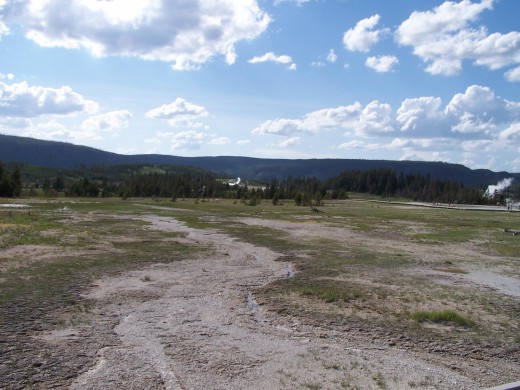

The Illness Spreads
Five sick as of that afternoon. Fierce diarrhea, stomach cramps, we could hear the moaning as we stopped for a spell under a rare canopy of trees along the Platte, the shade so comforting while the mosquitoes snacked on our dust-caked arms and necks.
“Nobody knows what’s wrong with them, Joshua,” Laura said to me. “They can’t keep any food down, water flows right through them, and I’m told two are near death right now. Doc Adams is giving them all whiskey and vinegar, supposed to help with stomach ailments, but so far it’s making no difference.”
I looked up at a sky so bright blue as to hurt my eyes. Heat shimmered on the land, as if it were a living thing, rippling in waves, distorting my vision, making me rub my eyes and question my own eyesight. A hawk flew overhead, a small rodent in its beak, brown wings against the blue sky, gracefulness and death locked together over a land as unforgiving as hell itself.
“Let’s get the oxen some water, Laura. Make sure the children don’t go anywhere near the sick wagons. If we don’t know what’s causing it, we best be staying far away from its source. It’s a tough land, wife, and I aim for us to be tougher and smarter. We’ll gather water for us to drink from fresh streams that enter the Platte. I don’t much like the looks of that Platte water, so make sure the children know not to drink it.”
She nodded.
“How much longer before we see a fort, Joshua?”
“Jackson was saying last night that Fort John is about three-hundred miles dead west from here, so say twenty days, maybe, if all goes well.”
I could tell from her beautiful face she didn’t much like that answer. I couldn’t rightly say I blamed her for those feelings.
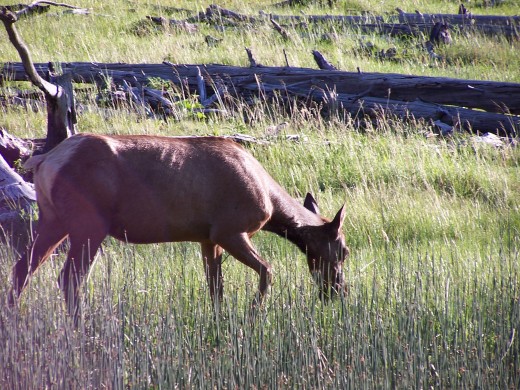
The Magnificent Oxen
We had named our oxen Clyde and Gert, no particular reason, just names the children liked. Oxen are magnificent creatures, certainly not in appearance but more so in temperament. They are gentle giants, docile, but as strong as you could ever hope for. I had no concerns about the children being around them, none at all, not like a spooky horse or an unpredictable cow. They demanded little, water on the breaks, grazing when the day was done, a handful of grain as their reward for a job well done. We treated ours well, our hopes and dreams riding along their strong backs, for dead oxen meant the end of the journey.
Lisa and Samuel pointed out a small colony of prairie dogs, one standing sentry while the others looked for food, curious little creatures, reminding me somewhat of squirrels without tails, a high-pitched chittering coming from their colony as they watched us from a distance, and a good hundred yards away six antelope broke cover from the brush, spooked by something, their thin legs carrying them at speeds hard to imagine, not so much running as hopping and flying, over a swell in the land and they were gone in a blink. Several minutes later we saw the reason for their alarm, two coyotes came into view, ragged, scrawny, on the hunt, hoping to find the weak or infirmed, nature’s reminder that the death of one meant life-sustaining for another, just the way it was and always will be.
Two shots rang out, members of the train hoping for a fresh kill, not much chance of hitting anything with their muskets from a hundred yards, more a distraction from the tedious nature of the journey, and then Jackson signaled the rest was over. In formation the wagons began, once again, to kick up dust and announce to the other inhabitants of that inhospitable land that visitors were coming, invited or not, welcomed or not, following the sun one step at a time.
AUTHOR’S NOTE
It is estimated that over 400,000 people traveled over the Oregon Trail from 1843 to 1869, making the 2,100 mile journey in approximately six months. Most walked. Many died. This series of short stories is in no way a glorification of their journey, but rather an attempt to make sure they are never forgotten and always appreciated.
2017 William D. Holland (aka billybuc)