How Should You Vote

Voting – Not just a Right but a Responsibility
As we
once again draw close to the election season and the constant barrage of media
election analysis, let us be vigilant and educated about the choices we make
and the votes we cast. Our right to vote
is a huge responsibility and one that perhaps we take far too lightly. We like the way a guy looks or talks so we
decide to vote for him, but then we fail to really listen to his words. The proposals all sound like great ideas but
we do we understand the long range ramifications of these proposals? Do we comprehend both the pros and cons of each
debate? Do their words really matter?
What do we know about our rights? Do you feel as though you understand your rights and are knowledgeable about them? Perhaps the better question would be - are you satisfied with the way that Congress and the government treat your rights?
When we are told to just pass a bill so we can finally find out what is in the bill, do you feel as though you were just told that you aren’t smart enough to understand the bill, or important enough for your opinion to count? Does that make you feel that perhaps you are considered less than worthy of their notice?
Not knowing how any one else would answer these questions or how partisan you, as a citizen, feel about it all, I question our methods of voting. I am, however, certain that many Americans are concerned about preserving the integrity of our Constitution and our individual rights as spelled out in the Bill of Rights.
We have Congressmen, on the record, stating that they don’t pay much attention to the Constitution anymore. Really? Didn’t they swear in their oath of office to uphold and defend the Constitution above all else? Did I miss something that let them off the hook?
The Patriot Act - Who really Cares and Why?
Bitter complaints were all the rage during the last administration, when President Bush passed the Patriot Act. Yet, those complaints seemed to vanish as President Obama took office and not only continued the practice but actually strengthened the Patriot Act, giving himself even more power to act from the White House, bypassing Congress and the issue of separation of powers. So, are we really concerned with the actual violations of our rights or is it just that we are concerned over who is infringing on them?
Another example would be the hiring of what has now been termed czars and the presidential or executive orders. Within our Constitution is built an avenue for such actions, falling under the jurisdiction of Congress, to oversee and approve. By the president using these executive privileges, he bypasses the oversight of Congress.
Under former President Bush, Congress and those who opposed his administration, vehemently complained and protested his hiring of czars and his edicts made by executive order. Yet, while those same objections are obviously relevant in this administration, the dissenters are unusually quiet. So again I ask, is it the policy that we oppose or is it the one who uses the policy that we oppose?
Why Amend the Constitution?
When our Constitution was written, the character of the men leading our country was often questioned, much like it is now. The words they spoke and the writings that they published meant something to all of the people and so, had to encompass a fair measure to everyone. There was no thought of favoring one group of individuals over another. All men were created free and equal.
While the emphasis was on property ownership and the rights given accordingly, the premise held true for all. Without a long discussion about it, I grant that not all men were considered equal. Corrections were later made to incorporate all men and women.
In their quandary over the wording of the Constitution and the Bill of Rights, our Founding Fathers saw the potential for corruption, perhaps more clearly than we see it now. What we accept as status quo, they would be appalled at. Pork barrel spending, entitlements, lobbyists and strong federal control were concepts that they not only warned us about but fought as well.
Balancing the influence of the wealthy and the needs of the poor are nothing new. Americans in the late 1700’s faced the same issues that we face today. It was their concern for the average citizen that tempered all of their decisions, giving the voice of authority to the people and not the government.
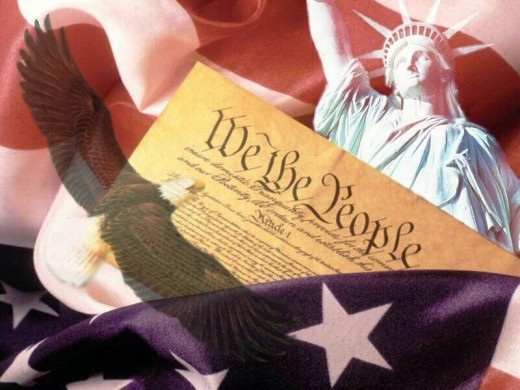
It has taken many years, but that voice is not nearly as authoritative as it once was. We, as a people, have allowed our voices to fade, which in turn, has allowed the government to expand.
While there are some Americans who favor the idea of a strong central government; it was not the intention of our founders to allow or to sanction such expansion.
Almost every amendment made to the Constitution was needed to protect man against man, whether it was intended for the man in government against the man on the street or the powerful man of business against the individual. The innate corruption of man has dictated that we continually change our laws.
The influence of the wealthy and powerful to manipulate votes still hasn’t been addressed. As they say, money doesn’t buy happiness; but it sure buys elections. With the moral decline that we face everyday, the influence peddling proves that the need for regulations will remain strong. Thus a certain amount of federal control is needed.
The Free Press is Dead
Where does the average citizen fit into this? How do we lift our voices so that once again the will of the people carries real authority? The only answer is by voting intelligently. Know what you are voting for. Know who you are voting for. In years past, the press dug for information about the candidates and every bill up for a vote.
They excelled at exposing the dirty little secrets of each one of the candidates. They presented both sides of every argument. The job they did was considered so important that they were dubbed the Fourth Estate. They carried a tremendous burden to shine a light on the hidden secret agendas of those we placed our trust in.
But as we have seen, in recent years, the bias of the press has taken root. When a story that is important isn’t told because it might hurt the image of the guy they want to win, when an average citizen is taken to task and humiliated by the press just for asking an unpopular question, or when the negative impact of a bill isn’t presented because the press wants the bill passed for their own advantage, we know with a certainty that a fair and free press is dead.
You Have to Think Before you Vote
So, it is up to you and me to discover the answers to the questions we have about each candidate and each proposal. This is not only your right to choose; it is your responsibility. That’s how it works. With information freely offered on the internet, it becomes your job to seek the education you need to make intelligent choices.
We risk too much by voting for the guy who looks good on TV or the guy who smooth talks us into voting for him. We need more than sound bites. We need real character. We need to know that our rights are important to those who seek to govern. America needs each one of us to understand the importance of an educated choice, and an intelligent vote.
Starting with the Founders throughout our history we have always known what the Constitution means to the American people.
"The Constitution is not an instrument for the government to restrain the people, it is an instrument for the people to restrain the government -- lest it come to dominate our lives and interests."
-- Patrick Henry
"The strength of the Constitution lies in the will of the people to defend it."
-- Thomas Edison
"The government was set to protect man from criminals -- and the Constitution was written to protect man from the government. The Bill of Rights was not directed against private citizens, but against the government -- as an explicit declaration that individual rights supersede any public or social power."
-- Ayn Rand
"Good intentions will always be pleaded for every assumption of authority. It is hardly too strong to say that the Constitution was made to guard the people against the dangers of good intentions. There are men in all ages who mean to govern well, but they mean to govern. They promise to be good masters, but they mean to be masters."
-- Daniel Webster