ArtsAutosBooksBusinessEducationEntertainmentFamilyFashionFoodGamesGenderHealthHolidaysHomeHubPagesPersonal FinancePetsPoliticsReligionSportsTechnologyTravel

Jute fiber is used to make natural materials and green products

Updated on December 12, 2012
Source

Copyright 2012 - Kris Heeter, Ph.D. (reposting, copying, or republishing this article in part or in whole is prohibited)


Exploration of natural fibers for new bio-based products is a growing industry. Those fibers that come from renewable resources are becoming increasingly popular.

Scientists and companies are turning to plants that grow quickly and from which fiber, rich in cellulose, can be easily extracted. Jute is one example of a plant that meets these criteria.

Jute has been used and traded for centuries in Eastern and Far Eastern countries. Early industrial use dates back to 1833 in Scotland where jute fiber was first spun mechanically. The first jute mill was later built in India in 1855.

Source

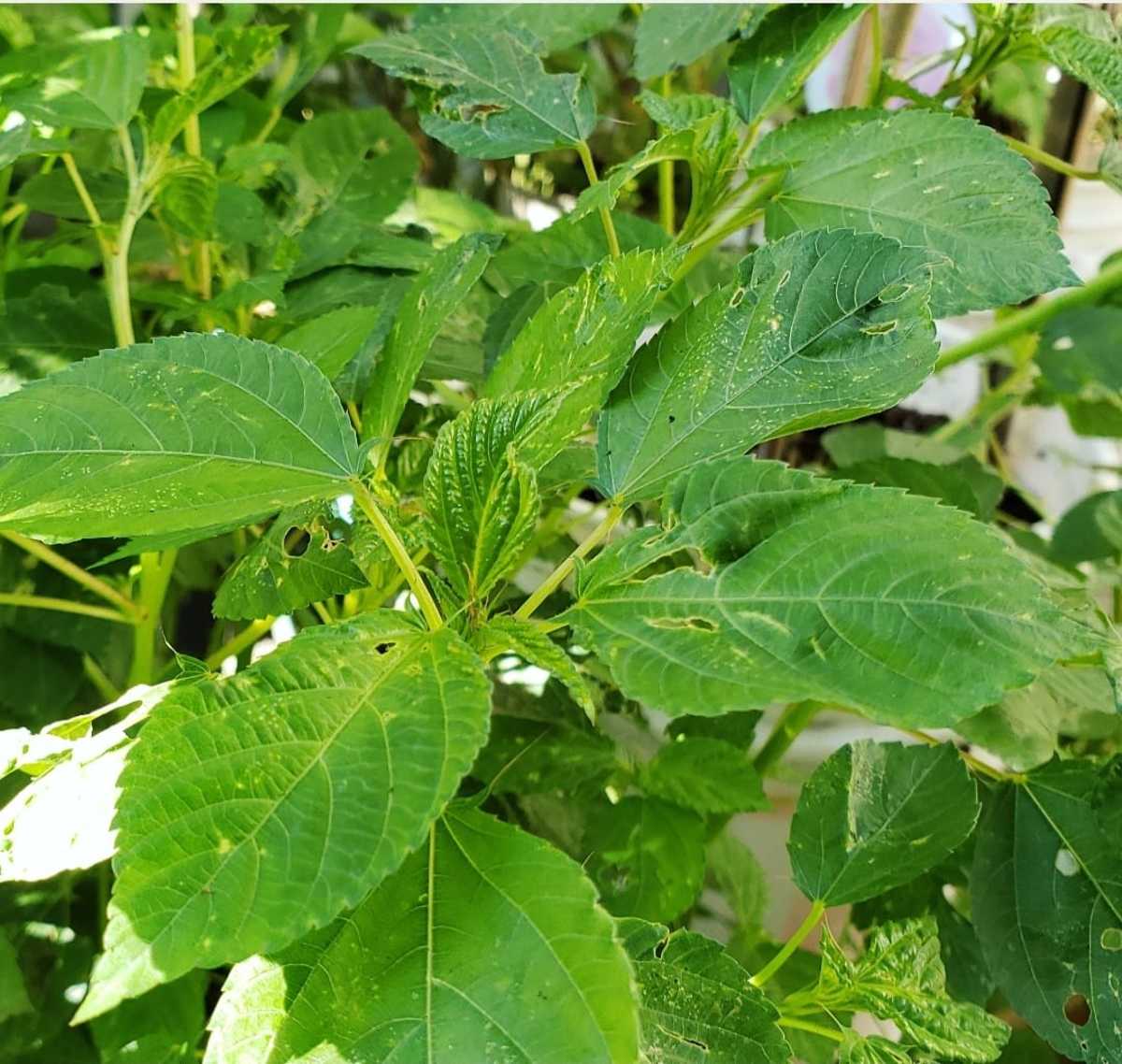
The Jute Plant - Corchorus capsularis and Corchorus olitorius

Jute fiber is extracted typically from two herbaceous annual plants, Corchorus capsularis and Corchorus olitorius.

Corchorus capsularis is known as "white jute" and Corchorus olitorius is referred to as "tossa jute".

Jute originated in Asia and Africa and it is now is grown mainly in India, Bangladesh, Nepal, China, and Thailand.

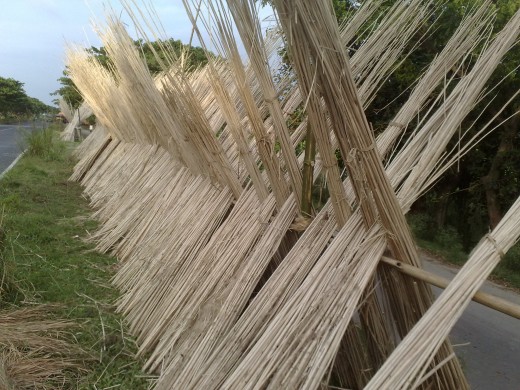
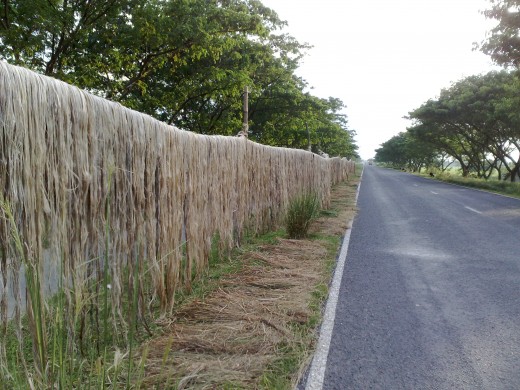
The plants are harvested by hand, dried, and then undergo a period of “retting”. Retting is a essentially a rotting process. Micro-organisms and moisture on the harvested plants to facilitate the cellular decay and leave cellulose fibers behind.

The fiber collected from jute plants is considered a "bast fiber" – fibers collected from the skin or bast of the plant. Other bast fibers used for natural products includekenaf, hemp, ramie, and flax.

Once collected, the fibers are graded for a number of factors:

  • color
  • length
  • uniformity
  • cleanliness,
  • strength
  • softness
  • luster

After it is graded, it can be used to make a number of different natural products.

Source

Natural Jute is Used to Make Sacks, Rugs and Carpet

Some of the more popular products made from jute fiber include natural area rugs and carpets.

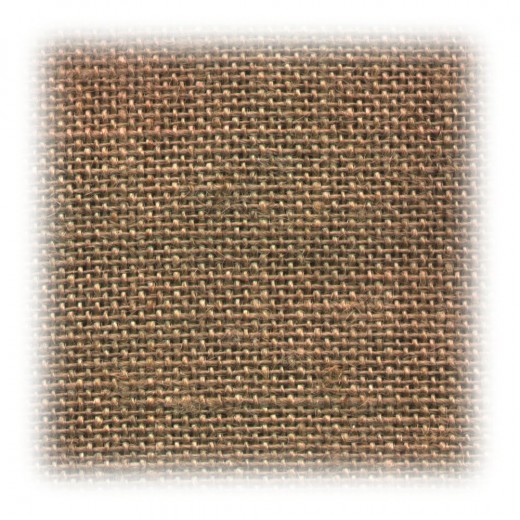
Natural jute ranges in color from light tan to a reddish brown. The natural fiber woven into area rugs is very durable and creates a beautiful natural floor covering.

Jute is often used as the backing to carpet rather than in the surface of carpet. It is also a popular material in some countries for prayer rugs.


Other Natural Products Made From Jute Fiber

Jute fiber can be used alone or blended with other natural fibers to create green products, for example:

  • Handbags
  • Rope
  • Twine
  • Paper, including cigarette paper

Jute handbags have become popular not only because jute fiber is environmentally friendly but also because it is durable.

Using jute to create pulp for paper has many advantages. The paper making process uses less chemicals and consumes less energy than making traditional wood pulp in the pulping process.


Is Jute Soft?

The answer to that question is not black and white!

Jute fiber itself is long, soft and shiny.

Tossa jute fiber is softer, silkier, and stronger than white jute. The fiber from either plant is spun into coarse, strong threads that is used to make a fabric and common jute fabric is not really considered soft.

However, very fine threads of jute can be separated out and made into imitation silk which can be much softer.


Jute Fabric

Jute fabric is used primarily for wrapping bales of raw cotton and for making a coarse cloth or burlap (also called hessain cloth). Jute woven fabric can also be made into curtains and chair coverings.

Natural jute burlap can be purchased in rolls of varying widths. It is often marketed as an eco-friendly cloth that can be used for window displays, floral arrangements and other craft projects.


Other related articles of interest:

New Being Explored

India is the leading producer of jute fiber. In collaboration with the United Nations Development Program, the Indian government is researching new uses for jute. The possibilities include fine yarns, composites, and paper.

With regard to composites, jute is being evaluated for use in molded composites with thermoplastic materials that can be used in automobiles.
working

This website uses cookies

As a user in the EEA, your approval is needed on a few things. To provide a better website experience, hubpages.com uses cookies (and other similar technologies) and may collect, process, and share personal data. Please choose which areas of our service you consent to our doing so.

For more information on managing or withdrawing consents and how we handle data, visit our Privacy Policy at: https://corp.maven.io/privacy-policy

Show Details
Necessary
HubPages Device IDThis is used to identify particular browsers or devices when the access the service, and is used for security reasons.
LoginThis is necessary to sign in to the HubPages Service.
Google RecaptchaThis is used to prevent bots and spam. (Privacy Policy)
AkismetThis is used to detect comment spam. (Privacy Policy)
HubPages Google AnalyticsThis is used to provide data on traffic to our website, all personally identifyable data is anonymized. (Privacy Policy)
HubPages Traffic PixelThis is used to collect data on traffic to articles and other pages on our site. Unless you are signed in to a HubPages account, all personally identifiable information is anonymized.
Amazon Web ServicesThis is a cloud services platform that we used to host our service. (Privacy Policy)
CloudflareThis is a cloud CDN service that we use to efficiently deliver files required for our service to operate such as javascript, cascading style sheets, images, and videos. (Privacy Policy)
Google Hosted LibrariesJavascript software libraries such as jQuery are loaded at endpoints on the googleapis.com or gstatic.com domains, for performance and efficiency reasons. (Privacy Policy)
Features
Google Custom SearchThis is feature allows you to search the site. (Privacy Policy)
Google MapsSome articles have Google Maps embedded in them. (Privacy Policy)
Google ChartsThis is used to display charts and graphs on articles and the author center. (Privacy Policy)
Google AdSense Host APIThis service allows you to sign up for or associate a Google AdSense account with HubPages, so that you can earn money from ads on your articles. No data is shared unless you engage with this feature. (Privacy Policy)
Google YouTubeSome articles have YouTube videos embedded in them. (Privacy Policy)
VimeoSome articles have Vimeo videos embedded in them. (Privacy Policy)
PaypalThis is used for a registered author who enrolls in the HubPages Earnings program and requests to be paid via PayPal. No data is shared with Paypal unless you engage with this feature. (Privacy Policy)
Facebook LoginYou can use this to streamline signing up for, or signing in to your Hubpages account. No data is shared with Facebook unless you engage with this feature. (Privacy Policy)
MavenThis supports the Maven widget and search functionality. (Privacy Policy)
Marketing
Google AdSenseThis is an ad network. (Privacy Policy)
Google DoubleClickGoogle provides ad serving technology and runs an ad network. (Privacy Policy)
Index ExchangeThis is an ad network. (Privacy Policy)
SovrnThis is an ad network. (Privacy Policy)
Facebook AdsThis is an ad network. (Privacy Policy)
Amazon Unified Ad MarketplaceThis is an ad network. (Privacy Policy)
AppNexusThis is an ad network. (Privacy Policy)
OpenxThis is an ad network. (Privacy Policy)
Rubicon ProjectThis is an ad network. (Privacy Policy)
TripleLiftThis is an ad network. (Privacy Policy)
Say MediaWe partner with Say Media to deliver ad campaigns on our sites. (Privacy Policy)
Remarketing PixelsWe may use remarketing pixels from advertising networks such as Google AdWords, Bing Ads, and Facebook in order to advertise the HubPages Service to people that have visited our sites.
Conversion Tracking PixelsWe may use conversion tracking pixels from advertising networks such as Google AdWords, Bing Ads, and Facebook in order to identify when an advertisement has successfully resulted in the desired action, such as signing up for the HubPages Service or publishing an article on the HubPages Service.
Statistics
Author Google AnalyticsThis is used to provide traffic data and reports to the authors of articles on the HubPages Service. (Privacy Policy)
ComscoreComScore is a media measurement and analytics company providing marketing data and analytics to enterprises, media and advertising agencies, and publishers. Non-consent will result in ComScore only processing obfuscated personal data. (Privacy Policy)
Amazon Tracking PixelSome articles display amazon products as part of the Amazon Affiliate program, this pixel provides traffic statistics for those products (Privacy Policy)
ClickscoThis is a data management platform studying reader behavior (Privacy Policy)