How To Stop Your Child From Bullying

Bullying is a learned behavior, a combination of aggression and power. By using aggression, bullies find they can get the power they want. The bully gains status and also a certain type of popularity, often fear based. Bullies quickly learn how to intimidate.
Although the reasons some children become bullies are not totally understood, we do know something about their possible origins. Bullies come from families where little affection and warmth are shown, and where physical punishment is common. Their lives are poorly monitored, and they often feel rejected. Bullies may have rigid, punitive parents. Bullies may also have been bullied themselves.
Bullies choose as their victims those that appear to present easy targets, those that stand apart and are often neglected by others. However, this is only the general choice. Sometimes there is no apparent reason why a victim is chosen. If a bully can gain a support group, literally anyone can become a victim.
Although bullying can be present in any age group, it generally first appears in elementary school. It is estimated that about one in every five children are bullied to some extent during their school years.
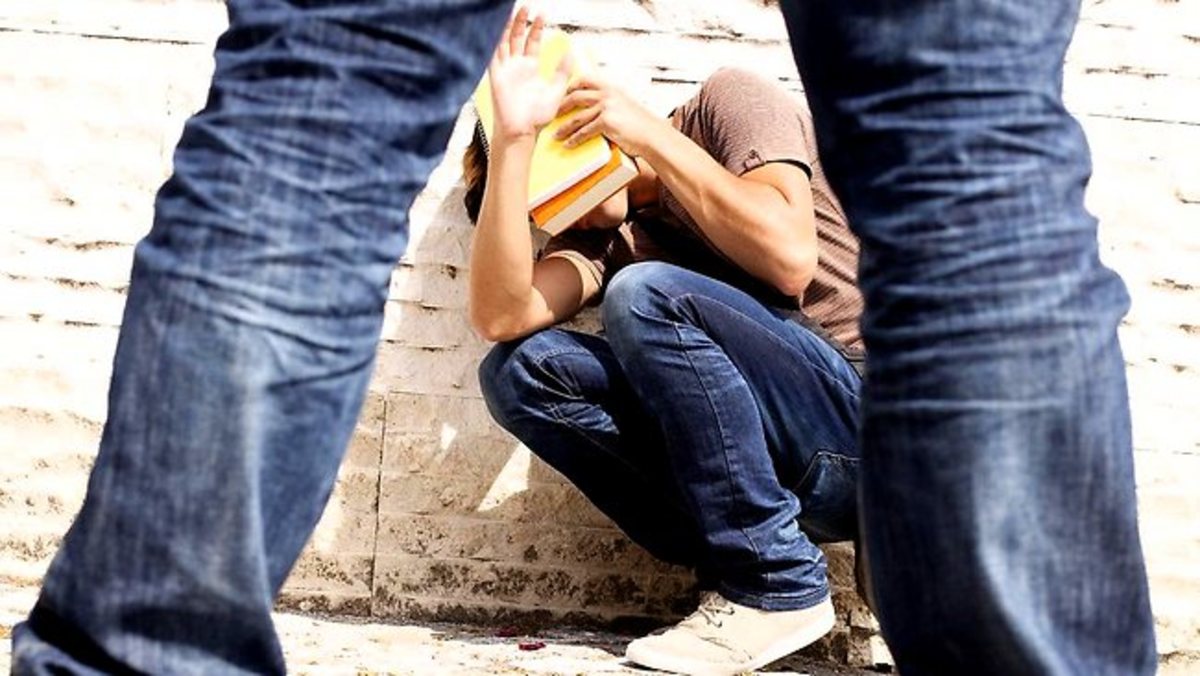
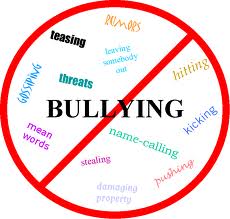
The old idea was that bullying was an inevitable part of growing up, something we all experience and something we must learn to tolerate. This idea has changed. Bullying causes a myriad of results, all of them harmful. Bullying causes not just physical injury but also self-loathing, absenteeism, depression, bulimia, drug and alcohol abuse, mental breakdown, suicide, and death. Some victims lash out at others, perpetuating the practice. Bullying by boys tends to be more physical, hitting, punching, kicking, and tripping while girls tend to go for emotional bullying, gossiping, teasing, and excluding. One form is as damaging as the other. Why has this gone on so long?
Unfortunately, some parents take pride in their bullying child, their tough guy, the son who won't be pushed around, won't take anything from anybody, or the daughter who 'has a real mouth on her'. Bullying has also grown as, for some reason,"telling" has taken on only a negative connotation. Children must be taught the difference between telling because someone needs help, or simply tattling because they want to cause trouble. Parental indifference is another factor that has allowed the practice of bullying to become rampant.
Bullying causes damage not only to the victim, but to the aggressor, and to the witnesses. The bully learns that aggression and meanness are effective tools for gaining power. The victims suffers all the anxiety and other miseries mentioned above, and the witnesses, fearful of becoming the next victim join in, or keep a shameful silence.
Unfortunately, most bullying takes place when adults are not present. It is unrealistic to expect children to deal with these problems on their own. You must watch for any signs that your child or others are being bullied. Are they exhibiting an unreasonable number of cuts and bruises, torn clothing or schoolbooks. Are their grades dropping or are they avoiding school, playing sick, or choosing to stay indoors. If you see any of these signs, you must bring up the subject of bullying, talk to your child's teachers, principal, the school psychologist, anyone and everyone, until the problem is resolved. All the children and their parents involves must meet together with an experienced mediator to understand and solve the problem. This is not easy, especially if the bully's parents are uncooperative, but it is vital if your child is to grow up confident, and healthy in mind and spirit. Bullying is a serious and growing problem and must be addressed.
Bullying cannot be stopped by just a few concerned parents. The whole community must be involved. Parents must enlist the aid of other parents, to approach school authorities, community centers, churches, police and any other organizations that deal with children and youth.
If you see bullying in your own home, discuss it with the children involved. Let everyone tell their story and how they feel about what they have done or what has been done to them. Do not emphasize the laying of blame, but make sure that a solution is found in which the victim is compensated. A 'sorry' is not enough. Some minor privilege might be allotted. Children do not have to like one another but they must be taught to be kind and tolerant towards one another.
I once saw an excellent program dealing with bullying in a school where I volunteered. The school was in a poorer area with a lot of problems. The anti-bullying program was set up with the cooperation of the principal, teachers, and most parents. It was a program called "Zero Tolerance" There was to be no bullying of any kind anywhere on school grounds. Children where taught the difference between a 'put down' such as "Don't you know anything" and a 'put up' such as "That's hard. If you want, I'll help you with it." Each 'put down' had to be followed by two 'put-ups'. The first year of the program was pretty tough going but in the second year, things really got moving. The children seemed happier and there were more friendly exchanges. The ripple effect seemed to be moving outward. Reports of bullying became rare.
Parents need to take the victimization of children by other children seriously and work together with other parents, as well as school and community resources, to find workable and lasting solutions.
If you want to understand the terrible tole that bullying has taken, go to the site below.
http://www.jaredstory.com/bully.html