Herbs and Spices
81More about Herbs and Spices
|
James Beard's American Cookery
Price: $14.09
List Price: $25.99 |
|
|
Crockery Cookery
Price: $3.90
List Price: $7.50 |
|
Puerto Rican Cookery
Price: $15.66
List Price: $24.95 |
|
|
Woodstove Cookery: At Home on the Range
Price: $6.78
List Price: $12.95 |
Why I love to use herbs and spices
One of the most wonderful meals I've eaten was in Portugal, on a windswept cliff overlooking the Atlantic. It was late spring, one of those pale warm days that are so full of expectation. The food was simple and perfect - a soup laden with garlic, a piece of charcoal-grilled fish flavored with fresh cilantro. The taste of the cilantro was memorable, and typical of Portuguese cooking. If I'd been eating grilled fish in Italy, probably rosemary or thyme would have been used.
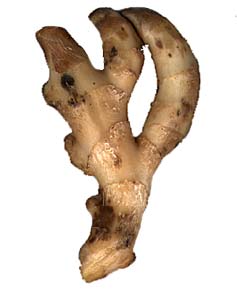
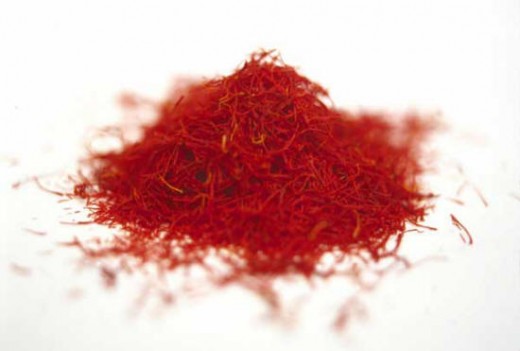
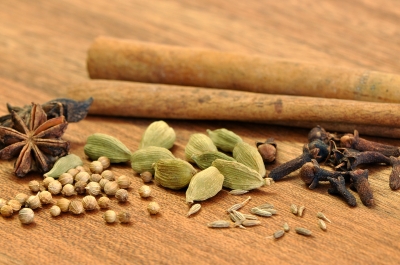
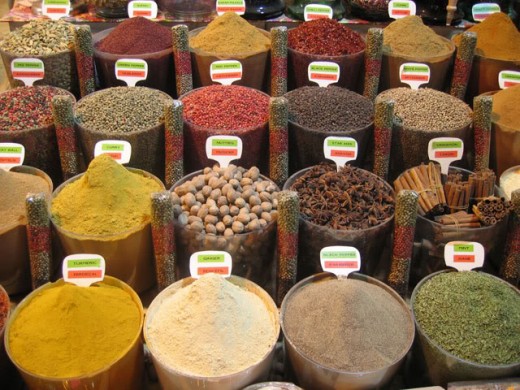
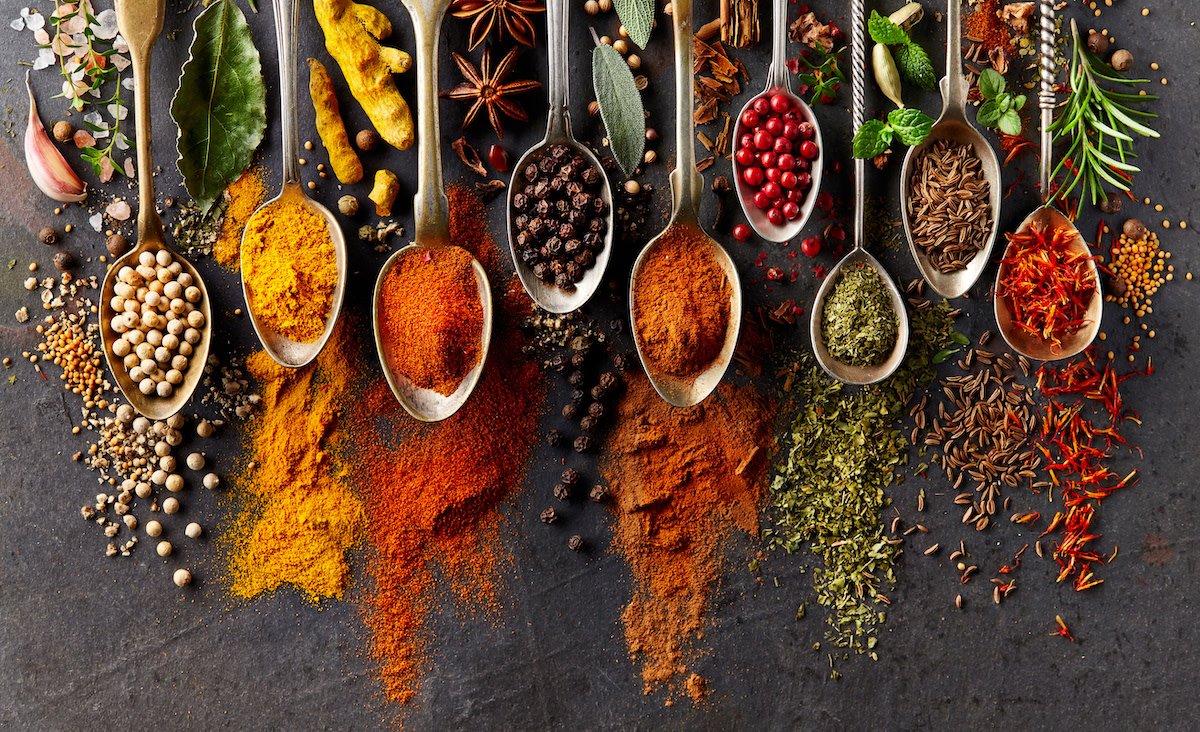
The flavors and the aromas of dishes depend very much on herbs and spices. And the choice of herbs and spices is determined by the place as well as the particular food. We associate chervil, tarragon and marjoram with France; cumin and the other curry spices with India; allspice with the West Indies; fresh ginger with Asia. And, of course, some spices and herbs are essential to a dish: no self-respecting Italian or Spanish cook would dream of making a risotto or paella without saffron, for instance. Tradition plays an important role in the kitchen.
The traditions are based on centuries of wise experiment, and on what is fashionable. This is particularly true when it comes to herbs. Until very recently, spices were expensive, highly prized commodities and in some cases worth more than their weight in gold. Products with such economic importance rarely are allowed to disappear from the market place. But herbs have never cost much, and the dividing line between a "weed" and an herb is a fine one. Dandelion, lovage and salad burnet, for example, were much used up until the end of the last century, then their culinary importance was all but forgotten, which is a pity, as many of the more unusual herbs are excellent included in salads.
Herbs are often added as a garnish. Flowers used to be, and once more it's time to strew them in your salads and on desserts. Good food should taste wonderful and look beautiful.
Watercress Soup with Marigolds
Makes 6 servings :
- 2/3 cups of dry chick peas (soak for 2 hours, boil for 10 minutes, simmer for 40 minutes)
- OR medium sized tin pre-cooked chick peas
- 3 sprigs of thyme
- 3 tablespoons of olive oil
- 1 finely chopped leek
- 2 finely chopped courgettes
- 1 finely sliced carrot
- 2 tablespoons finely chopped parsley
- 4/5 cups stock (vegetable or chicken)
- 3 cups finely chopped watercress
Put the oil into a large saucepan and add leeks, courgettes, carrots, parsley and chick peas. Cover and cook over a gentle heat to soften the vegetables. Add the stock and simmer until the vegetables are cooked. Add the watercress.
Purée the soup until smooth - if it is too think add a little more hot stock.
Garnish with marigold petals and serve immediately.
Parsley
General Information
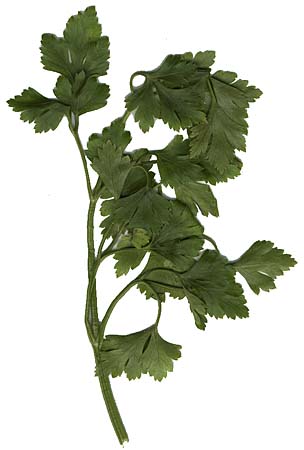
In legend, the ancient Romans used parsley (Petroselinum crispum) to counteract drunkenness. In Greece, however, it was a symbol of death. It was used there as a grave decoration, but garlands of parsley were also awarded at games. These games, however, arose from games played at funerals, so even in this case, the herb was linked to death. By the Middle Ages, parsley was associated with death and the devil in folklore, and transplanting the herb was thought to bring tragedy.
Nonetheless, parsley, with its mild taste and pretty, fresh, green leaves, is one of the most commonly used kitchen herbs. In the past, parsley was an ingredient for medicines and herbal cures, but today it appears throughout the year as a useful garnish and flavor in a variety of savory foods. Parsley is a hardy biennial, but it is often grown as an annual to keep the kitchen in fresh supplies. If grown as a biennial, parsley will flower and set seed in the second year, and then the leaf quality deteriorates before the whole plant dies.
Parsley is normally grown from seed, but it is very slow to germinate and can sometimes take three or four weeks to appear. Soak the seeds overnight before planting, or water them with hot water after they are planted to speed up germination. It is often best to sow seeds in trays or pots and then transplant the seedlings when they appear. Grow parsley in good soil and keep it well watered. Protect the herb from hard frost and severe weather during the winter to maintain the plant and provide a crop throughout the year. If it is easier, pot a plant and keep it in a greenhouse. Parsley also grows very well in window boxes.
The origins of the parsley plant are much disputed. Some say it is a native of Sardinia, others claim it originated in the eastern Mediterranean. One thing is certain -- parsley is indispensable in the kitchen, and it is essential to have a constant supply on hand to enhance your cooking. It helps to bring out the flavor of other herbs and is therefore always included in a bouquet garni and in other herbal mixtures.
Serving Suggestions
It is often put into a dish at the beginning stages of cooking. More parsley is added, finely chopped, as a garnish at the end. A light parsley soup is delicious in summer, and whole stalks of the herb are sometimes fried and served as a vegetable. Parsley is probably the most popular garnish.
Rich in vitamins A and C and certain trace elements, such as iron and calcium, the herb has many medicinal uses. It was once widely used for liver and kidney complaints. The flavor is most concentrated in the stems, which can be added whole to stocks and soups and removed before eating. It is rarely used as the main ingredient in a recipe, except in relishes or salsas.
Parsley can be used in generous quantities in soups, sauces and stuffings, or as a garnish for shellfish, fish, meat, poultry, game and vegetable dishes. Parsley sauce is a traditional accompaniment for fish. There are few American recipes which use parsley on its own, but the herb is used in great quantities in the Middle East, particularly in the well-known bulgur wheat salad, tabbouleh.
Varieties
There are two main kinds of parsley: curled-leaf, grown extensively in America, England, Australia and New Zealand, and the flat-leaf, often called Hamburg or continental parsley. Curled-leaf parsley is the most decorative and makes a small, round hummock of bright green. It is a popular garnish. Flat-leaf parsley is a more straggly plant with weaker stems. A keen cook is likely to want both sorts of parsley, in quantity.
|
Indoor Culinary Herb Garden Starter Kit- Start Growing Fresh Cooking Herbs & Spices- Great Gift Idea!- Seeds: Parsley, Thyme, Cilantro, Basil, Dill, Oregano, Sweet Marjoram, Chives, Savory, Garlic Chives, Mustard, Sage
Price: $32.95
List Price: $34.95 |
|
Chia Gourmet Herb Garden
Price: $14.99
List Price: $18.35 |
|
Growing Chinese Vegetables in Your Own Backyard: A Complete Planting Guide for 40 Vegetables and Herbs, from Bok Choy and Chinese Parsley to Mung Beans and Water Chestnuts
Price: $8.81
List Price: $16.95 |
|
|
Window Sill Garden Kitch Herbs
Price: $13.62
|
I Love Using Herbs and Spices
- Sorrel
The fresh, bright green leaves of sorrel are some of the earliest to appear in the herb or vegetable garden. They look similar to spinach, but are more narrow with longer leaves. - Sorrel Recipes
Two of my favourite recipes : Sorrel and Asparagus Crepes and Sorrel Tart - Coriander
Coriander - my personal favourite herb, plus a recipe for Coriander and Lime sauce. - Parsley
In legend, the ancient Romans used parsley to counteract drunkenness. In Greece, however, it was a symbol of death. More ... plus a recipe.
PrintShare it! — Rate it: up down flag this hub
Comments
Hi Chris - I'm VERY new here and you are my first visitor. Thank you. I shall be writing a lots about herbs and spices with recipes that I have collected over many years of travelling and eating !
that sounds great Iphigenia. And welcome to Hubpages!
btw, you migth want to put pictures to go with the text to make it all the more interesting. :D
Hi Chris - thanks for the advice re: using pictures. Will follow ... :)
Very nicely written and tasty sounding.
Your watercress soup sounds lovely! I will be sure to try it! :)
Will look forward to your culinary travel experiences. That is half the fun of traveling to new places.......experiencing the different flavors that people use in their cooking along with learning about the history of the area and enjoying the scenery.
Love this hub! We just moved to rainy Hilo, in the Big Island HI, and one of the things i would love to do is grow herbs for our own consumption. What's the best way to plant them?
Hi IslandVoice - nice to meet you and thanks for reading and commenting. I don't grow many pices - they are so cheap to buy fresh here in the south of France - I do grow coriander from seed and always have a basil plant on the go. I guess you need to know your soil type and then find out what you can grow there. Although pots of herbs and spices are great - and easily moved to exploit weater conditions. I'm thinking of having a go at growing chillies ......
Thanks Iphigenia. My daughter say's 'everything' grows where we are because of the rain. Will do more researcning and experiment. We'll check out the fresh produce market too.


Cris A says:
10 months ago
I love experimenting with herbs and spices whenever I cook. And sometimes I do come up with perfect combos (at least for my taste) but the problem is I always forget to list what herbs I used. LOL Thanks for sharing this :D