Calorie Restriction Diet Plan

What Is a Calorie Restriction Diet Plan?
A calorie restriction diet involves following a strict regimen of counting daily caloric intake. Many diet plans involve cutting and counting calories, but there are a number of people who advocate calorie counting not simply as a weight loss tool, but as a lifestyle.
Dr. Oz (of Oprah fame) is one of the public figures who has come forward in support of calorie restriction. Tony Robbins, the motivational speaker and author, has also written extensively in support of it. There is evidence that calorie conservation can slow the aging process, but anyone considering a calorie restriction diet plan should weigh all the potential benefits and risks before adopting this nutritional philosophy.
How to Read a Food Label
Calorie Restriction Benefits
Research has indicated that calorie restriction (abbreviated CR) lowers blood pressure, bad cholesterol, and body fat percentage in humans. Since humans live relatively long, it's difficult to monitor the effects on aging, but CR-supporters have several animal studies to back up the claim that calorie restriction also promotes longer life. A study from the 1930's showed that rats on a reduced-calorie diet had a lifespan twice as long as their counterparts. A 2006 experiment found that a restricted diet lowered the incidence of Alzheimer's-like changes in the brains of squirrel monkeys.
There are several theories about why calorie restriction might increase lifespan. The most recent scientific findings indicate it might be that the low-level stress placed on the body by a reduced-calorie diet places it in a defensive state to survive what it perceives as famine, which helps protect it against the causes of aging. Dr. Oz has said that feeding your body less causes it to become more efficient with what it gets, which is an idea in a similar vein.
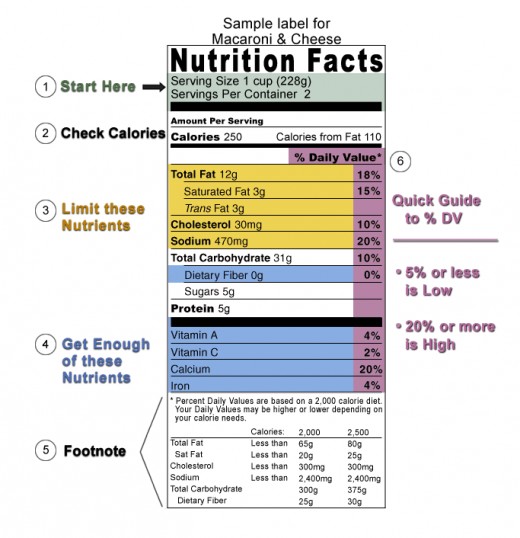
As far as benefits like lowered LDL cholesterol, body fat, and blood pressure, these are fairly easily explained by the fact that most citizens of Western countries are overfed (in terms of calories) in the first place. Being more aware of what you are eating, as you are forced to be when you're counting calories, changes the food choices you make. Looking at a nutrition label (above right) to tally calories forces you to look at the cholesterol, saturated fat, and sugar contents of your food. When you are on a calorie budget, you tend to pick foods with more "bang for their buck," nutritionally--foods that are more filling, with less excess calories. You may also consume more fruits and vegetables, with the natural nutrients your body needs to function optimally.
Risks of Calorie Restriction
One of the major and most obvious dangers in restricting calories is that malnutrition is extremely unhealthy and sometimes deadly. Some groups recommend between 1700 and 1800 calories a day, which is more in the reasonable range for adult women, but when calorie cutting is taken to extremes for long periods of time, it has devastating effects on your body. Another risk is that, even if you are taking in enough energy, you may not be getting all of the essential vitamins and minerals that you need for optimal functioning.
There are also mental and emotional side effects to calorie restriction. It can be difficult to count calories in restaurants and social settings. Obsessing about everything that passes your lips can add a lot of stress to your life, which may reduce your quality of life and your enjoyment of food itself. Calorie restriction can also be addictive. People with obsessive-compulsive tendencies or with bad body image can easily cross the line into the realm of eating disorders.
Should I Restrict Calories?
If you have an obsessive personality or have struggled with disordered eating or compulsive dieting before, it's a bad idea to tempt yourself with calorie counting. If you're looking for quick weight loss or an instant solution for all your health ills, you'll be disappointed. If you're going to beat yourself up or stress about moments where counting calories is simply impossible, don't put yourself in that position.
If you aren't an obsessive type and want to make a long-term commitment to change for the goal of health, rather than weight loss, you may receive some satisfaction from this lifestyle, but I highly recommend concentrating on portion control and balanced nutrition instead, and only under the supervision of a good doctor or licensed nutritionist.