Helping Your Child Become A Good Speller

Fame is a bee.
It has a song--
It has a sting--
Ah, too, it has a wing. Fame is a bee.
It has a song--
It has a sting--
Ah, too, it has a wing. - Angie Dickinson
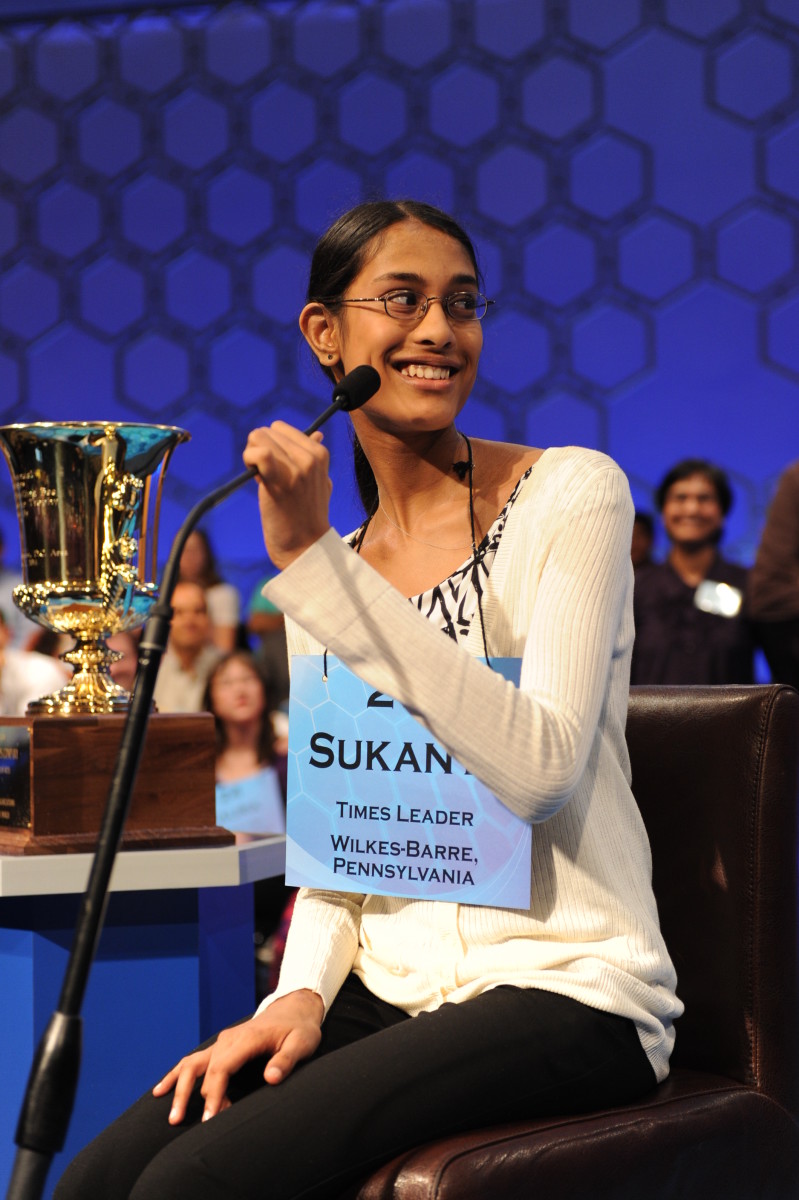
In this "plugged in" world in which we live, it's heartening to see that the Spelling Bee competition is still engaging the interest and participation of the nation's children. This year's competition proved that not only are the children interested in improving their vocabulary and spelling skills, but they are rising to the challenge of spelling more and more difficult words. Take a look at these: polatouche, rougeot, abhinaya and the word that made Sukanya Roy romp home with the championship trophy - cymotrichous, meaning "wavy hair." Could you use it in a sentence?
My long cymotrichous blew freely in the wind.
But all jokes aside, spelling is a dying art, not only among schoolchildren, but also among adults. Our absorption with television, the internet and the wide array of digital gadgets now on the market has made us callous about the way we spell. However, if you are a parent who values your child's education, you would do well to help him/her become a good speller. He does not have to learn words to win the spelling bee (unless he wants to), but he should be able to write a decent essay without relying heavily on the spell checker. In fact, when your child goes into the work place, the program he uses to write his reports may not have a spell checker. The one I use on my job does not, and I all too frequently hear co-workers asking, "how do you spell such-and-such?"
Parents can help their children learn to spell in the following ways:
1. Encourage your child to read. This is intrinsic to good spelling. A child who reads well, spells well. I did when I was a child (and still do) because both my parents encouraged me to read. Then they would select some of the more difficult words and have me spell them.
2. Use flash cards. You can purchase these from bookstores or office supply stores, or you can make your own. Just buy some construction paper and write the words on it with a marker, cut them out and give them to your child. This works well for younger children. Older children can copy words on to 3x5 cards and keep with them to refer to whenever they have the time.
3. Match words and pictures. Another valuable aid for younger children. These can be purchased, printed from online or you can make them yourself.
4. Play word games with your child. There are many word games on the internet. Some of them are printable, others have to be played online. You can also purchase Sudoku, scrabbles and crossword puzzles.
5. Shop for words. While on a trip to the grocery store, you can point out words in the aisles, depending on your child's age. Words such as dairy, vegetables, breakfast, toiletries, produce and others can keep your child occupied while you shop.
6. Hold their interest during car trips. Instead of your children asking "Are we there yet?" during a long car trip, you can have them look for and spell road signs along the way. Be sure to reward them for their effort at the end of the trip.
7. Don't knock the electronics. There are some electronic games that your child can write on and erase. This can be used as a teaching tool. Simply call a word and have your child write it on the game board. If he makes a mistake, he can erase and try again.
8. Have a game night. Getting together one night after dinner to play Scrabbles, Boggle, Buy word or one of the many board games available will promote family fun and help to improve your child's spelling and vocabulary.
These are just eight ways you can help improve your child's spelling. You may be able to come up with some more. If you do, leave a comment below and share with us.
- YouTube - Children's: Spelling 15 - Shapes
http://xoax.net Lesson page: http://xoax.net/childrens/Spelling15.php This children's spelling video teaches kids how to spell words that describe shapes: ov...