Trump The AUTHORITARIAN
I see the Right-Wing is on the attack again! This nut-job attacks Ilhan Omar while she is speaking about DHS and Trump terrorizing her constituents.
"After town hall attack, Ilhan Omar condemns ‘terrorizing’ immigration push and criticism from GOP"
Personally, I don't care much for her politics or some of things she says or does, but this kind of attack goes beyond the pale.
https://www.cnn.com/2026/01/27/politics … olis-trumpTrump, the Felon is proving how much he wants to stop people from voting. He has had his FBI invade the election offices in Atlanta looking for mythical, nonexistent evidence of nonexistent voter fraud.
The sign that we have lost our democracy to Trump's authoritarianism. "FBI searching Fulton County elections office as it investigates alleged voter fraud"
It is also a sign of Trump's psychopathy.
Oh, btw, "A review by the DOJ in Trump’s first term did not find evidence to support allegations of widespread fraud that could have changed the result of last month’s presidential election."
https://www.cnn.com/2026/01/28/politics … bi-warrantThe WAR PRESIDENT is on the attack again.
"Trump weighs major new strike on Iran as nuclear discussions show no progress"
https://www.cnn.com/2026/01/28/politics … ary-strikeI didn't realize this when SCOTUS decided we no longer live in America. One Conservative justice issued this statement regarding random stops of people on the streets for no particular reason other then the color of their skin or the language they spoke.
"“If the person is a U. S. citizen or otherwise lawfully in the United States, that individual will be free to go after the brief encounter,” Kavanaugh wrote." This was defending the right of DHS to stop a person based solely on what they look like or how they sound.
Kavanaugh totally misses the point of being an American living in a once free society. It is the "brief encounter" that is the point - it should not have happened in the first place for the reasons it was made. Instead, he decided it was OK to strip all but white people living in America of their freedom to go about their business without being accosted by law enforcement.
That is what they do in IRAN and other authoritarian nations. So now Kavanaugh and other Conservatives on bench believe people living in America should be treated the same as those living in Iran. I am guessing the Conservative white people in this forum will come rushing to Kavanaugh's defense and suggest the way they do it in Iran or Russia or China or North Korea is the model we should follow from now on.
No wonder American patriots are so sick to their stomachs about the loss of their basic rights to conservative authoritarianism.
https://www.cnn.com/2026/01/30/politics … ump-judgesThat’s grim reading, and I can understand why it hits you so hard. From this side of the pond, it’s jarring because what you’re describing simply wouldn’t be legal here. Under UK law, stopping someone purely because of how they look or sound would breach the Equality Act, PACE, and basic human‑rights protections. The whole point is that the ‘brief encounter’ shouldn’t happen in the first place — and on that, I’m completely with you.
It’s unsettling to see a justice frame it as harmless when the harm is in the very act of singling people out. That’s the sort of logic we normally associate with authoritarian states, not democracies. Watching it unfold from Europe, it feels like a step backwards for a country that has always prided itself on individual liberty.
I can see why so many Americans feel sick about it. It’s not the America many of us grew up admiring.This from a country where you can be put in jail for using the wrong pronoun. A place where you can get arrested for saying something online that upsets someone. A nation that has forgotten the concept of free speech.
The UK has far worse problems than anything going on in the United States.
I know, it's even worse in Germany.
Americans need to watch this and HOPE we don't become like the UK.
Police In The U.K. Are Hunting Down Citizens For THOUGHT CRIMES
https://www.youtube.com/watch?v=BVyDkhXCeY8Isn't that "whataboutism" and deflection? You sidestepped the issue entirely. Does that mean your silence means you agree with the policy of random stops?
As to speech - so has Trump - forgotten the concept of free speech (except his own of course). And now he is arresting journalists for being journalist - a massive attack on our 1st Amendment.
Oh, oh, and now he is having the federal gov't take over state elections in order to rig the 2026 elections in Republican's favor.. Do you agree with that as well?I must admit you do have a problem with reality and specifics.
Again you dodge, fabricate, and then insult.
None of that was stated as opinion, you presented it as fact, yet it was nothing but unproven rhetoric. The comment was pure projection, built on sweeping accusations and selective history, with no evidence to support the claims. Writing it as though it were factual doesn’t make it so. Assertions without facts aren’t insight; they’re narrative-building.
Actually, it wasn't. What are you claiming isn't true? Or is it just because I wrote it, after checking my facts, that it is wrong. Have you ever thought it could be you that is wrong?
Yes, he does appear to have many problems —and he also has a real problem deciphering the context of written information. He projects his own assumptions and seems to engage in selective thinking. I mean, just look at the comment.
"Oh, oh, and now he is having the federal gov't take over state elections in order to rig the 2026 elections in Republican's favor.. Do you agree with that as well?" ECO
His context reports this as fact --- yet
No — the statement he wrote (“he is having the federal gov’t take over state elections to rig the 2026 elections in Republicans’ favor) is not a verified fact. Here’s what current reporting and authoritative sources actually say about federal vs. state role in U.S. elections:
.Under the Constitution and longstanding law, each state is responsible for administering its own elections, including the 2026 midterms. The federal government can enforce some federal laws (e.g., voting rights protections), but it does not “take over” state election administration or replace state officials with federal control.
There is no official federal takeover of state election systems for 2026.
There is no credible evidence that the federal government has changed U.S. election administration in a way that would automatically “rig” the outcome for one party.
Claims that federal actions equal a partisan takeover are generally political arguments, not established legal facts.
His idea that the federal government has “taken over” state elections to rig the 2026 outcome is a political assertion, not a proven or legally established fact. Various federal actions have sparked debate, legal challenges, and criticism. But they do not equal an outright takeover of state election administration.
Thanks for sharing. I was aware of the issues, but you were brave enough to bring them into the light
Sharlee, I get why the video Readmikenow shared feels alarming — it’s presented in a very dramatic way. But the picture it paints doesn’t reflect how UK law actually works, and the examples in it are framed in a way that leaves out the key facts.
What he posted is a set of unusual cases made to look like a pattern, but when you look at the actual legal outcomes — the CPS dropping charges, the courts overturning police overreach, the reforms to the recording system — it becomes clear that the UK isn’t jailing people for pronouns or “wrong ideas”. That’s not something our laws allow.
It’s still important to talk about free speech, of course, but it helps to separate the rhetoric from what’s really happening on the ground.That video is a great example of DISinformation.
What my research has shown is that it appears true that the UK has hate-speech and “malicious communications” laws that allow police to investigate, arrest, and sometimes prosecute people for speech alone, including online posts that cause “distress” or are deemed offensive. Hence, my comment on Mike's post.
I did turn to AI to check out the laws.
I will admit, I was shocked by the fact that the UK has laws that allow police to investigate and arrest people over certain kinds of speech online or in other communications, including posts that are deemed offensive, distress-causing, threatening, or grossly offensive, even if no physical crime occurred. Here’s how that works in reality:
UK laws that can lead to arrests over speech
1. Communications Act 2003 (Section 127)
This law makes it a criminal offence to send a message over a public electronic communications network (like social media, email, WhatsApp) that is “grossly offensive,” indecent, obscene or menacing, or which causes annoyance, inconvenience or needless anxiety. Police have used this section to arrest people for posts deemed offensive online.
2. Malicious Communications Act 1988 (Section 1)
This law makes it illegal to send communications (including online messages) with the intent to cause distress or anxiety to the recipient. That can include abusive or threatening electronic content.
3. Online Safety Act 2023 (newer offences)
This newer legislation (effective January 2024) created additional criminal offences related to threatening communications, false harmful communications, cyberflashing, and encouraging serious self-harm. Some of these can also lead to arrest and prosecution, with penalties including imprisonment.
Enforcement and real-world arrests
There have been real statistics showing thousands of arrests under these laws:
In 2023, police across England and Wales made about 12,000 arrests under Section 127 and the Malicious Communications Act — roughly 30+ arrests per day related to offensive online messages. Many of these are for messages that caused distress, were deemed grossly offensive, or otherwise fell under the legal definitions in the statutes.
Most arrests do not lead to convictions. Many cases are dropped because the evidence isn’t strong enough or victims choose not to support prosecution." AI
In my view, those laws alone are something many Americans would find deeply troubling. I generally don’t involve myself in how other countries choose to govern; I prefer to focus on my own backyard. Mike offered food for thought, and I dug in.Sharlee, I really appreciate that you actually went to the source and looked up the laws themselves — that already puts this conversation on a much firmer footing than the headlines and YouTube commentary Mike shared.
And you’re right: to an American reader, those statutes look sweeping. The USA and Europe start from very different philosophical baselines about speech and harm, so it makes perfect sense that the wording would feel troubling when viewed through an American lens.
But Mike didn’t offer “food for thought”. He launched a full‑frontal attack on European culture because our values differ from those in the USA.
In Europe, we place a high value on protecting vulnerable people and groups from targeted harm — not just LGBT people, including trans people, but also women, disabled people, religious minorities, and crucially, children.
That’s a major part of why the Online Safety Act exists.
It wasn’t created to police opinions; it was created because of real‑world tragedies where children were harmed by online content.
One of the most heartbreaking examples is Molly Russell, a 14‑year‑old girl who took her own life after being exposed to a stream of self‑harm material online. Her case shook the country. It forced a national conversation about what platforms allow, what children can stumble into, and what responsibility society has to protect them.
And Molly wasn’t the only one.
There have been other children — some even younger — whose deaths were linked to harmful online content. Those cases had a profound impact on public opinion here. They made it clear that “online speech” isn’t an abstract philosophical issue; it can have devastating real‑world consequences.
So when you see these laws, they’re not about policing ideas. They’re about preventing harassment, threats, and harmful content from being disguised as “free speech”, and about protecting the people who are most at risk — especially children.
I completely understand why the raw text of the laws surprised you.
But the reality on the ground is far more measured, and the cultural context is very different from what Americans are used to.
This is Molly Russell, one of the children whose deaths helped drive the UK’s commitment to stronger online‑safety laws.
I appreciate the thoughtful response, and I don’t disagree that the intent behind these laws, especially when children are involved, comes from very real tragedies. Cases like Molly Russell were heartbreaking, and no reasonable person dismisses that.
That said, it’s also clear from current media reporting in the UK that all is not well there either. We’re seeing a growing ideological split that looks very familiar to those of us in the U.S. — deep disagreements over speech, government authority, cultural values, and where protection ends and overreach begins.
I want to be clear on one thing: laws are made to be kept and followed, and once they exist, they matter, regardless of how often charges are dropped or cases don’t go forward. The existence of the law itself shapes behavior. Saying “people may be penalized but cases were dropped” doesn’t negate the fact that the laws are actively being carried out and used. Enforcement, even when inconsistent, still has a chilling effect.
I did find Mike’s comment interesting, but I didn’t take it at face value. Before I commented, I took the time to do my own research and actually read the statutes. I listed specific UK laws that, as written, do impede free speech. I’m not sure how one could reasonably argue otherwise when the language itself criminalizes certain forms of expression based on how they’re perceived.
This isn’t about denying that harm exists or that children should be protected, it’s about acknowledging that broadly written laws inevitably limit speech, even when the intent is well-meaning. And once those limits are in place, they don’t disappear just because some cases are later dropped.
So from my perspective, these laws do impede free speech, full stop. That doesn’t mean people who support them have bad intentions. It just means we’re prioritizing different risks. And judging by the growing debate inside the UK itself, this isn’t a settled issue there either.
In the end, it looks like both our countries are wrestling with the same tension, how to protect vulnerable people without losing open debate. We may land in different places, but the concern itself is legitimate.Sharlee, the difficulty with your position is that it treats “freedom of speech” as an absolute, even when the consequences are fatal. Cases like Molly Russell weren’t abstract debates — they were real children harmed by real online content. In Europe, we take the view that preventing those harms is a legitimate responsibility of society, not an attack on liberty.
That philosophy may suit America, but in Europe we take a different view: protecting children from harm takes precedence over absolute speech.
Your feedback highlights the flaws and dangers of trying to understand another culture and nation purely based on what you read on the Internet. What you see online is a topic swamped by a tiny minority on the far‑right with a loud voice, not the silent majority.
It’s only when you live in another culture in a different country that you see the true reality, and the true reality in the UK on this topic is NOT reflected by what you see on the Internet.
If your perception of what British people think of “free speech” were true, then it would have been reflected in what the British people considered the main issues during the 2024 General Election — but it wasn’t. Not even 2% of voters considered free speech an issue during the election campaign.
The top 16 issues that the British public listed as the most important issues, with the percentage of the voting public who considered it an issue, are as follows:
1. Cost of Living = 45% of voters considered this an important issue.
2. NHS = 34% of voters.
3. Economy = 32%
4. Immigration = 26%
5. Environment and Climate Change = 14%
6. Housing = 10%
7. Tax = 10%
8. Crime = 9%
9. Defence = 9%
10. EU = 8%
11. Pensions = 8%
12. Education = 7%
13. Welfare Benefits = 5%
14. Gaza War = 5%
15. Childcare = 4%
16. Transport = 2%
And when I said what you hear on the Internet is from just a tiny minority on the far‑right with a loud voice, that is reflected in politics: the far‑right, who swamp the Internet with their views, only have 8 politicians in Parliament — just 1.23% of elected politicians.
So your claim that the UK is split over the issue like the USA, when you put it into perspective, just doesn’t hold water. For the vast majority of British people, it is not an issue — it is only an issue for a tiny proportion of people on the far‑right.Just my view ---
I get that from your perspective, freedom of speech isn’t absolute and protecting children is paramount, no one is denying that Molly Russell’s tragedy was real and heartbreaking. But the way you frame this, as if anyone questioning these laws is some far-right ideologue or Internet fantasist, really misses the nuance of what I was attempting to point out.
I have spent time reading the statutes, looking at case law, and examining how these laws are actually enforced. The problem isn’t concern for children; it’s that the laws themselves are broadly written, vague, and carry a chilling effect on speech that goes far beyond protecting anyone.
Saying “it’s a tiny minority online” ignores the fact that these laws shape behavior for everyone, not just political activists. The online world is where much of public debate and expression occurs, and when people self-censor to avoid legal risk, that affects the culture at large, not just fringe groups.
And your claim that “less than 2% of voters cared” doesn’t invalidate the debate either. Just because a topic doesn’t dominate election polling doesn’t mean it isn’t a serious issue. Those laws limiting speech still exist and are enforced, and impact ordinary people, journalists, and academics, whether or not it registers as an election concern. Real-world impact doesn’t require a referendum to matter.
So yes, child protection is very critical. But framing any discussion of free speech limits as extremist paranoia ignores how these laws function in practice. The UK may prioritize harm prevention differently from the US, but that doesn’t erase the fact that poorly written laws can restrict legitimate expression, a problem worth acknowledging, regardless of polling statistics.Sharlee, with respect, you’re not responding to what I actually said — you’re responding to a version of it that’s easier to argue against.
You claim I’m “framing” critics of these laws as far‑right ideologues. I’m not framing anything. I’m describing a simple reality: the *vast bulk* of online content portraying the UK as sliding into authoritarianism comes from a very specific ideological corner. That isn’t an insult, it’s a factual observation about who is pushing that narrative. Meanwhile, the overwhelming majority of Brits don’t raise the issue at all because, in Britain, free speech simply isn’t under threat in the way you’re imagining.
And this is where your argument drifts. You’ve read the statutes — fine. But you’re analysing them through an American constitutional lens that doesn’t apply here. I live under these laws, in the culture that produced them, and in the society that overwhelmingly supports them. That context matters.
You describe the Online Safety Act as “broadly written” as though that’s a flaw. It was *deliberately* written that way — not by accident, not through incompetence — but because the older, highly specific laws couldn’t keep up with the pace of online harm. Before the Act, there was no adequate legal protection against things like:
- online trolling
- threatening communications
- knowingly false communications intended to cause harm
- cyberflashing
- encouraging or assisting serious self‑harm
- epilepsy trolling
These harms didn’t exist when the older laws were drafted. The Conservative government made the Act broad precisely to future‑proof it, rather than having to legislate every time a new form of abuse emerged. That’s not authoritarianism — it’s legislative pragmatism.
You also assert that these laws “shape behaviour for everyone.” That may reflect American experience, but it doesn’t reflect British society. Ordinary people here do not self‑censor out of fear of prosecution. They weren’t threatening or abusing vulnerable groups before the Act, and they aren’t doing so now. The cultural baseline is different. The anxieties you’re projecting simply don’t map onto the UK.
And for clarity: these laws do *not* affect journalists. British newspapers are explicitly exempt to protect press freedom. If the press — the group most sensitive to censorship — is exempt, that alone should tell you that the intent and effect of the Act are not what you’re suggesting.
You’re right that online spaces are where public debate happens. But in Britain, that debate is about politics, climate, government policy, Trump, the economy — all perfectly legal, all expressed robustly, often colourfully. My own feeds are full of it every day. None of that is chilled, restricted, or policed.
As for polling: I didn’t cite it to “invalidate the debate.” I cited it because if fewer than 2% of British voters list free speech as a concern, that tells you something about how these laws are actually experienced. In Britain, if an issue doesn’t register in election polling, it’s because the public doesn’t see it as a problem. It’s not for Americans to decide which issues matter to us. If we reversed the logic, I’d be insisting that America abolish the Second Amendment because 50,000 gun deaths a year strike me as a far more urgent moral crisis than moderating online harm.
So no — I’m not dismissing debate. I’m correcting a mischaracterisation of my own country. You’re analysing British law through American assumptions, and the result simply doesn’t match the lived reality here.Just because a topic doesn’t dominate election polling doesn’t mean it isn’t a serious issue.
I would say that the English people are in aggravate are the best to determine whether an issue is serious or not. Any issue here with a 2 percent level of concern is not going to raise any flags.One thing I have noticed in all this - for liberals, innocent lives lost because of actions of others is more important that absolute rights. For conservatives, absolute rights trump innocent lives lost. That dichotomy is one reason I am liberal.
ESO, I think pseudo- conservatism describes Trump and the Trump phenomena to a “T”. What do you think?
———
A pseudo-conservative is defined as an individual who adopts the rhetoric and outward appearance of conservatism but advocates for radical, authoritarian, or reactionary changes, rather than the traditional, moderate, or status-quo principles associated with true conservatism. They are often characterized by intense, ideological fervor, xenophobia, and a desire to destroy existing institutions.
I
Key characteristics used to define a pseudo-conservative include:
Radical Tactics: They often behave like radicals, pursuing dramatic, sudden, or disruptive changes to government, contrasting with the conservative preference for gradual, considered change.
Authoritarian Tendencies: Pseudo-conservatives often score high on measures of fascism, anti-semitism, and ethnocentrism, using conservative language to mask non-conservative, authoritarian attitudes.
Reactionary Nature: They are frequently described as reactionary, aiming to restore an idealized past rather than conserving the current, evolving society.
Paranoid Style: They often exhibit a "paranoid style" in politics, viewing political opponents as mortal enemies and believing in a constant threat of betrayal by "insiders".
Populist/Anti-Intellectual: They often engage in anti-intellectualist, "know-nothing" politics, focusing on emotional, simplified arguments rather than principled policy.That sounds exactly right - we are dealing with pseudo-conservatives.
Nathanville, I am intrigued by this debate and want offer my “two cents”
I inquired of the “brain” to help me get my juices flowing.
Here was the reply, my interjecting comments are in parenthesis.
(I believe that both our societies have the foundation of the principles of free speech as paramount, but free speech is interpreted and permitting on a broader scale here.)
Britain protects “freedom of expression,” but it is qualified and far more limited than the United States’ First Amendment, which is an absolute constitutional ban on government restrictions of speech. Britain allows broad restrictions—hate speech laws, public‑order limits, and online‑safety regulations—while the U.S. sharply limits government power to censor speech.
———
---
Freedom of speech in the United States is protected by a strong constitutional guarantee that sharply limits government restrictions, while the United Kingdom treats free expression as a qualified right that can be restricted more easily to protect other social interests. The result is that Americans generally enjoy broader legal protection for controversial or offensive speech, whereas the British system allows more regulation of harmful, hateful, or disruptive expression.
---
Core Difference at a Glance
Issue United States United Kingdom
Legal foundation First Amendment to the U.S. Constitution (explicit, strong protection) Politics ... +1
Government limits USA Very difficult to restrict speech; strict scrutiny applies
UK Restrictions allowed if “necessary in a democratic society” for public order, safety, reputation, etc.
Hate speech laws USA No general ban on hate speech unless it directly incites imminent lawless action
UK Broad hate speech and “offensive communications” laws exist; prosecutions occur
Police involvement USA Rare for speech alone unless it is a true threat or incitement
UK Police may intervene for offensive, abusive, or “harassing” speech, even in peaceful context
Cultural/legal attitude USA Free speech seen as a near-absolute individual right
UK Free speech balanced against community harmony and protection from harm
---
United States: Broad, Constitutionally Anchored Protection
Key Features
• First Amendment explicitly prohibits government from abridging speech.
• Courts apply strict scrutiny to any law limiting speech, making restrictions rare.
• Offensive, hateful, or disturbing speech is usually protected unless it crosses narrow lines:• True threats
• Incitement to imminent lawless action
• Obscenity (narrowly defined)
• Defamation (with high burden of proof)
Practical Effect
Americans can legally express highly controversial or offensive views without fear of arrest, as long as they do not directly threaten or incite violence. Anglotopia.net
---
United Kingdom: A Qualified Right with Broader Restrictions
Key Features
• No single constitutional free speech clause; rights come from common law, parliamentary statutes, and Article 10 of the European Convention on Human Rights, which allows restrictions for public order, national security, and protection of others. Politics Sta...
• Laws such as the Public Order Act, Communications Act, and Hate Crime legislation criminalize:• “Grossly offensive” or “abusive” speech
• Hate speech targeting protected groups
• Certain forms of protest or expression in sensitive areas
Practical Effect
Speech that is legal in the U.S. can lead to police action in the U.K. Examples include arrests for offensive tweets or even silent prayer near abortion facilities. Newsweek
---
Why the Systems Diverged
United States
• Founded on a distrust of government power and a belief that more speech, not less, is the remedy for harmful ideas.
• The First Amendment is intentionally rigid and difficult to override.
United Kingdom
• Developed through evolutionary common law, emphasizing social order and balancing rights.
• Parliament can legislate limits more freely, and courts weigh speech against competing interests like dignity, safety, and public order. Anglotopia.net
---
Bottom Line
If you say something offensive in the U.S., the government usually cannot punish you.
If you say something offensive in the U.K., the government can intervene if the speech is considered harmful, abusive, or disruptive.
(If I made a negative comments regarding our phony Christian Right, for example, in your society they may well be considered a protected group and I might be subject to arrest. Trump seems to believe that they are an oppressed class. But, I attack the political Right regularly. If I consider all of voices arrayed against me as a threat subject to arrest because of hateful comments, how long will it be before that justification could be used to curtail my speech. The biggest danger right now in my opinion is the muzzling of the press and free speech in homage to our reigning King. Despots and tyrants always consider free press and free speech as a threat to their power, as keeping people ignorant and misinformed is how they stay there.)The implication is that England should have a lower rate of hate crimes. Try as I could, I could get ChatGPT to produce an apples-to-apples comparison because the definitions are SO different the results are meaningless.
Yes, it is difficult to make an apples‑to‑apples comparison between the USA and the UK on questions of “free speech”, simply because our two cultures approach the issue from such different starting points. What counts as protected expression in the USA and what counts as harmful or unlawful speech in the UK are built on entirely different legal and cultural foundations. By contrast, the UK and EU share broadly similar values and therefore end up with broadly similar laws.
And on the hate‑crime point, the picture in Britain is actually quite straightforward: the relatively low numbers of arrests and prosecutions reflect the fact that we do have a lower rate of hate crimes, largely because our laws are designed to protect the weak and the vulnerable. That’s something I’m grateful for.
Thanks, Credence, for your two cents’ worth. What really caught my eye was your closing paragraph, where you said of Trump:
“The biggest danger right now in my opinion is the muzzling of the press and free speech in homage to our reigning King. Despots and tyrants always consider free press and free speech as a threat to their power…”
What many Americans understandably won’t be aware of is that, in Britain, freedom of the press is enshrined by Parliament and by our political culture. It isn’t a constitutional clause, but it’s a deeply rooted principle that governments are expected to respect.
Most of the criticism from Sharlee and Mike on this forum has centred on their dislike of the UK Online Safety Act (2023) and the EU’s equivalent from 2022. What they won’t know is that, although the Act applies to online content from individuals, groups, and organisations, it does not apply to the British press.
When the Conservative Government drafted the Online Safety Bill, they didn’t simply publish it out of the blue. They ran a three‑month consultation period — the White Paper — so that interested parties, including the public, could lobby on the proposals. During that period, the British press argued strongly for exemption on the grounds of maintaining the long‑established principle of freedom of the press. The Government accepted that argument, and the final Act reflects it.
So the Act they dislike so much doesn’t apply to the British press in the first place — the exemption reflects the UK’s established commitment to freedom of the press.
Mike, you’ve raised this theme before — last time it was the Isabel Vaughan‑Spruce case — and the same pattern is appearing again here. A handful of anecdotes, stripped of legal context, are being used to imply that Britain has “thought crimes”. That simply isn’t how UK law works.
Let me walk through the key claims in the video you posted, because once you put the facts back in, the narrative collapses.
1. “Thought crimes” don’t exist in UK law
There is no offence in Britain that criminalises thoughts or private opinions.
You cannot be arrested, prosecuted, or imprisoned for what you think — however offensive.
Every actual criminal case still requires conduct: threats, harassment, incitement, criminal damage, terrorism‑related activity, etc.
Calling this “thought crime” is a political slogan, not a legal category.
2. The “cat is a Methodist” stunt
The lawyer in the video deliberately tried to trigger the old “non‑crime hate incident” (NCHI) system by asking a friend to report her joke.
Key facts missing from the video:
– An NCHI is not a criminal record.
– It does not mean you’ve been charged or convicted.
– It was an administrative log, many created automatically when someone complained.
– The system has since been reformed after court rulings.
This wasn’t “police hunting down thought criminals”; it was someone gaming a flawed admin system to make a point.
3. Silent prayer in abortion buffer zones (Vaughan‑Spruce & Smith‑Connor)
You’ve used this example before, but last time it was Isabel Vaughan‑Spruce.
The legal point is the same in both cases.
Neither case was about “illegal prayer”.
The issue was a Public Spaces Protection Order (PSPO) — a civil restriction on activities in a defined zone around an abortion clinic (approaching, protesting, counselling, etc.).
Silent prayer itself is not illegal anywhere in the UK.
In Vaughan‑Spruce’s case, the CPS dropped the charges twice because there was no realistic prospect of conviction.
If “prayer” were illegal, that wouldn’t have happened.
You can dislike abortion clinic buffer zones as a policy, but that’s a debate about where protests and vigils can take place — not about criminalising thoughts.
4. The Kelvin Wright disciplinary case
This was an internal military employment matter, not a criminal prosecution.
He was investigated, then exonerated, and chose to leave.
That’s not “the state jailing people for wrong ideas”; it’s a workplace dispute in a uniformed service.
5. “250,000 non‑crime hate incidents” and “some have gone to prison”
This is where the video quietly blurs categories.
– A non‑crime hate incident is, by definition, not a crime.
– You cannot be imprisoned for a non‑crime.
– The figure quoted is a total of admin entries over a decade, not arrests or prosecutions.
Where people have gone to prison, it has been for actual offences: threats, harassment, incitement to violence, terrorism, etc.
All of which would be crimes in the USA as well.
6. “Only government‑approved speech is allowed”
If that were true, the UK wouldn’t have:
– National newspapers savaging the government daily
– Protest marches on everything from Brexit to Gaza
– Online platforms full of criticism of immigration, the NHS, the monarchy, gender ideology, and every social issue under the sun
You might prefer the USA’s First Amendment model — fair enough — but Britain has not abolished free speech, and people are not being jailed for their thoughts.
If you want to argue that the UK draws the line in a different place from the USA on hate speech and public‑order offences, that’s a legitimate discussion. But saying Britain “hunts down thought criminals” just isn’t accurate. It’s a narrative built from anecdotes without the legal context that explains them."Mike, you’ve raised this theme before"
Yes, and it hasn't stopped. It's only gotten worse.
You shouldn't be upset with me.
You should be upset with all of your fellow citizens of the UK who feel the British government has eliminated free speech. In the video I provided, it was UK citizens who felt they were being censored.
There are literally hundreds of such articles and videos available. Written by British citizens about their concern of a lack of free speech in the UK.
It's not just in the UK. Germany is even worse. It's something happening all over Europe. Vice President J.D. Vance was correct when he said the UK and other European partners are going down a dark path.
Here is an article from the Telegraph. There are other articles by the BBC.
Hundreds charged with online ‘speech crimes’ under ‘Orwellian’ crackdown
https://www.yahoo.com/news/hundreds-cha … ccounter=1
Here is a story that really horrified me.
A comedy writer’s arrest supercharges a transatlantic debate about free speech in Britain
Graham Linehan during a rally in Belfast on April 16, 2023.
Armed police officers are a rare sight in Britain, but the Irish comedian Graham Linehan was met by five of them when he landed at London’s Heathrow Airport from Arizona on Monday, before being arrested, searched and questioned.
The reason? Three posts he wrote on X in April, Linehan claimed on his Substack.
“If a trans-identified male is in a female-only space, he is committing a violent, abusive act,” Linehan wrote in one of them, in reference to trans women. “Make a scene, call the cops and if all else fails, punch him in the balls.”
https://www.cnn.com/2025/09/03/uk/uk-fa … latam-intl
Here is a very good article that explains how it is increasing all over Europe.
Europe’s Free Speech Crisis Is Making International Headlines
https://adfinternational.org/en-gb/comm … ech-crisis
Europe is going down a dark path.Yeah, right; I’m quivering in my boots.
You keep talking as if “the British people” are rising up against free‑speech laws, when in reality it’s a very small, very loud corner of the far‑right who object to protections for LGBT people and other vulnerable groups. They’re not the majority, and they’re certainly not the voice of the country.
Your first link (Telegraph/Yahoo):
292 charges over two years — four a week — and only 67 convictions.
That’s fewer than one conviction a week in a nation of 67 million people.
And the offences weren’t “wrong pronouns”; they were things like threatening communications and deliberate disinformation causing psychological or physical harm.
The Telegraph only ran the piece because Trump and Vance decided to interfere in British politics again.
Your second link (Graham Linehan) - CNN article:
Graham Linehan wasn’t arrested by “armed police” because of his views — he was arrested at Heathrow. All police in UK international airports are armed. Anyone arrested there is arrested by armed officers.
And he wasn’t arrested for “opinions”; he was arrested because one of his posts explicitly encouraged people to physically assault trans women. His own words were:
“If a trans‑identified male is in a female‑only space… make a scene, call the cops and if all else fails, punch him in the balls.”
That is incitement under UK law.
And it’s important to note that Linehan isn’t an ordinary member of the public — he is a long‑standing anti‑transgender activist, so his posts weren’t seen in isolation.
The CNN article itself spends most of its time platforming Nigel Farage’s talking points rather than explaining the law. Then, in a last‑minute attempt at “balance”, it tacks on a single paragraph quoting Rep. Jamie Raskin — who completely demolishes Farage’s narrative:
“To the people of the UK who think this (Nigel Farage)… free speech impostor and Trump sycophant will protect freedom in your country, come over to America and see what Trump and MAGA are doing to destroy our freedom. You might think twice before you let Farage ‘make Britain great again.’”
In other words, even the article you posted ends by warning British readers not to fall for Farage’s and Trump’s version of “free speech”.
Your third link (ADF International):
ADF International is the global arm of Alliance Defending Freedom, a US‑based conservative Christian advocacy organisation known for campaigning against abortion, same‑sex marriage, transgender rights, and other LGBT protections. They are not a neutral authority on European law; they are an advocacy group with a very clear ideological agenda.
Their narrative depends on pretending that the UK and USA have identical legal frameworks. They don’t.
In the USA, almost all speech is protected, even when it harms others.
In the UK and EU, speech is protected unless it crosses into harassment or incitement against vulnerable groups.
Most Europeans consider that a reasonable balance.
So no — Europe isn’t “going down a dark path”.
It’s simply refusing to adopt the American model where “free speech” is used as a shield for harassment, threats, and incitement.You just responded to mis and disinformation in action coming from the Trump dystopian universe.
"292 charges over two years — four a week — and only 67 convictions.
That’s fewer than one conviction a week in a nation of 67 million people."
In a civilized society...there should be NO arrests and convictions for expressing free speech. Who determines what is "deliberate disinformation? The government. Every read a book by a famous British author George Orwell called "1984." Makes you wonder if art imitates life or if life imitates art.
"posts explicitly encouraged people to physically assault trans women. His own words were:
“If a trans‑identified male is in a female‑only space… make a scene, call the cops and if all else fails, punch him in the balls.”
If British society can't see this as a joke intended to be funny...then the British IQ has dropped dramatically as of late OR their is just a desire to arrest any joke people don't like.
Yeah, as I said before, the UK and Europe are going down a dark path. It is sad to watch. I feel sorry for the true British patriots who are fighting against censorship.
The illegal immigration in Europe is another hot button issue.If the society were truly civilized, no when would threatening another with bodily harm. When speech gets to the point where that speech can incite others do harm to the target, then, yes, it should be prosecuted.
To use an extreme example, you are declaring THIS to be acceptable speech that ought to be allowed. Someone stands on the street corner yelling he will give anyone that rapes that person's daughter (naming that person). You will defend that?
I do agree, Europe is flirting with disaster by giving Nazi's and other far-right groups a voice.1. “There should be NO arrests for speech.”
Every country — including the USA — arrests people when speech crosses into threats, harassment, or incitement.
The UK isn’t arresting people for “opinions”; it’s arresting people for the same categories of behaviour that are illegal everywhere. The difference is simply where the legal line is drawn.
2. Linehan’s comment was not a “joke”.
Graham Linehan is a long‑standing anti‑transgender activist. His post wasn’t humour; it was part of a pattern of targeted, deliberate activism designed to encourage others to harm trans people.
That is the textbook definition of incitement under UK law.
3. “Europe is going down a dark path.”
Europe isn’t sliding anywhere. It simply refuses to adopt the American model where harassment and threats get relabelled as “free speech”. Protecting vulnerable groups isn’t authoritarian — it’s basic social responsibility.I'm sorry, but there are many people in the UK who believe the UK government engages in serious censorship.
There are too many article from too many people in the UK to list them all.
Graham Linehan made a joke. You would be horrified at what comedians say about trans people here in the United States. There have been comedians who have had hour long specials making fun of people in many ways. This is because Americans have matured to a point where we know the difference between humor and actual threats. Many Americans who are trans have no problem laughing at themselves.
If the UK government ran the United States they would lock up comedians by the hundreds. It's a shame Europe fears comedy because many times it contains uncomfortable elements of truth.
It would make sense to Europeans but in the United States we have free speech and the government doesn't get involved.
The desire to censor people's free speech is something the UK government doesn't seem to be able to contain to the UK.
"UK police commissioner threatens to extradite, jail US citizens over online posts: 'We'll come after you'
'Being a keyboard warrior does not make you safe from the law' the police commissioner warned
London’s Metropolitan Police chief threatened to seek extradition of Americans and other foreigners so that he could jail them if they were deemed to have violated the country’s rules for online content."
This is just plain crazy. As an American I chuckled when I read this and felt a desire for him to try and see what happens. We're very well armed here in the United States.
I know that Europeans and Americans often talk over one another on this topic. I don't understand the European stance on this topic. I've had to work with Europeans before and I don't understand their stance on many things.
I still believe Europe is heading down a dark path of increased censorship of speech and it does worry me."I'm sorry, but there are many people in the UK who believe the UK government doesn't engage in serious censorship enough. " - So, what is your point?
"It would make sense to Europeans but in the United States we have free speech and the government doesn't get involved." - ROFL. Since Trump, gov't has been involved a lot in censorship.
Yes, the Met chief warned they’ll pursue online crimes even if posted from abroad. But headlines claiming he’ll extradite Americans for online posts go beyond what he actually said and gloss over how hard extradition is in practice. - I guess in your world the police shouldn't pursue crime, if it is from the Right.
Nathanville, I am intrigued by this debate and want offer my “two cents”
I inquired of the “brain” to help me get my juices flowing.
Here was the reply, my interjecting comments are in parenthesis.
(I believe that both our societies have the foundation of the principles of free speech as paramount, but free speech is interpreted and permitting on a broader scale here.)
Britain protects “freedom of expression,” but it is qualified and far more limited than the United States’ First Amendment, which is an absolute constitutional ban on government restrictions of speech. Britain allows broad restrictions—hate speech laws, public‑order limits, and online‑safety regulations—while the U.S. sharply limits government power to censor speech.
———
---
Freedom of speech in the United States is protected by a strong constitutional guarantee that sharply limits government restrictions, while the United Kingdom treats free expression as a qualified right that can be restricted more easily to protect other social interests. The result is that Americans generally enjoy broader legal protection for controversial or offensive speech, whereas the British system allows more regulation of harmful, hateful, or disruptive expression.
---
Core Difference at a Glance
Issue United States United Kingdom
Legal foundation First Amendment to the U.S. Constitution (explicit, strong protection) Politics ... +1
Government limits Very difficult to restrict speech; strict scrutiny applies Restrictions allowed if “necessary in a democratic society” for public order, safety, reputation, etc.
Hate speech laws No general ban on hate speech unless it directly incites imminent lawless action Broad hate speech and “offensive communications” laws exist; prosecutions occur
Police involvement Rare for speech alone unless it is a true threat or incitement Police may intervene for offensive, abusive, or “harassing” speech, even in peaceful contexts Newsweek
Cultural/legal attitude Free speech seen as a near-absolute individual right Free speech balanced against community harmony and protection from harm
---
United States: Broad, Constitutionally Anchored Protection
Key Features
• First Amendment explicitly prohibits government from abridging speech.
• Courts apply strict scrutiny to any law limiting speech, making restrictions rare.
• Offensive, hateful, or disturbing speech is usually protected unless it crosses narrow lines:• True threats
• Incitement to imminent lawless action
• Obscenity (narrowly defined)
• Defamation (with high burden of proof)
Practical Effect
Americans can legally express highly controversial or offensive views without fear of arrest, as long as they do not directly threaten or incite violence. Anglotopia.net
---
United Kingdom: A Qualified Right with Broader Restrictions
Key Features
• No single constitutional free speech clause; rights come from common law, parliamentary statutes, and Article 10 of the European Convention on Human Rights, which allows restrictions for public order, national security, and protection of others. Politics Sta...
• Laws such as the Public Order Act, Communications Act, and Hate Crime legislation criminalize:• “Grossly offensive” or “abusive” speech
• Hate speech targeting protected groups
• Certain forms of protest or expression in sensitive areas
Practical Effect
Speech that is legal in the U.S. can lead to police action in the U.K. Examples include arrests for offensive tweets or even silent prayer near abortion facilities. Newsweek
---
Why the Systems Diverged
United States
• Founded on a distrust of government power and a belief that more speech, not less, is the remedy for harmful ideas.
• The First Amendment is intentionally rigid and difficult to override.
United Kingdom
• Developed through evolutionary common law, emphasizing social order and balancing rights.
• Parliament can legislate limits more freely, and courts weigh speech against competing interests like dignity, safety, and public order. Anglotopia.net
---
Bottom Line
If you say something offensive in the U.S., the government usually cannot punish you.
If you say something offensive in the U.K., the government can intervene if the speech is considered harmful, abusive, or disruptive.Mike, the difficulty here is that you’re describing a version of the UK that exists mainly in American media commentary, not in the lived reality of people who actually live here.
You say “many people in the UK believe the government engages in serious censorship.” But when you look at what the British public themselves consider important, free speech simply isn’t on the radar. In the 2024 General Election, not even 2% of voters listed it as a concern. The issues dominating public debate were cost of living, the NHS, the economy, immigration, housing, and climate — not speech laws. If the UK were genuinely sliding into authoritarian censorship, you’d expect the electorate to notice.
On comedy, the idea that “Europe fears comedy” doesn’t reflect reality either. British comedy has always been far more cutting, political, and irreverent than American stand‑up — from Monty Python to Blackadder to Frankie Boyle. The cultural line here isn’t about avoiding offence; it’s about who you’re joking about. British comedians have always punched inward, not downward — Val Doonican joking about the Irish because he was Irish, Billy Connolly poking fun at the Scots because he is Scottish. What isn’t acceptable is a comedian targeting vulnerable groups they don’t belong to, which in the UK crosses into racism rather than humour. And in Graham Linehan’s case, what he faced wasn’t a ban on jokes at all, but the consequences of a long‑running personal campaign that went far beyond comedy. Reducing that to “he made a joke” is simply inaccurate.
As for the quotes you posted about extraditing Americans:
No — that wording is not correct.
It’s a heavily embellished paraphrase used by partisan outlets. The Metropolitan Police Commissioner never said he would “seek extradition of Americans so he could jail them for violating UK online‑content rules.” His comments were about people inciting violence during the UK riots, not ordinary speech. And legally, the UK cannot extradite Americans for anything protected by the First Amendment. So the dramatic headlines don’t match the legal reality.
You’re right that Europeans and Americans often talk past each other on this topic. The USA treats free speech as an absolute; Europe treats it as one right among several, balanced against harm, safety, and social responsibility. That doesn’t mean Europe is “heading down a dark path.” It means we’ve made different cultural choices based on different histories and different experiences.
From inside the UK, the picture looks very different from the one you’re seeing online.I suppose my belief mirrors the views of my friend from Wales and others I've met there. I'm sure my friend from Wales and you would have a rather spirited discussion on UK politics. He and his family are conservative. The relationship between Wales and England confuses me.
Here is a good article I was sent that puts things in perspective.
The court that stops us speaking our mind
Strasbourg is spooked by the idea of US-style protections for free speech
"Depressingly few people care about the right to free speech these days. Pressure groups, ranging from uncompromising Islamists through trans activists to Palestinian hardliners, relentlessly demand more and more curbs on our right to say what offends them; experts clamour for the right to censor what we see to save us from what they see as disinformation.
Meanwhile the government, and the police, find this to be just fine. They are only too content to go for the quiet life, give in to demands of this kind and quietly back them with the force of the state. Intellectuals, for their part, are little better. For most of them it’s enough to say, with a shrug, that there’s nothing special about speech, that bad speech causes all sorts of harms and that it’s quite all right to suppress it on that account.
All this means that, having once been a country with a proud indigenous tradition of protecting our right to speak our mind come what may, we now rather shamingly have to import our safeguards from abroad. Notably, this means a disproportionate reliance on Article 10 of the European Convention on Human Rights, which protects free speech."
https://thecritic.co.uk/the-court-that- … -our-mind/Actually, the polls appear to favor Nathanville's view. One poll CHatGPT found says about 63% of those surveyed felt the laws on free speech was about right or too strong (speech should be less protected).
Only 33% felt the laws need to be strengthened.Mike, a bit of context might help here. The Online Safety Act wasn’t some left‑wing project imposed on an unwilling public. It was a Conservative Party manifesto commitment in the 2019 General Election — the same election the Conservatives won with a substantial majority. Their manifesto explicitly promised to “legislate to make the UK the safest place in the world to be online.” In other words, this was a Conservative policy, backed by Conservative voters, delivered by a Conservative government.
And on your point about your Welsh friend: the Conservative Party here is a broad church. It ranges from the soft‑left (roughly equivalent to moderate Democrats in the USA) to the hard‑right, which overlaps ideologically with Reform UK. If your friend sits on the soft‑left of the party, we could probably have a perfectly pleasant political chat over a pint. If he’s on the hard‑right — which seems likely, given you say his views mirror yours — then no, we wouldn’t be able to have a constructive political conversation at all. That’s not a Wales–England issue; that’s simply the ideological spread within the party.
As for the relationship between Wales and England: culturally and politically, they’re very similar. Wales has its own language and a slightly more socialist tilt, which is why it lowered the voting age to 16 in 2020. Scotland is where you see a much sharper divergence — far more socialist, and it lowered the voting age back in 2014. Northern Ireland is different again, with one of its main parties holding hard‑right positions on issues like abortion and same‑sex marriage. Now that the UK has a Labour government, voting at 16 will likely become universal across the whole country.
Turning to the article you shared: I did read it, but it’s important to recognise what it is — an opinion piece. Using it to make a constitutional claim is a bit like using a restaurant review to prove food safety laws. It’s not evidence; it’s rhetoric. The author paints a picture of a country where free speech is collapsing and only Strasbourg is holding the line. That simply doesn’t reflect the lived reality here.
The UK has never had US‑style absolutist free speech, and we’ve never pretended otherwise. Our tradition has always balanced expression with harm prevention, and that balance is widely supported across the political spectrum. The idea that “depressingly few people care about free speech” is the author’s flourish, not a reflection of British public sentiment. If free speech were genuinely under threat in the way he describes, it would show up in polling, elections, and public debate. It doesn’t.
And crucially, the article omits the most telling fact: the British press is explicitly exempt from the Online Safety Act. If the government were trying to muzzle dissent, the press would be the first target — yet they’re carved out entirely. That alone undermines the narrative of creeping authoritarianism."As for the relationship between Wales and England: culturally and politically, they’re very similar. Wales has its own language and a slightly more socialist tilt,"
That is something to tell people who have never been to Wales. I've been there twice. I know there are people in Wales who expressed a genuine dislike for the English. They tend to blame the English for a lot of things. I heard about the history, sports, Welsh language decline many blame on the English, things English Kings did, something about water, and more. A person from Wales told me there are parts of Wales where the English should not go. I guess take that however you will.
BUT...in the same breath...they will talk about a great time they had at some place in England and some English products they enjoy.
So, as an American, it seems to me the Welsh have a love/hate relationship with the English. I will say my friend from Wales was very proud to have been part of the UK military. So, I remain confused.
Wales has some of the most beautiful places to go hiking. Some of it is quite stunning. I enjoyed the people but they did like to play pranks and have fun.
As far as the opinion piece, you are correct, that is what it is, a person's opinion.
There is a growing feeling among many in the UK concerning government censorship of free speech. As I said before, there are hundreds of article about the government censorship of speech in the UK and all of Europe. Most agree Germany is the worst.Thanks, Mike, for putting your comments about the relationship between England and Wales into context; now I can see why you find it confusing. And now you’ve explained it, it might surprise you that—apart from one point—I fully agree with you on this. More about that in a moment, but first, let’s get the bones of contention out of the way.
Firstly, there is no growing feeling among “many” in the UK concerning government censorship of free speech. The hundreds of articles about government censorship in the UK are almost exclusively published online by a small group of far‑right activists with very loud voices.
You hear very little from the silent majority who have no issues with the speech laws, and thus no reason to waste their time writing about it online. So what you get on the Internet is a distorted view where those who shout the loudest dominate the conversation.
The second bone of contention is where you were told that “there are parts of Wales where the English should not go.” That, I would suggest, is a fabrication designed to impress you—i.e., to feed into your views.
I can assure you with confidence that there are no “parts of Wales where the English should not go.” Bristol is on the Welsh border, and it’s just a 20‑minute drive from our house to Wales; consequently, we frequently visit Wales for day trips and week‑long holidays. Over the years we’ve visited every part and every corner of Wales, including the remote areas tourists never see, many times. And we’ve always found the Welsh friendly and welcoming.
In fact, the only Celts who have ever been anti‑English towards me on social media are the Cornish—but more on that in a minute. First, let me explain why there is an ambivalent (love/hate) relationship between Wales and England—and not just between the Welsh and English, but also the Irish and English, Scots and English, Cornish and English, and even the French and English.
Put in a nutshell, it all boils down to race and history. The Welsh, Scots, Irish, and Cornish are all Celts—the original Britons before the Romans conquered England—whereas the English are Anglo‑Saxon (Germanic). So for the past 2,000 years there has been friction, and sometimes outright war, between the Anglo‑Saxons in England and the Celtic nations. To this day, that history leaves us with a love/hate relationship.
A lot of this ambivalence is reflected in their national anthems. For example, a key line in the Welsh national anthem is: *“For freedom they lost their blood.”*
In contrast, the English national anthem is more religious—which is ironic considering England is now a secular country. “Jerusalem,” the unofficial national anthem of England, is played far more often than the official national anthem these days:
https://youtu.be/UFbcp5CiFS4
The Cornish national anthem is the most direct jibe at England. And while I’ve never had negative comments online from any of the other Celtic nations, on several occasions I’ve had Cornish people call me an *Emmet*—a Cornish derogatory word for the English, used as a territorial jab.
National Anthem of Cornwall (sung in Cornish with English subtitles):
https://youtu.be/M0I9_mTX0lg
To put it into perspective: the Cornish are Celtic and do not see themselves as English, as strongly expressed in this old 2012 video:
Free Cornwall – Cornwall is not England:
https://youtu.be/Cmtqn8wANLY
In 2014, two years after that video was published, the Conservative Government granted the Cornish people National Minority Status, legally recognising them as a distinct national group with protected status—putting them on the same legal footing as Wales, Scotland, and Northern Ireland.
Under British law, giving a nation within the UK National Minority Status grants them the legal right of self‑determination. In that respect, both Wales and Scotland were given a series of referendums in the 1990s to choose their future path. The Scottish people voted for a Scottish Government independent of Westminster, which is why many Scottish laws differ from English laws—and why, since 2014, the Scottish Government has been campaigning hard for full independence.
Conversely, in their referendums, the Welsh rejected their own independent government (which I think was a mistake—but that was their choice) and instead opted to be ruled by England, but with a little more autonomy. Hence why English and Welsh laws are almost identical.
But the most contentious nation in the UK is Northern Ireland. Half the population (Protestants of English descent) are patriotic to England—far more patriotic than the English themselves—while the other half (Catholics of Irish descent) want to leave the UK and join the Republic of Ireland. Hence the 30‑year civil war in Northern Ireland from 1968 to 1998. And although the civil war has ended, it remains a fragile peace.
The ambivalence between France and England stems from the Norman Conquest of 1066 and the numerous wars between the two nations over the centuries.
The Celtic nations may have a love/hate relationship with England, but these days it’s not malicious—it’s friendly sparring. And I love hearing the Celtic languages; to me they’re quite musical.
For a taster, “Hello” in the different Celtic languages is:
- Cornish (Kernewek): Dydh da
- Welsh: Shwmae
- Irish: Dia duit
- Scottish Gaelic: HalòHave you noticed he almost aways uses the something like the ambiguous terms "some people" or "there are people" without saying if it is 1% or 99% or even "a large portion" or "significant", Once I see that kind of phrasing, I know it is frivolous.
Might I add, the American Right-Wing media commentary.
Absolutely — Fox News springs immediately to mind.
That is his right-wing style for sure. Count yourself luck you even got anecdotes, lol.
"It’s unsettling to see a justice frame it as harmless when the harm is in the very act of singling people out. " - well put.
America, sadly, has a long history of doing just that. From our founding to today, it is Blacks. Up through the 1800s, it was Native Americans. Starting with the 2015 escalator ride it is now Brown people. During WW II and Covid it was Asian people. That is all on American conservatives.
Then the far left joined the conservatives to start pummeling the Jews again. Can't forget that most of America appeared happy to not accept Jewish refugees from Nazi Germany during WW II. Because of a 1924 law put in place by the conservatives in charge then, immigration was severely limited and Congress didn't see fit to make exceptions for those being murdered by Hitler. Just shameful.
Is there any group Whites consider "the Other" that I forgot?It would be a shame to think someone with any sense of history and reality would take anything you say seriously.
I hope that doesn't happen.Remember, I live in the real world where truth and facts matter.
I don't live in Trump's dystopia where truth and facts are what he says they are and his cult members parrot and say false things like "It would be a shame to think someone with any sense of history and reality would take anything you say seriously."I also hope that does not happen--- Hence, I intend to call out his post when needed.
If you are going to call it out, bring facts to the table like I do. Otherwise, it is just - how did you put it - " was pure projection, built on sweeping accusations and selective history, with no evidence to support the claims.".
I take it seriously, the history mentioned here is fundamentally correct. My assessment of reality has no need for moderation.
I don’t see this kind of sweeping, accusatory rhetoric coming from the right in any meaningful sense. What I do see,over and over, is this framing coming from the left: broad moral indictments, selective history, and the assignment of collective guilt based on race or political identity. That approach doesn’t challenge prejudice; it repackages it under the banner of moral superiority.
What’s especially concerning is how confidently these narratives flatten complex history into a single villain, usually “conservatives” or “whites,” while ignoring nuance, disagreement, and evolution over time. That isn’t accountability, it’s ideological storytelling. When rhetoric becomes this absolute, it stops being about justice and starts being about division, and that is something the left has increasingly embraced, whether it admits it or not. You are projecting in a very unsettling manner; this kind of rhetoric is particularly disconcerting. None of what you shared should be shared as factual, but your opinion.“What’s especially concerning is how confidently these narratives flatten complex history into a single villain, usually “conservatives” or “whites,””
No subtle nuances to sort through this time, Sharlee, for the vast majority of this struggle, ESO has correctly named the predominant villain in this story.And my research, and as my book will show, into our history clearly shows that conservatives are the villain. From social oppression to fiscal bungles.it has almost always been the conservatives.
I had ChatGPT do some number crunching for me.
My hypotheses is that the 2024 Trump voters break down into these three groups:
1. Those who believed Trump's lies about bring prices down (35%)
2. Brainwashed MAGA (45%)
3. Mirror-image MAGA (those who think and act like Trump normally) (20%)
The percentages to the right are what ChatGPT estimated are how many fit into each group. There was actually a range it came up with, but I asked it to give me a single number.
At last count, I think it is 20% to 35% of the "Economic" voters now wish they hadn't voted or had voted for someone else - well more than enough to flipped the election to a reasonable outcome.It will be between the people who cannot stand Trump verses those who virtually have their noses in his arse.
The victory will be determined by those in the middle who are not ideologues, but who continue to ask “what’s in your wallet”. They are the ones that will depose the king.
I am certainly more that just left of center. I don’t have problems with Jews, but have problems with Netanyahu, the Israeli government and its policies
And isn't that they way rational people view things. Rational people don't paint a whole group as bad when only a few, like Netanyahu and Trump, are the really bad apples.
I'll present some interesting insight from one of the psychologists I am reading last night about the Trump Contagion.
My Esoteric, I think you’ve put your finger on something deeper — this isn’t really about left or right, it’s about a long American habit of defining an “Other” whenever a group doesn’t fit the white majority’s idea of who belongs.
As you say, it hasn’t just been conservatives. The far left has had its own shameful moments, especially in the way Jews have been treated at different points. And the pattern goes right back to the beginning: Native Americans weren’t targeted because society was under strain, but simply because they were different and stood in the way of what the dominant group wanted. The same logic played out with Black Americans, Asian Americans during wartime and Covid, and Jewish refugees who were turned away when they most needed help.
From over here, that’s what makes the current ruling so unsettling. It echoes that long standing reflex to single people out based on who they are rather than what they’ve done — a reflex America has struggled with for centuries.
For what it’s worth, Britain’s record isn’t spotless either. We did take in around 80,000 Jewish refugees before the war, including the Kindertransport children, but once the war began the doors tightened sharply. No country comes out of that era looking as generous as it likes to remember.
What your comment really underlines is how important it is to recognise the pattern when it shows up — because that’s the only way it ever gets broken.And that pattern leading into full-blown fascism is clearly present in America and a lot of Europe. You already have Orbán. in Hungary. Does it look like Giorgia Meloni, of Italy wants to become the original fascist, Mussolini? Then there is La Pen in France.
Right, there is no cause for the stop nor brief encounter, there must be probable cause or reasonable suspicion. Otherwise WE would always be stopped for DWB (Driving while black). We both live in Florida and the use of the Spanish language by folks is hardly a reason to suspect that they are breaking the law. I would insist that there be more confirming evidence to support a cause for being accosted.
Like so many rightwingers, Kavanaugh is an idiot, he has basically given Carte Blanche to the policies of racial profiling. How do you think that this ruling will play in actuality on the streets?
Yes, indeed, “as the stomach turns”….
Trump has taken the next giant leap into (not toward since we are already part way there) AUTHORITARIANISM. Trump is now having journalists arrested!!!! This is what any self-respecting dictator does.
"Journalists Don Lemon and Georgia Fort taken into custody after Minnesota church protest"
https://www.cnn.com/2026/01/30/politics … n-custody]He broke the law, very clearly broke it, and it is wonderful that there is video to prove it. And some here just love video proof-- Oh, but only when it suits their narrative. In my view, he needs to be prosecuted with theothers that were arrested for protesting inside a church. No one is above the law. The costs of defending himself will be steep.
This makes my day. I am pleased to see justice take its course.Yes, it's too bad justice does not take its course on Trump and Company
My comment was about Don Lemon being arrested. It has nothing to do with the President or his administration.
He was arrested by federal agents in Los Angeles while there covering the Grammy Awards. Charged and released without bail.
He’s been charged with Federal civil rights crimes, including:
Conspiracy to deprive others of their civil rights, and
Violating the Freedom of Access to Clinic Entrances (FACE) Act — a federal law that also protects houses of worship from interference.
Prosecutors allege his presence and actions during the protest interfered with the First Amendment rights of worshipers at the church.
You ruminate on Trump, and it is not fair to continuously divert others convestation, due to personal rumination issues.
If Trump thought they would vote for him, he would do it in a heartbeat - he is that unethical and immoral.
You know, that would work. The Democrats’ approach or ploys. has become incredibly simplistic, almost mechanical, and, in my view, often nonsensical. That’s a big reason you’re seeing them lose support. Who wants to be labeled as buying into ideas that don’t hold up to basic scrutiny? When a party insists that up is down and down is up, people eventually walk away. I can’t imagine why anyone would want to align themselves with that kind of political movement.
An investigation is ongoing regarding Pretti, as well as Good.
By who, the DOIJ? Yeah, that will be objective alright since they have already declared him guilty and a terrorist a few hours after he was murdered.
That sort of looks like DHS in action, doesn't it? LOL I wonder if that one cop in the foreground is from Minnesota - isn't DHS attacking them to like the MAGA insurrectionists are in that picture?
What I see is a meme. No comment on the meme--- due to it not even touching on the subject of my post. This alone tells me you have nothing to offer about the subject. And may have triggered anger.
My creation via Grok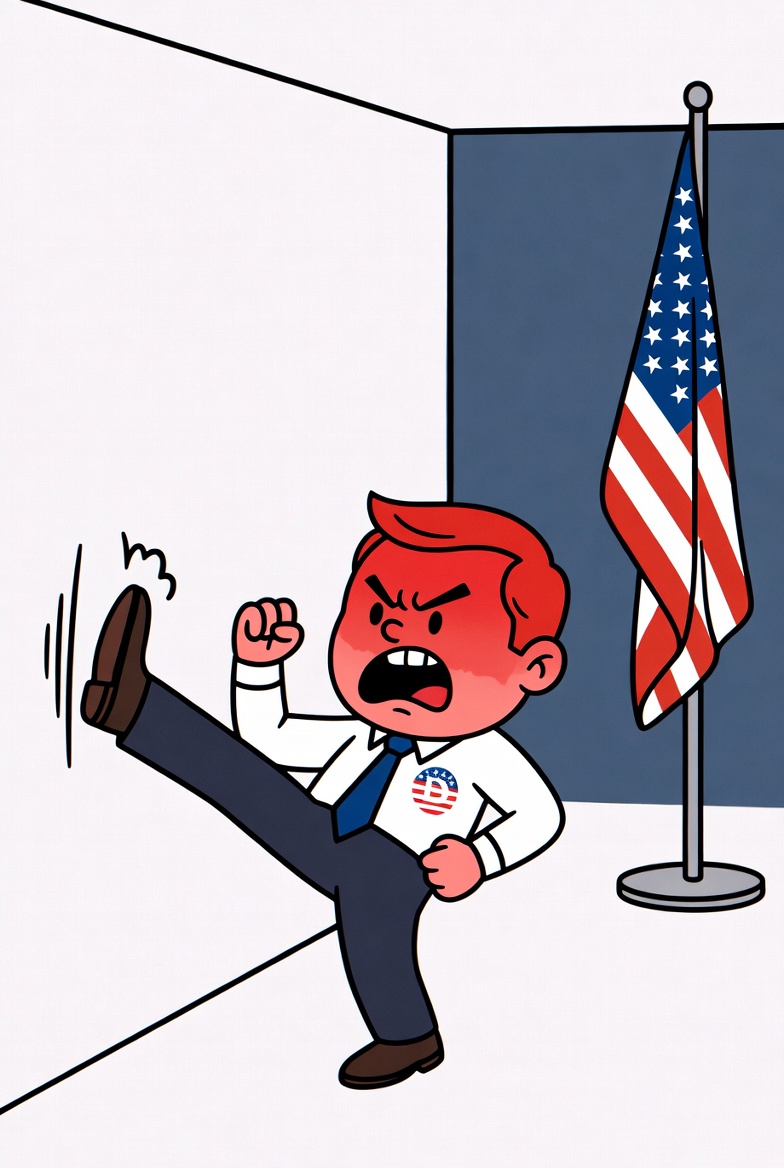
I mean, what does being so angry and bitter really accomplish?Everything on this forum is relevant to Trump and Company. Everybody in this country is angry, let's face it.
Do you think Trump is letting us live by the preamble to the Constitution? He probably has never read it or the Constitution, just the parts that he can benefit from, like the Insurrection act of 1807.
"We the People of the United States, in Order to form a more perfect Union, establish Justice, insure domestic Tranquility, provide for the common defence, promote the general Welfare, and secure the Blessings of Liberty to ourselves and our Posterity, do ordain and establish this Constitution for the United States of America."I am not at all angry. I have shared that I'm pleased with what I see from Trump so far. I can truly say I have not witnessed Trump disregarding our Constitution in any fashion. I do frequently witness the Democratic representatives step on the Constitution. I will not debate or make a list... I don't really care about leftist views. No energy to waste.
I feel very comfortable with Trump in the White House. I feel his job performance is A+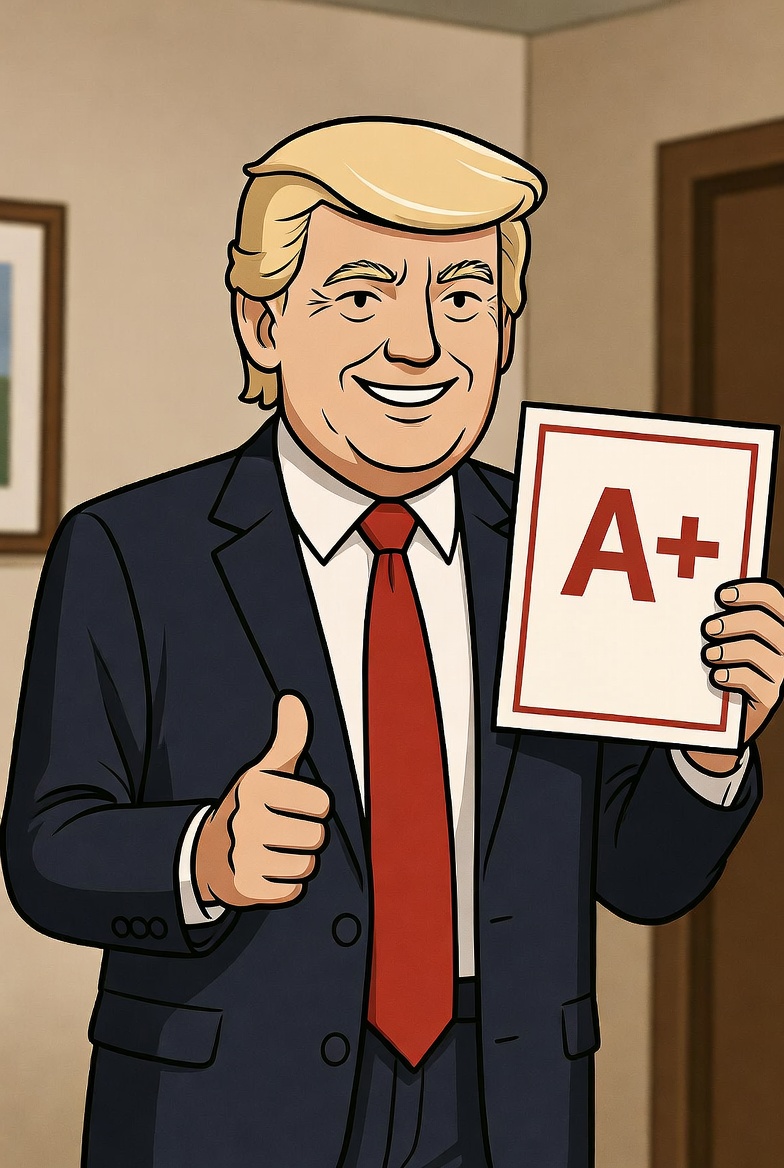
Truth is, the majority are very happy with what Trump has done.
Even as recently as this insurrection effort in Minnesota started to deflect from the corruption and theft of billions of our taxpayer dollars that Oman, Walz and the rest trying to cover up. Trump is winning again:
https://www.youtube.com/shorts/cMkGaPNABqITrump is winning again -
* Job Approval: -12
* Economy: -14.4
* Foreign Policy: -12.2
* Even Immigration is negative: -6.5
* Inflation: -22.3 (yes negative 22.3)
* Crime: -1.3
* Russia/Ukraine: -17.4
* Israel/Palestine: -1.0
ALL NEGATIVE! He is winning alright. Isn't flipping reality one of the signs of belonging to a cult?Gosh, yet he won two elections with very poor polls... Go figure. This tells me polls are not to be relied on--- at all LOL
Where is that from... I mean really... was that from a CCP website?
Trump has never been more popular with Americans.
Trump more popular than ever? US President takes U-turn on ‘fake news’ CNN, shares clip on 'reality check'
https://economictimes.indiatimes.com/ne … 648279.cms
Trump More Popular Than Ever As Americans Feel Country Is On Right Track
https://dallasexpress.com/national/trum … ght-track/
Trump More Popular Now Than Ever Before
https://www.realclearpolling.com/storie … ver-beforeI asked myself the same question. Where does he get this stuff, and why does he bother me with it? I have informed him time and time again that I don't buy polls in any respect.
Then why do you keep using time after time after time?
You should throw in a link, such information doesn't mean much without it.
Hopefully, Cred stops in ... this is for him, since he is one to always tell me China has done nothing to him, so he is good with them... this clip shows where China's mindset is at:
https://www.youtube.com/shorts/VJOIKu1gHrEI accept your invitation. Racism is part and parcel of human existence. Yet, I have been to Europe and there are societies that are better than we are in that aspect.
Beijing and Moscow are in the other hemisphere across broad oceans, Trump and the racial animus that he is reintroducing is here in my face.
It is going to take more than a snippet or two to convince me that China is worse than we in this regard.
While I do not always trust motives of Putin or Xi, I don’t trust Trump either right here in my backyard.I provided sufficient information for you to find it. Go look, if you are that interested. Or if you have better numbers, provide them. Don't use that to avoid the truth.
And that is a perfect example of how to mislead people. Very good job Ken with your January and March 2025 articles. That is pure deception.
Deception?
They are real articles from what I can tell.
There is no figuring about it - 65% of his votes came from either brainwashed MAGA or Trump look-a-like MAGA. The part that put him over the top was the 35% who believed his lies on the economy and now regret their vote
THAT is the reality.
The other realities are that he LOST in 2020, and his "win" in 2016 was pure luck, timing of certain events, a little help from Putin, a little help from Clinton's personability/drip, drip, drip of stolen emails, and people not caring where he grabbed women.
There are some rumbles and indications that the iron grip that the GOP had on the electorate is fading. I work to turn the hairline fissure into a crack and chasm. You all can ignore the recent Democratic victories, but it well may be a precursor to what is coming in November, and you ain’t gonna like it.
So Trump's insurrection on Jan 6 was something you give him an A+ for?
Which party is saying that inflation is going down and whose leader says it is zero?
Which party is saying that grocery prices are down when they are up?
Which party is saying America thinks DHS is acting lawfully when they are out of control?
It certainly isn't the Democrats.
Rather than projecting Republican faults onto the Democrats, you might get your own house in order.
One must not forget that while the Democratic favorability is in the dumps, Republican favorability is right there with them! Yet why is it with the Democratic favorability being so low, Americans want the to take back the House? One poll has Ds up 4.5, two more have Ds up 6.5, and one poll has Ds up by 7 in the Generic Ballot.
Doesn't seem like Americans like what they are seeing from Republicans. In fact, taking over the Senate was not in the cards six months ago, now, because of Trump, it is.
Is this the reason that rightwingers are so afraid of them, because they wouldnt vote Republican?
That is the reason democrats broke the law to let tens of millions of people into the United States illegally.
democrats can't get Americans to vote for them so they try to import illegal votes.
That has been the democrats plan all along.
Now, Republicans have to clean up a huge democrat mess...as always.I am an American and I vote for “them”. “Americans” will show Trump to the door for incompetence and sadism in the conduct of his policies as applied. We will dispense with them all and it wont take much longer, let the GOP and Trump keep on doing what it is currently doing.
I hope you're having a good day with Florida weather
Really cold and lots of snow where I'm at.
Cross country skiing is real common these days.Yeah, no doubt the weather here sucks.
Well, Mike, we are dealing with upper 20s here in central Florida as lows, and I have seen frost here for the first time. They say that these last couple of days are the coldest in 15 years.
We are expecting a warming trend this week. But, in spite of this inclement weather, my ice scraper and snow shovel still remain undisturbed in the garage.
Best wishes for you in your winter wonderland.
I must say, you have a funny sense of justice when you won't even admit an insurrectionist like Trump shouldn't even be investigated but you want to put a journalist simply doing their job in jail. That is called hypocrisy. One of these days, I hope you see that.
Now, to your comment -
First of all, it wasn’t Minneapolis — the reporting says the church disruption happened in St. Paul, not Minneapolis.
Second, you’re doing that thing again where “there’s video” magically becomes “the law was very clearly broken.” Spoiler alert - Video can show conduct; it doesn’t automatically resolve the legal questions (intent, warnings, orders to leave, each person’s role, etc.). That’s what courts are for.
Third, if your principle is “no one is above the law,” then apply it consistently, apply it to Trump who you obviously think is "above the law" by giving him a pass on his actual crimes and don't even want to investigate his probable crimes. You don’t get to demand instant prosecution for people you dislike while hand-waving away criminal convictions and civil findings against your guy.
Finally, if Lemon was there as press—as he and his lawyer claim, and there is NO EVIDENCE he wasn't—the real question is whether the government can prove he crossed from documenting to participating. If they can, prosecute. If they can’t, drop it. That’s what “rule of law” actually looks like.
Remember: the first time your weaponized DOJ marched in with the “he very clearly broke the law” routine, the judge basically sent them packing. But Trump doesn’t do “drop it.” So they regrouped and took another run at it—same playbook as the grand-jury fishing expeditions with James and Comey: if you don’t get the outcome you want, you just keep trying until you get a Trump judge that doesn't follow the law.“Finally, if Lemon was there as press—as he and his lawyer claim, and there is NO EVIDENCE he wasn't—the real question is whether the government can prove he crossed from documenting to participating. If they can, prosecute. If they can’t, drop it. That’s what “rule of law” actually looks like.”
A key point, thanks….
77 million did this to us in November 2024. Please help us end it. Vote Democrat in the 2026 midterms. It's our only escape before 2028 - if we still have an America by then.
"77 million did this to us in November 2024. Please help us end it. Vote Democrat in the 2026 midterms. It's our only escape before 2028 - if we still have an America by then." Kathleen
We don’t need hyperbole or apocalyptic framing to discuss elections, we need reasoned debate, facts, and accountability. If someone disagrees with Trump’s policies, that’s fine, but presenting voters as a threat to the nation is dishonest and inflammatory. Democracy doesn’t survive on fear; it survives on informed choice.
In my view, that comment is pure fear-mongering, full of exaggeration, and ignores context. Claiming “77 million did this to us” frames nearly half the country as an enemy, which is exactly the kind of divisive rhetoric that weakens democracy rather than strengthens it. Encouraging people to vote based on panic about the future of the country rather than the issues themselves is manipulative.
Trump’s administration has focused on policies that many Americans care about, from border security and economic growth to regulatory reform and supporting law enforcement. These are tangible accomplishments that go beyond rhetoric, and they deserve to be part of any fair discussion. Democracy doesn’t survive on fear; it survives on informed choice and accountability.Well, Sharlee, for many of us there is a threat, but for the standard rightwingers it is sheer custard.
I vehemently disagree with Trump policies and express the upcoming outcome in the form of an opinion.
Believe me, we are already well divided, and I see a growing crevice that will make finding a common road ever more difficult with each passing day.
People need to vote on “panic” from either side, such is the nature of our electoral choices today. The way the issues are handled by the Trump regime today IS the source of the “panic”.You’ve shared your view. Believe me, I see just how divided we already are, and that divide is deepening in a way that makes finding common ground more difficult with each passing day. I see your side shrinking into a smaller minority, driven by Democratic ideologies and a willingness to promote false narratives and, at times, tolerate violence. I would think this is something you’ve noticed as well.
The only real panic I see is coming from the left. We are not protesting federal law. We are not pushing extreme or harmful values. We are not dismantling the norms upon which this nation was clearly built.Trump's invasion of America is a sure sign of Panic on the Right. And it also highlights is psychopathy as he gleefully hurts and kills so many people..
Funny, you did not address my subject
"Trump's invasion of America is a sure sign of Panic on the Right. And it also highlights is psychopathy as he gleefully hurts and kills so many people.." ECO
To repeat for those who have a problem with reading a comment and deciphering context.
"You’ve shared your view. Believe me, I see just how divided we already are, and that divide is deepening in a way that makes finding common ground more difficult with each passing day. I see your side shrinking into a smaller minority, driven by Democratic ideologies and a willingness to promote false narratives and, at times, tolerate violence. I would think this is something you’ve noticed as well.
The only real panic I see is coming from the left. We are not protesting federal law. We are not pushing extreme or harmful values. We are not dismantling the norms upon which this nation was clearly built."Shar
Correct.
And I believe most Americans see this as well.
The Democrats support these Color Revolution efforts to destroy America, because if they cannot have things their way, they would rather burn down the country than accept that the American people do not want what they are peddling.
Unfortunately, these traitors are throughout the media, the DC cabal, and hold some of the highest positions in key States.
We will see in the 2026 election if the American people are as gullible and manipulatable as the Democrats believe... if they are smarter than Democrats give them credit for, the Democrats will do poorly.Ken, I agree. And something else worth noting is that these tactics only work if people stop trusting their own lived experience. Inflation, crime, border chaos, foreign policy weakness, Americans don’t need the media or political class to tell them what they’re dealing with day to day. When messaging becomes detached from reality, it stops persuading and starts exposing intent.
That’s why the constant escalation and accusations feel less like confidence and more like desperation. If their ideas were broadly popular, they wouldn’t need to shame, censor, or destabilize to advance them. 2026 will show whether Americans still value independent judgment or whether manipulation wins. I say the majority don't want to hitch their wagon to stupid.
On what measure are Democrats a ‘shrinking minority’? Party ID is basically even, independents are the largest group, the 2024 popular vote was essentially 50–48, and the current generic ballot average has Democrats ahead. If you mean ‘minority,’ you’ll need to define the metric.
" essentially 50–48, and the current generic ballot average has Democrats ahead." ECO
LOL as it did both times Trump won his bids for the White House. I shared that I don't respect polls at this point. Not sure why you waste your time posting them in comments to me... Again, I don't respect polls. period.
From AI I know you have an affinity toward this artificial brain
"Many people have grown skeptical of polls for several reasons, and it’s a combination of methodological, political, and media-related factors. Here’s a breakdown:
Historical Misses: When polls fail to predict major events—like the 2016 U.S. presidential election, Brexit, or other surprising results—people lose confidence. Even well-conducted polls can have errors, but repeated “wrong” predictions make the public question their reliability.
Sampling Issues: Polls depend on getting a representative sample of the population. With declining response rates to phone calls and surveys, pollsters may over- or under-represent certain groups. People notice if polls seem consistently biased toward one party or demographic.
Question Wording & Framing: How questions are asked can strongly influence answers. Leading, confusing, or loaded questions can skew results, making people doubt whether polls reflect true opinions.
Weighting & Adjustments: Pollsters adjust their data to account for demographics, past voting behavior, and likely turnout. If the public doesn’t understand or trust these statistical adjustments, they may dismiss the results as “manipulated.”
Media Overemphasis: Polls are often reported as exact predictions rather than snapshots of a moment in time. When results change frequently, or media hype one poll over another, people feel polls are inconsistent or unreliable.
Political Polarization: In today’s divided climate, people are more likely to reject polls that don’t match their preferred narrative. If a poll shows bad news for their side, they may assume it’s biased.
Online Misinformation: Social media amplifies claims that polls are “rigged” or “fake,” further eroding trust.
In short, skepticism comes from a mix of genuine methodological challenges and political/psychological factors. People don’t necessarily distrust all polls—they just know that polls are not infallible and often don’t reflect the outcome" AI.
“Smaller minority’, Sharlee?
Like you told me earlier, it is still a considerable time from now until the midterms, we will then see if that minority will grow by November. Your people are already running scared, we Dems are going to exploit that.
If it is "fear-mongering" we learned from the best there is at it - Trump, the con artist.
If you hate America, or want to see its economy fail, or want it to be overrun by foreigners, or want to lose your rights to free speech and property...
Vote Democrat.
If you love America, if you want to have a strong economy, if you believe in Citizen Rights, if you believe in American exceptionalism and America 1st, if you believe in freedom of speech, the right to own property and protect it and yourself...
Vote Republican.
It is as simple as that.With what people know today, had they known it then, enough have said they wish they hadn't voted for Trump that we would have had a good president today instead of the psychopathic monster we have now.
That is a mathematical certainty I proved earlier.
So what is this now, Make America Great Again, after he is done fleecing it?
https://www.salon.com/2026/01/30/trump- … s-lawsuit/Quote from the article you offered
"President Donald Trump sued the IRS and the Treasury Department on Thursday, alleging they failed to “safeguard” his and his family’s tax returns from being leaked to the press.
Trump, along with his sons, Eric and Don Jr., and the Trump Organization, are seeking $10 billion in damages, according to a lawsuit filed in Florida’s Southern District Court.
The lawsuit alleges that the IRS and Treasury Department “had a duty to…protect” the Trumps’ “tax returns and related tax return information from such unauthorized inspection and public disclosure.”
The lawsuit comes after former IRS consultant Charles E. Littlejohn was sentenced to five years in prison in 2024 for stealing the tax records of thousands of wealthy Americans, including the Trumps. He later provided the records to ProPublica and The New York Times, which published them."
A couple of questions--- Why do you feel this lawsuit is an inappropriate move on Trump's part?
And would you be up with your personal tax information spread around by the media?
Are you aware that the IRS is responcible to protect your information by law?
Is this one of the laws you feel you can dismiss due to a narrative?Cmon, Sharlee, is it true that you would find a defending narrative for even the devil himself?
Donald Trump is not worth 10 billion dollars
As President of the US will he use his authority over executive agencies to force a favorable outcome to his suit. Donald is a dirty as it gets. How do you sue an agency that you are in charge of?
Because he is President of the United States, the stupidity of mentioning such a thing is automatically a conflict of interest. Only Trump would be that dumb.
Trump pulls an obscene number from the sky as recompense, 10 billion is far from being reasonable.
Trump tried to sue the BBC based on specious BS, they all told him to “take a hike”.
I am aware of the law, Trump let that MUsk character ransack social security records violating the privacy of millions of folks. This has nothing to do with exposing anything except exposing Trumps derrière.
He could have at least respected the office and curbed his greed until after him term ended?My put is that yes, the IRS had a duty to protect the information and yes, they failed at that. I'll even go so far as saying Trump has the right to sue - but NOT NOW. Just like bring charges against a sitting president is not allowed, neither should a sitting president be able to bring suit against his own government. If he is, he needs to wait until he is out of office.
You are right though, he is not worth $10 B and what reputational harm? People already widely suspected he didn't pay taxes through one sketchy scam or another, so he will have to prove how that verifying what they already suspected actually harmed him.
This is just another one of his political stunts that, since the DOIJ is no longer an independent organization and is Trump's personal lawyer, will probably "settle" for the full 10 B.
Its a good thing Trump gets welfare from the gov't and doesn't have to pay for his health care.
"Many Haitians may soon not be able to work in the US. That will make caring for the elderly much harder"
Trump to cancel TPS for LEGAL Haitian immigrants and destroy their lives - he must love doing that since he does it so often and helps prove he is a psychopath - maybe getting a few killed for good measure when they go back.
https://www.cnn.com/2026/02/01/business … nts-statusThat's right, plenty of American citizens that need help, that can't pay their bills, that don't have a home.
We don't need to be paying for millions of foreigners that the Biden Administration felt it was OK to let in and have taxpayers care for, house, feed, etc. putting Americans out of work so they can have their jobs.
Democrats are the enemy of American Citizens.
The ICE riots will help crystalize the overall issue, for many Americans.
This is a good thing, even in NY it is becoming THE political divide:
https://youtu.be/QnygwkTi1mE?t=111I’ve come to see these riots as strangely useful in that they have helped many Americans wake up to the true nature of the party they support, feel embarrassed, and turn away from it. I mean, in reality, who wants to support all kinds of crazy?
I think it is a slow awareness that is spreading...
Consider what we have gone thru in just the last couple of years, from successful and unsuccessful assassination attempts, to violent riots over ICE agents attempting to remove foreign criminals.
If you hate America, if you want revolution, if you believe in Open Borders and just don't recognize how that negatively increases the pressure on our economy and society... the Democrats are the Party for you.
If you want America to remain a strong Nation, with a vibrant economy, if you don't want to be overrun by immigrants or made into slaves that the elites can control by cutting off your free speech or your access to digital currency (money) ... then Trump (Republicans) is the only option you have.
Niall Ferguson: 'We don't need to invoke fascists or Roman emperors to explain Trump'
https://www.youtube.com/watch?v=VVxxiwC8iNg
A brilliant analysis of who and what Trump is, to/for Americans.
Sir Niall Campbell Ferguson is a British-American historian who is the Milbank Family Senior Fellow at the Hoover Institution and a senior fellow at the Belfer Center for Science and International Affairs at Harvard University.
He nailed it.Where does Trump stand on his promise to become Dictator on Day One? By my estimation, he is 66% of the way there, at least until this time next year.
1. Weaponization of the Department of Justice (DOJ), Federal Bureau of Investigation (FBI), and Department of Defense (DOD) One of the things Authoritarians do is the purging of career civil servants and installation of loyalists in these agencies to pursue investigations against political opponents, critics, and organizations. This includes launching probes into figures like New York Attorney General Letitia James, former special prosecutor Jack Smith, and groups such as Media Matters, while using the DOD for domestic enforcement actions like deploying troops against protests or in immigration operations. (Note - DOJ and the FBI have never been weaponized in modern history, not even in Trump's first term.
2. Executive Overreach and Attempts to Undermine the Constitution. Trump issued executive orders purporting to restrict birthright citizenship (violating the 14th Amendment), impose tariffs without congressional approval by declaring false national emergencies, and dismantle agencies like the U.S. Agency for International Development (USAID). These actions are seen as usurping legislative powers and ignoring court rulings, accelerating democratic backsliding.
3. Attacks on the Free Press and Media Freedom The administration has censored government data, dismantled public broadcasters, sued outlets critical of Trump, and pressured media companies to install allies in leadership roles. This is classic Authoritarian actions. Trump has labeled journalists as "enemies of the people" and halted U.S. funding for international media freedom initiatives, actions compared to those in regimes like China or Turkey. For example, after failing the first time, DOJ, at Trump's direction, just arrested Don Lemon and another journalist for covering a protest in a church. They falsely claimed he was part of the demonstration.
4. Targeting Political Opponents, Critics, and Civil Society Executive actions have sanctioned law firms challenging administration policies, threatened universities accused of "anti-American" values, and investigated nonprofits, elected officials, and former officials who criticize Trump (e.g., John Bolton, James Comey). This includes arresting protesters without charges and using physical force against dissenters, seen as chilling free speech. At least Trump doesn't shoot them or push them out of windows yet like his mentor Putin does.
5. Abuse of Pardon Power to Reward Allies and Encourage Lawbreaking Trump pardoned over 1,200 individuals involved in the January 6, 2021 Capitol attack, including violently attacking police which was partly the reason several of them died. This includes known insurrectionist groups like the Proud Boys and Oath keepers, as well as allies who broke laws for his benefit. Doesn't this place loyalists above the law and incentivizes political violence?
6. Dehumanizing Immigration Policies and Military Involvement Policies include deploying the National Guard and Marines for mass deportations, expanding fast-track removals without due process, and framing immigrants as an "invasion" or "vermin." Executive orders have stripped protections and used military force domestically, echoing authoritarian tactics to consolidate power by targeting marginalized groups.
7. Dismantling Diversity, Equity, and Inclusion (DEI) Programs and Ideological Purges Executive Orders have terminated federal DEI initiatives, closed the Department of Education, and withheld funding from programs promoting "gender ideology" or environmental justice. This includes erasing legal recognition for transgender and non-binary individuals and auditing institutions for compliance, viewed as imposing a white Christian nationalist agenda.
8. Cuts to Democracy Promotion and Alignment with Autocrats Abroad The administration eliminated funding for pro-democracy programs (e.g., gutting USAID and the National Endowment for Democracy), imposed tariffs on allies for political reasons, and launched unauthorized military actions like incursions into Venezuela. This is criticized as fueling global authoritarianism by retreating from U.S. support for democratic institutions.
9. Subversion of Oversight and Independent Institutions Actions include colonizing federal agencies via the "Department of Government Efficiency" led by Elon Musk, defying court orders, and rolling back public health protocols or disaster response funding. These are seen as weakening accountability and prioritizing loyalty over expertise.
These examples are not exhaustive but represent major Authoritarian moves from sources tracking Trump's second-term actions through early 2026.
https://www.authoritarianplaybook2025.org/
Debates continue in courts and Congress over the legality of many items, with ongoing lawsuits challenging their constitutionality."Justice Department expected to ramp up efforts to deliver on Trump’s ‘weaponization’ priorities
At least they don't make any bones about it. It seems Trump, as the AUTHORITARIAN, is yelling at them because they haven't prosecuted his political enemies yet or fast enough and he wants heads to role! The appropriately named "Weaponization Working Group" has not, in The Leader's View, been working hard enough to bring people Trump hates to injustice.
https://www.cnn.com/2026/02/02/politics … n-priorityThis fits under the Authoritarian banner in that the fight is about States Rights and Congressional Authority.
The fight inside the Trump administration. Trump's AI czar wants to tell states they can't regulate AI in their own state and to tell Congress they can't pass any laws regulating it. A White House lawyer is pushing back hard on it saying you can't sidestep Congress or the States.
The compromise was an authoritarian EO taking power away from the states by threatening them with loss of funds.
https://www.cnn.com/2026/02/02/politics … vide-trumpIf it wasn't already - Trump just brought his drive to turn America into an AUTHORITARIAN run country out in the open.
"Trump calls on Republicans to ‘nationalize’ future elections"
That idea is as unAmerican as it can possibly get. Yet I am sure that the right will jump in to defend the indefensible or say "that is not what he really meant" or just not say anything at all. What you won't hear is general condemnation of Trump's attempt to take over the election process (YES, that is exactly what it is given the almost all Republicans in Congress are bowed at his feet with their faces in the dirt and their asses in the air. (Yes, that is contempt for rank cowards)
https://www.cnn.com/2026/02/02/politics … -elections
https://www.cnn.com/2026/02/03/politics … ons-digvidTHis is misinformation as written
"If it wasn't already - Trump just brought his drive to turn America into an AUTHORITARIAN run country out in the open.
"Trump calls on Republicans to ‘nationalize’ future elections" ECO
Trump has not submitted a request to Congress, proposed a bill, or triggered any official legislative process. What he’s done is make public statements and campaign-style remarks urging Republicans to pursue national standards for federal elections. That’s advocacy and rhetoric — not a formal action.
It is this kind of misinformation that poses discontent.Give me a break, Sharlee. HE SAID IT Are you calling him a liar or a purveyor of misinformation?
As always, your context says something that indicates the statement is a fact, and it is not
"Trump calls on Republicans to ‘nationalize’ future elections" ECO
" ECO
Trump has not called on Republicans to nationalize elections... Period.Amazing how the Trump Contagion works.
On February 2, 2026, Trump said Republicans should “nationalize the voting” in at least “15 places,” and also used language like “take over” elections, during an interview with Dan Bongino. - Reuters
* “We should take over the voting, the voting in at least many -- 15 places. The Republicans ought to nationalize the voting." - DONALD TRUMP
How much clearer can he get? Face it, you are wrong."Trump says states are agents of federal government in elections"
In what world does this idiot live? It certainly isn't the real world.
https://www.cnn.com/2026/02/03/politics … ons-statesMore Analysis of Trump's desire to take over elections
"Trump wants Republicans to ‘nationalize’ US elections. The Constitution might get in the way"
" —
A wide array of election experts say President Donald Trump’s call for Republicans to “nationalize the voting” is an alarming and potentially dangerous escalation of his continued efforts to transform how US elections are administered.
Trump’s remarks were notable both for their ambiguity and for what they could mean if interpreted literally – especially coming from a president who already tried to overturn one election and is now trying to exert powers that are unprecedented in American history, nearly a dozen election officials, lawyers and nonpartisan experts told CNN.
The White House has since sought to downplay Trump’s remarks [as have some in this forum] by claiming Tuesday that he was merely expressing support for the SAVE Act, pending legislation that would require people to prove their citizenship before registering to vote. (The bill is meant to combat illegal voting by undocumented immigrants, which studies have found occurs on a microscopic level.)
The timing of Trump’s comments was also jarring to election professionals. They came two days after Democrats flipped a ruby-red Texas state Senate seat; five days after the FBI used a search warrant to seize 2020 election records in Fulton County, Georgia; and amid multiple Justice Department lawsuits seeking to obtain voter rolls from Democratic states.
“We all need to be very, very sober about this,” said Lori Ringhand, a professor at the University of Georgia School of Law who teaches constitutional and election law. “There are few things we do as a country as important as peacefully transferring power through the electoral process, and nobody should be kneecapping that lightly.”
Then there is this over-the-top lie in his interview that is designed to keep his cult members in line - "If we don’t get them out, Republicans will never win another election,” Trump said.". It is that kind of fear-mongering that has converted millions and millions of otherwise intelligent Americans into obedient followers of The Leader.
https://www.cnn.com/2026/02/03/politics … ion-clause
No, I am infring you are spreading misinformation.
Wait, you already said this --- "Trump calls on Republicans to ‘"Trump calls on Republicans to ‘nationalize’ future elections" ECO
Has he asked Congress to address "Trump calls on Republicans to ‘nationalize’ future elections"?
"When Trump makes election threats, it’s best to believe him"
https://www.cnn.com/2026/02/03/politics … on-threats"The Trump team can’t get its story straight on the president, Gabbard and Fulton County"
Election interference, plain and simple. It is also another example of Trump's psychopathy.
Since the left like Chat GPT
I asked about the similarities between the democrat party and the Nazi party
1. Use of government to shape society
Both support the idea that government can play a role in addressing social and economic problems.
Democrats: regulation, welfare programs, civil rights enforcement within a constitutional democracy.
Nazis: total state control subordinated to racial ideology and dictatorship.
2. Populist messaging
Both have used rhetoric that appeals to “the people” versus elites.
Democrats: messaging about corporate power, inequality, or protecting working families.
Nazis: aggressive, exclusionary populism targeting Jews, minorities, and political enemies.
3. Large party coalitions
Both were/are big-tent parties at certain points.
Democrats: coalition of labor, minorities, liberals, moderates, etc.
Nazis: absorbed or eliminated other right-wing groups once in power.I don't know what is AI or you. But in any case we aren't talking about Parties, we are talking about Trump and Trumpism.
Nevertheless:
“Those ‘similarities’ are so generic they’d also apply to Republicans, Labour, Christian Democrats, and half the world. The meaningful comparison is about dictatorship, abolition of pluralism, political violence, and racial-state ideology—which is what defined Nazism.”
Clarifying the Election Law Discussion-- context, and facts matter
Trump has not formally asked Congress to draft or pass a bill on this.
What he has done is publicly talk about the idea of “nationalizing” federal elections, meaning uniform rules for things like voter ID, ballot handling, deadlines, and enforcement. That’s campaign or political rhetoric, not a formal legislative request.
What Trump has talked about regarding election laws isn’t new or radical. The Constitution already gives Congress authority over federal elections, that’s well established and not controversial. While states administer elections, federal standards for federal elections have existed for decades, including civil-rights protections, voting age requirements, and accessibility rules.
When Trump uses the term “nationalizing” future elections, he’s talking about uniform rules for federal elections, things like voter ID standards, ballot handling, deadlines, and enforcement. He’s not talking about abolishing state elections or turning the process into a personal power grab. States would still run their elections; the difference would be consistent guardrails instead of 50 different systems operating under wildly different rules.
You can strongly disagree with that approachm that’s fair. But calling it “un-American” ignores the reality that federal oversight of federal elections is explicitly constitutional. Reasonable people can debate whether more standardization is good or bad without turning it into a claim that democracy itself is being seized.
As for the claim that Republicans are “bowed at his feet,” that feels more like rhetoric than analysis. Supporting a proposal doesn’t mean surrendering independence, and there is still disagreement within the party, whether critics choose to acknowledge it or not.
I’m not asking anyone to like Trump. I’m simply asking that we argue against what’s actually being talked about, not a version that assumes the worst possible intent and ignores the constitutional reality altogether.“We should take over the voting, the voting in at least many -- 15 places. The Republicans ought to nationalize the voting." - DONALD TRUMP
That is as unAmerican as you can get.
As to the bow (I kept it polite) - Observation forces one to use that metaphor. Also, I said Congressional Republicans. As soon as someone disagrees with Trump if they are Republican, they get primaried, and if they are anyone else, Trump wants them investigated.
And what has the Constitution have to do with anything when Trump simply ignores it.
Such as:
1) Trying to impose nationwide election rules by executive order
2) Treating the presidency as if it can directly “preempt” state AI regulation
3) Calling to “nationalize” voting and “take over” elections“We should take over the voting, the voting in at least many -- 15 places. The Republicans ought to nationalize the voting." - DONALD TRUMP" ECO"
Again, I need to ask you to read my comment --- I addressed the very fact in the first paragraph that "Clarifying the Election Law Discussion-- context, and facts matter
Trump has not formally asked Congress to draft or pass a bill on this.
What he has done is publicly talk about the idea of “nationalizing” federal elections, meaning uniform rules for things like voter ID, ballot handling, deadlines, and enforcement. That’s campaign or political rhetoric, not a formal legislative request.
From my perspective, many of Trump’s proposals on voting laws, like requiring voter ID, proof of citizenship for registration, limiting no-excuse mail-in voting, and cleaning up voter rolls, fit squarely within our Constitution if they are passed through Congress. The Constitution gives Congress the authority to set or alter rules for federal elections, and these ideas reflect a principle I support: that elections should be fair, secure, and transparent. The ideologies behind these proposals are about protecting the integrity of our election system, not overstepping presidential authority. The key is that any such laws are enacted legislatively, respecting the constitutional balance between state and federal powers. His ideas are constitutionally strong
What he has done is publicly talk about the idea of “nationalizing” federal elections, meaning uniform rules for things like voter ID, ballot handling, deadlines, and enforcement. That’s campaign or political rhetoric, not a formal legislative request.
Sharlee, as President, he should not be saying such things in the first place.Yes, I did mention he has been talking about nationalizing laws.
"What he has done is publicly talk about the idea of “nationalizing” federal elections, meaning uniform rules for things like voter ID, ballot handling, deadlines, and enforcement. That’s campaign or political rhetoric, not a formal legislative request." Shar
Trump is not calling for total federal takeover of elections. He wants federal minimum standards, especially for security and eligibility, while leaving states to handle logistics. That’s why Congress would need to pass laws for any real change.
I have researched the ideas he has been discussing, and I see them as not only constitutionally sound but also aligned with the principles our Constitution upholds, like fair and secure elections. Measures such as voter ID and updating registration processes are intended to protect the integrity of the vote while still respecting every citizen’s right to participate. Of course, implementing these proposals would require Congress to pass the necessary laws, but the goals behind them reflect the Constitution’s ideals of equal protection and a trustworthy democratic process.
Thus far, here is a list of what Trump has been talking about.
Election Reform & Voting Law Ideas
National standards for voter ID
A uniform photo ID requirement for voting in federal elections. This would require voters to show government‑issued ID before casting a ballot.
Documentary proof of U.S. citizenship to register. Require “documentary proof of U.S. citizenship” (like a passport or REAL ID) to register to vote in federal elections under the SAVE Act and related executive directives.
End counting ballots received after Election Day
Some proposals would prohibit counting mail‑in or absentee ballots received after Election Day, even if postmarked on time under state rules.
Restrict mail‑in voting
Trump would end no‑excuse mail‑in voting (except for limited groups like military or very ill voters or if one would not be in the country ).
Ban “ballot harvesting” or mass ballot collection
The proposals include bans on third‑party collection of ballots (often called ballot harvesting).
Paper‑backed or audited ballots
Some versions of election‑reform bills push for auditable paper ballots rather than purely electronic systems.
Online voter registration changes
A federal plan to create an online voter registration system with identity checks through a federal portal is controversial and legally complex.The controversy centers on President Donald Trump urging Republicans to “nationalize” or federally take control of elections—an idea critics say threatens the constitutional system in which states, not Washington, run U.S. elections. His comments have triggered bipartisan alarm because he has not explained how such a takeover would work and has tied the proposal to unfounded claims of widespread voter fraud.
---
What Trump Said
• Trump has repeatedly suggested that the federal government or the Republican Party should “take over” voting in 15 or more states, claiming—without evidence—that some states are “crooked” or unable to run honest elections. (This based solely on his assessment, who is going to believe that?)
• He argued that states are “agents of the federal government” and questioned why the federal government doesn’t run elections already. (Is
Trump ignorant about the principle of “federalism’, power and authority designate to the states rather than the federal government?)
• In interviews, he said Republicans should “take over the voting” to prevent alleged illegal voting by migrants, again without evidence. (Why should Republicans take over, again, no evidence and his concerns fall on deaf ears)
Why It’s Controversial
1. Constitutional Concerns
• U.S. elections are decentralized by design: states administer elections, set rules, and count votes.
• Trump’s proposal is seen as federal overreach that could violate the Constitution’s allocation of election authority.
• Even some GOP leaders have raised objections, warning that nationalizing elections would undermine state sovereignty.
(Have any of you rightwingers type considered this?)
2. Lack of Specifics
• Trump has not identified which states he wants to take over or explained how the federal government or a political party would assume control.
• Critics argue that the vagueness suggests a willingness to override established legal processes.
(These are very serious proposals, Trump had better be able to do more than just shoot in the dark on this)
3. Tied to False Fraud Claims
• His calls come alongside repeated, unsubstantiated claims of widespread election fraud and illegal voting by migrants.
• These claims have been widely debunked, yet they form the basis of his argument for federal intervention.
(As I said before, no proof, no soap. I don’t care what he thinks that he cannot prove)
4. Fear of Partisan Control
• Because Trump frames the proposal as something Republicans should do, critics say it suggests a partisan takeover of election administration rather than neutral federal oversight.
• This raises concerns about fairness, democratic norms, and the potential for political manipulation.
(I am not going to give Trump nor the Republicans ANY advantage at the expense of the other side, they should all know that by now)
---
Bottom Line
The controversy stems from Trump proposing a dramatic shift of election power from states to the federal government, justified by false claims of fraud, and framed as a partisan effort. Opponents argue it threatens constitutional norms, state authority, and the integrity of future election.
—————
Furthermore.
Uniform voter ID, fine but it must be made free and available to obtain by all citizens who otherwise do not have this identification as people should not have to pay to vote.
Documentary proof of U.S. citizenship-OK
End counting ballots received after Election Day:
NO, I see no reason mail-in or absentee ballots postmarked prior to the closing on Election Day should not be accepted. That is a disadvantage to large urban areas that tend to vote Democratic, and I give Republicans absolutely nothing.
Restrict mail-in voting. NO, many states have used the practice acceptably, until Trump and the Republicans can PROVE that it a source of fraud, no means no.
Ban ballot harvesting-I have to look into this further.
Paper back or audited ballots- I have to look further before I comment.
On line voter registration changes-I have to look further before comment.
Why should ANYBODY be surprised with this headline? This is what PSYCHOPATHS do.
"Fact check: Trump’s WSJ op-ed was littered with false and misleading claims"
* Trump repeated his regular false claim that in less than one year back in office, “we have secured commitments for more than $18 trillion” in new investment in the US, “a number that is unfathomable to many.” The number is not only unfathomable but factually incorrect.
* "Trump accurately noted that gross domestic product grew by an annual rate of 4.4% in the third quarter of 2025, but then he said that, despite the impact of the fall government shutdown, “the fourth quarter is projected by the Atlanta Fed to be well over 5%, a number like our country has not seen in many years.” While the Atlanta Fed’s GDPNow model was estimating fourth-quarter 2025 growth of more than 5% just over a week ago, the latest update from the model, released four days before Trump’s op-ed was published, was down to 4.2%. Also, some other estimates suggest fourth-quarter growth was lower than 4.2%."
* "Trump claimed that, in an incredible achievement, “we have slashed our monthly trade deficit by an astonishing 77% — all with virtually no inflation, which everyone said could not be done.” We’ll address the “virtually no inflation” claim below, but the claim of a 77% decline in the trade deficit is misleading — an apparent reference to a one-time decline in October that quickly reversed in November."
* "Trump wrote, “Factory construction is up by 42% since 2022.” Trump’s choice of 2022 as his starting point for this calculation is misleading given that the op-ed was purporting to provide evidence of the success of his tariffs: he took office and imposed the tariffs in 2025, when spending on factory construction actually declined from 2024. The spike above the 2022 numbers largely occurred in 2023, under President Joe Biden," - Why didn't he give Biden credit for the increased factory construction?
* "Trump claimed that by causing an inflation crisis, Biden and his allies in Congress cost “the typical American family $33,000 in real wealth.” But this figure is misleading: real wealth increased significantly for the middle class, as well as all other groups, if you look at Biden’s presidency from beginning to end. Trump’s claim about a decline in real wealth for the “typical” family is accurate only if you look at a mere fraction of Biden’s presidency.
“There was a dip in 2022-2023 but a clear rebound in 2024,” Emmanuel Saez, a University of California, Berkeley economics professor who studies the issue, told CNN on Monday."
* "Trump repeated his regular false claim that “in nine months, I settled eight raging conflicts, WARS,” saying that “tariffs deserve much of the credit.” While Trump has played a role in resolving some wars (at least temporarily), the “eight” figure is a clear exaggeration."
There were several other misleading claims that I omitted to save space. This is yet another example of how a Psychopath works - Lie - Mislead - Lie - Mislead ad nauseum.
https://www.cnn.com/2026/02/03/politics … -wsj-op-edThis CNN article is a perfect example of skewed, one-sided reporting. What they don’t tell you matters far more than what they do. They cherry-pick numbers, ignore context, and leave out the real achievements that millions of Americans see every day. By the way—how are CNN’s ratings these days? Makes you wonder how they even cover the lights. I am almost certain that you may be the last person standing to turn the lights out...
Why should anyone be surprised by this headline? To me, it reads more like an attempt to deliberately mislead than an honest fact check. I’ve spent time looking closely at Trump’s WSJ op-ed, and the picture the media paints is far from complete.
Take the $18 trillion in investment he cites. Critics say it’s “unfathomable” and “factually incorrect.” But here’s the context they leave out: these commitments are real agreements with major companies planning to invest in American jobs, factories, and infrastructure. Some numbers might be rounded, yes, but the scale of the economic activity Trump’s team has helped unlock is unprecedented. Calling it a lie without noting the massive deals behind it is disingenuous.
Regarding GDP growth: yes, the Atlanta Fed’s model fluctuates, but Trump’s point about strong economic momentum is accurate. Using the latest update to discredit him ignores the fact that economic projections are constantly revised. Growth above 4% after years of stagnation is a rare achievement.
As for the trade deficit and factory construction, the media conveniently ignores that Trump inherited a fragile supply chain, global inflation pressures, and a complex trade environment. The one-time decline in the trade deficit may have reversed slightly, but the trajectory he’s highlighting, toward stronger domestic production, is real. And yes, while some factory construction numbers rose under Biden, the acceleration in the period after Trump’s policies were enacted is significant and shouldn’t be dismissed.
The “$33,000 lost by the typical American family” figure gets cherry-picked too. If you look at short-term inflation impacts and the effect on wages, Americans felt real pressure during this period. Focusing only on long-term averages conveniently ignores the financial stress families experienced.
Finally, the claim about resolving conflicts: Trump has historically taken bold, unprecedented actions to de-escalate wars and broker agreements, even if the media calls the number “exaggerated.” The point is that he’s been actively working to reduce U.S. involvement in endless conflicts, a reality that the fact-checkers barely acknowledge.
What’s consistent here is the approach: selective reporting to make him look dishonest while ignoring the underlying accomplishments. I don’t say this lightly, but in my view, Trump has achieved results the media often refuses to recognize. The “psychopath” framing is just another way to dismiss the facts that don’t fit the narrative.How can a Fact Check be one-sided? It checks whether Trump was telling the truth or not and in many cases he was not. That is pretty straight-forward isn't it?
As to misleading - Trump is a known pathological liar, so how can "Why should ANYBODY be surprised with this headline?" be misleading. That doesn't make sense to me.
* $18 Trillion - that is a lie. From the WH website - "Total U.S. and Foreign Investments: $9.6 Trillion"
* GDP Projection: He said the Atlanta Fed is predicting OVER 5%. That is a lie because he know the Fed had LOWERED its estimate to 4.2%
* You write "As for the trade deficit and factory construction, the media conveniently ignores that Trump inherited a fragile supply chain, global inflation pressures, and a complex trade environment. "- That is not true. It was Biden who inherited a fragile supply chain, not Trump. Inflation was falling toward the Fed's 2% goal and world inflation pressure was on the wane when he took office, in fact it was in a disinflation phase, The Trade environment is always complex for any president. Trump, with his unnecessary tariff war just complicated it further.
* Recovered "slightly" - That is very misleading since Nov recovered 94.6%! As to trajectory, the Q4 numbers show the trajectory being DOWN, negative .7%. In any case, you affirmed Trump was misleading with his claim.
* The only thing that counts in the long-term is - the long-term. The reason you don't look at the short-term is it can easily be misleading. That is why economists want the long-term numbers.
* Wars: This was a Fact Check of Trumps veracity. No amount of downplaying can absolve him of having no veracity.
Selective Report? Bull. The reporting simply reported what Trump said in his misleading op-ed. They were thorough, not "selective"
The MSM always reports on Trump's accomplishments and screw-ups. He just does so much more of the latter, it just appears he has no accomplishments. Until you can produce one valid significant accomplishment MSM did report, I must take your claim as misleading.
The psychopath framing is spot on as Trump's degree of unrepentant, pathological lying puts him squarely in the psychopathy framework.
ChatGPT - Yes — in general, chronic/pathological lying is one of the commonly cited markers associated with psychopathy, especially when it’s paired with manipulativeness and lack of remorse.
In the most widely used framework (Hare’s PCL-R), “pathological lying” and “conning/manipulative” are explicit checklist items—so lying isn’t just incidental; it’s treated as a characteristic feature. (NOTE, I reported elsewhere that several psychiatrists used the Hare's PCL-R took and concluded Trump scores very high, which is not a good thing.
I’m seeing a lot of media coverage and social media chatter about Trump talking about our election laws. He has several ideas, and he’s being openly transparent about them. What concerns me is that much of what I’m seeing online is misleading or misinforming. As far as I know, he hasn’t formally presented these ideas to Congress yet, so facts should really be front and center.
Right now, it feels like the media and social platforms are going “hair on fire” over this topic, often skirting around the positive accomplishments he is making. Instead, they seem focused on feeding those with TDS some ready-made food for thought.
It will be up to Congress to pass or amend election laws. However, I have not heard a peep that Trump has asked Congress to have a look-see at the election laws as of yet.
Could it be that he doesn't want congress to have a look-see at his "nationalizing" the elections? Trump has a sickness that won't allow him to accept that he lost the Jan. 6 election. He keeps repeating that he won it and everybody know it.
Why did the FBI seize the Fulton County voting ballots of Jan. 6? He keeps claiming there was fraud in that election. The only real fraud is him. He won't give it up. Why is it that he only wants 15 states to be nationalized by the republican congress? They are more than likely all blue states.
He has even said we don't need elections because he has accomplished so much while being president. He is on a master power trip, which in my view leads to a complete dictatorship.
I believe if he had his way, he would be a complete dictator, but the Constitution creates an obstacle for him. But given two more years and what he has already done, he could pull it off."Could it be that he doesn't want congress to have a look-see at his "nationalizing" the elections? Trump has a sickness that won't allow him to accept that he lost the Jan. 6 election. He keeps repeating that he won it and everybody know it.
Why did the FBI seize the Fulton County voting ballots of Jan. 6? "PP
Are you referring to? Perhaps the FBI seizure of original voting records in Fulton County this past week.
FBI Director Kash Patel said Thursday that a federal judge determined there was probable cause to carry out Wednesday's search of the Fulton County Elections and Operations Hub in Georgia.
County officials said the FBI seized the original 2020 voting records on Wednesday while serving a search warrant at the facility.
"What we did yesterday was, we presented our facts and the findings of the investigation, and the judge determined there was probable cause, and then you saw the results, we went and executed the search warrant and collected the information pursuant to that search warrant to continue our investigation," Patel told "The Charlie Kirk Show" on Thursday.
The search warrant legally authorized the FBI to search for "All physical ballots from the 2020 General Election," in addition to tabulator tapes from voting machines and 2020 voter rolls, among other documents, according to the warrant. The warrant says the material "constitutes evidence of the commission of a criminal offense" and had been "used as the means of committing a criminal offense."
https://abc30.com/post/fbi-raid-georgia … hatgpt.com
Specifically, the warrant listed possible violations of two statutes , one which requires election records to be retained for a certain amount of time, and another which outlines criminal penalties for people, including election officials, who intimidate voters or to knowingly procure false votes or false voter registrations.The warrant says the material "constitutes evidence of the commission of a criminal offense" and had been "used as the means of committing a criminal offense." It was signed by federal magistrate Judge Catherine Salinas.
Patel said he "can't predict" where the investigation is going to go and said it takes time to go through "truckloads" of evidence.
Not interested in beating a dead horse on all you dislike about Trump. That is a moot subject with me; I am very satisfied with Trump's job performance.Here is what Kash Patel said, according to my AI:
Kash Patel has not publicly stated any specific “reason” beyond what the FBI has already disclosed: that a federal judge found probable cause to seize 2020 election materials as part of an ongoing investigation. He has repeatedly emphasized that the warrant was court‑authorized and that agents collected evidence permitted under that warrant, but he has not described any underlying theory, allegation, or conclusion about why the ballots were taken beyond the legal basis for the search.
What Patel has actually said
He confirmed the FBI conducted an “extensive investigation” before seeking the warrant and that a judge determined there was probable cause to seize ballots, tabulator tapes, electronic ballot images, and voter rolls.
He has not explained what specific crime investigators believe may have occurred, only that the seized materials were authorized because they could constitute evidence of a criminal offense, as stated in the warrant.
He has stressed that the FBI is reviewing a “voluminous amount of information” and that the investigation is ongoing, which means he has not publicly attributed any motive or conclusion to the seizure.
What he has not said
He has not claimed knowledge of fraud.
He has not said the ballots were taken for any political purpose.
He has not provided any explanation beyond the legal justification: probable cause and a judge‑approved warrant.
What “probable cause” actually means
In plain terms:
Probable cause = enough specific facts to make a reasonable person believe that evidence of a crime might be found in the place to be searched.
A few key points make this clearer:
• It’s about likelihood, not certainty
The judge isn’t saying a crime happened. The judge is saying:“There is a reasonable basis to think evidence could be there.”
• It must be based on facts, not hunches
Agents must present:
documents
witness statements
investigative findings
data or records
anything concrete that supports the request
A judge won’t sign a warrant based on speculation or political pressure.
• It’s the lowest evidentiary standard in criminal law
When Patel says a judge found probable cause, he’s saying:
“We showed the judge enough evidence to justify looking at these ballots and records.”
He is not saying:
fraud occurred
votes were falsified
officials committed crimes
Trump was right or wrong
It simply means the investigation had enough factual grounding to legally collect the materials.
Voter rolls — do contain personal information
The FBI warrant (as described publicly) allowed seizure of voter rolls, which include:
Full name
Residential address
Date of birth
Voter registration number
Voting history (whether you voted, not how you voted)
These are considered election records, not ballots.The Charlie Kirk Show" on Thursday. Kash Patel
https://www.youtube.com/watch?v=OnHnEMGVK-8
I listen to the Charley Kirk Podcast show. I prefer to get my facts from a live source if possible, from the actual individual. Patel offered a good interview on the issue, live and lengthy.You know what a federal judge found probably cause for and authorized? The investigation into one of Trump's campaign operatives. Remember all the yelling and chest thumping by these same individuals who are now giving Trump's FBI a pass? Talk about hypocrisy.
Ken, you worry a lot about WW III. Well, Trump is heading us in that direction.
Fears of nuclear arms race rise as US-Russia treaty expires"
I believe the article says that Putin is for signing a modified version. It doesn't appear Trump wants anything to do with it.
https://www.cnn.com/2026/02/05/politics … ty-expiresTotally unrelated but... why not put it here?:
Florida Is The FUTURE
https://www.youtube.com/watch?v=sK4fMc1kEKI
CA and NY are not just the past, they are in decay.Are they, Ken
California, Texas, New York, and Florida hold the largest economies in the U.S. as of 2024–2025, consistently ranking as top contributors to the national GDP. California leads with a \(\$4.1\) trillion GDP, followed by Texas (\(\$2.7\) trillion), New York (\(\$2.3\) trillion), and Florida (\(\$1.7\) trillion). These four states together comprise over one-third of the total U.S. GDP.
Seems to me like California and New York are holding their own, and the “okies from Muscogee” still have to catch up.This is where AI comes in handy --- stats
ChatGpt
California, Texas, New York, and Florida do hold the largest state economies, accounting for over a third of U.S. GDP, with California and New York near the top. But GDP size alone doesn’t equal fiscal health. Both states generate enormous economic output while simultaneously running persistent budget deficits, carrying massive unfunded pension and retiree obligations, and relying on highly volatile tax revenue from a narrow group of high earners. In other words, they’re big economies, not necessarily well-balanced ones. Scale can mask structural weaknesses for a long time—until it can’t.
California’s Finances
Large debt load: California is one of the most indebted states in the U.S., with state and local long-term debt among the highest in the nation — roughly hundreds of billions in liabilities including pensions and retiree health promises.
Budget deficits: Recent projections show ongoing budget shortfalls — about $18 billion for the coming fiscal year — and those gaps may grow without significant spending cuts or revenue increases.
Revenue volatility: Because California relies heavily on high-income earners and capital gains taxes, revenue can swing wildly with the economy — good markets help, bad markets hurt.
Unfunded obligations: Much of California’s “hidden” debt comes from unfunded pensions and retiree health costs, which add significantly to long-term liabilities.
New York’s Finances
High debt per resident: New York’s state and local long-term debt per person is among the nation’s highest — partly due to pensions, retiree benefits, and traditional borrowing.
Budget pressures: Fiscal watchdogs have warned that both the state and New York City are running budgets that lack adequate reserves and could struggle if economic conditions worsen.
Federal balance: New York contributes a lot in federal taxes and gets only slightly more back in federal spending compared to many states — which means it isn’t as subsidized by Washington as some might assume.
Economic shifts: Both states have seen out-migration of income and jobs to lower-tax states, putting further pressure on tax bases long term.
Big picture comparison
Both states spend big on social programs, pensions, and services — and both have significant unfunded obligations that strain budgets.
California’s deficits are recurring and tied to revenue swings and high entitlement costs.
New York’s finances are pressured by oversized budgets (state + NYC), high retiree liabilities, and reliance on a concentrated tax base.
Bottom line: Both face long-term structural risks from high debt, unfunded promises, and political choices that expand spending faster than stable revenue. If economic growth slows or federal support recedes, those pressures could become acute — a real test of whether ideological priorities can survive harsh financial realities.Better reply than I would have come up with, so... yeah, lets go with that.
Texas and Florida will have it own very similar problems that plague California and New York State in time, in my opinion.
Proof Positive Your President is Nuts and seriously mentally ill. ONLY somebody off their rocker would do this
""Trump promises Schumer funding for NY tunnel project — if Penn Station and Dulles Airport are renamed after him"
Sicko.
I have no clue how you Trumpers can lower yourself so much as to support him.
https://www.cnn.com/2026/02/05/politics … ing-renameThey say Lefties hate memes because they have no sense of humor...
You prove the point... Trump is trolling Schumer and you guys (the CNN and MSNBC types) are treating it as serious news.
None of you can wrap your heads around why Trump was voted back in... in a landslide... in what I promise was not exactly a fraud free election, slanted against him being able to win.
Let me tell you why... because for 4 years the machine worked to convince Americans Trump was evil, was going to start nuclear war, was going to crash the economy, was a Russian puppet and traitor and on and on...
And then the Democrats got Biden in there.
And then they went and did all those things they told us Trump would do... they started WWIII and they crashed the economy (that is what you call 30% inflation and interest rates shooting to 9%) and they tried to make it so anyone that wasn't vaccinated was fired and they said Trans were women and they pushed racism (DEI)...
It was the most un-American ... criminal loving ... migrant loving ... citizen hating Administration the county had ever seen.
That is what made Trump so popular... and not matter what lies the 'news' is telling you today, Trump is more popular now than when he was elected a year+ ago.I see things changing... we shall see where it leads:
Jeff Bezos sacks 300 ‘anti-Trump’ journalists from The Washington Post
FBI Raid on Fulton County will show election was stolen from Trump
Epstein files full of Democrats, as expected
Just a couple of the headlines I see today...
This is the guy that you once boasted should be in a position to control America? Trump is like a chatty Cathy doll, pull the string and be forever surprised by what it says.
Face it, Ken, that was a stupid thing that Trump was speaking about, you would support him to the depths of hell, wouldn’t you?
He may have been voted back in, but it is a revolving door and we show him that presently, he is on the wrong side of it. November is coming……I don't care what he says to annoy and agitate the people who don't like him.
I only care about what he does.
Get rid of insane Trans policies of Biden/Looney-Leftists
Close the border and stop giving illegal migrants Social Security numbers and government support.
Put America first, twist the arms of other nations to ensure money and industry flow INTO America... not out of it.
Stop funding the likes of Soros NGOs with hundreds of billions of tax dollars.
We could go on and on... but all rational people know the difference between Trump and the efforts of the Progressive-Socialist-Democrats (IE Biden Administration).WE only care about what Trump does - and what Trump is doing is quickly destroying our democracy and every good thing we are SUPPOSED to stand for. That is what successful leaders in high power that exhibit all the traits of a psychopath.
His predecessors and contemporaries are:
Adolf Hitler (Nazi Germany)
Joseph Stalin (Soviet Union)
Mao Zedong (PRC)
Pol Pot (Khmer Rouge, Cambodia)
Idi Amin (Uganda)
Saddam Hussein (Iraq)
Kim Il-sung (North Korea)
Kim Jong-il (North Korea)
Slobodan Milošević (Serbia/Yugoslavia)
He got voted in again because he is the Consummate Con Man. As I have pointed out, there are three types of Trump voters in the 2024 election: 1) those that are a mirror of Trump, 2) those that have been brainwashed by Trump (which I hope is the larger of the two), and 3) those that voted for selfish reasons because they were duped by the con man. There were JUST enough of #3 to barely tip the scale to Trump.
He got voted in again because he is the Consummate Con Man. As I have pointed out, there are three types of Trump voters in the 2024 election: 1) those that are a mirror of Trump, 2) those that have been brainwashed by Trump (which I hope is the larger of the two), and 3) those that voted for selfish reasons because they were duped by the con man. There were JUST enough of #3 to barely tip the scale to Trump." ECO
Ran your comments through AI
Yes — I can analyze this pretty cleanly for you, and I’ll keep it neutral and specific to language, not politics.
What you’ve posted is not really an argument. It’s a character attack + voter labeling statement, and most of what you’re noticing (projection, misinformation, hyperbole) comes from how the claim is structured, not which candidate it targets. The same analysis would apply if someone said it about Biden voters.
Let’s break it carefully.
1) Is it hyperbolic?
Yes — strongly.
Hyperbole means exaggerated language presented as certainty without supporting evidence.
Examples in the statement:
“Consummate Con Man”
“brainwashed”
“mirror of Trump”
“duped”
dividing all voters into only three negative categories
These are not measurable claims. They are absolute psychological judgments about tens of millions of people.
In reality, the 2024 electorate (like every election) contains:
policy voters
party-loyal voters
economic voters
single-issue voters (abortion, immigration, taxes, war, energy, etc.)
protest voters
anti-opponent voters
Political science research consistently shows voters rarely vote for only one psychological reason. The statement compresses a very complex electorate into a moral caricature. That’s classic hyperbole.
2) Is it misinformation?
Not exactly factual misinformation — it’s actually something different.
It’s what social psychologists call a non-falsifiable claim.
Why?
Because no evidence could ever disprove it.
If a voter says:
“I voted because of inflation, immigration policy, or foreign policy.”
the speaker’s framework automatically reclassifies them as:
brainwashed, or
selfish, or
morally similar to the candidate.
So the claim cannot be tested against reality. It is interpretive labeling presented as fact.
That makes it rhetorically persuasive but not empirically grounded.
3) Is there projection?
Very possibly — and here’s why.
Projection (in psychology) happens when someone assigns motives to others while being unaware they are doing the same thing themselves.
Look at the structure:
The speaker assumes:
no rational policy reasons exist for the vote
voters are manipulated
voters lack independent judgment
But the speaker is also:
making a moralized political judgment
dismissing opposing voters categorically
reducing individuals to psychological types
In other words, they accuse the voters of irrationality while using an emotionally-driven explanation themselves. That fits the classic pattern of motivated reasoning, and often overlaps with projection.
4) What this really is (most important part)
This statement is an example of out-group moralization.
Instead of saying:
“I disagree with their policy priorities”
it says:
“There is no legitimate reason a reasonable person could disagree with me.”
So the only explanations left are:
ignorance
manipulation
bad character
Once a person adopts that framework, political disagreement stops being political and becomes psychological or moral condemnation.
5) Why people talk this way
Interestingly, this isn’t rare anymore. It’s a known phenomenon in modern politics called:
“motive attribution asymmetry.”
Both sides now tend to believe:
their own voters are motivated by concerns and values
the other side’s voters are motivated by fear, hate, stupidity, or manipulation
Your quote is a textbook example of that.
Bottom line
Hyperbolic? Yes.
Misinformation? Not factual misinformation, but an unfalsifiable claim presented as fact.
Projection? Likely, because it assigns irrational motives to others while using emotionally-driven reasoning itself.
Most importantly:
It does not attempt to understand why people voted the way they did — it eliminates the possibility that legitimate reasons exist. That’s a rhetorical strategy, not an analysis.
If you want, I can also show you what a non-hyperbolic critique of Trump voters (or Biden voters) would actually sound like — it’s very different in tone and structure.I had a much longer response written, but I like ChatGPT's version better.
Fair point, and I appreciate the exchange. I think the AI output you posted reflects the limits of the prompt more than the merits of the issue. A short excerpt, separated from the prior discussion, will often be evaluated as rhetoric rather than as part of a larger evidence-based argument.
My original comment was a concise explanatory summary, not a full evidentiary brief. The underlying framework has been discussed at length in this thread and elsewhere: voter-motive segmentation, propaganda susceptibility, leader-follower dynamics, and post-election economic expectation effects. In that fuller context, my language was blunt, but it was not random or unsupported.
A few clarifications are important. I referred to Trump voters, not “all voters.” I also disagree with the claim that my categories are inherently unmeasurable. They are measurable if defined properly (polling indicators, motive data, behavioral proxies, and post-election attitude/regret measures). So I accept that my wording was forceful; I do not accept that it was analytically empty.
On “projection,” I’d suggest caution. From a single paragraph, neither a commenter nor an AI can responsibly infer psychological projection. At most, one can critique tone, breadth, or evidentiary sufficiency in that specific excerpt.
On terminology: my use of “mirror” and “mirror-hungry” comes from political-psych leader/follower analysis (including work associated with Jerrold Post). In that framework, “mirror-hungry” describes a leader’s need for constant validation; “mirror” (as I used it) describes followers who replicate the leader’s rhetorical and emotional style.
If you think my characterization is wrong, I’m open to a substantive rebuttal. The most useful next step would be specific counter-evidence tied to specific claims. That would move this from labels to analysis, which I’m fully in favor of.
I saw that, ESO, ignorance squared is stupid. Why get on national media and reveal to everyone that you are a total idiot?
It makes him feel good.
Here is the dangerous part - he doesn't even understand that is what he is doing.
Some don't think Trump, the Felon is also a Racist - THINK AGAIN.
"Trump shares racist video depicting Obamas as apes, sparking outrage"
Of course, that will please many of his followers who hold the same sick view.
https://www.cnn.com/2026/02/06/politics … uth-socialWhat about the hyena and warthog, no outrage for them?
GA
Trump makes appeal to White Nationalists to assist in ridding the nation of what he calls vermin (brown people) and blood poisoners.
"The US government seems to have a clear message for White nationalists"
WE WANT YOU!!!!
https://www.cnn.com/2026/01/15/politics … s-analysisI'm going to keep this simple. Whie normal people have a conscience, Trump has none. He has an empty space in his brain as to where his conscience is supposed to be located. It allows him to push everything he does and says to extremes. Then when others tell him he can't do that, he may backoff. But he will try like hell to push it through.
Case in point is Jan. 6, he is still claiming he won that election. He knows he is lying, but because he has no conscience, it allows him to believe his own lies. It also won't allow him to accept losing at anything.And hundreds of mental health professionals back you up based on what they observe about Trump.
Yeah...
CNN has blown stories big and small. Some were outright hoaxed, some required them to write a settlement check, and all of these hoaxes involved CNN’s “top reporters” such as Jake Tapper. Here is a list of 7 of their hoaxes, although there are many more you can find.
https://www.cernovich.com/mike-cernovic … -than-cnn/
100 DAYS OF HOAXES: Cutting Through the Fake News
https://www.whitehouse.gov/articles/202 … fake-news/
Top 20 CNN Fake News Moments (from 9 years ago)
https://thepeoplesvoice.tv/top-20-cnn-fake-news/amp/
Oh... and Pass the Save Act!
Save America... your freedoms... your Citizen rights and liberties.The initial step in deprogramming someone afflicted with Trump Derangement Syndrome is to cut off their CNN exposure cold turkey.
Ask Rupert Murdoch, who was head of FOX News, how much he paid Dominion Voting System to settle out of court for a defamation law suit against them. I'll save you the trouble, it was 767,5 million.
https://www.foxdominionnews.com/post/fo … ng-systems
https://www.nbcdfw.com/news/national-in … s/3238800/Here is the thing, I don't watch Fox news, so who cares about it?
We know, you consume unreliable and highly biased YouTube opinion pieces. Well, most of your fellow right-wingers are avid followers of Fake Fox News and consumers of its misleading mis and dis information.
What? My point was about TDS. I was being sarcastic — I joke that CNN acts like a virus that spreads it. In that spirit, I said maybe taking CNN away “cold turkey” could help deprogram someone and bring them back from the abyss. Not sure what Rupert Murdoch or Dominion voting machines have to do with anything. Once again, you divert. I am talking about what I believe is a psychological illness, and I do feel left media is what has caused this phenomenon. I can honestly say I have never witnessed anything that could compare to TDS.
It is interesting that when Bonafide Psychologists analyze Trump's behavior, you bring up the Goldwater rule. But you claim that people who don't like Trump have TDS which you think is brought on by the left-wing media.
It is not even a real malady. In my book, Trump is the Deranged individual. He has no conscience. He is not capable of guilt, remorse, or losing. His lack of a conscience allows him to lie and push everything to extremes in his favor.
Right now, he is using Steve Bannon's Flood The Zone and High Muzzle Velocity to have all kinds of things going on so the media can't even keep up with him from one day to the next. You as a person, don't even know what he is going to do tomorrow.
As far as me bringing up Fox News and Dominion. Fox is a media company is it not? Don't they support Trump? Isn't it Trump and company who claimed Dominion Voting rigged the Jan. 6 election votes.
Fox bought it hook, line, and sinker and all the Fox viewers bought it as well. They and other Trump outlets have brainwashed the MAGA public into believing anything that Trump says or does is truthful and right.
TDS is not real and it's a derogatory concept, like the deep state. Trump wants an us and them populous so he can manipulate the people and the media
I know this is an exercise in futility on my part. I'm not going to convince you of anything, but at least I can defend myself and express what I feel is valid.Can't really reply; my comment would be repetitive. I certainly don't want to exhibit a classic symptom of TDS—ruminating, repetitive comments, projecting.
I also don’t want this to turn into a back-and-forth of rumination or deflection.
What I do want to say is this: you rarely address the actual point I make. From my perspective, that feels discourteous and honestly frustrating
I won’t go into a long reply because I’d only end up repeating myself. I also don’t want this to turn into a back-and-forth of rumination or deflection.
What I do want to say is this: you rarely address the actual point I make. From my perspective, that feels discourteous and honestly frustrating. When I put time and thought into a comment, I expect the basic courtesy of responding to the subject being discussed.And bring the Truth and common sense to others.
No, in my view, what you do is ruminate, and practice repetition, by posting the same information frequently ---say it enough times, and the information becomes true in your own mind. Then they attempt to project the misinformation as facts. So, much of what you post should be presented as an opinion, but your context is written as if what you are stateing a fact.
I guess you refuse to say what the misinformation is, so I must assume you don't know and just are saying it to be insulting.
I try to always try to present facts and reasonable conclusions based on the evidence at hand or research conducted. When I present an opinion, I say so. The others such as Nathanville and Credence, just to pick two, know that.
I have to assume you guys do to since you never challenge any of what I say with evidence of your own."I guess you refuse to say what the misinformation is, so I must assume you don't know and just are saying it to be insulting." ECO
I had AI do that...I run your comment through AI and ask three questions: Does this comment contain misinformation, and is the person projecting? And is it hyperbolic?
I provide mostly my view.... This is a chat, chats promote views, and the sharing of views through conversation.And it responded yes, but without pointing out what the misinformation, hyperbolism, and projecting were. That is unusual for an AI program to omit that crucial information. Did you ask it what it found objectionable?
Since that comment resulted from previous comments that were not provided, then it is missing critical context on which to make an honest evaluation. So, any analysis by the AI program is suspect.No, it gives a mile long cirtque the comment in question. I just ran through one of your posts on this page. Funny, you missed it. AI offers a complete breakdown. I could run your comments through one after another--- AI finds the same problem --- hyperbolic, misinformation, and projecting. One could bet the bank on the AI results.
Here is the permalink
https://hubpages.com/politics/forum/369 … ost4394828
By your definition what you posted is Fake News. You didn't provide 7 examples of hoaxes as you promised.
Your first link which I read had ZERO hoaxes in it. It did have examples of errors that were corrected - something with Trump and Fox News never does.. - It is also EIGHT YEARS OLD.
Your second link is to a known fake news web site.
Your third link, which is NINE YEARS OLD, is a fake news site itself.
That is just the beginning, it has even gotten worse. These sorts of things will render him inert this fall, by a chorus of reasonable people….
https://www.bbc.com/news/articles/ce8r8y78g10o
I don’t think that the world renowned BBC got there with biased journalism, so we can nip that in the bud.
This story is across the journalistic spectrum, where are the “sugarcoaters”, minimizes, etc. how are you Trumpers going to slime him out this one? So, it is not about race? Trump is a bigot, it is loud and clear. Every incident and foolish gesture will chip away from his credibility to the point where even mainstream Republicans best stay away or be accused of being racists. So, what say you, right-wingers?I have to look at this with common sense. To me, this post is racist and completely unacceptable. It’s hurtful—not just to the Obamas and their family, but to all people of color. I agree that incidents like this will harm Trump with many, and it’s deeply disappointing that something so thoughtless was shared. This isn’t just about politics; it’s about basic respect and human decency. My heart hurts. We’ve come too far to let a racist gesture like this go unnoticed or unchallenged.
This is not a chip, this is a chunk...Well, this time, Sharlee, we are on the same page……
Policies aside, these are the kinds of things that neutralize my attitudes about anything positive in regard to this man.
Where are all the other Trump supporters, are they hiding?Lends credibility to all the KKK and white supremacist claims made against him. Self-inflicted political wound, at best...
Would like to have seen the video to know if it was outrageous or just ignorant... I like to make my own opinion/judgement on things, not rely on a outlet like the BBC that has been notoriously anti-Trump in its coverage.
Guy keeps himself as the #1 news story... especially for you guys that live and breathe everything Trump... ten years of you losing your marbles over him.What is the dispute, Ken, every major news outlet is reporting the same story about the “Grand Dragon” that you all swoon over? When something is done before your very eyes what “opinion” can you offer to mitigate what Trump has done?
I looked at your link... not interested in doing more than that... it is a meme, I don't care... my goodness, you guys chase down every nonsensical thing your loony left news reports about Trump.
[edit]
Lets have a discussion about real issues, not memes.
Lets say, for debate purposes, you are correct about Trump and he becomes the next Hitler and turns America into a fascist gestapo state. Lets say he abolishes elections and becomes dictator for life.
I could see that... we have already taken Venezuela, I hear Cuba is on the back burner, and we know Greenland is a must have... capturing Cuba and Greenland and suspending the 2028 election, seems far more probable now than it did two years ago.
China would then feel free to snap up Taiwan... the alliance supporting Ukraine would fall apart, not sure what would become of the EU or NATO.
The world would devolve into the great powers (China, America, to an extent Russia) carving up the world, those with nukes, like France and India might be exempt but those without would fall under the sphere of influence and control of one or the other that do.
Its plausible that the world goes in that direction relatively quickly considering the global economic system SWIFT is old and being replaced, China is the industrial heart of the world today the way America was in the 50s... and more of the world today aligns with China than the US... though Trump has muted or reversed some of this trend, its too far along to be stopped.Well, I think that it is more than a meme but a reflection of Trump’s attitude and agenda and we will hold this against him. I wont associate with nor support bigotry and intolerance. For me, that is issue number 1.
You can see Trump becoming a fascist dictator, OK.
Americans are not going to take kindly to tyranny, as neither Russia nor China have democratic traditions. Trump may well find that his reach will exceed his grasp. To subdue the American populace to the despotism that you mentioned will tear this country apart. There will be no smooth path and we all just as well return to “Plymouth Rock” and at that point will have no proper use for concern over China or Russia.
This Trump has got to go and I am to the point to where I don’t care in what manner that happens, now.That is not really exploring the possibilities... you think the German people in the 30s (the most liberal and educated populace in the world at that time) thought they were going to turn into what they did?
Is the alternative a Mao like revolution led by the Progressive Left... where millions of Americans are led to the slaughter in one form or another?
Neither seems likely to be supported by the populace.
Considering that 33% would likely support a Trump fascist state... and 33% would likely support a Progressive revolution... while the other 33% wants neither and would prefer a return to an America that existed before 2008 and the recession, pandemic, ACA, etc.
Evaluating the global and national situation is difficult... when the Biden Administration chose war against Russia rather than compromise, freezing its assets and blocking it from SWIFT... it fast forwarded America's own economic hardships, it advanced by at least a decade nations fleeing the dollar and joining with BRICS and aligning with China through new trade agreements... it killed the Petro-Dollar years before its demise would have otherwise come.
It pushed Russia and China into an alliance, it gave North Korea a way to become relevant, it aligned all American enemies to unite together, while neutral nations like the UAE dropped using the dollar altogether.
The world IS changing... SWIFT is swiftly being replaced by newer, better, technology and trade alliances... Russia and China are using military aggression to get what they want and America no longer has the industrial or technological superiority to stop them.
You can hate Trump all you want... but the changes are happening regardless... and America can either secure its own needs (resources, industry, military security) as Russia and China secure theirs... or we can remain in denial that these seismic shifts are occurring and do nothing.
The Biden Administration gave us just a taste of how bad it could become... Cartels moving in, migrants flowing in by the millions every year, inflation over 10% a year (imagine it going to 1000%) interest rates going to double digits and all social benefits being cut (we have to support all the migrants and there is only so much to go around).
You hate Trump... but it could be a lot worse for us Americans... as we may find out (as I have said repeatedly) if the Trump Administration fails in its efforts.Where are you getting your history, Ken? Germany was anything but liberal and educated, the era was marked by economic and political strife. It features The fall of the Weimar Republic and the rise of Nazi Germany, I don’t think that your description of the German people is accurate anytime after the Great War. We should use Germany as an example of the creeping threat of tyranny and despotism wrapped up in a form of rationality.
The left as your side defines it has figured prominently in American life and governance since 1945, I don’t see any threat of a leftist dictatorship, that is all coming from your side.
The Biden administration did not CHOOSE war, but supported allies in an alliance, so let’s not befuddle things, shall we?
Why is everyone else denied the caprice to ally with whomever for their perceived economic benefit, we certain do this? Where is this idea from the Rightwingers that you believe that you have the right to control the planet?
It is not rational to think that technological and industrial advantages are going to overcome the combined resources of China and Russia. It worked during WWII, but it doesn’t work now.
I hate bigots and intolerance, which ultimately would make this society uninhabitable from my standpoint, WE have been to that rodeo before and WE know where it must lead. Yes, the changes are happening and Trump and his coarse style is ill equipped to help America adapt to a changing world.
If you want to be a bigot and promote racism and intolerance domestically then you choose to be hated. Trump will not be the solution to our economic and political woes not without a lot of strife that will involve blood and treasure negating the promise made 250 years ago.
Is that the world that I am supposed to get on board with?You may disagree with his conclusion but not on the liberal changes o Germany. There were so many liberal reforms in Germany in the early 20th century that I used AI to list them all:
Here are major liberal (or liberalizing) reforms in Germany in the first part of the 20th century, mainly spanning the late German Empire (Kaiserreich) and especially the Weimar Republic (1918–1933). I’ve grouped them by theme and period for clarity.
1. Political & Constitutional Reforms
a. Introduction of Parliamentary Democracy (1918–1919)
End of the monarchy after World War I (abdication of Kaiser Wilhelm II).
Establishment of the Weimar Republic, Germany’s first true parliamentary democracy.
Executive power shifted from the emperor to an elected president and parliament (Reichstag).
b. Universal Suffrage (1918)
Universal adult suffrage, including women’s right to vote and run for office.
Voting age lowered to 20.
Proportional representation replaced elite-dominated electoral systems.
c. Weimar Constitution (1919)
One of the most liberal constitutions of its time:
Guaranteed civil liberties, including:
Freedom of speech
Freedom of the press
Freedom of assembly
Freedom of religion
Equality before the law regardless of class or sex.
Legal recognition of political parties and trade unions.
2. Social & Labor Reforms
a. Expansion of Workers’ Rights
8-hour workday introduced in 1918–1919.
Legal protection for collective bargaining.
Recognition of works councils (Betriebsräte) giving workers a voice in company decisions.
b. Social Welfare Expansion
Building on Bismarck-era programs, Weimar expanded:
Unemployment insurance (1927)
Broader health and disability coverage
Increased pensions and support for war widows and veterans
These policies reflected social-liberal and social-democratic influence, not pure laissez-faire liberalism.
3. Legal & Judicial Liberalization
a. Judicial Independence and Due Process
Stronger guarantees of due process and legal equality.
Reduction of aristocratic privilege within the legal system.
b. Penal Reform Efforts
Movement away from purely punitive justice toward rehabilitation.
Debates and partial reforms regarding:
Prison conditions
Juvenile justice
Capital punishment (not abolished, but increasingly contested)
4. Cultural & Educational Reforms
a. Academic Freedom
Universities granted broad academic autonomy.
Flourishing of liberal and progressive thought in law, economics, sociology, and medicine.
b. Secularization
Separation of church and state formalized in the Weimar Constitution.
Civil marriage fully established.
Religious instruction made optional in public schools.
5. Gender & Family Law Reforms
a. Women’s Legal Status
Women gained:
Full political rights
Access to civil service positions
Greater participation in professional life (law, medicine, academia)
Legal recognition of women as independent citizens, not dependents of husbands.
b. Family Law Liberalization (Limited but Significant)
Reforms made divorce more accessible (still restrictive by modern standards).
Debates over reproductive rights and sexuality became publicly discussable—unprecedented in Germany.
6. Economic Liberalization (Selective)
a. End of Feudal Privileges
Abolition of noble legal privileges and titles as legal distinctions.
Greater equality in taxation and property law.
b. Market-Oriented Reforms
Protection of private property and contracts.
Independent central banking traditions strengthened (Reichsbank reforms in the 1920s).
7. Freedom of Expression & the Arts
Removal of imperial censorship laws.
Explosion of free press, political satire, and dissent.
Berlin became a global center for:
Avant-garde art
Experimental theater and cinema
Open discussion of sexuality, psychiatry, and social reform
Important Caveat
These liberal reforms coexisted with:
Severe economic crises (hyperinflation, Great Depression)
Political extremism on both left and right
Constitutional weaknesses (e.g., Article 48 emergency powers)
This tension ultimately undermined the survival of these reforms after 1933.I do disagree with Ken’s conclusion but acknowledge my error to both you and Ken regarding a liberal bent in Germany after 1918.
However
Much of these “radical” changes had their counterparts over much of the “West” during the era of the “Roaring Twenties”.
While the structure was liberal, these reforms were implemented under duress, following the military defeat and the November Revolution of 1918. Furthermore, the system included compromises that hindered its liberal nature
The reforms aimed to create a robust liberal democracy and, on paper, formed one of the most liberal documents of the 20th century. However, this new liberalism was immediately challenged by extreme political instability and a lack of deep-rooted support from conservative elite institutions. Since this liberalism was not rooted and was always precarious, the ease of its downfall and the rise of Hitler became possible.Yes, those reforms were taking place in many countries. My grandfather went to work at the coal mine at 8 years old but by the 20s and 30s that was not happening anymore.
I can agree with that... in general...
We are spending a Trillion dollars just on our interest for our debt, and spending Trillions more than we bring in... it gets fixed now... or the economy... globally... collapses.
The key to what happened in Germany that makes it different than America is that:
1) Germany lost a war and was humiliated by the victors.
2) Germany's economy failed, in large part because of reparations they had to pay for the war and other penalties forced on them.
The key was their economic collapse, the humiliation was spicing added on. That the Nazi party was able to turn the economy around, is what gave them the ability to gain total control... the Germans felt humiliation and anger over the previous war and the punishment... and the Nazi party was able to feed into that to garner support for their war efforts.
If America's economy tanks, and we see the type of inflation Germany saw, well then, an old-fashioned world war where billions could die is far more possible.
The entire globe practically has been dependent on America being a strong economy since the USSR collapsed... and if our economy falters now, all nations would feel the pain, some more than others.
America may only be 27% if global GDP today, but it is still our influence and our navies that maintain relative order... that and many nations are dependent on the trade they do with America.
I am surprised to see this reply from you. We have had discussions (you and I) in the past regarding Germany... in fact, back then, it was I who was surprised at just how 'Progressive' Germany had become.
How the Weimar Republic paved the way to its own ruin
https://www.americamagazine.org/arts-cu … -own-ruin/
An Excerpt:
"The most striking revelation for me in the book was how progressive the Weimar Republic was. This was a model democracy, with a constitution that included proportional representation. Berlin was a diverse city, a capital of culture and leftist politics. A movement for L.G.B.T. rights in Weimar Germany was decades ahead of similar movements in the United States.
Gay Berlin, Before Hitler Came to Power
https://www.centertheatregroup.org/news … -to-power/
Germany was also an epic center (global) for higher education until the mid-30s.
This too, we have discussed for years, it is 100% matter of record that the Biden Administration rejected ALL efforts to negotiate a peace, before and after the war began... it was Biden way back in 2014 as VP that addressed Ukraine and told them matter-of-factly that Crimea seceding from Ukraine and joining the Russian Republic would NOT be accepted by America (which twisted many arms in the UN). By 2021 and Biden's election, it was full steam ahead for war.
Biden says US won't accept Russia's Crimea annexation
https://www.wionews.com/world/biden-say … ion-366505
Statement by President Biden on the Anniversary of Russia’s Illegal Invasion of Ukraine
https://bidenwhitehouse.archives.gov/br … f-ukraine/
Excerpt:
"The United States does not and will never recognize Russia’s purported annexation of the peninsula, and we will stand with Ukraine against Russia’s aggressive acts. We will continue to work to hold Russia accountable for its abuses and aggression in Ukraine.
Pretty black and white to me. In 2022 when a negotiated peace was almost agreed upon by both sides, the UK &US told Ukraine to walk away.
Then there was the Minsk Agreements and who did what.
Former German Chancellor Merkel admits the Minsk agreement was merely to buy time for Ukraine’s arms build-up
https://www.wsws.org/en/articles/2022/1 … i-d22.html
This is correct.
This is why the Trump Administration is building 'Fortress America"... a return to the Monroe Doctrine, and kicking Russia and China OUT of Mexico, Canada, Venezuela, Cuba, Greenland, etc.
You have long been resistant to accepting that we are in WWIII... and certainly it may look much different than past global wars have, but that is because of Nuclear Weapons.
We cannot defeat Russia in Russia or China in China without almost certainly starting a nuclear war, but we can secure our own borders, resources, and ensure our neighbors do not become to America what Ukraine became to Russia or Taiwan is to China.
The rest of your statement is a rant that I am not going to feed into.
[ADD]
Going back to Germany and how 'Progressive" it had become... what I fear, is that the Biden Administration was the tipping point for America... as we reflected some of the decadence and idiocy seen in Germany (pre-Hitler) if anything, the Biden Administration topped it, with attempting to make irreversible sex change drugs and operations legal for children... sacrificing the youth rather than protecting them from the insane and greedy.
If that fear is based in some form of reality, then America would follow a similar path that Germany did in the 30s... this is avoidable if the Trump Administration is able to 'right the ship' and our economy takes off... which it appears primed to do:
Was Trump Right About Inflation All Along? | E.J. Antoni, Ph.D.
https://www.youtube.com/watch?v=KKCHYFg24s4Tis is a fabrication of the Right that you fell for - "This too, we have discussed for years, it is 100% matter of record that the Biden Administration rejected ALL efforts to negotiate a peace, " That myth is just the opposite of the TRUTH.
A ChatGPT timeline of what happened in the real world:
From the start, Biden used a dual-track strategy: (1) direct diplomacy with Putin and Russia’s leadership, and (2) coordinated deterrence with allies (sanctions threats, military readiness, and support to Ukraine).
In June 2021 (Geneva summit), Biden met Putin and raised Ukraine and broader “rules of the road” directly, reopening high-level engagement rather than treating conflict as inevitable.
As Russia rebuilt forces near Ukraine in late 2021, Biden escalated personal diplomacy. In the Dec. 7, 2021 Biden-Putin call, he warned of severe economic consequences and signaled increased support for Ukraine if Russia invaded. He followed with another Dec. 30 call, again pressing de-escalation and warning of decisive allied response if Russia attacked.
At the same time, Biden ran a serious diplomatic push across multiple forums:
* Strategic Stability talks (U.S.-Russia),
* NATO-Russia Council,
* OSCE channel,
all in January 2022, explicitly aimed at defusing the crisis. . Blinken then met Lavrov in Geneva (Jan. 21, 2022); no breakthrough, but both sides agreed to continue discussions.
Another major Biden move was unusually public intelligence declassification in early 2022—warning allies and the public about potential Russian pretexts and invasion planning. This was meant to complicate Moscow’s “false narrative” playbook and strengthen allied unity before the attack.
As invasion risk became acute in February, Biden paired diplomacy with concrete deterrence prep: coordinated sanction planning with allies and clear warnings that a new invasion would trigger major penalties. When Russia moved first (recognizing occupied regions and then invading), the U.S. immediately executed those measures.
Bottom line
Saying Biden “did nothing” or “rejected peace” before Feb. 24 is NOT supported by the record. The administration tried sustained diplomacy (leader-to-leader calls, ministerial talks, NATO/OSCE processes), public intelligence exposure, and coordinated deterrence. The effort failed to stop Putin—but it was extensive and real.
Now, if there are specific points in that narrative that you disagree with, point them out and provide persuasive evidence how they are wrong.Not interested in debating, my point is made in my statement, with links.
Not interested in what your ChatGPT says, it is pulling from sources like CNN and MSNBC, which is all propaganda and lies, all the time.Reconsidered...
Let us consider the position of the Biden Administration.
In 2021, the Biden administration DID hold high-level meetings with Russian leaders, including a June summit, and subsequent, tense, virtual, talks in December.
So you are correct... they met/discussed.
The Biden Administration firmly rejected Russian demands to guarantee no NATO expansion into Ukraine or to reverse previous, NATO-related, pledges, while threatening Russia with sanctions. They also demanded that Crimea be given to Ukraine and reparations.
So... in effect, there were never any serious efforts to negotiate a peace, because Crimea was part of the Russian Republic and had been for 8 years by that time... Russia had invested billions into Crimea, Russia felt the naval bases there were an essential part of its security and defense and were not going to part ways with Crimea.
There are people smarter than me that KNEW what the Biden Administration was saying was not only a non-starter... with the saber rattling Zelensky was making at that time to take back Crimea BY ANY MEANS... to Russia, the writing was on the wall, and war was coming:
Ukraine Declares All Options Possible, Even War, To Retake Crimea From Russia
https://theowp.org/ukraine-declares-all … om-russia/
"Ukraine’s National Security and Defense Council Decree no. 117/2021, Ukraine has committed to putting all options on the table to taking back control over the Russian annexed Crimea region. Signed on March 24th, President Zelensky has committed the country to pursue strategies that Ukrinform reports “will prepare and implement measures to ensure the de-occupation and reintegration of the peninsula.”
So... it was always the plan to start this war... you don't make the demands that Biden and Zelensky were making if you are trying to avoid war and come to a peaceful solution.
It was a gamble... the Biden Administration flubbed it horribly... the cost for this effort to destabilize Russia and/or overthrow Putin has cost the EU (Germany in particular) more than it will ever recover from... China has bought up Germany on the cheap, its industry, its corporations, and it will continue to decline without access to the cheap Russian energy and resources.
In addition this war made BRICS far more powerful/relevant than it would have been in years... advancing its development and the countries wanting to join it."The Biden Administration firmly rejected Russian demands to guarantee no NATO expansion into Ukraine or to reverse previous, NATO-related, pledges, while threatening Russia with sanctions. They also demanded that Crimea be given to Ukraine and reparations." - He did the right thing there, he did cave to Putin like Trump does. Remember Putin is the aggressor here, not the Ukrainians, and not Biden..
So, your position is if the United States invaded Cuba and held on to it for 8 years and invested lots of money into it, Cuba and their people become a possession of the United States that nobody has a right to correct the wrong. Do I understand you correctly?
"Ukraine Declares All Options Possible, Even War, To Retake Crimea From Russia" - As well he should and is his right
Sovereign nations simply do not cower to the bully who wants their land, but that seems to be your solution.
Many seasoned Russia and security experts, observing these trends, concluded that Putin’s drive to invade Ukraine was effectively inevitable barring a complete Western capitulation. Putin’s own worldview, as they noted, made a peaceful outcome unlikely. Fiona Hill, a prominent Kremlin analyst, warned that Putin saw Ukraine as unfinished business essential to his legacy and was willing to use extreme force.
Melinda Haring of the Eurasia Center bluntly stated that Putin’s treatise alone should remove any doubt about his intentions – it showed that “Moscow [would not] countenance letting Ukraine go”, reflecting an imperial ambition that could well lead to war
trategic think tanks also assessed that Putin was not bluffing and that deterrence was failing. In a conference of security experts after the war began, panelists noted that all pre-invasion signs – Putin’s writings, Russia’s military moves, the maximalist demands – indicated Putin was “firmly set” on invasion and would not be dissuaded by any normal cost-imposition or diplomacy
There should be no question in anybodiy's mind that Putin was going to invade Ukraine.Your statement is the delusion many on "the Left" those that think the "liberal rules based" system is still possible are operating under.
We can no longer enforce the "liberal rules based" system... so it is no longer in effect.
Might makes right... economic might, military might... whether you or any other "Lefty" likes that reality... it IS the reality.
So yes, if we take Cuba, or Greenland, this IS the reality and no one can say otherwise because no one is capable of defeating America in its own hemisphere of influence. Nor is it worth it for China or Russia to try... nor do they care what happens Greenland or Cuba.
So, it appears you do understand what is going on in the world today... you just don't want to accept it... much like the Biden Administration and their delusions of global dominance and dictating what is and is not acceptable.
Trump is a realist... the people pushing Progressive ideology or the Liberal Rules Based world order are not dealing with reality, nor do they have the ability to dictate to nations like Russia or China. They do not have the military or economic means to do so.You keep on believing that, I'll stick with reality myself. Also, Trump is not a realist (e.g. Greenland, getting Putin to quit fighting), but he is dangerously mentally ill - just look at him, it is so easy to see.
So agree---
Ken, I think what you’re getting at isn’t really about cheering for power; it’s about recognizing limits. For a long time we operated as if declarations, agreements, and international norms alone could shape the behavior of nations. They matter, but only when they’re backed by the ability and willingness to enforce them. Without that, they become aspirations, not policy.
The world has shifted back toward spheres of influence whether we like it or not. Russia acts in its region, China in theirs, and pretending the U.S. can manage every outcome everywhere through diplomacy alone hasn’t proven realistic. A rules‑based order only works when the major players all accept and respect it a, nd clearly some no longer do. Ignoring that doesn’t preserve peace; it just leaves us reacting instead of planning.
To me, the real divide is between idealism and realism. Idealism says we can declare how the world should behave. Realism asks what countries actually will do based on interests, security, and power. I don’t see acknowledging that as aggressive; I see it as necessary to avoid miscalculations and conflicts we aren’t prepared for.
So I agree: the discussion shouldn’t be about what we wish the international system to be, but about how to navigate the one that actually exists, while still trying to preserve stability where we can.For a brief moment, after the collapse of the Soviet Union, America along with its allies, dominated the world.
We then chose to use that brief opportunity to shift our industry to China (international corporations and investment firms seeking profits and new markets), while we declared war on the nations that had been USSR allies.... Libya, Syria, Iraq, etc.
China was let into the WTO, China began pouring billions of dollars into buying our politicians, our universities our high tech businesses...
Before you know it from the NBA to Disney businesses were defaulting to the CCP not wanting to offend...not wanting to lose access to their markets...never understanding they were always going to lose those markets and/or assets to the CCP.
The West defeated the USSR only to build a far bigger enemy to its lofty goals for a NWO an international order they could control... China isn't interested in playing that game, they have their own goals and agendas... Defeat the West, create their own international global network of trade and control mechanisms while dismantling what America had spent decades building and defending (global trade - UN - WT - IBA - IMF).
They bought the politicians to sabotage from the inside... From China being a favored nation to fighting endless wars to destroying our children's education getting them to hate their own country and freedoms... Marxist Feminism was on the march on the inside while we wasted trillions in useless wars on the outside.
Trump and those Patriots who stood with him... Tulsi Gabbard, Rubio, Musk, are working to save America from those trying to destroy it.
It's late in the game... China has massive inroads and the Biden Administration helped forward their designs by a decade at least ...never been a bigger collection of traitors to the nation than that cabal of misfits.I’d add another angle to this that often gets overlooked. It wasn’t just about trade or factories moving overseas, it was about dependency. When a country willingly allows its supply chains, critical minerals, pharmaceuticals, electronics, and even defense components to rely on a strategic competitor, it stops being a purely economic decision and becomes a national security one. You can’t deter a rival you also depend on to keep your lights on and your shelves stocked.
Part of the miscalculation was how we understood China itself. Many leaders assumed economic growth would make China gradually become a Western-style capitalist country. Instead, China developed what’s often called state capitalism. Businesses, markets, and profits exist, but they ultimately operate within the direction of the government. Companies can grow and succeed, but not in ways that challenge the state, and access to their market often came with technology transfer and political concessions. So while we believed we were integrating a future partner into the global economy, we were also helping build the industrial base of a strategic competitor.
What concerns me even more is how incentives changed inside our own system. Short-term shareholder returns became more important than long-term national resilience. Companies weren’t necessarily being malicious; they were following the rules we set up. But those rules rewarded offshoring, penalized domestic production, and encouraged technology transfer in exchange for market access. Over time that quietly shifted leverage away from the United States.
Another problem is cultural confidence. A nation that loses faith in itself struggles to act decisively abroad. If a generation is taught primarily to view its own country as uniquely unjust or illegitimate, it weakens the public support required for coherent foreign policy, strong alliances, and industrial rebuilding. No country can compete globally if its own citizens no longer believe it’s worth preserving.
None of this means conflict is inevitable, but it does mean reality has changed. The world is no longer unipolar, and pretending it still is leads to bad decisions. Re-industrialization, energy independence, secure borders, and protecting key technologies aren’t isolationism, they’re the basic foundations of sovereignty. Without them, diplomacy and military strength both rest on sand.
China is beating us at our own game ---China didn’t really adopt our system. It selectively borrowed the parts of capitalism that create wealth and innovation, while not adopting the parts that create independent power (free capital, free media, independent courts, or companies that can oppose the government). So instead of playing the same game better, they’re playing a different game using some of our tools.Well put and very true.
Though I think a lot of people who have the power and wealth who helped our investment into China believe that China has a better system than we do, and have gone out of their way to help China make inroads into our country (Universities, Politics, Corporations, Real Estate) and defer to China over American interests.
We had a problem back when Chinese businessmen were investing billions into Clinton's campaign, swept under the rug, that was back in the early 90s...we have been our own worst enemies (our politicians and investment firms) ever since.
I stand corrected on a “liberal” Germany, at least on paper. You have that round, see my comment to the “Doc”.
But, everything was wild and unrestrained in much of the Western World during the 1920s.
—————-
This is why the Trump Administration is building 'Fortress America"... a return to the Monroe Doctrine, and kicking Russia and China OUT of Mexico, Canada, Venezuela, Cuba, Greenland, etc.
Honestly, Ken, do you really think that all of the Western hemisphere is going to allow their sovereignty to be stolen by Trump and his empire? How are we going enforce all of this power and control, there are not enough military to begin such a task? Everybody is going to naturally resist, can you control them all? If that is the best that you have to offer, we just as well resign ourselves to America’s decline.
———
You have long been resistant to accepting that we are in WWIII... and certainly it may look much different than past global wars have, but that is because of Nuclear Weapons.
Ken, you have been the “chicken little” about this WWIII stuff since the Ukrainian invasion, what is it? Four years now…. the “war”, winners and losers, is now focused on economics. Who is going to risk WWIII in a nuclear exchange? Are the neo-cons afraid because they are losing control over so much of the world both in military prowess and economics because it is no longer so simple? The reality of the nuclear genie has kept the peace for 80 years, who is going to risk tipping that apple cart?
————
We cannot defeat Russia in Russia or China in China without almost certainly starting a nuclear war, but we can secure our own borders, resources, and ensure our neighbors do not become to America what Ukraine became to Russia or Taiwan is to China.
The rest of the Western hemisphere is not a “Ukraine to Russia” or a Taiwan to China”. Secure our own border, but as Canada indicates, you spit in my face, I am not coming back to you as a friend. If they want to do business with China, that is their business. The U.S. and its economic sanctions toward Canada has driven them away. I support Canada, Greenland and the rest in their right to their sovereignty and territorial integrity.
——-
I also say that this “empire” of yours will have to change the nature of government as we have known it here and I see the changes and where they are leading, and I am determined to resist at any and all levels.
What makes you think that the economy is about to “take off” beyond your opinion? Excuses wont answer, if is there is not economic improvement between now and next November, your king will be deposed….You don't understand the context... because you are thinking in terms of Trump the dictator and China and Russia as nations you can come to agreeable terms with.
When China's navy and military is strong enough, and America is weak enough, they are not going to ask... they are going to tell.
If you believe the world, that everyone is working together, that the Liberal Rules World Order is still functional, you will see how wrong you are in the years ahead.
Biden giving support for the Russia-Ukraine war... rather than accepting the secession of Crimea... refusing to respect Russia ...was the beginning of the end of that... there is no going back... the world IS being divided, BRICS currently represents close to 50% of global GDP and two thirds of the global population.
What Greenland or Canadian people want in this emerging new world is irrelevant, they have no armies, they do not have the economic might to refuse... they will ultimately fall under American influence and control, one way or the other... this is what those idiots in the Biden Administration set in motion, there is no stopping it now.
[EDIT]
I wanted to find a video that could help better explain my perspective for things that are going on in the world today... other than China wanting to become the global "leader" by displacing America as the world's economic&military superpower:
The “Everything Cycle” Just Started (Markets Are Unstable)
https://www.youtube.com/watch?v=RJMwcV1owtg
Terrible title, but good information.
You started with "Lets say, for debate purposes, you are correct about Trump and he becomes the next Hitler and turns America into a fascist gestapo state. Lets say he abolishes elections and becomes dictator for life." - a good start. But then you moved on to other things.
Where was the follow up?
Why is it when a media outlet reports fairly about Trump, you call them anti-Trump? Are they NOT supposed to report on the avalanche of terrible things Trump does just so it won't contradict your Trump-world view of him?
Big Brother Trump is Watching You in his land of the unFree.
"Minotti is among dozens of US citizens in Texas alone to have been ensnared in a massive drive by the Trump administration to search for immigrants and other ineligible voters on state voter rolls.
The impact goes well beyond one state. Texas is among some two dozen states using a federal database overhauled last year to try to verify voters’ citizenship — and has flagged potential problems on just 0.0003% of queries nationwide. One Republican election official in another state told CNN that “the vast majority” of voters in their state flagged by the system turned out to be citizens after further investigation."
What a COLLOSUL waste of time and money while Trump invades YOUR privacy in states like Texas who foolishly give out your private information to the corrupt Trump federal government.
https://www.cnn.com/2026/02/09/politics … audit-pushThis headline is worrisome
"FAA abruptly closes El Paso airspace for 10 days over unspecified security concerns"
But the Trump administration is SO untrustworthy that I for one don't automatically assume there is no nefarious purpose to this - like punish a Democratic city at Trump's direction. That is Trump world today.
https://www.cnn.com/2026/02/11/us/faa-e … ctions-hnkDid they consult with you? The airspace closure was reported as a security precaution. Personally, I’m relieved to see an administration willing to take proactive steps to protect the country, it suggests someone is paying attention and trying to address problems before they happen. To me, that’s a more thoughtful, intelligence-driven approach to governing. Get some help, your TDS is getting much worse, push away from CNN.
The article was a skewed mess of look at this, but ignore all the facts as have been
reported. I read this CNN “annotated” piece, and what stands out to me is how it’s presented, not just what it says. The article repeatedly frames certain interpretations as misleading, despite the fact that no official explanation for the airspace closure has been released to the public. When the facts are still unknown, labeling one side’s interpretation as misinformation while elevating another as reasonable isn’t fact-checking; it’s guiding the reader toward a preferred conclusion.
The structure itself does the persuading. By breaking statements into claims and corrections, the article implies that inaccurate narratives already exist, yet it cannot actually provide the underlying cause because authorities haven’t disclosed it. Instead of acknowledging uncertainty, the presentation fills the gap with skepticism directed in only one direction.
What also stands out to me is the omission of normal security practice. Temporary flight restrictions for national defense often do not include public explanations in real time. The piece treats the lack of detail as suspicious rather than routine, which subtly encourages distrust without new evidence.
Overall, this doesn’t read like straight reporting. It reads like an interpretation presented under the appearance of a fact-check. When an article frames unknown information in a way that nudges readers toward a particular reaction, that’s not neutral journalism; that’s narrative shaping.Why would they consult with me? What would they consult with me about. Why do you think they would consult with me. That question makes no sense.
Again, you seem to have a problem with context ---My "Did they consult with you " was a sarcastic ask--- Not sure how one could miss that. Get some help with understanding context. I might add, CNN skews context, so I would look to other outlets.
I believe you are the one that needs the help. I was aware it was sarcasm so I replied back with sarcasm that you missed entirely. I am not sure how you could have missed that.
CNN does not skew content, that is just your biased, unsupported, unproven CNN DS fueled perception with which most people disagree with according to the polls.
This "Personally, I’m relieved to see an administration willing to take proactive steps to protect the country, it suggests someone is paying attention and trying to address problems before they happen. To me, that’s a more thoughtful, intelligence-driven approach to governing. Get some help, your TDS is getting much worse, push away from CNN." is BS. What really happened is DoD didn't coordinate with FAA and FAA got wind of the DoD possibly shooting off laser (no proof there were drones in the air).
So the FAA, in their blindness, took appropriate precautions to prevent DOD from shooting down civilian aircraft. They didn't even tell the WH they were going to do thatSince the article I posted was not annotated and was straight forward reporting, I must chalk your comments up to CNN Derangement Syndrome.
Well, it turns out this Keystone Kop of an administration could communicate which led to this very costly to others shut down. I guess the FAA, who was in the dark, was worried about Hegseth shooting down airliners with his lasers.
https://www.cnn.com/2026/02/11/us/faa-e … ctions-hnk
All eyes turn toward the magistrate judge who issued the search warrant to seize 700 boxes of 2020 ballots from an election office Trump HATES.
The newly released affidavit that "supports" the request from the FBI is flawed beyond repair.
So question, what made this judge issue a warrant that shouldn't have been issued for multiple reasons?
https://www.cnn.com/2026/02/10/politics … -annotatedI see another article from CNN skewing information, claiming a judge “ordered the FBI to seize ballots in Georgia” as if the judge personally launched an investigation or targeted Trump. That isn’t how the law works.
A magistrate judge does not direct the FBI and does not pick political cases. Investigators go to the court first and submit a sworn affidavit under oath. The judge’s only job is to decide whether probable cause exists that evidence of a possible federal crime may be located at a specific place. It is not a finding of guilt and it is not an endorsement of the investigation, it is permission to search.
Election materials are government records, and if investigators believe records related to custody, documentation, or handling may be evidence in a potential federal violation, the court can authorize securing those records so they cannot be altered or destroyed. That is called evidence preservation and it happens in many types of cases.
Also, the public never sees the full affidavit. Portions are sealed, witnesses are redacted, and supporting exhibits are not released. The judge reviewed more information than what appears online. If investigators misled the court, there is a legal process called a Franks hearing where a judge can invalidate the warrant and the evidence would be thrown out.
So the existence of a warrant does not prove wrongdoing by the target, and it also does not prove corruption by the judge. It only establishes that sworn evidence was presented and a court found the constitutional standard of probable cause was met at that moment. Whether the warrant ultimately holds up is decided later in court, not on social media.
"Grand jury declines to indict Democratic lawmakers who urged service members to disobey illegal Trump orders"
Pam Bondi needs to resign. She can't even find a pliable grand jury, who will normally indict a ham sandwich if the prosecutor tells them to, to indict these patriotic lawmakers.
https://www.cnn.com/2026/02/10/politics … ders-video
"“It wasn’t enough for Pete Hegseth to censure me and threaten to demote me, now it appears they tried to have me charged with a crime — all because of something I said that they didn’t like. That’s not the way things work in America,” Kelly said in a statement." - WELL CLEARLY Kelly is wrong because this is the way it works in Trump's dystopia AmericaThis morning’s jobs report came in strong, the U.S. economy added 130,000 new jobs last month, beating the projected 50,000 by 80,000, showing employers are still hiring and growing. Even better, the unemployment rate held steady at 4.3%, a clear sign of stability in the labor market. OH yes, on a roll!
More Americans are working, opportunity is expanding, and the workforce remains resilient. A very encouraging report and a great way to start the day. Thank you, Trump administration!Why do you report only part of the news - the OK part. You left out the BIG fact that in ALL of 2025, the economy added ONLY about 181,000 jobs!!! That is the real story you wanted to hide.
Compare that 181,000 to Biden's 2.2 MILLION jobs added in 2024. Yeah, we are on a roll alright - NOT.I am glad that we are now getting the “rest of the story”
I always liked Paul Harvey, just not his politics as I recall.
I looked into this because I didn’t want to argue feelings — I wanted the actual labor data.
You’re correct that after the government’s annual benchmark revision, **2025 ended up showing about 181,000 jobs added for the entire year.** That part is real. But it also wasn’t a number the media was “hiding.” The monthly reports are estimates from employer surveys, and once a year the Bureau of Labor Statistics compares those estimates to actual payroll tax records from nearly every employer in the country. This year those records showed the surveys had over-counted, so the total was revised downward. In other words, the story didn’t exist earlier — the data itself changed.
The bigger issue though is how to interpret one year.
Before COVID, economists generally considered a healthy U.S. economy to add about **90,000–150,000 jobs per month**, just to keep up with population growth. That works out to roughly **1.1 to 1.8 million jobs per year** as a normal, stable economy.
Here’s what “normal” actually looked like pre-pandemic:
• 2015: about 2.7 million jobs
• 2016: about 2.2 million
• 2017: about 2.1 million
• 2018: about 2.3 million
• 2019: about 2.0 million
So yes — compared to a typical year, **181,000 is weak hiring.** I agree with you there.
But the context matters. From 2021 through 2023 the U.S. added roughly **14+ million jobs** as businesses rehired workers after the shutdowns. Companies weren’t slowly growing — they were urgently refilling positions they had lost. By 2025 many employers were already fully staffed, so hiring slowed dramatically. Economists call that a late-cycle labor slowdown or labor-market saturation, not automatically a collapsing economy.
That’s also why economists don’t judge the economy by a single year. What they look for is rising unemployment and layoffs. A truly bad year would show payrolls shrinking and unemployment spiking. That didn’t happen — hiring slowed, but jobs didn’t broadly disappear.
So I’m not dismissing your number — it’s correct. I’m saying the conclusion being drawn from it is incomplete. A weak hiring year after the largest hiring rebound in modern U.S. history doesn’t necessarily mean the economy was secretly failing; it means the labor market had largely already filled back up.
As always, you put little into basic research and misrepresent an issue.Nobody but you were hiding anything. What has the "media" have to do with your personal post?
Where was 2020 - 2025 in your series?
Here is the complete series:
• 2015: about 2.7 million jobs
• 2016: about 2.2 million
• 2017: about 2.1 million
• 2018: about 2.3 million
• 2019: about 2.0 million
2020: about -9.3 million jobs
2021: about +6.7 million (Recovered 72% of the lost jobs)
2022: about +4.8 million (Recovered 124% of the lost jobs!!)
2023: about +3.0 million (above normal after all lost jobs were recovered)
2024: about +2.0 million (average)
2025: about +0.18 million (as bad as it can almost get)
No amount of obfuscation is going to repair that result.
Even Republicans see what DOIJ is, the Department of Injustice.
MAGE Rep Nancy Mace "“I personally have lost all faith in our Justice Department. It’s a system of injustice,” Mace told CNN on Wednesday. “There is evidence, there are co-conspirators, you can’t have thousands of victims and have no other accomplices other than one.”Another day and another high level administration official breaks another law.
"Judge says Pete Hegseth is unlawfully retaliating against Sen. Mark Kelly over ‘illegal orders’ video"
"A federal judge on Thursday shut down Defense Secretary Pete Hegseth’s attempts to punish Democratic Sen. Mark Kelly over his urging of US service members to refuse illegal orders, ruling that the Pentagon chief’s actions were unconstitutionally retaliatory.
The decision landed two days after a grand jury in Washington, DC, declined to approve charges sought by federal prosecutors against the Arizona senator and several other Democratic lawmakers who taped a video last year warning that “threats to our Constitution” are coming “from right here at home,” and repeatedly implored service members and the intelligence community to “refuse illegal orders.”
Together, the grand jury declination and ruling from senior US District Judge Richard Leon represent major impediments to efforts by aides of President Donald Trump to use the levers of government to punish Kelly, a retired Navy captain and former astronaut, over his participation in the video.
Leon, an appointee of former President George W. Bush, wrote in a scathing, 29-page ruling that Hegseth was trampling over the First Amendment rights of Kelly and that his moves are an impermissible form of government retaliation.
“That Senator Kelly may be an ‘unusually staunch individual’ does not minimize his entitlement to be free from reprisal for exercising his First Amendment rights,” Leon wrote. “Senator Kelly was reprimanded for exercising his First Amendment right to speak on matters of public concern.”
The Pentagon, the judge wrote, was targeting “unquestionably protected speech” that is actually entitled to “special protection” under the law."
https://www.cnn.com/2026/02/12/politics … uit-rulingHegseth's and Noem's incompetence led to the FAA shutting down the El Paso airport for 10 days last week (it reopened several hours after being closed). The reason, as it turns out, is Border Patrol and the military (I don't know which branch) shooting down mylar party balloons they thought were invading drones from cartels and DOD and DHS didn't bother telling FAA what they were doing - idiots.
https://www.cnn.com/2026/02/13/politics … gy-el-pasoIt's amateur hour for all of Trump's appointees. They are there for one thing only to serves as Trump's protectorates' None of them know what the hell they are doing, including Trump, except for making money for him and his oligarch friends, 13 of which are in his administration. He is also very good at keeping his a** out of jail by using the courts to protect him.
Kash Patel and his FBI don't know what the hell they are doing as well. That's why they can't find Guthrie's Mother.Can't find Guthrie's mother? Think about that reflection Mike. It isn't a good one. Kinda low.
Can you guess the inference?:
GANo, I can't guess what others are inferring from my comment. More than likely some will agree others won't. It's a free country; you can judge my comments if you want to.
Pam Bondi is one of the amateurs in Trump's circus, when her credentials are compared to those who questioned her in the hearing. While refusing to answer certain questions she attacked those who were questioning her and went into a meltdown as to how great the stock market is doing.
I noticed you only commented on my Kash Patel comment. How about the first paragraph?
Nice picture of Pam. As the song goes, "Lookout here comes, she's a man killer."
Mike.I didn't reply to your first paragraph because I didn't want to be argumentative or choral.
I replied to the part that earned the criticism. It was a cheapshot. Do you think the Guthrie family would appreciate your wit?
GAIt has nothing to do with my wit, it's my opinion and you are making it a hypothetical situation. Do you really think the Guthriie family are really going to read my comments? Get a life. It appears most of your comments are about judging other's comments.
What is your definition of choral?That's good advice, and a fair criticism.
GA
Deleted
I not going to look at your YouTube link, for the same reason you don't like AI. It's the economy stupid. Yes, the stock market is going up. But so are the prices in the grocery market and other consumer stores.
For those people who are not earning enough to play in the stock markets, it makes no difference what the stock market does. I paid $72.00 yesterday for a pair of Levi pants. More than likely they were made in a foreign country. But thanks to Trump's tariffs. the imports cost was passed on to me as the consumer.
The Trumpers answer to that is make them here. The reason they are made in other countries is because of lower labor costs. That's why the stock market is going up because the corporations' bottom lines are increasing at the cost of the consumer.
As far as immigration goes, many of those people who work the fields and hospitality jobs who are willing to work for lower wages are being deported by the thousands. That's Stephen Millier's goal, 3,000 per day. Who is going to replace them and work for lower wages?
Welcome to reality.
"‘Stunning’: Jeanine Pirro’s Failure to Indict Democrats Is a Big Deal"
This article excoriates Pirrio and Trump in their continuing weaponization of DOIJ to attack his enemies and silence the rest of us. The author is a former federal prosecutor who is incensed at what the Trump administration has done to the federal attorney workforce by turning DOIJ into a clown show. Yes, he is opinionated but he backs his opinions up with real facts.
[i]"he administration’s use of the Justice Department to intimidate President Donald Trump’s political opponents and stifle dissent reached a remarkable new low last week, when federal prosecutors in the U.S. Attorney’s Office in Washington, D.C. tried and failed to prosecute six Democratic lawmakers who made a video urging military personnel to refuse to carry out illegal orders.
The disturbing stakes and implications of the effort were partially obscured by the clumsy execution of U.S. Attorney Jeanine Pirro and her prosecutors. A grand total of zero — zero — grand jurors agreed to return the proposed indictment. As a former federal prosecutor, I have never heard of this actually happening before.
Pirro also personally appointed the two prosecutors who worked on the case: One of them is a lawyer and dance photographer who had never worked in the Justice Department before last year, and the other is a former staffer for House Oversight Committee Chair James Comer (R-Ky.), who is not exactly famous for conducting competent and nonpartisan investigations.
“The average person doesn’t appreciate how stunning” it is for a grand jury to outright reject an indictment, as a former prosecutor in the U.S. Attorney’s office in D.C. put it to me. “The rules are skewed so heavily in favor of the prosecutor that it’s almost comical. But the public is essentially saying, ‘We do not trust you. We are skeptical of you.’” ...
There was hope among some observers that Pirro might be able to restore stability to the office after the tumultuous and buffoonish tenure of Ed Martin, which resulted in a substantial hollowing out of the office’s rank and file. Pirro had worked as a top prosecutor as the Westchester County District Attorney, and despite her hyper-partisan television run as a Trump sycophant, she initially made some moves that were encouraging to career officials. The former prosecutor told me that Pirro had quietly reinstated a demoted Assistant U.S. Attorney who had worked on some of the Proud Boys and Jan. 6 cases.
Those days are long gone.
It is now clear that Pirro, like Attorney General Pam Bondi, is willing to use her power to try to intimidate and punish Trump’s political opponents — even if that means degrading herself, the office and DOJ, and wasting taxpayers’ money all at the same time. ...
Pirro’s effort to indict the six Democratic members of Congress marks her highest profile flop to date, but it is far from the first. Remember Sandwich Guy? Pirro made a video mocking the man who threw a sandwich at a federal agent, then failed to secure felony charges from a grand jury before losing the fallback misdemeanor case altogether. ...
In September, Magistrate Judge Zia Faruqui took the office to task for a series of major errors during what he described as a “rush” to charge individuals during the Trump administration’s takeover of the D.C. police department. He accused the administration of “playing cops and robbers, like children.”...
There is, of course, much more at stake — including freedom of speech, the right to engage in political dissent, the conduct of our military and the integrity of our political system.
Judge orders Trump administration to help dozens of deportees return to the US
We are fortunate, for those reasons, that Pirro failed in this case to use the Justice Department to prosecute Trump’s political opponents, but the fact that the administration keeps pursuing these politically motivated prosecutions is undeniably worrisome. When I previewed Trump’s coming revenge tour if he returned to the presidency, I noted that judges and grand juries might serve as some bulwarks against his efforts, but they can only do so much....
https://www.politico.com/news/magazine/ … n-00782313
Surprise - this wasn't the very credible and honest CNN which for which many of you have CNN DS.ESO, Trump, Whiskey Pete got their asses kicked on this ruling. What do you think Hegseth is going to do now?
———
On February 12, 2026, U.S. District Judge Richard Leon blocked Defense Secretary Pete Hegseth from punishing Senator Mark Kelly, a retired Navy captain, ruling that efforts to censure or demote him for advising troops to refuse illegal orders violated his First Amendment free speech rights. The judge called the actions "unlawfully retaliatory" and "trampled" on constitutional liberties.
Key Aspects of the Ruling:
Protection of Speech: Judge Leon determined that Kelly’s participation in a video encouraging service members to refuse unlawful orders was protected speech, not grounds for military punishment.
Preventing Retaliation: The injunction stopped Hegseth from moving forward with a formal censure and potential reduction in rank or pay, which the judge deemed a "trampling" of rights.
Constitutional Violation: The court found that the Pentagon's actions under Hegseth threatened the constitutional liberties of retired military personnel.
Reaction: Hegseth stated the decision would be "immediately appealed" and called it a "setback" in the administration's efforts regarding the video.
This ruling was a significant blow to the Trump administration's attempt to discipline Senator Kelly and other lawmakers for the video, which was made amid concerns about the legality of certain military strikes.
——————
I need many more blows to render this administration unconscious…..
"Trump has chipped away at the long-standing wall between church and state. It’s just the beginning"
Said another way, Trump, who some ironically think is the anti-Christ, is FORCING federal workers to support or become Christians by invading the federal workplace with Christian propaganda. I would hope I would have had the courage to get up and walk out if this happened to me -
"At first glance, the December meeting of a little-known government panel looked like ordinary bureaucratic business.
But then, the Consumer Financial Protection Bureau’s advisory board opened its proceedings in an unusual way: with a Christian prayer.
The benediction was delivered by a White House official. “Thank you for your son, Jesus, who died for our sins,” the official said at one point, according to two sources who attended the meeting."I would hope I would have had the courage to get up and walk out if this happened to me….
——-
I hate rightwingers with their disgusting, hypocritical proselytizing. I may well have walked out as my resistance would have gotten me fired anyway. Fortunately, our periods of service was during a time when Trump was nothing more than an international playboy and not both a domestic and international threat as he is today.
I positively loath that man!!!Trump is like the head of the Mafia, but his lieutenants are all amateurs. They are like the gang that couldn't shoot straight. Trump's entire administration is made up of people who are beholden to him for various reasons, so it makes it easy for him to clone them into himself If they don't, perform the way he wants, he just simply fires them. But their job is to protect the Capo di Capo.
Gosh, People, even Capone did not have so felonious a record. How did America get here? It does not look well on the American people to allow something like Trump and company to freely operate under their very noses…
Have you ever tried to determine why...
Why has Trump been elected not once, but twice?
Not the noise of the idiot talking heads on CNN or MSNBC that tell you its because everyone is a racist or sexist or whatever they blame...
Remember the saying "Its the economy stupid"...
Followed closely behind is the not so often said "Its our safety stupid"...
If people do not feel economically secure... and/or if they do not feel safe in their own neighborhoods (say... because migrants are being shipped all over the country and filling up hotels and school gymnasiums)...
30+ years of industry being gutted and shipped to China, Mexico, Canada...
30+ years of millions of illegal migrants flowing in... to the point where southern Arizona, southern California, etc. are 90% foreign born.
30+ years of good paying construction jobs going to foreigners (migrants) that can be paid on the cheap... 30+ years of truck driving jobs being filled (through NAFTA) by drivers from Mexico and Canada...
There was only one time in the last 30+ years where wages were going up faster than inflation, that was Trump's first term... those gains were then wiped a couple of years later (and then some) during the Biden years.
I offer this, something to contemplate:
Marco Rubio delivered a historic speech in Munich that sparked strong reactions among world leaders and attendees.
https://www.youtube.com/watch?v=gYftS2BTFwMHe was elected “barely” in 2016 and 2024, due a great deal to misogyny and disorganization of the Democrats, but he cannot be elected again.
Yes, it will center around the economy, so if he wants himself and his entourage to be considered in the future it had better improve and fast.
Ask the question who is accepting this migrants because they work “on the cheap”. How much blame goes demand rather than supply? Do you really think the corporatists are less concerned about their “bottom line’ as compared with illegal immigration.
While you extol Trump at every turn, I blame him for every bit of nastiness since Obama left office. That, Making compromise between every competing group both domestically and internationally much less likely.
Trumps talk of an economic miracle is just so much BS to misdirect and distract, but it is just a Jedi Mind Trick designed to work on the feeble minded.Cred, you are focusing on Trump.
The question, followed by things to consider, is WHY was Trump elected, not once, but twice.
Other than the American people did not trust or like either Harris or Clinton.
Trump would have been elected in 2024 (even if Biden had been cognizant enough to fool most of the people that voted for him the first time) because of Biden's disastrous 4 years.
Perhaps it was a rhetorical question... focus not on Trump... focus on why Trump was elected despite all his flaws and a system that worked to make his election impossible not once, but twice.
Despite the efforts of a powerful propaganda media effort and the near silencing of opposing voices (see the Twitter Files) on Social Media platforms... Trump won because the American people reject what the Democrats are selling... from Open Borders to Trans in women's sports... but especially Globalization and letting all the industry (jobs) flow out of the nation and/or being filled by foreigners in America rather than Citizens.
You can blame corporate greed for letting it happen... but NAFTA... the continuation of China's favored nation status... the repeal of Glass Steagall ... these things occurred while Clinton was President, perhaps because of the pressure some people could put on him for his Epstein Island visits?
Anyways, look past Trump, see what is going on... there is a reason why the "news" sources you like so much focus you on Trump every moment of every day... because they don't want you focusing on anything else.
Orange man bad... that is all you need to know right? Just blame him and his Administration. Anyone that tells you otherwise is a Russian puppet or a Racist. Makes the world nice and simple for those looking for simple answers.Well, Ken, i am the “American people” and I don’t trust Trump.
You mean in 2020? Why should I believe that Trump would have won in 2020? He certainly did not win by a landslide in either 2016 or 2024.
For someone who is elected based on concern by the American people, he is doing badly, poll wise. He has to reach into a dirty bag of tricks to stay in power through state redistricting outside of the standard practices. We are talking about Econ 101, surely you are a least familiar with that? It is all about the money and Trump is the epitome of that attitude and direction. That is how jobs flow out or are filled by non-citizens.
The Clinton administration was 30 years ago, a great deal has changed since then. Trump is in the news each day as President and the narcissist that he is. He remains the focus of all my anger and frustration, and I certainly am not going to ignore the elephant in the room. When Trump attacks Obama and indirectly attacks black people, he can be nothing but dead in my opinion. Yes, for the aura that presently exist in this society that did not a mere 10 years ago, he and his administration are to blame. In the face of any personal attack, there is nothing to consider. That would be true of Canada or anywhere else.
But, again, that is just my opinion.If the "Death Star" were approach Earth, I would be focusing on that to. There is very good reason to focus on Trump.
"Trump’s damage is done. Democrats – and Europe – are struggling to define what’s next"
I would modify that headline to read "Trump’s damage is done and there is much more to come. Democrats – and Europe – are struggling to define what’s next"
The other headline associated with this article was provocative as well-"Democrats post-Trump assurances met with skepticism abroad"
No kidding. Trump will have left America so much weaker in all respects (other than arrogance) by the time he is done it is uncomprehendable.
https://www.cnn.com/2026/02/16/politics … ees-speechYep. With the EU and the UK losing trust in America, we’re now rapidly expanding our trade markets to become far less reliant on the USA.
In practical terms, the UK is strengthening its trading ties with countries like Australia, Canada, India and China — not because we suddenly dislike the USA, but because the political instability coming out of Washington makes long‑term reliability impossible to assume.
That shift doesn’t happen in a vacuum. The more Europe and the UK diversify away from the American market, the more it weakens America’s influence on the world stage. Trust is a form of power, and once it’s lost, it’s incredibly hard to rebuild.From his first term it was easy to predict that Trump would squander what Biden had rebuilt. In only one year he has not only wiped out what Biden had won, he returned us to the bad old days by April and has continued his wrecking ball march to oblivion.
What the world can't trust anymore after he was elected the second time is that America refuses to learn from its mistakes. It will be good that in 2026, we return control of at least the House (very likely) and the Senate (at least there is a chance now) to the Democrats and in 2028, we elect an honest, forward looking moderate Democratic president (pretty likely), but it won't matter.
Like in Orbán's Hungary, those that prefer dictatorship are a large part of our electorate and America will screw it up again.
BTW - what vibes are you getting on Hungary's election. I saw that Rubio is there spreading the authoritarian MAGA word.Where is all the outrage for what the Epstein files have shown...
Oh wait... it shows how evil the likes of Gates, Clinton, and so many other wonderful 'Progressive... LGBTQ+' advocates on our political system are.
Time to bury that news story, right?
Joe Rogan Breaks Down Horrifying Epstein List Details – Shocking Connections!
https://www.youtube.com/watch?v=SbS_Gkdn5IkThere you go, right on queue. The typical response from Trumpers when they don't have anything essentials to say. They switch to Whataboutism.
The clique in here that despises... America... Trump... Men being Men... I don't even know what you stand for anymore other than anti-American, anti-Nation, and very much anti-Trump regardless of whether he is right or wrong.
This is where you folks are at, this is what your posts look like to me, on these forums:
https://www.youtube.com/shorts/53T6yjJGlX8I have studied up for years and written about how those that score high on the Right-wing Authoritarian Follower assay from Dr. Altmeyer as well as cult members when challenged with facts that are unquestionable.
You might find this interesting and recognizable. High Scoring RWA follower:
People who score high on RWA (Right-Wing Authoritarianism)—especially on the follower side (authoritarian submission + conventionalism + authoritarian aggression)—tend to respond to fact-challenges in a pretty recognizable pattern. Not everyone does all of this, and it varies by topic and identity threat, but these are common “moves” you’ll see:
What happens when you confront them with disconfirming facts
Source-first dismissal (not evidence-first evaluation).
They’ll often decide whether something is true based on who said it (“fake news,” “biased,” “globalists,” “activist judges,” “deep state”) rather than engaging the content.
Rapid motivational pivot to authority and loyalty.
If the fact threatens their leader/in-group, they shift from “is it true?” to “are you loyal?” Criticism becomes a character test: you’re attacking us, not you’re debating a claim.
Reactance and anger, not curiosity.
Challenges can feel like an attempt to dominate or humiliate, triggering pushback: raised intensity, sarcasm, contempt, or “how dare you” moral outrage.
Cognitive rigidity: black-and-white framing.
They collapse nuance into binaries: patriot/traitor, good/evil, us/them. Ambiguous evidence gets forced into a moral story.
Goalpost shifting and “what about” escapes.
When one claim falls, they jump to a new claim (“even if that’s true, what about…”) so the emotional conclusion stays intact.
Just-world / order-maintenance rationalizations.
They may defend harsh outcomes as necessary for order: “rules are rules,” “they had it coming,” “that’s what happens,” even when the specific facts don’t support the severity.
Moralization replaces verification.
Instead of conceding an error, they treat the dispute as a fight for values. The fact becomes less important than the “side” it seems to help.
Derogation of the challenger.
If they can’t refute the evidence, they may attack your motives: “You’re obsessed,” “TDS,” “elitist,” “brainwashed,” “you hate America.”
NOW, if they are also a cult member, they pick up these attributes when presented with fact they don't like:
A lot of this overlaps with RWA, but cult dynamics add a few extra layers: identity fusion, fear conditioning, and “thought-stopping” habits. When you challenge a committed cult member with facts, the reaction is often less like a debate and more like an immune response.
Common patterns when confronted with disconfirming facts
Instant “source poisoning.” (CNN DS, LOL)
The fact is rejected because it comes from an “enemy” (“apostates,” “mainstream media,” “the system,” “outsiders who don’t understand”). The messenger is treated as contaminated.
Thought-stopping clichés.
Short phrases designed to shut down cognition: “That’s negative,” “You’re being deceived,” “Have faith,” “It’s a test,” “Don’t overthink,” “Pray on it,” “Do your own research” (used to end the conversation, not start inquiry).
Cognitive dissonance repair (fast and creative).
They generate explanations that preserve the belief:
the evidence is “fake,” “staged,” or “edited”
the leader was “misquoted”
the critic is “jealous” or “paid”
the bad event is “part of the plan”
Doubling down / escalation.
Counterintuitively, strong contradictory evidence can intensify commitment (“This proves we’re over the target; they’re attacking us because we’re right”).
Fear response and moral panic.
Facts can feel dangerous—not just wrong—because doubt is associated with punishment, loss of community, loss of salvation, or chaos. You’ll see anxiety, anger, or abrupt withdrawal.
Identity fusion: ‘If you’re wrong about this, you’re wrong about me.’
The belief isn’t separate from selfhood. Challenging the claim feels like attacking the person’s core identity, family, purpose, and social belonging.
Dependency defenses.
If the group provides friendships, status, routine, income, or meaning, facts threaten survival needs. So the mind protects the dependency with rationalizations.
Compartmentalization.
They may concede a small factual point but isolate it: “Maybe that happened, but it doesn’t matter,” keeping the central narrative intact.
[b]Shaming and boundary enforcement.[b]
They may accuse you of being “negative,” “evil,” “lost,” or “unsafe,” and then disengage. Some groups train members to report or cut off dissenters.
"Oh wait... it shows how evil the likes of Trump, Lutnik, Bannon, Giuliani, and so many other wonderful 'Conservative... fascist advocates on our political system are."
No wonder Trump and DOIJ are trying very hard not to comply with the law.
Yes, I’m getting the same vibes about Hungary’s election as you are. And honestly, it’s not surprising once you look at how the Hungarian government has been reshaping the system ever since they came to power in 2010.
Over the years they’ve basically rebuilt the political playing field from the ground up. The big turning point was 2011–12, when they pushed through a brand‑new constitution. They amended the old one a dozen times in a single year, cleared out the safeguards that might have slowed them down, and then passed the new constitution entirely on their own. No opposition support, no referendum, no real public consultation. Once that was in place, everything else followed.
From there, they rewired the electoral system in ways that consistently tilt things in their favour. Districts were redrawn to benefit rural pro‑government areas, the size of parliament was cut (which magnifies the effects of gerrymandering), and they introduced this “winner‑compensation” rule that hands bonus seats to the largest party. They also tweaked the rules around party lists and joint opposition runs, making it harder for the opposition to coordinate effectively.
And then there’s the institutional side. They expanded and reshaped the Constitutional Court, filled key judicial posts with loyalists after forcing early retirements, and created a media regulator staffed entirely by their own people. Once the referees are on your team, the game becomes very predictable.
Put all that together and you get a system where elections still happen, but the governing party has spent fourteen years adjusting the rules, the institutions, and even the constitution itself to make sure they’re fighting on home turf every time.
And this is where the parallel with America becomes hard to ignore. The details differ, of course, but the underlying pattern is familiar: a leader who openly admires the Hungarian model, a political movement that treats institutional guardrails as obstacles rather than safeguards, and a chunk of the electorate that’s comfortable with that direction. When a country shows the world that this isn’t a one‑off mistake but a recurring preference, allies start to hedge their bets.
Which loops right back to the point I made earlier: trust isn’t just about who’s in office today — it’s about whether a country can be relied upon tomorrow. Hungary shows how quickly democratic norms can be hollowed out once the constitutional guardrails are weakened. And when America keeps signalling that it’s willing to flirt with the same playbook, the rest of the world naturally becomes more cautious.To simplify...
Nation 1st vs. Open Borders and subordinating the nation to International Authorities.
Citizens 1st... Over prioritizing the needs of migrants, and other nations.
Simple as that.
Recognizing that China is not a fair or charitable nation... that it operates concentration camps and has aspirations for world domination.
What more do you need to know?Ah, I see, your solution is to take everybody's freedoms away to "close the borders". At least we know where you stand on the issue.
It is also true that "Recognizing that Trump is not fair or charitable... that he operates concentration camps and has aspirations for world domination."
What more do you need to know?Ken, you already know exactly where I stand — I’m openly globalist, pro‑immigration, and pro‑open borders. I believe countries are stronger when they’re connected to the world, not sealed off from it. That’s my worldview, and I’m not pretending otherwise.
But none of that actually touches the point I made to My Esoteric.
My post wasn’t about borders, migrants, or international authorities. It was about how Hungary slid into authoritarianism — the constitutional rewrites, the electoral engineering, the capture of courts and media, and how that model is now openly admired by parts of the American right.
You didn’t respond to any of that. You reduced a detailed analysis of democratic backsliding to a slogan about “Nation First vs Open Borders,” which has nothing to do with the institutional changes I described.
If you want to defend what Orbán has done — or the fact that Trump praises that model — then defend it directly.
But turning a discussion about authoritarian governance into a bumper‑sticker about borders doesn’t answer the argument. It just avoids it.I didn't backslide, I simplified.
One side or the other will win... if your side 'wins'... if the policies you believe in dominate your nation, it will become subservient to China soon enough, same would happen to America if we remain(ed) on the path we were on before Trump.
Soon as China was let into the WTO and allowed to bend the rules to its wants, same as was done with the WHO, and any other International body it is allowed into... until it is the dominant voice and the one setting the rules.
China's plan has always been to supplant America in the role as global leader, global super power.
Problem with that, China is a communist country, a police state, that runs concentration camps, that harvests organs of those in concentration camps, that does not have open borders and never will.
China is every evil that is projected onto America today... and they will be far more vicious in their rulership over the world than America has been.
America has chosen not to bow down to China's globalist designs, if that means we have to carve out our part of the world and keep it separate and out of the control of China and the International Agencies it will come to dominate and control, so be it.The problem with the argument presented above is simple: it doesn’t address the point. It replaces it. Instead of engaging with the discussion about authoritarian governance, democratic backsliding, and institutional erosion, it shifts the entire conversation onto China, global domination, and hypothetical future catastrophes. Predictions stated as facts, sweeping generalisations, and rhetorical flourishes are not a substitute for evidence.
So let’s deal with the claims directly.
If the policies I believe in dominate my nation, it will not become “subservient to China.” That idea only works if you start from the assumption that every country must kneel to one superpower or another. Britain is a trading nation. We trade with whoever it makes sense to trade with. And whether we trade with the USA or China doesn’t magically hand over our sovereignty. China doesn’t write our laws. We do.
The claim that the WTO “lets China bend the rules” is misinformation. The WTO has ruled against China repeatedly. The WHO is governed by member‑state voting, not controlled by any one country. International bodies are not monoliths captured by a single actor; they are arenas where major powers compete for influence. That’s how they’ve always worked. And if we’re talking about bending WTO rules, both the EU and the USA have done exactly that during their tariff wars. So let’s not pretend this is something unique to China.
And what difference does it make to Britain whether America or China is the global superpower? Trump has already demonstrated that America can no longer be relied upon as a stable partner. That’s not an opinion — that’s the reality Britain has had to deal with. So the idea that our fate depends on America remaining “top dog” simply isn’t true.
As for China being a communist country — yes, that’s their political system. We don’t have to agree with it to trade with them. And yes, China has its mass internment camps, which nobody is defending. But let’s not pretend the USA is some humanitarian gold standard these days. ICE is forcibly removing hundreds of thousands of people in ways that raise serious human‑rights concerns. And the American justice system has over 56,000 people serving life sentences with no chance of parole. Compare that to the UK’s 70. If we’re going to talk about humanitarian issues, let’s at least be consistent.
And if we’re going to talk about abuses, we also need to distinguish between credible, documented concerns and unverified allegations presented as certainties. Otherwise we’re not dealing in facts — we’re dealing in rhetoric. Mixing verified issues with unproven claims doesn’t strengthen an argument; it weakens it.
You also said China “doesn’t have open borders.” Fine — but neither does the USA. In fact, the USA has some of the harshest immigration controls in the Western world, and enforces them aggressively. It’s far easier for a Brit to visit China than the United States. China allows visa‑free entry for Brits. The USA does not. And while we’re on the subject of borders, let’s be honest: it wasn’t “America” that started slapping punitive tariffs on everyone — it was Trump. He imposed tariffs not just on China, but on the EU, the UK, and pretty much anyone else he felt like targeting. So if “closed borders” and economic protectionism are the issue, the USA under Trump is hardly in a position to lecture anyone.
Around half a million Brits visit China every year, and roughly the same number of Chinese tourists visit Britain. And those tourists are good for our economy — they spend money, they support local businesses, and they come here because Britain is open to them.
China is not imposing its will on the world the way America does. China’s primary concern is economic growth, not military adventurism. America is far more interventionist globally than China has ever been. That’s not praise for China — it’s simply a factual comparison of behaviour.
And when you say “America has chosen not to bow down to China’s globalist designs,” what you’re really describing is America turning inward, cutting itself off not just from China but from the rest of the world. That’s isolationism. And isolationism weakens a country — it doesn’t strengthen it.
But the most important point is this: none of this answers the original question. The discussion was about authoritarian governance — constitutional rewrites, judicial capture, media consolidation, and the erosion of democratic checks and balances. Changing the subject to China doesn’t make those concerns disappear. It just avoids them.
If the argument is that a particular political model is preferable, then defend that model. If the argument is that democratic backsliding is justified, then say so plainly. But shifting the conversation onto China, global domination, and hypothetical futures is not an answer. It’s an evasion.
Replacing the point is not the same as addressing it."You also said China “doesn’t have open borders.” Fine — but neither does the USA. In fact, the USA has some of the harshest immigration controls in the Western world, and enforces them aggressively." - Is also true and was TRUE before Trump 2.0, It is just that sometimes systems get overwhelmed especially when conservatives invited all those immigrants to the border by lying to them, repeatedly and loudly like Ken often does, the border was open.
That mass migration was as much their fault as anybody else's.I know you are not that naive, quite the opposite, you are a good representative for the mindset in Brussels as well as the UK when it comes to being at peace with China coming in and taking ownership of businesses and stifling competition.
You support the idea of Open borders and making nation states subservient to international authorities.
Those beliefs lead to China's dominance... Dominance over industrial production...trade rules and regulations...being the controlling, dominant authority in every international body ultimately.
You don't want to focus on that end, you don't want to accept what allowing China to shift into that position of global dominance means...
For the EU maybe things don't get much worse ...their standards of living aren't exactly what any American that is moderately successful would aspire to ...but in America it would devastate our economy, our standards, our middle class.
We don't want that ...we would rather say to hell with the UK and EU...if you choose China, your on your own, if you want to keep fighting Russia... Which China supports in their war efforts ...you are on your own.
Going back to the dossier that UK intelligence supplied to Clinton... The UK has proven to be the enemy of the American Citizens as well as Trump
I'm glad the Trump administration is doing everything it can to crap on your future interference and influence in our nation.Are we not getting a little testy here, Ken? You have received an honest appraisal from an individual who lives on the other side of the pond. Short of war, you are not going to stop China’s economic assault. We are all going to have to be smarter than this. Also, Trump has just had his rump handed to him by the Supreme Court in regards to his tariff “weapon” even this rightwinger tribunal has to recognize that there are limits and Trump has gone well beyond them.
Ken, your perception of the EU and UK simply isn’t aligned with the facts.
1. China is not “taking ownership” of the UK or EU economy
The numbers are straightforward:
* Chinese investment in the UK: 0.1% of the UK economy
* Chinese investment in the EU: 0.06% of the EU economy
China is economically relevant to Europe through trade, not ownership or control.
The one European country where China has gained significant leverage is Hungary, where Chinese investment now accounts for 6% of Hungary’s economy. That is the direct result of Orbán’s policies — not EU or UK policy.
2. The UK is not economically dependent on China — it trades with the entire world
The UK has one of the broadest export footprints of any mid‑sized nation:
* The UK exports to 160 countries (around 80% of the world).
* Over 50% of UK exports go to Europe.
* 9% of all UK exports go to China — making China an important market, but not a dominant one.
This is a two‑way trading relationship, not a one‑way dependency.
The idea that China “swamps” the UK while Britain exports nothing in return is simply incorrect.
3. The EU and UK are not “subservient” to international authorities
Every sovereign nation participates in global frameworks — WTO, WHO, UN — because they benefit all members. None of these bodies are “dominated by China”:
* WTO has repeatedly ruled against China.
* WHO decisions are made by member‑state voting, not by Chinese fiat.
* The UN Security Council has five veto powers, not one.
Participation is not subservience.
4. China does not control European industrial policy
Both the EU and UK set their own industrial strategies, trade rules, and regulatory standards.
The UK in particular is:
* investing heavily in high‑tech and green industries
* building domestic battery factories
* mining its own lithium in Cornwall
* leading the world in offshore wind technology
These developments are reducing, not increasing, dependence on China.
5. The EU is not economically weak — it runs a healthy trade surplus
Another point worth noting is that the EU as a whole runs a substantial trade surplus with the rest of the world. That is not what a “dead duck” looks like, nor does it indicate dependence on China. In fact, the EU exports far more high‑value goods and services globally than it imports, which is why it remains one of the world’s largest and most competitive trading blocs. A region supposedly “controlled by China” would not be running a surplus — it would be running a deficit.
6. “Open borders” is a myth
Europe does not have open borders to the world.
It has managed migration, which is economically necessary given ageing populations and labour shortages.
This is demographic reality, not ideology.
7. Standards of living
Your characterisation of European living standards is simply inaccurate.
Europeans enjoy:
* universal healthcare
* free education
* strong consumer protections
* generous paid leave
* robust social welfare
These aren’t ideological preferences — they are structural features of our societies.
To give one practical illustration: in the UK we don’t have to budget for healthcare insurance or worry about high medical bills. The NHS is free at the point of use, which means our living costs are significantly lower than in the USA. Add to that the fact that everyone in work gets six weeks paid leave by law, and it’s easy to see why most people here enjoy a stable, comfortable standard of living.
Speaking personally, my wife and I live entirely on our pensions, and our monthly expenses use only about half of that income. The rest goes into savings, home improvements, and regular holidays. That isn’t unusual — it’s exactly how the system is designed to work.
This is why Europeans don’t recognise the picture you paint. Our standard of living is not inferior to America’s; it’s simply organised differently, with far less financial insecurity.
8. The Steele dossier
The Steele dossier was not a UK intelligence product, nor was it supplied by the UK government. It was opposition research commissioned by a private firm. There is no factual basis for calling the UK “the enemy of American citizens.”I think several of your claims rely on technically correct numbers but lead to conclusions that don’t follow from the full economic picture.
" China and 'ownership”
You’re using *direct investment percentage of GDP* as the only measurement of influence. That is not how economic leverage actually works.
Modern leverage comes from **supply-chain dependence**, not land ownership or majority equity stakes.
For example:
Europe relies heavily on China for rare-earth processing (around 90% of global rare-earth refining capacity is in China).
China dominates solar panel manufacturing and battery materials. European auto manufacturing depends on Chinese battery supply chains and critical minerals.
A country does not need to “own” factories in order to control industrial outcomes. If key components, inputs, and refining capacity are concentrated in one country, that country has leverage. This is precisely why the EU itself has formally labeled China a “systemic rival” and is now pursuing “de-risking.”
So yes — China’s share of investment is small. But **dependency is measured in supply chains, not equity percentages.**
" UK trade exposure"
Saying the UK exports to 160 countries sounds reassuring, but trade exposure is measured by concentration and necessity, not number of flags on a list.
China is:
a primary supplier of manufactured consumer goods
a dominant supplier of electronics and components
central to pharmaceutical precursors and industrial inputs
The UK can survive without exporting to China. The question economists actually ask is the opposite:
Can the UK rapidly replace Chinese imports?
Right now, realistically, it cannot. That is why both the UK and EU have launched strategic industrial policies to reshore semiconductors, batteries, and pharmaceuticals. You don’t spend billions reshoring supply chains unless dependence exists.
" International organizations"
Participation is not subservience — but influence inside institutions absolutely matters.
China leads or holds senior leadership roles in multiple UN-affiliated agencies and heavily funds development programs in emerging markets. At the same time, Western governments increasingly complain inside the WTO about state-subsidized Chinese industry distorting global markets. The WTO ruling against China doesn’t negate influence; it demonstrates the system is struggling to constrain it.
" Industrial policy"
You’re actually proving the opposite of your argument.
Europe:
subsidizing semiconductor fabs
subsidizing batteries
restricting Huawei
screening foreign investment
passing supply-chain security laws
These are not actions of a region unconcerned about dependency. They are corrective actions acknowledging that dependency developed over the last 20 years of globalization.
" EU trade surplus"
A trade surplus does not mean economic strength in every sector. Germany runs a surplus largely from high-end manufacturing exports, but Europe simultaneously runs strategic deficits in energy, semiconductors, and critical materials. Before 2022, Europe was also deeply dependent on Russian natural gas, a reminder that a wealthy economy can still be strategically vulnerable.
" Migration"
Europe does not have completely open borders, but it does operate under free-movement rules internally and asylum frameworks externally that have produced record inflows in recent years. The policy debate inside Europe itself (France, Germany, Italy, the Netherlands, Sweden) demonstrates this is not a settled issue.
"Living standards"
Quality of life is not identical to economic resilience.
Europe has strong social protections, which is true. But Europe also has:
slower economic growth than the U.S. over the last decade
lower median disposable income in many countries, and higher energy costs after the Ukraine war.
Different systems produce different tradeoffs: Americans often earn more but pay more privately; Europeans pay more through taxation but receive more public services. That is a policy choice, not proof that one system is objectively superior.
" Steele dossier"
You are correct on one point: the Steele dossier was opposition research and not an official UK government intelligence operation.
My point is simple:
Your statistics are real, but they are being interpreted in a way that minimizes strategic dependency and overstates economic independence. Europe is not collapsing, but it is also not insulated from geopolitical economic leverage, particularly from supply-chain concentration in China.
similar to what the United States did with China a few decades ago.
For many years the U.S. encouraged deep trade integration with China on the belief that economic growth and global participation would gradually moderate China’s behavior. Instead, the U.S. later found itself heavily dependent on Chinese manufacturing and supply chains, something that became very clear during COVID shortages and has since led to tariffs, export controls, and efforts to reshore key industries.
From what I can see, the UK and EU also spent years welcoming Chinese investment, trade, and technology ties under a similar assumption that engagement would stabilize relations. The difference is they are recognizing the risks earlier than the U.S. did. That’s why we now see things like restricting Huawei, screening foreign investment, subsidizing batteries and semiconductors, and trying to move critical supply chains back home.
So I’m not saying Europe is repeating the exact same mistake, more that it looks like they’re a later chapter of the same story, and now trying to “de-risk” before dependence becomes as deep as it did in the U.S.That is a very favorable (to his position) evaluation of the various topics discussed.
Leaving out recent developments in Germany and China buying up on the cheap what has become an industrial catastrophe for Germany ...
Leaving out the military aspects of the global power shift... Without the US... Neither the UK nor any other EU nation will be able to deter China aggression.
Leaving out a lot...
A great read even if I find it too generous.Sharlee, thank you — sincerely — for such a thoughtful and fact‑driven reply. It’s refreshing to have a discussion grounded in substance rather than rhetoric, and it makes the exchange far more constructive.
Just to clarify one point from earlier: when I mentioned living standards in the EU and UK, I wasn’t making an argument about economic resilience. I was simply pushing back on the idea that Europeans live “substandard” lives compared to Americans. As you rightly said, different systems produce different trade‑offs. Americans often earn more but pay more privately; Europeans pay more through taxation but receive more public services. Those are policy choices, not indicators of superiority.
On the broader issue of dependency, you’re absolutely right that supply‑chain vulnerability is a real concern. China currently dominates rare‑earth refining and key components for batteries and electronics. That’s precisely why the UK and EU are now pursuing de‑risking. It won’t happen overnight, but the direction of travel is clear.
For example:
Several European countries — including England — have their own lithium reserves. Cornwall alone holds one of the largest deposits in Europe and has already begun small‑scale processing. Within a few years it could supply around 10% of UK demand, with much larger capacity planned over the next decade.
The UK already has one EV battery plant producing roughly 20% of domestic needs, with two more under construction and a fourth in planning.
And globally, China only holds around 16% of known lithium reserves. Australia, for instance, holds nearly a quarter. The current imbalance reflects who industrialised early, not who will dominate forever.
So yes — dependency exists, but it is recognised and being actively corrected.
Where I’d add a further layer is this: if dependency on China is a strategic risk, then dependency on the USA is also a strategic risk. Just a different kind.
Europe learned this with Russian gas.
We’re learning it again with American industrial policy.
* The Inflation Reduction Act pulled investment out of Europe almost instantly.
* American LNG exporters now set the price floor for European energy.
* USA export controls apply extraterritorially to European firms.
* And as you noted, Europe relies heavily on the USA for security — which is itself a form of dependency.
None of this is anti‑American. It’s simply the reality of asymmetric power.
And it’s why Europe’s long‑term strategy is not “choose China” or “choose the USA,” but avoid being overly dependent on any single power.
That’s the globalist perspective I come from: diversification, multilateralism, and shared frameworks that reduce the leverage any one country can exert — whether China or the USA.
On international organisations, I agree with you that influence matters. But participation isn’t subservience. China holding leadership roles in UN‑affiliated bodies reflects its global engagement — just as the USA, EU, and others have done for decades. There’s nothing stopping any nation from seeking influence in emerging markets; that’s how global diplomacy works.
And on globalisation more broadly — the point Ken and I fundamentally disagree on — the last 20 years have shown both its benefits and its vulnerabilities. The corrective actions you listed (semiconductor subsidies, investment screening, Huawei restrictions, etc.) aren’t a rejection of globalisation; they’re an adjustment to it. No modern economy can be fully self‑sufficient without sacrificing choice, competitiveness, and affordability. Even the USA would face higher prices, reduced variety, and capacity constraints if it tried to produce everything domestically.
Finally, on trade: when I mentioned the EU’s trade surplus, it wasn’t to claim Europe is strong in every sector. Every country has strengths and weaknesses. It was simply to counter the narrative that the EU is some kind of “sinking ship.” The numbers don’t support that.
Germany’s over‑reliance on Russian gas was indeed a mistake — but it was Germany’s mistake, not Europe’s as a whole. And it’s a useful reminder that strategic vulnerability can come from any direction, which is why Europe is now reducing exposure not only to China, but also to the USA in areas like energy, investment, and security.
I genuinely appreciate the constructive tone of your reply, and I think we’re closer in outlook than it might appear. We both want resilient, diversified economies — we just frame the path slightly differentlyI truly appreciate the tone of your message. It’s rare to have a discussion like this where neither side is caricaturing the other, and I value that more than you probably realize.
You’re absolutely right that differences in living standards between the U.S. and Europe are about trade-offs, not superiority. I’ve never believed Europeans live “substandard” lives. As you said, Americans tend to pay more privately and Europeans more collectively through taxation. Those are structural choices rooted in culture and policy preferences. I think it’s fair to debate which model creates more long-term dynamism, but I agree it’s not a question of one civilization being inherently better than another.
On China and supply chains, I also agree with much of what you’ve laid out. The dependency is real, and the fact that Europe is actively pursuing de-risking is a positive development. Cornwall’s lithium projects, additional battery plants, and the broader diversification of sourcing are all steps in the right direction. And you’re correct that reserve ownership and industrial dominance are not the same thing. China’s early industrial scaling created leverage, but that doesn’t make it permanent.
Where I might push back slightly is on the symmetry between U.S. and Chinese dependency. I understand your argument that reliance on any major power carries risk. However, I do see a meaningful distinction between dependency on a strategic rival and dependency on a long-standing democratic ally. That doesn’t mean the U.S. acts altruistically, of course it pursues its own interests, but the structural incentives and political systems matter. The risk profile of leverage from Beijing is not identical to leverage from Washington.
For example, you mention the Inflation Reduction Act. The Inflation Reduction Act did pull investment toward the U.S., and I can see why that frustrated European policymakers. But I would frame that less as coercive leverage and more as competitive industrial policy, something Europe itself is increasingly embracing. Competition among allies isn’t necessarily destabilizing; sometimes it’s just economics.
On energy, I think it’s also worth noting that after the shock of the Ukraine invasion, American LNG exports played a stabilizing role for Europe. That created pricing realities, yes, but it also prevented a far worse energy crisis. I see that less as asymmetric exploitation and more as interdependence under stress.
Regarding Germany and Russian gas, I understand your distinction. Still, when we talk about “Europe,” Germany’s scale makes its decisions continental in impact. The strategic bet on cheap Russian energy under leaders like Angela Merkel shaped the EU’s exposure as a whole. That doesn’t mean Europe is a sinking ship, I agree the data doesn’t support that, but it does show how national policy decisions can create bloc-wide vulnerability.
On international organizations, I agree participation isn’t subservience. My concern is less about formal leadership roles and more about norms and enforcement. Influence in bodies like the United Nations can shape regulatory standards in ways that favor certain governance models. That’s not unique to China, the U.S. has done it too, but I think liberal democracies have to be realistic about how institutional leverage works.
Where I think we align strongly is on diversification. I don’t support total self-sufficiency; that’s neither realistic nor efficient. But I do believe certain sectors, such as semiconductors, critical minerals, and defense supply chains, are not purely economic categories. They’re strategic. In those areas, I lean toward more domestic capacity or tightly aligned sourcing, even at some cost premium.
I also agree that globalization hasn’t been rejected; it’s being recalibrated. The last twenty years exposed the vulnerabilities of hyper-efficiency. A more resilient model probably means slightly higher prices in exchange for lower systemic risk. That’s a trade-off I’m increasingly willing to consider.
So yes, I think we are closer than it may appear. We both want resilient systems, diversified supply chains, and reduced coercive leverage from any one power. Where we differ is mainly in how we assess relative risk and how much strategic weight we assign to alliance structures versus pure multilateral balance.
I appreciate the seriousness of your perspective, and I’m glad we can disagree at the margins without questioning each other’s motives. That’s the kind of debate that actually sharpens thinking.Sharlee, I won’t go back through the points you raised here, as I’ve already covered them in detail in my replies to Ken. But there is one thing he said — and which many Americans seem to believe — that has stayed with me: the idea that living standards in Europe, including the UK, are “substandard” compared with the USA. On the surface, the per‑capita GDP figures do give that impression.
To your credit, you yourself said you’ve never believed Europeans live “substandard” lives. But Ken’s comment made me curious about what the ordinary person actually has once you strip out the billionaire effect that heavily skews USA averages.
The results were genuinely startling.
GDP per capita tells you almost nothing about the lived reality of the median citizen. To understand that, economists look at median wealth per adult, because the median reflects the middle of the distribution — not the ultra‑rich at the top.
Here are the figures:
USA: $107,000
UK: $141,000
So despite the USA having a much higher GDP per capita, the typical American has less wealth than the typical Briton. The reason is simple: the USA has an extremely unequal distribution of wealth. The mean is very high, but the median collapses once you remove the billionaire class from the picture. In the UK, the distribution is flatter, so the median sits higher even though the national average is lower.
To put it another way:
In the USA, the top 1% own roughly a third of all wealth.
In the UK, the top 1% own only about a fifth of that.
A few structural reasons explain the gap:
United States
• Very high inequality in wages and returns on capital
• Much weaker social safety net
• High medical and education debt
• Housing wealth heavily concentrated
• A vast billionaire class that distorts national averages
United Kingdom
• More compressed wage distribution
• Broader homeownership
• Billionaires have a smaller effect on national averages
• More redistribution through taxation and welfare
So when people say Europeans have a “lower standard of living,” they’re really looking at the wrong metric. Once you examine what the median person actually has, the picture flips quite dramatically.I appreciate the time and detail you put into this. I actually agree with you on an important point: GDP per capita by itself doesn’t fully describe how ordinary people live, and I’ve never believed Europeans live “substandard” lives. But I think the conclusion you draw from the median wealth numbers may go a bit further than the data really supports.
Median wealth is useful, yet it still doesn’t directly measure the standard of living. Wealth reflects accumulated assets, not necessarily day-to-day economic life. Standard of living is affected by ongoing income, purchasing power, cost of goods, taxes, and what people can realistically afford in their daily lives. Two countries can have similar or even higher median wealth, while the median household’s disposable income and consumption opportunities are different.
The UK figures also rely heavily on housing wealth. When property values rise, median wealth appears higher on paper, but that wealth is not very liquid, and it comes with high housing costs. In many parts of the United States, especially outside a few major metropolitan areas, housing is comparatively more attainable relative to income, which changes how people actually experience their finances, even if the statistical wealth comparison looks different.
On inequality, I agree the U.S. has a wider distribution of wealth. However, the presence of very wealthy individuals doesn’t automatically mean the median household has a lower material standard of living. Measures such as disposable income and consumption often still show Americans having greater purchasing power. In other words, inequality and living standards are related, but they are not identical concepts.
I also think the safety-net comparison cuts both ways. The UK model emphasizes security and redistribution, while the U.S. model tends to emphasize market income and upward mobility. Each system produces advantages and trade-offs, and which one seems “better” depends partly on what outcomes someone values most.
That brings me to what I think is really at the heart of this discussion — mindset and values, not just statistics. Different societies define prosperity differently. Much of Europe tends to prioritize stability, predictability, and narrower income differences. The United States has historically placed more emphasis on opportunity, flexibility, and the ability to improve one’s circumstances even if outcomes are less equal.
Because of that, people can look at the same data and reach different conclusions. Someone who values security may see the European model as a higher quality of life, while someone who values economic freedom and upward potential may see the American model as offering a better standard of living. So I don’t think the debate is really about whether Europeans live “substandard” lives. It is more about what we believe prosperity should provide: security, opportunity, or some balance between the two.Sharlee, you’re right that median wealth has its limitations, and that’s exactly why I began by pointing out the problems with GDP per capita. Neither of those measures fully captures how people experience their finances day to day, which is why I moved to median wealth as a better—though still imperfect—indicator.
Where the comparison becomes clearer, I think, is when we look at measures that do focus specifically on disposable income. My Esoteric recently posted the World Bank Gini figures, and those are quite revealing: the USA sits at 41.8 while the UK is at 32.4. Since a lower figure indicates a more equitable distribution of disposable income, that gap suggests a meaningful difference in how the “median” household experiences its financial position.
And because lived experience matters alongside the statistics, there’s a short video you might find interesting. It’s by Evan Edinger — an American who moved to the UK and has lived under both systems. He’s actually my favourite American on YouTube precisely because he has first‑hand experience of both cultures, so his comparisons tend to be grounded in real life rather than stereotypes. In this one he looks at everyday grocery prices in the USA and Britain: The average cost of groceries in Britain vs America — https://youtu.be/Oqu4F9PhDsc
And just to be clear, I’m not setting up a “UK good, USA bad” comparison — that’s never been my point. I’ve only been responding to the idea that the UK or Europe somehow represents a lower standard of living. As you said, different countries prioritise different things, and that naturally shapes how their systems work. When you look at the Gini data alongside real‑world cost comparisons, it simply helps explain why people in each country may experience their standard of living differently, even when looking at the same statistics.Thank you for the clip. I enjoyed it, and offer food for thought.. So, I did a bit of looking around. When I started looking into the average cost of groceries in Britain versus America, I honestly expected a simple answer, either food is cheaper there or it’s cheaper here. But what I found is that it’s more layered than that, and the differences actually say a lot about how each country structures its food system.
On average, an adult in the United States spends somewhere between $320 and $420 a month on groceries. In Britain, that number is more like $210 to $300 per person. So overall, groceries in the UK are typically about 20–35% cheaper. That doesn’t mean everything costs less across the board, though. Some categories flip the script.
Fresh produce, bread, and dairy are generally cheaper in Britain. Eggs, milk, and basic staples tend to cost less there. In contrast, packaged snacks, soda, fast food, and especially chicken and certain meats are often cheaper in the U.S. So depending on what someone eats, their experience could feel very different.
One of the first structural differences is how taxes are handled. In Britain, grocery prices include VAT (Value Added Tax) in the sticker price, and most essential food items are zero-rated, meaning they’re not taxed at all. What you see on the shelf is what you pay. In the U.S., sales tax varies by state, and some states tax certain grocery items. The tax is added at checkout, which makes it less visible while shopping. It’s not the biggest driver of price differences, but it does contribute.
A much bigger factor is farm subsidies. In the United States, federal agricultural subsidies heavily support corn, soybeans, and cattle feed. Those crops form the backbone of processed food, high-fructose corn syrup, snack foods, soda, fast food, and inexpensive meat production. That’s why calories are relatively cheap in America. Junk food is inexpensive. Soda is inexpensive. Fast food is inexpensive. Chicken and beef are often inexpensive. But fruits and vegetables are not heavily subsidized in the same way, so fresh produce can be comparatively expensive.
In Britain, and Europe more broadly, agricultural support is structured differently. There is broader support across dairy, grains, and produce. The result is that basic whole foods, milk, bread, eggs, and vegetables are generally more affordable relative to income. So in simple terms, the U.S. system is designed to make calories cheap, while the UK system is designed to make staple groceries affordable.
Store structure also matters. American grocery stores are enormous. They carry 40,000 to 60,000 items. They have huge refrigeration systems, giant parking lots, extended hours, and in many places operate 24 hours a day. That infrastructure is expensive. More square footage, more electricity, more staff, more inventory, it all gets built into shelf prices. British grocery stores are typically smaller, denser, and closer to residential areas. Chains like Aldi and Lidl operate with lean staffing and limited product selection. That efficiency lowers operating costs, which lowers prices.
Labor costs also factor in. While wage comparisons are complex, U.S. grocery stores often operate with higher labor costs per store because of scale and service expectations. Larger staffing models increase overhead, which shows up in pricing.
Geography is another major factor that people overlook. The United States is vast. Food often travels thousands of miles, produce from California shipped to Michigan, Arizona lettuce sent to New York, imported produce coming through Mexico and distributed across the Midwest. Transportation involves fuel, refrigerated trucking, interstate warehousing, and spoilage management. Britain, by contrast, is geographically small. Distribution distances are shorter. Shorter travel times reduce transportation and storage costs, especially for fresh foods. That difference disproportionately affects produce prices in America.
Regulatory differences also play a role. The UK and Europe generally enforce stricter rules on additives, preservatives, and certain farming practices. That often results in shorter shelf life and encourages more local or regional sourcing. The U.S. system is optimized for long shelf life and national distribution networks. That requires large-scale storage, advanced packaging, and extended logistics systems. While that supports abundance and availability year-round, it adds layers of cost.
When I step back and look at it objectively, I see two different design philosophies. In America, the system prioritizes abundance, convenience, and low-cost calories. That makes processed food, snack food, soda, and fast food relatively inexpensive. In Britain, the system is more oriented toward keeping everyday staples affordable within a smaller geographic footprint.
So when someone says groceries are cheaper in one country versus the other, the answer is both yes and no. It depends on what you buy. If someone’s diet leans heavily toward processed foods and meat, America may feel cheaper. If someone prioritizes bread, dairy, eggs, and fresh produce, Britain often comes out ahead.
For me, the clearest way to explain it is this: the U.S. food system makes calories cheap, while the UK food system makes groceries cheaper. The difference isn’t accidental. It reflects agricultural policy, taxation structure, geography, store design, labor models, and distribution logistics, all working together.
I also find myself hopeful lately hearing more discussion about the nutritional quality of our food here in the United States. With Robert F. Kennedy Jr. beginning to publicly point out concerns about additives, processing, and overall food health, it feels like a conversation that many people, including myself, have quietly had for years is finally becoming more open. I’ve long felt that much of our food system prioritizes shelf life, convenience, and mass production over nutrition, and the higher level of processing seems hard to ignore once you start paying attention to ingredient lists. Whether people agree with every position he takes or not, I do think the broader attention being brought to food ingredients, food processing, and long-term health is worthwhile. For a long time I have believed there is a real connection between how our food is produced and many of the health problems we see, and I’m glad the subject is at least being discussed more seriously now.Nice piece of research and explanation on your part, Sharlee.
Re: your last paragraph about the differences between the two philosophies.
Seems to me that much of this difference is very deeply rooted in the culture and governmental approaches between the two. The UK is much more of a nanny state that the US, and this reflects in the way they subsidize their food production.
The US, on the other hand, depends on the market place, and the ultimate customer, to determine what is produced. This results in just what you mention; calories, quick foods, prepared dishes, etc. Quality is strictly secondary to taste and convenience.
So...is it a good thing the RFK Jr. is pushing for what will ultimately be more government control? Probably, if all that matters is our health. But if freedom and personal choice/responsibility takes the front position then no. Hiding it behind "secret" subsidies does not change just who is making the call."So...is it a good thing the RFK Jr. is pushing for what will ultimately be more government control? Probably, if all that matters is our health. But if freedom and personal choice/responsibility takes the front position then no. Hiding it behind "secret" subsidies does not change just who is making the call." Dan
Kennedy’s emphasis is both as a presidential candidate in the past and now as HHS Secretary, has been on pushing changes to regulatory policy and Greater transparency around food chemicals and additives, rather than directly creating new government bans. But he is using his position to push the FDA and other agencies in that direction and to encourage legislative efforts that align with his “Make America Healthy Again” goals.
I think maybe my comment was taken a little differently than I intended. I wasn’t arguing for more government control or less personal freedom. I was simply saying that I appreciate RFK Jr.’s courage in bringing attention to what’s actually in our food and how much of it is chemically altered or heavily processed.
To me, transparency doesn’t automatically equal control. Wanting clearer labeling, fewer questionable additives, and an honest conversation about subsidies isn’t the same thing as removing choice. In fact, I would argue it strengthens choice because real choice requires real information.
If consumers fully understand what’s in their food and how it’s produced, then they can decide for themselves. That’s personal responsibility. My support leans more toward the willingness to take on powerful industries and start the conversation, not toward some sweeping expansion of government authority.
That was really the heart of my view. We are a very unhealthy country.
Sharlee, your reply was genuinely informative — thank you. You’ve laid out the structural differences between the two systems really clearly, and it helped me understand something that has puzzled me for years: why fast food and processed food have become such a large part of the American diet, especially when here in Britain it’s the fresh, healthier food that tends to be more affordable. The video touched on this, and your explanation really helped fill in the picture — particularly how USA subsidies make fast food and high‑calorie processed foods cheaper, while our system keeps the price of fresh staples lower.
For us, fast food is really just an occasional convenience when we’re travelling on holiday. Even then, we often take a packed lunch for the day, and in the evenings we’ll either stop at a restaurant on the way back to our holiday cottage or I’ll cook a proper meal once we’re in. At home I do all the cooking because of my wife’s disability, and we use fresh ingredients almost exclusively. Most of our vegetables — apart from potatoes — come from our own garden, and whatever we can’t eat straight away gets frozen in our food store at the bottom of the garden.
You mentioned the size of American grocery stores, and that’s something I’ve heard a lot about. Ours are definitely smaller, but the upside is that we have more of them, located near to where people live, rather than in large retail parks on the outskirts of cities and towns. In the UK there’s roughly one food shop for every couple of square miles, so about 95% of people live within a short walk of a corner shop. Even the supermarkets tend to be close to residential areas, so people don’t have to drive long distances to do their weekly shop.
Online shopping is also very common here. All the supermarkets offer it, often with free delivery. My wife will sometimes use a price‑comparison website that checks all the supermarkets in real time, and she can place the order directly from there. Other times she prefers to go in person and browse.
On geography, I think Americans sometimes underestimate how interconnected Britain is with the rest of Europe. We’re small, yes, but we’re not isolated. Our electricity grid is part of a wider European network, and our rail system links directly into the continental network. So when comparing things like distribution, transport, or energy, it often makes more sense to compare the USA with Europe as a whole rather than with the UK alone.
Food distribution is a good example. Over half of our vegetables and most of our dairy are produced domestically, but a significant portion of fresh produce comes from across Europe. Different crops grow better in different climates — just as in the USA — so a lot of our early‑season fruit and vegetables come from the warmer southern regions of Europe. Those can travel 2,000 miles or more before reaching British supermarkets; Greece to Britain is about 2,500 miles. In that sense, it’s not so different from produce travelling long distances across the USA.
Your point about additives and preservatives is an important one. The UK and EU take a stricter approach, and many artificial preservatives, colourings, and flavourings are simply not allowed. That’s why our bread only stays fresh for two or three days — it has no preservatives, no added sugar, and reduced salt. It’s a very different philosophy from the American system, which prioritises long shelf life and national distribution.
And I agree with you entirely about the growing conversation in the USA around food quality. It feels overdue, and I hope it leads to a broader look at how food is produced and what goes into it. Nutrition and long‑term health deserve far more attention than they’ve had.
As you said, “it depends on what you buy. If someone’s diet leans heavily toward processed foods and meat, America may feel cheaper. If someone prioritises bread, dairy, eggs, and fresh produce, Britain often comes out ahead.” That’s very true, and it’s also why the typical British experience is quite different from the typical American one. The vast majority of households here in the UK cook their meals at home from fresh ingredients, because fresh produce, bread, dairy, and staples are both healthier and — in Britain — the cheapest option. In contrast, many families in the USA rely far more on fast food and heavily processed foods, simply because that’s what the USA system makes cheapest. So for most Brits, the answer really is “yes”: groceries feel cheaper here because we tend to buy and cook the foods that our system keeps affordable.Thanks for your reply. I think we pretty much agree on the issue. You offered more food for thought.
I think you are painting too rosy a picture of the situation in the UK, fast food wise.
The UK comes on the second place as it comes to fast food consumption in the world. It's Europe's leader and has over a 46,000 fast food outlets.
And when you look at ready meals it even tops the United states and is the the number one in the world!Peter, your “46,000 fast‑food outlets” figure is not wrong in itself, but it is not the whole picture:
GB Fast‑food outlets vs proper cooked‑meal venues
1. The UK does have a high number of fast‑food outlets — that’s true.
2. But the UK also has well over 100,000 restaurants, cafés, pubs, bistros, and other sit‑down venues serving proper cooked meals, not processed fast food.
3. These venues overwhelmingly serve fresh vegetables, salads, meats, fish, and home‑style dishes, which are fundamentally different from the ultra‑processed fast‑food model.
4. So even though fast‑food outlets are visible in towns and cities, they are still a minority of all food‑serving establishments.
What people eat at home matters far more than what they buy when out
1. My discussion with Sharlee was about home eating habits, not takeaway culture.
2. In Britain, the majority of households cook their meals at home using fresh ingredients — vegetables, meat, fish, pulses, bread, dairy, etc.
3. Fresh produce, bread, eggs, and dairy are the cheapest foods in the UK, so home cooking is both economical and healthy.
4. In the USA, fast food and ultra‑processed foods are often the cheapest calories available, which is why many Americans rely on them as part of their everyday diet.
5. That fundamental difference in what people eat at home is why British health outcomes are significantly better.
GB vs USA Health outcomes: the UK is nowhere near the USA
1. Obesity: USA ~42% vs UK ~26%.
2. Diabetes: USA ~11% vs UK ~6–7%.
3. Life expectancy: USA ~76 years vs UK ~81 years.
4. If the UK were “almost as bad as the USA”, these numbers would not be so far apart.
Ready meals: high consumption, but not the same as the USA
1. The UK does eat a lot of ready meals — that’s fair.
2. But UK ready meals are subject to stricter regulations, lower permitted salt/sugar levels, and bans on many additives still allowed in the USA.
3. The traffic‑light system forces manufacturers to reformulate, so even our ready meals tend to be less unhealthy than their American equivalents.
The UK takes public health seriously — far more than the USA
1. Junk‑food advertising banned before the watershed (9pm).
2. No junk‑food ads in children’s programming.
3. Upcoming ban on online junk‑food advertising.
4. Traffic‑light food labelling on the front of packaging — a simple red/amber/green system that alerts people instantly to fat, sugar, salt, and calories.
5. Sugar tax on soft drinks, which led to a 44% reduction in sugar content across the industry.
6. Strict school‑meal standards: no sugary drinks, limits on fried foods, mandatory fruit/veg portions.
7. NHS public‑health campaigns (Change4Life, Better Health, GP referrals, dietician support).
8. Local planning restrictions preventing new fast‑food outlets near schools.
9. The USA has none of these nationwide protections.
1. Mediterranean Europe remains the gold standard
2. Countries like Italy, Spain, and Greece still have the healthiest diets in the world.
3. High consumption of vegetables, legumes, olive oil, fish, and fresh produce.
4. Lower obesity, lower diabetes, longer life expectancy.
The UK is not in that league — but nor is it remotely close to the USA’s situation.
Conclusion
So yes — the UK has a fast‑food problem, and yes, we consume too many ready meals. But the overall picture is far more balanced than the raw “46,000 outlets” figure suggests. Fast‑food venues are only a minority of all food establishments, most British households cook proper meals at home using fresh ingredients, and our health outcomes reflect that. Add to this the UK’s strong public‑health policies — advertising restrictions, traffic‑light labelling, sugar taxes, school‑meal standards, and NHS education — and it’s clear that while we’re not perfect, we’re nowhere near the situation in the USA, and we’re actively working to improve.After doing some research on the issue so we could have a more informed conversation, I can honestly say you hit it out of the ballpark. As an American, I see firsthand the serious problem we face with poor eating habits, and unfortunately, many people have simply accepted it as normal. It has become far too easy to eat badly, convenience often wins over health. I hate to say it, and this is only my personal view, but too many of us take the easy way out. Instead of confronting the problem, we sweep it under the rug and ignore the effort it would take to truly address it.
Sharlee, your honesty really stood out to me — it takes real clarity to recognise how easily unhealthy habits become normalised when convenience is everywhere.
In Britain we certainly have people who eat unhealthily, but it’s rarely due to a lack of information. With the sheer volume of government and NHS campaigns, supermarket labelling, and media coverage, awareness is very high. When people continue with poor diets, it’s usually more a matter of self‑denial or simply not having the willpower to break long‑established habits. That’s a very human tendency, and we see it here too.
At the same time, there’s a strong counter‑trend. Around 14% of the UK population is now vegetarian or vegan, up from about 4.5% in 2018. My son and I are both vegetarian, and several of our friends are vegetarian or vegan, so I see that shift quite closely. Because the numbers are now so noticeable, almost all restaurants, cafés, pubs, and takeaways offer proper vegetarian and vegan options, and supermarkets clearly label suitable foods. The range of plant‑based products has expanded enormously in recent years, making it far easier for people to make healthier choices if they want to.
What’s especially interesting is that the evidence behind these choices is getting stronger. A major new analysis published yesterday — the largest study ever conducted on non‑meat diets and cancer, covering 1.8 million people across three continents — found that vegetarians have substantially lower risks for five major cancers, in some cases close to a 30% reduction. Findings on that scale help explain why so many here are consciously rethinking their eating habits.
So while the UK does have its own issues with fast food and convenience culture, a lot of people here are actively trying to move in a healthier direction. And that’s why your comment resonated with me — recognising the problem honestly is the first step toward changing it.
Out of curiosity, how common is vegetarianism where you are in the States? Do you see it growing, or is it still fairly niche?I can absolutely agree with your sentiments, especially your point that unhealthy habits often become normalized simply because convenience surrounds us. That is very much a human tendency, and I see it here in the States as well.
My own perspective comes from my education in the science of the human body. My degree is in Anatomy & Physiology, and I also hold a secondary degree as a Registered Nurse. Studying the intricate systems of the body, how metabolism works, how inflammation develops, how insulin resistance progresses, how cellular changes occur over time, is what first drew me deeply into the subject of diet and its long-term effects. When you truly understand how nutrition interacts with organ systems, hormones, and even gene expression, it becomes difficult not to take food seriously.
I agree with you that in many developed countries, including both the U.S. and the UK, lack of information is rarely the primary issue anymore. We have labeling, research, public campaigns, and more data than ever. Yet knowledge does not always translate into behavior. In my clinical experience, habits, culture, emotional relationships with food, and convenience often override what people intellectually know to be true. That is not a moral failing, it’s simply human psychology layered on top of biology.
I do find the shift you’re describing in Britain fascinating. The growth in vegetarian and vegan populations is notable, and when demand increases, accessibility follows, restaurants, supermarkets, labeling, which in turn makes healthier choices easier. That positive feedback loop is powerful. Large-scale analyses on plant-based diets and cancer risk are certainly compelling, and I’m always interested in reviewing the methodology behind such studies because nutritional epidemiology can be complex. Still, the broader body of evidence supporting higher intake of plant-based foods and lower intake of processed meats has been steadily strengthening for years.
Here in the United States, vegetarianism is still more niche than what you’re describing in the UK, but it is growing, particularly among younger demographics. Plant-based alternatives are far more visible than they were even a decade ago. However, we also have a deeply entrenched fast-food culture and a highly processed food supply that makes convenience eating extremely easy. So I would say we are experiencing both trends simultaneously, greater awareness and availability of healthier options, but also continued normalization of highly processed diets.
For me personally, this isn’t about ideology, it’s about physiology. Once you’ve studied how the body responds to chronic inflammation, excessive refined carbohydrates, and nutrient deficiencies, diet stops being abstract. It becomes foundational to health outcomes.I found your response both fascinating and genuinely informative. Your background in Anatomy & Physiology, along with your nursing qualification, really shows in the way you explain the interplay between diet, metabolism, inflammation, and long‑term health. It’s impressive, and it adds a depth to the discussion that I really appreciate.
Although I’m not as highly qualified as you are in this field, I did study Human Biology at college as part of a formal qualification, so I’m familiar with many of the areas you’re describing. That’s why your line — “When you truly understand how nutrition interacts with organ systems, hormones, and even gene expression, it becomes difficult not to take food seriously” — resonated so strongly with me. Once you’ve seen how the body responds at a systems level, it’s impossible to look at diet as just a matter of preference or convenience.
Your point about knowledge not always translating into behaviour also rings true. Even when the information is readily available, habits, culture, and the sheer convenience of processed foods often win out. We’re not immune to that in Britain, although the overall shift toward healthier and more plant‑based eating does seem stronger here than in the States.
A close friend of ours who lives in Portsmouth comes to mind. I spend a week at a time with him a few times a year to help with DIY projects—he’s partially disabled, and although DIY is a hobby of his, some tasks really do need two pairs of hands. He isn’t a vegetarian himself, but cooking is another of his passions, and whenever I visit he happily switches to a vegetarian diet for the week. Most of what he makes is simply good, wholesome food built around fresh vegetables and dairy, and then on some days we’ll include a plant‑based alternative just for variety. One of his favourites is the Linda McCartney Quarter Pounder Burgers, and I also like the “This Isn’t” meat brand in the UK, particularly the “This Isn’t Pork Sausages.”Thank you — that’s incredibly kind of you to say. I genuinely appreciate the way you engaged with what I wrote, especially the systems-level perspective. It’s always refreshing to have a discussion where someone doesn’t just respond to a headline idea, but actually thinks through the mechanisms behind it.
I really liked your point about behaviour often lagging behind knowledge. That gap fascinates me. We understand metabolism, inflammation, insulin signalling, even epigenetics, and yet habit, culture, and environment often steer the ship more than information does. It says a lot about how human biology and human psychology intersect. Knowing something at a cellular level doesn’t automatically override comfort, routine, or social influence.
Your Portsmouth example is a great illustration of how food can be both practical and relational. There’s something powerful about someone being willing to adapt their cooking not out of obligation, but out of curiosity and shared experience. That kind of flexibility probably does more for long-term change than rigid dietary labels ever could.
It's interesting how plant-based alternatives have evolved. A decade ago, they were niche and often uninspiring. Now brands like Linda McCartney and “This Isn’t” are trying to replicate not just flavour, but texture and mouthfeel, which tells us something important: people don’t just eat for nutrients; they eat for familiarity and sensory satisfaction. If healthier options can meet those psychological cues, behaviour change becomes far more sustainable.Thanks, Sharlee — your response really does give food for thought.
I became a vegetarian when I was 13, although the shift started a few years earlier. Even without today’s plant‑based alternatives, I never really missed meat; I’ve always enjoyed vegetables, and the transition felt natural. That said, I could never become vegan — I enjoy dairy far too much for that.
All of this was long before the days of modern meat substitutes, so when I married it was a bit of a challenge for my wife to adapt to cooking a predominantly meat‑free diet. She was willing, though, and even now she still has a little meat a couple of times a week.
Back then, even the basics were tricky — Bisto gravy and OXO cubes were beef‑based on both sides of the Atlantic. In the UK, that’s changed in more recent years: most Bisto gravy granules are now vegetarian, and OXO also makes vegetarian cubes, which means we can both enjoy a traditional British Sunday lunch without compromise.
And with the explosion of plant‑based alternatives over the last decade, a whole new world has opened up in the kitchen. It’s made it possible for my wife and me to enjoy meals together that we couldn’t share when we were first married — things like a Full English breakfast, bangers and mash, or even a bacon sarnie. I’ll have the vegetarian sausages and/or “bacon,” and she’ll have the real McCoy, and we both come away happy.
Those developments have genuinely transformed how I cook for the family. What used to be a limitation has become an opportunity for creativity, and it’s remarkable how far the food landscape has come.
It’s fascinating to see how food culture keeps evolving, and I’m genuinely curious to see where it goes next.
Welcome to America's K-shaped economy, although I am not sure why they use that letter, "V" seems more appropriate.
In America, the top 40% of households own 90% of the wealth. In the UK, it is a bit more spread out where 50% of the household own 90% of the wealth.
Even more telling, using disposable income as a measure, the US Gini Index from the World Bank is 41.8 while in the UK is a significantly lower .32.4.Thanks for sharing that, My Esoteric — it fits very well with the broader picture I’ve seen, especially the disposable‑income Gini.

" fact‑driven reply. It’s refreshing to have a discussion grounded in substance rather than rhetoric"
Again, you are a voice for the very bodies that support Open Border policies, those that offshored industry to China and other nations, the net zero carbon goals, etc. etc.
Saying today... oops, we recognize our mistakes, offshoring everything to China and America needs a course correction.
You and I both know the people that made those decisions became immensely wealthy off of those decisions, be they Corporations or Institutions... BUT at the cost of the citizens of the UK, Germany, France, having stagnating wages and job loss for decades... at the cost of our governments (America included) building up massive amounts of debt that can never be repaid... debt that gets passed down to the citizens, not the corporations and institutions that have no loyalty to a country or its citizens.
An explanation of why there can never be a serious discussion laden with facts only... via a personal experience:
Years ago I was once handed a file which detailed an official report as to what occurred during the Cuban Migrant crisis in the mid-90s...
This incident resulted in 50 deaths (American and Panamanian nationals) 198 hospitalized, several military vehicles commandeered or destroyed, etc.
The report was then 'revised', no deaths occurred, only 50 people were hospitalized, no vehicles were commandeered, the incident was down graded from the disaster it was, to a mere flare up of hostilities quickly brought under control with limited harm.
The revision became the 'official' record. This happens every day, in so many ways, in so many 'official' records... it happens when they report jobs created in a month, which they will revise down months later, which no one will report...
You choose to go by the numbers presented to you by institutions that cannot be trusted... I don't care if they are non-profits and say they are neutral... or if they are from a university... there are no sacred cows of truth and reliability in today's world.
You have to go by what you can see and what you know to be true... when you go to the grocery store and pay 50% more for what you are buying today than you did two years ago... it doesn't matter that the Biden Administration is telling you the economy is great and that the inflation you are dealing with doesn't really exist... you are experiencing the truth.
And it doesn't matter that Germany is saying everything is swell and they have 1.5% GDP growth... the reality is businesses are shuttering by the hundreds every week in Germany, companies that existed for over a century are going under... Volkswagen is closing its factory in Dresden, marking the first time in the company's 88-year history that it has shut down a domestic production plant.
China is far more dangerous to Western nations than you want to believe, they have a million Uyghurs in concentration camps, they do not share western values or ideals... and this is going to become more apparent to the world the stronger they become, and the weaker America becomes, and there is no one left to stand up to them.
The welfare states that the EU and UK have been able to enjoy during America's reign for the past 75+ years is coming to an end, they cannot be maintained, the standards of living will decline and China will bleed your nations dry on the global stage, the citizens will suffer, not the wealthy that can flee."The welfare states that the EU and UK have been able to enjoy during America's reign for the past 75+ years is coming to an end, they cannot be maintained, the standards of living will decline and China will bleed your nations dry on the global stage, the citizens will suffer, not the wealthy that can flee." Ken
I must agree, I actually see the same mistakes that the US fell into, due to poor governing, being repeated by some of the European Nations, as well as the UK, to a lesser extent.The problem for the EU is more severe...
America did the heavy lifting for the UK and EU... we maintained the safety of the oceans, we maintained the system with which the world traded on (SWIFT/Dollar) and we allowed them to live under the umbrella of stability that we provided them.
They did not spend trillions of dollars maintaining a defense force...
They did benefit from trade agreements that benefited their nations at the expense of American interests (national and/or citizen)...
They are pissed because Trump and Co. are saying no more free ride...
While they continue to open their countries to Chinese products, and allow them to buy corporations within their nations... China is supporting Russia in its war against Ukraine... yet they want America supporting the war against Russia.
With friends like the UK and EU... who needs enemies?
They make China stronger buying all the cheap stuff China can ship, while allowing their corporations to be bought out... while expecting America to accept their products at a detriment to our GDP and jobs, and to fight Russia (and by extension China) for them!
We still have a powerful military... we still have top tier corporations like Apple, Google, Tesla... we are shaping the future still... what exactly is cutting edge or powerful coming from the EU? ...1. On the claim that Europe “benefited from trade agreements at America’s expense”
This simply doesn’t reflect how trade between the UK/EU and the USA has actually worked.
Neither the EU nor the UK has ever had a free trade agreement with the USA. Trade between Europe and the USA has always been conducted under WTO rules, with tariffs set by the WTO, not by Europe.
The EU has 76 trade agreements worldwide (38 of them full FTAs). The UK has 72 trade agreements, all FTAs, plus its trade agreement with the EU.
The USA has never been the UK’s main export market — roughly 50% of UK trade is with the EU, and the UK trades with around 160 countries globally.
So the idea that Europe “benefited at America’s expense” doesn’t match the actual structure of global trade.
2. On “opening their countries to Chinese products”
The numbers tell a different story.
Only 11.2% of UK goods imports come from China — down from 13.3% in 2021. The UK’s largest trading partner is the EU, not China. The UK trades with about 80% of the world, and China is just one part of that mix.
This is not a picture of a country “opening the floodgates” to Chinese imports.
3. On “allowing China to buy corporations within their nations”
Again, the data is clear:
• In the EU, only 0.89% of companies by value are Chinese owned.
• In the UK, it’s less than 0.2%.
• Chinese investment in both the UK and EU has fallen sharply in recent years.
That’s not to say Europe hasn’t made mistakes in the past — and I am giving two good examples from the UK:
• About a decade ago, a UK Conservative government agreed to let China build a major power plant in the UK as part of the UK’s own net zero strategy. A few years later, the same Conservative government cancelled the project on national security grounds. China complained, but ultimately could do nothing about it.
• In 2020, it was the Conservative government that sold British Steel to a Chinese company — a move widely criticised as allowing China to run down a key UK industry so it could dominate the British steel market. When Labour came into power in 2024, they stepped in and took control of British Steel to protect the UK’s strategic industrial capacity.
These examples actually show the opposite of what you’re claiming:
Europe can — and does — reverse Chinese investment when it chooses to.
4. On “America did the heavy lifting for the UK and EU”
It’s true that the USA has played a major role in global security and the post war economic order. But that doesn’t mean Europe has been passive or dependent.
The UK and EU fund their own welfare states through domestic taxation and economic capacity. European economies are among the largest and most productive in the world. Europe maintains its own institutions, trade networks, and regulatory systems.
The idea that Europe has simply been “living under an American umbrella” is a simplification that doesn’t reflect how modern economies function.
5. On “Europe strengthens China while expecting America to fight Russia”
This framing ignores several facts.
The UK and EU have imposed extensive sanctions on Russia and provided significant financial and humanitarian support to Ukraine. Europe is actively reducing its reliance on Russian energy and Chinese supply chains. As noted above, Chinese ownership in Europe is extremely small.
The situation is far more complex than “Europe strengthens China while America fights Russia.”
6. On “we still have top tier corporations… what exactly is cutting edge from the EU?”
That’s really a separate topic.
Europe has world leading sectors in aerospace, pharmaceuticals, engineering, automotive technology, renewable energy, and more — but that deserves a focused reply of its own.
For now, it’s enough to say:
I’ll cover the question of European innovation and cutting edge industries in a dedicated post.
7. A simple closing thought
The reality is more complex than the picture you’re painting. Europe has its challenges, but the data on trade, investment, and economic structure doesn’t support the idea that the UK or EU are dependent, collapsing, or being “bled dry”.
I’ll pick up the “what is cutting edge from the EU?” question in more detail in a separate post.A short note before I begin
Ken, you asked what “cutting edge or powerful” industries come from Europe, as if the EU and UK were technological passengers while America alone “shapes the future”. That claim doesn’t survive even the briefest look at the facts. Both the EU and the UK are home to world leading sectors that underpin global aviation, pharmaceuticals, engineering, renewable energy, AI, and advanced manufacturing.
So rather than deal in vague impressions, here’s a clear picture of what Europe actually produces at the cutting edge — split into the EU and the UK, because each has different strengths, and together they form one of the most innovative regions in the world.
1. The EU’s Cutting Edge Industries
When you ask “what exactly is cutting edge or powerful coming from the EU?”, the answer is: quite a lot. The EU isn’t loud about it, but it quietly builds, regulates, and exports some of the most advanced technologies in the world.
Aerospace Europe literally builds half of the world’s commercial aircraft.
• Airbus is one half of the global Airbus–Boeing duopoly.
• ArianeGroup launches satellites for global clients.
• Safran produces world leading aircraft engines and avionics.
Pharmaceuticals and biotech
• BioNTech (Germany) co developed the first mRNA Covid vaccine.
• Sanofi (France) and Novo Nordisk (Denmark) are global pharmaceutical giants.
• Europe hosts several of the world’s top biotech clusters.
Automotive engineering
• Germany alone is home to BMW, Mercedes Benz, Audi, Porsche, Volkswagen.
• Sweden (Volvo), France (Renault, Peugeot), and Italy (Ferrari, Lamborghini) add to the mix.
• Europe leads in EV safety standards, battery regulation, and automotive engineering.
Renewable energy and green tech
• Denmark dominates global wind turbine technology (Vestas, Ørsted).
• Spain and Portugal lead in solar integration.
• The EU is a world leader in offshore wind, hydrogen research, and grid modernisation.
Advanced manufacturing and robotics
• Germany and Italy are global leaders in precision engineering and industrial robotics.
• Europe exports high value machinery worldwide.
Digital regulation and standards Not glamorous, but hugely influential:
• GDPR set the global standard for data protection.
• USB C standardisation was driven by the EU.
• The EU’s AI Act is shaping global AI governance.
The EU’s strength is breadth, depth, and quiet competence — not noise.
2. The UK’s Cutting Edge Industries
And the UK is no slouch either. It specialises in high value, high innovation sectors that complement the EU’s strengths.
Aerospace and jet engines
• Rolls Royce builds some of the world’s most advanced jet engines.
• BAE Systems is a major player in defence aerospace and advanced avionics.
• The UK is a core partner in major European aerospace programmes.
Pharmaceuticals and life sciences
• AstraZeneca (UK/Sweden) produced one of the most widely used Covid vaccines.
• GSK is a global pharmaceutical leader.
• The Oxford–Cambridge–London “Golden Triangle” is one of the world’s top biotech hubs.
AI, computing, and deep tech
• DeepMind (London) is one of the world’s leading AI research labs.
• ARM (Cambridge) designs the chip architecture used in billions of devices worldwide — including most smartphones.
• The UK has a thriving quantum computing and advanced materials sector.
Renewable energy and green technology
• The UK is a world leader in offshore wind capacity.
• It has major research centres in tidal energy, hydrogen, and grid innovation.
Advanced materials and engineering
• The UK pioneered graphene research.
• It has world class expertise in composites, robotics, and high precision engineering.
Creative technology and media Often overlooked, but globally dominant:
• The UK’s visual effects industry is world leading (used in major Hollywood films).
• The UK games industry is one of the largest in Europe.
• British design, architecture, and creative tech have global influence.
The UK’s strength is innovation, research, and high value engineering — sectors that punch far above the country’s size.
3. A simple closing line
So when you ask what cutting edge industries come from Europe, the answer is: quite a lot — both from the EU and from the UK. Europe isn’t loud about it, but it quietly builds, regulates, and exports some of the most advanced technologies in the world.Well then... "Sweden (Volvo), France (Renault, Peugeot), and Italy (Ferrari, Lamborghini) add to the mix."... wonderful... you guys are trailblazing a path for the world to follow
Have fun with that... America can't cut ties from your delusions fast enough IMO... China and Russia can gut your nations economically and industrially or roll their tanks over them, it is the type of ends the arrogance your leaders (and those that support the direction they have taken their nations) have earned.
And whether we are talking GDP or military power or how the war with Russia is going... your nations are sleepwalking to their own economic demise and downfall... America is just saying, we aren't going down with the ship.
Sail on into those waters without us.Ken, that’s a colourful story, but it’s still just a story.
You haven’t actually challenged a single concrete point I made about European industry — you’ve simply waved it all away as “delusion” and then jumped straight to predictions of collapse. That’s rhetoric, not argument.
If China and Russia can “gut” Europe economically or “roll their tanks over” it, you’ll need more than a flourish to show how. The EU and UK together remain one of the largest markets on earth, major exporters in aerospace, pharmaceuticals, green tech, luxury goods, and high‑end manufacturing. The USA is deeply tied into that ecosystem through trade, investment, and supply chains. If Europe really were a “sinking ship,” the USA’s economy would be lashed to the same mast. That’s how interdependent the relationship is.
On the military side, Russia has struggled to subdue even non‑NATO Ukraine at enormous cost in men and materiel. The idea that it could simply “roll tanks” across NATO Europe — backed by the USA, UK, France, Germany, Poland and others — belongs more to fantasy than to strategic analysis. And yes, European defence spending has risen sharply, not only because of Russia’s aggression but also because recent American political signals, particularly under Trump, have made it clear that Europe cannot assume automatic support in every circumstance. That combination has pushed Europe to accelerate its own capabilities.
As for the idea of the USA “cutting ties,” that’s not a mainstream American position — it’s a Trump‑era talking point. Most of the USA’s political, military, and strategic establishment recognises that NATO and the transatlantic partnership are central to American security, not optional extras. Even Trump’s rhetoric about abandoning NATO hasn’t changed the underlying reality: the USA and Europe are deeply interdependent, economically and militarily. If Europe truly were the collapsing, inconsequential bloc you describe, the USA would feel the shock immediately — that’s how tightly the two sides are connected.
You’re of course free to dislike Europe, but if you want to claim it’s economically irrelevant, militarily helpless, and something the USA can casually discard, you’ll need to engage with actual numbers, alliances, and outcomes — not just declare the ending you prefer.That is the thought of the EU and UK leadership as well as the Democrats threatening what they are going to do when they get back in power.
For instance Democrats are proposing 'no warrant necessary' to invade any home known to have a weapon in it, as an example of how they are committed to continued efforts of censorship and control of the populace.
America is a different place... Many elites (Democrats) here have more in common with EU and CCP ideals and ideologies than our own.
Their ... your beliefs... simply are not going to take, not now, not until another couple of generations pass on.
The belief many like you have, is thinking that when Trump is gone this will be over... Perhaps it won't be.... It may coalesce into something bigger... more determined...
It could be that Trump was the beginning... Not the sum and end...“As for the idea of the USA “cutting ties,” that’s not a mainstream American position — it’s a Trump‑era talking point. Most of the USA’s political, military, and strategic establishment recognises that NATO and the transatlantic partnership are central to American security, not optional extras. Even Trump’s rhetoric about abandoning NATO hasn’t changed the underlying reality: the USA and Europe are deeply interdependent, economically and militarily. If Europe truly were the collapsing, inconsequential bloc you describe, the USA would feel the shock immediately — that’s how tightly the two sides are connected.’
Well, Ken, I am glad that my English friend understands and appreciates this and does not believe that the entirety of the United States has descended into madness.
———
Yes, as far as future Trump initiatives once the gavels change hands Congress wont so much as pass gas on his behalf.
Right now, the only warrantless searches and intrusions are coming from the Trump administration and its Gestapo like ICE institution. The Democrats want a leash on ICE and its practices that have gone too far.
I don’t see that there is a fundamental difference in the goals of the EU verses the US in all matters of great importance. What the Rightwingers continues to fail to understand is that no one likes a bully nor being subject to coercion as a form of communication.
It is not a “belief”, it is an inevitability, creating conflict and dissonance between us is not the way forward. Whatever you think would happen once Trump is dispensed with, will be countered with just that much more determination from the left and far more saner minds.
So, no, Trump will become the lamest of lame ducks, unless a miracle comes about and the GOP does not lose its majority. Most unlikely……Ken, I understand you see America heading into a very different political era, and that people are interpreting events through very different lenses right now.
But on one point I do need to be clear: Democrats are not proposing “no‑warrant home invasions” for houses with weapons. There is no such bill, policy, or proposal in Congress, the White House, or any state legislature. That claim simply isn’t grounded in anything real.
Beyond that, how America chooses to navigate its internal divisions is for Americans to decide. From outside, all we can do is observe the direction the country takes and respond to the reality as it unfolds.Well you come across as certain of that... "Democrats are not proposing"
I am glad you are here to set the record straight:
Minnesota Advances Semi-auto Firearm Ban Allowing Warrantless Home Inspections of Gun Owners - Feb 2026
https://www.ammoland.com/2026/02/minnes … un-owners/
Minnesota lawmakers are advancing legislation that would ban possession of nearly every semiautomatic firearm in the state, creating what gun rights advocates warn constitutes one of the nation’s most aggressive attempts to criminalize commonly owned weapons while imposing unprecedented warrantless home inspections on gun owners who attempt to comply.
Minnesota Democrats renew push for new gun control measures
https://minnesotareformer.com/2026/02/2 … -measures/
What we see attempted in California (gun laws) and Minnesota (the new frontlines of Progressive anti-American efforts) is what the Democrats stand for and what they want... the complete disarming of the American populace, while allowing lawlessness to continue (freeing violent criminals and allowing them to remain on the streets) so that they can, when they regain power, institute their Police State... they can then target the primary enemies of America which, from their perspective, are the American Citizens.Nathanville is still right.
What you posted says nothing about "warrantless searches" except in the mind of the author.
As to banning semi-automatic and automatic weapons of war - it makes all the sense in the world to me. Saving lives trumps banning something that didn't exist when the 2nd Amendment was written and is a proven life-saver.You’re talking to the wrong person if you’re expecting outrage about “banning gun ownership.” As a Brit, I genuinely find the whole idea of legal gun ownership in America completely bizarre. I know that puts me at odds with Americans across the political spectrum because of the obsession with the 2nd Amendment, but coming from a country where guns are illegal, I naturally have a very different outlook on the subject.
That said, cultural differences aside, facts are still facts — and on this point the facts are very straightforward.
Ken, I looked at both links you posted. The Ammoland article is an advocacy piece, and its “warrantless inspections” claim comes from gun‑rights activists interpreting the bill, not from Democrats proposing such a policy. The Minnesota Reformer article — a neutral newsroom — lists the actual Democratic proposals, and there is no mention of warrantless home inspections anywhere. So the claim that Democrats want warrantless home searches isn’t supported by the neutral source, and the only place it appears is in an activist interpretation, not in the legislation or in any Democratic statement.
That’s really all there is to it. Once you strip away the rhetoric, the facts speak for themselves.Yes, we come from different perspectives.
Yes, we interpret information differently.
We have different experiences, over the years you have stated many things that make it appear as if you are quite happy with your government, and by extension media, feeling the supports provided are good... you support socialism, are accepting of the large influx of migrants, etc.
It is more in the make-up of Americans to be distrustful of government, any government, going back to what gave birth to the nation... much of that has been eroded away, through deceit and planning, for over 100 years now.
But at the core of most Americans is that heart of a rebel, of not willing to give up control and liberties to gain some freebies from the government.
Which is why gun ownership will always be important here...during the remainder of my lifetime anyways... younger generations, perhaps not.
This is OUR country... the government will do what WE tell it to do... or we will tear the whole thing down. Which is why we see the popularity for Trump today... the Biden government was NOT doing what the majority wanted ... the majority did not want Trans men being treated as women... they did not want open borders... they did not want war with Russia... etc.
I still feel that if Trump fails... it will not lead to a 'Progressive Left' coming into power and putting Americans in their place... I think it will lead to the type of rebellion within that no other country could produce... because no other country answers to the People as does the American government.
Your government stripped away your rights to self-determination and self-governance long ago... same for China, and most EU nations... which may be why the UK feels more aligned with China these days than America.Keeping the guns out of law abiding citizens was one of the first thing our new leftist government did, now over 20 years ago. It has worked out great, as now only police and criminals have guns. Criminals know if they break into a house they are not going to be met with an armed gun owner. It has worked out great for murder statistics too, which is why so many Brazilian cities are at the top of the highest number of gun deaths in the world.
Ken, I’m going to leave aside the broader ideological points because they don’t relate to anything I said. I’ll focus only on the part of your comment that directly concerns the UK — specifically your claim that Britain has “lost self determination,” “lost self governance,” and is somehow “aligned with China.” None of that reflects the reality of how the UK actually functions.
The UK remains a self governing parliamentary democracy
The UK’s constitutional system is built on parliamentary sovereignty, meaning the elected House of Commons is the supreme legal authority. Governments only exist if they command the confidence of the elected chamber, and they fall immediately if they lose it. Elections are free, competitive, and held at least every five years.
The UK repeatedly reaffirms its commitment to self determination at the United Nations, describing that commitment as “iron clad.” That is the opposite of a country that has “lost” the ability to govern itself.
Public pressure and civil society shape UK policy every year
If anything, the UK is an example of a system where public opinion routinely influences government decisions. A few examples across different areas:
* Sugar tax introduced after sustained public health campaigning.
* Traffic light food labelling adopted after consumer advocacy pressure.
* Fox hunting ban passed after decades of public mobilisation.
* Net Zero 2050 target adopted after mass climate marches and public support.
* Microbead ban, plastic bag charges, and recycling reforms driven by public campaigns.
* Devolution referendums in Scotland, Wales, and Northern Ireland — direct exercises in national self determination.
These are not the actions of a population whose government “doesn’t answer to the people.” They are examples of a system where public pressure directly shapes policy.
The UK is now a genuine multi party democracy — unlike the USA’s fixed two party system
Since the 2024 General Election, the UK has moved decisively into a multi party political system. This strengthens both self determination and self governance because voters have more meaningful choices and can reshape the political landscape through their votes.
Key facts:
* In 2024, parties outside Labour and the Conservatives won 42.6% of the vote.
* Labour/Conservative combined vote share fell to 57.4%.
* Reform UK surged on the right.
* The Liberal Democrats surged in the centre.
* The Green Party (left of Labour) quadrupled its representation.
* Plaid Cymru and the SNP (socialist parties) remain strong in Wales and Scotland.
* Recent by elections show three way competition between Labour, Reform UK, and Greens/Plaid Cymru.
This is a political environment where voters can genuinely change direction — something the USA’s structurally locked two party system does not allow.
On top of that, Scotland and Wales already allow voting from age 16, and UK wide legislation is expected by 2029. That expands democratic participation and increases government accountability.
If anything, the UK now offers more routes for the electorate to influence government than the USA does.
The UK is not “aligned with China”
This claim is simply not grounded in reality.
* The UK has sanctioned Chinese officials over human rights abuses.
* The UK banned Huawei from its 5G network.
* The UK regularly challenges China at the UN.
* The UK’s foreign policy is aligned with NATO, the USA, and European democracies — not China.
There is no factual basis for the idea that Britain is drifting toward Chinese style governance.
The idea that “only America answers to the people” is a cultural belief, not a factual one
Every democracy answers to its electorate. The UK does so through:
* parliamentary confidence votes
* free elections
* judicial review
* devolved governments
* referendums
* public pressure driven policy changes
* a multi party system that allows voters to reshape the political landscape
The USA’s system is different, but not uniquely accountable. In fact, the UK’s ability to remove a government instantly through a confidence vote is a far more direct form of democratic control than anything available in the USA’s presidential system.
In short
Your description of the UK doesn’t match the reality. Britain remains a self governing parliamentary democracy, its policies are shaped by public pressure, its political system is now genuinely multi party, and it is not aligned with China in any meaningful sense.I understand how you see it, and that my gross simplification is not proper nor terribly accurate.
However, if the majority were/are not happy with the current immigration policy that has been in place... forever... it doesn't appear voting to change that has done you much good.
Just throwing an example:
https://www.ipsos.com/en-uk/immigration … march-2024
So... you guys vote... like you did for Brexit... and then the government undermines or thwarts or makes you vote on it again... same things occur in Germany, where they literally kill or jail the opposition if necessary...
Or like France, where they have a rotating door of prime ministers ...
France's perpetual political chaos: 4 prime ministers out in under 2 years
https://www.aa.com.tr/en/europe/timelin … rs/3682499
So yes... you and they have "Democracies" but they don't really work for change very well... opposition gets jailed or banned or killed...
Yes, here in America they tried to kill Trump, a few times... they tried to jail Trump... they tried to bankrupt Trump... it just doesn't quite work here, like it does in your country, or the EU...
Here the people get the person they really want, and that person makes the changes that they really want... and when an Administration like Biden comes along, we rid ourselves of such idiocy, we don't get stuck with it...
Like France does with Macron... real change happens in America, like our borders being controlled and migrants being thrown out... unlike what happens in the UK...
I'll take America... where I am far freer than the typical UKer... to speak my mind without worrying about going to jail.... where when we say we want the borders under control and illegal immigration shut down, we get it.
In my mind, there isn't much difference between your nations and China these days. Least not when it comes to who truly has control over the government... the People... or the people with power and authority.Ken, you’ve moved away from the specific claims you made about the UK and into very broad generalisations about Europe, immigration, France, Germany, China, and American exceptionalism. None of that relates to the factual points I addressed, so I’ll stay focused on those.
On the UK “not answering to the people”
The Ipsos poll you linked was published in March 2024, when the previous Conservative government was still in power. The General Election took place in July 2024, and the public responded to dissatisfaction with immigration policy in the most direct democratic way possible: they voted in a different government with a different approach.
Current public opinion is also more balanced than you suggest. According to YouGov, 52% of Britons think immigration is too high, while 48% think it is about right or too low. And of the 52% who think it is too high, the majority — around 30% — actually support immigration but believe current levels are higher than ideal. Only about 22% oppose immigration outright.
That is not evidence of a country that has “lost self‑governance.” It is evidence of a representative democracy where public opinion is diverse, elections change governments, and policy shifts follow electoral outcomes.
On Brexit being “ignored”
Brexit happened. The UK left the EU. Whatever one thinks of the outcome, it was implemented exactly as the referendum instructed. That is the opposite of a government “thwarting” the public.
On France and Germany “jailing or killing opposition”
This is simply not true. France and Germany are liberal democracies with independent judiciaries, free elections, and protected political opposition. Criticising Macron or Scholz is not a criminal offence. Opposition parties operate freely. Leaders change through elections, not violence.
On the UK being “like China”
The UK has:
* free elections
* an independent judiciary
* a free press
* parliamentary confidence votes
* devolved governments
* public‑pressure‑driven policy changes
* a multi‑party system
* legal protections for protest, speech, and association
China has none of those things. The comparison isn’t meaningful.
On the USA being uniquely responsive to “the people”
Every democracy answers to its electorate. The USA does so through a presidential system; the UK does so through parliamentary confidence. Neither system is uniquely free, and neither system is uniquely unfree. They are simply different constitutional models.
Your broader points about immigration, Trump, Biden, Macron, and “real change” are political opinions, not evidence. You’re entitled to them, but they don’t alter the factual reality of how the UK’s democratic system functions.
In short
Your description of the UK doesn’t match the reality. Britain remains a self‑governing parliamentary democracy, its policies are shaped by public pressure, its political system is now genuinely multi‑party, and it is not aligned with China in any meaningful sense.Interesting British Video.
https://www.youtube.com/watch?v=-S9f_Zn5qo8
What is your take on it?What is my take on the video: the exchange shown in the clip was broadcast repeatedly on the main UK news channels on Monday, and the coverage itself was straightforward reporting of the parliamentary debate. The only thing I would note about the YouTube link is that the first couple of minutes add a political framing that wasn’t part of the original broadcast.
As for the exchange in the House of Commons, the leader of the opposition made a forceful speech, as is typical in parliamentary debate. Her comments included political rhetoric, which is normal in that setting. Regarding the Prime Minister’s position, he had already stated publicly that the UK could not authorise the use of British bases for offensive action because that would raise issues under international law. Once the situation changed and active conflict began, the UK clarified that defensive use of bases by allies is treated differently under international law. That distinction has been part of UK policy for many years.
Recent polling also gives useful context. A YouGov survey published yesterday indicated that a majority of the British public supported the Prime Minister’s position on limiting the use of UK bases for offensive action. According to that poll, only around 20% of respondents favoured allowing the United States to use British military bases for an attack.
The wider context also includes Trump’s vicious attacks in recent months, which are ongoing, against NATO, the EU & UK over Greenland and other issues such as the trade wars against the EU & UK, and his attacks on the UK about our domestic policies. Those attacks by Trump have put a big wedge in the relationship between the USA and Europe; and have influenced how European governments interpret their obligations to the USA and how closely they align with particular actions taken by the USA.
NATO’s Article 5 has only been invoked once — after the 9/11 attacks — and European allies participated in the subsequent military operations. That historical point is relevant when discussing claims about whether Europe “shows up” for the USA.
All of this, along with the fact that Trump favours Russia over Ukraine in the Ukrainian war, all contributes to the current situation, where European governments are cautious about being drawn into another war, just to aid America and Israel. Their decisions are shaped by international law considerations, domestic political pressures, and the desire to avoid escalation. Whether the conflict itself is justified is a separate debate.Is it possible to sit and watch such proceedings in person?
I'm a bit of a history buff and this has been how politics have been conducted in the UK for hundreds of years. This is how the British debated the American Revolution. I find it fascinating.
I would love to see it.Yes, you can absolutely watch the proceedings in person. The public galleries for both the House of Commons and the House of Lords are open to visitors on sitting days, and most debates don’t require any booking at all—you simply queue, go through security, and take a seat. It’s a brilliant experience for anyone interested in history, because the atmosphere and procedures are very much the same as they were centuries ago, including during the debates on the American Revolution.
All the proceedings are also televised. In the UK, the BBC Parliament channel is a dedicated TV channel that broadcasts the Commons and Lords live throughout the day, along with major committee sessions, so you can watch everything exactly as it unfolds on the floor of the House. It’s essentially a continuous window into Parliament in real time.There are Brits who have a bit of a different take on things. This is one my friend from Wales sent me. He doesn't consider himself a Brit...which confused me.
‘Brits Are Outraged’ | Keir Starmer Has 'Humiliated Britain’ On International Stage
https://www.youtube.com/watch?v=-NGHHTn9sUkThere will always be Brits with different takes on political events — that’s democracy. But if we’re talking about what the British public actually think, the evidence is clear. The YouGov poll published on Tuesday shows a majority supporting the Prime Minister’s position on limiting the use of UK bases for offensive action, and only around 20% favour allowing the US to use British bases for an attack.
As for the video you shared, it’s commentary rather than news, and the framing in the first minute is a good example of why it shouldn’t be taken as representative of British opinion. It shows a short clip of Keir Starmer speaking to Muslim MPs and community leaders, but he said exactly the same thing to them as he said in Parliament the day before. The video is edited to imply he is tailoring his message to “appease” Muslims, but the substance is identical.
And it isn’t just Muslims he meets. Since the general election, Starmer has met with steelworkers, English mayors, Hindu, Sikh and Jain organisations, Jewish community leaders, and a wide range of civic groups across the UK. Engaging with different communities is part of the job of a Prime Minister in a diverse country. The idea that meeting British Muslims is somehow unusual or politically revealing is simply a misunderstanding of how UK politics works.
The parliamentary exchange itself was broadcast live on BBC Parliament and covered straightforwardly by all major UK outlets. The YouTube clip adds its own political framing, which is fine as opinion, but it doesn’t reflect the broader public mood or the factual reporting here in the UK.
And on your friend from Wales: many Welsh, Scots and Northern Irish don’t use the term “Brit” for cultural reasons. That’s normal and has nothing to do with the accuracy of the polling or the reporting I referenced.That was why 1) the video was used - to spread misinformation and 2) why I don't bother with them in the context of these forums - 95% they are propaganda. You can raise that to 99% if those I foolishly opened and watched (I found one that presented the truth).
You are right that is an opinion piece. But it is an opinion held by many people in the UK.
I think my point in providing those videos is that not all Brits have a single way of thinking.
Many people oppose what the PM has done. Starmer is now letting US military use UK bases. Many in the UK are upset that the UK base in Cyprus having a drone attack.
There are many people in the UK who believe mass immigration is causing the UK to lose its cultural identity.
I know that is a hot topic among the right in the UK.You’re right that people in the UK hold a range of views — that’s exactly why I’ve been referring to polling rather than individual YouTube clips. But when we talk about “many”, it’s important to look at scale. The polling doesn’t show a majority of Britons sharing the views you’re describing. It shows that these positions are held by a minority — roughly one‑fifth of the public — which aligns with the size of the current right‑leaning electorate.
On immigration, for example, around 52% say numbers are too high, but that figure includes people who want slightly lower numbers or better management. The proportion who think immigration is a cultural threat is much smaller, typically around 20–30% depending on the survey. That’s not “all Brits” or even most Brits — it’s a specific political segment, which is exactly what you noted when you said it’s a hot topic among the right.
The same applies to the Cyprus incident. It has very low public salience here because no British lives were lost, and UK polling consistently shows limited appetite for escalation in Middle Eastern conflicts. People support protecting UK personnel, but they’re not calling for wider military action. So while some people are upset, it isn’t a major national issue.
And on the bases, the YouGov poll this week showed a clear majority supporting the Prime Minister’s position on limiting the use of UK facilities for offensive action, with only about 20% wanting to allow the USA to use British bases for a strike. Again, that’s a minority view, not a national consensus.
So yes — there are different opinions in the UK, as in any democracy. But the polling shows that the views you’re highlighting are held by a specific minority, not by “many” in the sense of a majority of the country.
Again, your perspective and arguments seem completely rational and you can find documentation that supports them.
And I am generalizing... but to specific points I made... about Marcon and his many Prime Ministers... these are documented and provable.
About Germany:
Far-right Alternative for Germany candidates' deaths spark conspiracies
https://www.euronews.com/my-europe/2025 … nspiracies
The EU in general:
France and Romania: Should far-right candidates be banned from running for the presidency?
https://www.cer.eu/insights/france-and- … presidency
Many of your counters are good, like with Brexit... I am no expert on the UK, but you do NOT share the same freedoms and rights there, that we have here... and we do NOT have some of the social supports in place here that you do there.
It is just my opinion... it is how I see what is transpiring as an outsider... just as what you see transpiring here in America is as an outsider.Ken, we’ve reached the point where our perspectives are shaped by very different underlying assumptions, so there isn’t much common ground on the ideological side of this. But I can address the specific points you raised.
On the German article you linked
The Euronews piece you cited reports that the claims circulating online were conspiracy theories. It also states that the AfD itself rejected those claims and confirmed that the deaths were unrelated and due to natural causes. In other words, the article does not support the idea that political opponents were being targeted; it reports that the rumours were unfounded.
On the France/Romania article
The CER article discusses debates in Europe about whether parties with explicitly extremist or anti‑democratic platforms should be eligible for high office. The context is Europe’s historical experience with Hitler’s totalitarian regime, and the legal frameworks many European countries adopted after the Second World War is to prevent a repeat of that era. These laws are aimed at protecting democratic institutions, not restricting the everyday freedoms of citizens.
On “freedoms and rights” in Europe
The issues raised in those two articles relate to constitutional safeguards, rules about extremist parties, and legal protections for democratic systems. They do not affect the day‑to‑day civil liberties of ordinary people in the UK or EU. European countries have:
* free elections
* independent courts
* free media
* rights to protest and association
* legal protections for speech
multi‑party systems
Those are the core civil freedoms that shape daily life, and they remain intact.
On differing perspectives
You’re right that you’re looking at Europe from the outside, and I’m looking at the USA from the outside. That naturally leads to different interpretations. But the two examples you gave — the German conspiracy theory and the debate about extremist parties in France/Romania — don’t demonstrate a lack of freedom in Europe. They reflect:
* Europe’s legal response to its own 20th‑century history
* and the fact that misinformation sometimes circulates online
Neither of those points changes the basic reality that European democracies function with the same core civil liberties as other democratic systems."rejected those claims and confirmed the deaths were unrelated and due to natural causes."
Of course it does, one should suspect that if foul play were involved at a high level, it would be covered up... which then requires you to have faith in the institution to tell you the truth.
But we live in an age where we now know, here in America for instance, that our own CIA collaborated to kill our own President (at least once), we know we have been involved in countless coups in decades past, we have the Twitter Files released by Elon/X which proved the lies and censorship was not a conspiracy theory...
So we do have two perspectives that " are shaped by very different underlying assumptions" ... I assume our governments are corrupt, that they have no qualms killing the people that are a threat to their plans (based on who has the power) with the ease with which I would swat a fly.
That they would use the justice system, here in America, or France, or Germany (I'll let your UK hold to higher standards) to remove political opposition... to stifle the Voices of the People... Trump is a voice of the majority of Americans... which is why the Establishment, those in it, hate him so much... Congress is being threatened by him, he wants to end insider trading, the fraud and abuse of USAID has been ended by him, China's been halted in its tracks from acquiring control and influence in places like Panama, Venezuela...
Trump is a royal pain in the arse... he wants to deport illegal migrants, he wants to make sure trade agreements are fair and of benefit to America's economy and security needs...
"explicitly extremist or anti‑democratic platforms should be eligible for high office" ... and who gets to decide that?
The people already in power... of course!
According to many... Trump is worse than any tyrant who has ever lived... he is "extremist" and "anti‑democratic".
But to many others... he is just what they wanted to see from their President.Ken, the AfD example is actually the clearest illustration of why our interpretations differ. The AfD is not part of the German establishment — they are an opposition party that would have every incentive to claim foul play if they believed their own members were being targeted. Yet the AfD leadership themselves publicly stated that the deaths were unrelated and due to natural causes. If there were any basis for the conspiracy theory, they would be the first to amplify it, because it would directly benefit them politically. The fact that they dismissed it is precisely why the article you linked described the rumours as unfounded.
That doesn’t mean governments are perfect or incapable of wrongdoing. It simply means this particular case doesn’t support the conclusion that political opponents were being eliminated. Each claim still needs evidence on its own merits, rather than assuming a cover‑up by default.
On the France/Romania article, the debate is about whether parties with explicitly anti‑democratic platforms should be eligible for high office. Those rules were written into constitutions after the 1930s to prevent democratic systems being dismantled from within. They’re overseen by courts, not by whichever politicians happen to be in office. They don’t restrict the everyday civil liberties of citizens — they’re structural safeguards rooted in Europe’s own 20th‑century history.
On “freedoms and rights” in Europe, the issues you raised relate to constitutional protections and rules about extremist parties. They don’t affect the day‑to‑day civil liberties of ordinary people in the UK or EU. European democracies still have free elections, independent courts, free media, rights to protest and association, legal protections for speech, and multi‑party systems. Those are the freedoms that shape daily life, and they remain intact.
On the USA, views on Trump vary widely across the country. Some people see him as confronting entrenched interests; others see him as challenging institutional norms. That range of views in the USA shows a politically divided America rather than a single national majority all moving in the same direction.
You’re right that you’re looking at Europe from the outside, and I’m looking at the USA from the outside. That naturally leads to different interpretations. But the two examples you gave — the AfD conspiracy theory and the debate about extremist parties in France/Romania — don’t demonstrate a lack of freedom in Europe. They reflect Europe’s legal response to its own 20th‑century history, and the fact that misinformation sometimes circulates online. Neither of those points changes the basic reality that European democracies function with the same core civil liberties as other democratic systems.Your facts don't fit with Ken's narrative so he uses misiformation.
Sound, logical...
I am glad I gave those two links, which you were able to provably dismiss...
So lets take this to something that is more to the heart of my argument.
French "far-right leader" Marine Le Pen was barred from running for public office for five years following a March 2025 conviction for embezzlement, threatening her 2027 presidential bid. The court found her guilty of using European Parliament funds to pay for National Rally party staff.
The Ban: The five-year ban is effective immediately ("execution proviso"), even if she appeals, potentially blocking her from the 2027 election.
The Charges: Le Pen was convicted of misusing EU funds for party purposes, though she was not accused of personal enrichment.
Reaction: Le Pen described the ruling as a "blow to democracy" and a "political assassination," according to The Guardian.
Now Compare that to what was attempted against Trump:
Efforts to disqualify Donald Trump from the 2024 presidential ballot were largely resolved on March 4, 2024, when the U.S. Supreme Court ruled unanimously in Trump v. Anderson that states do not have the authority to remove federal candidates from the ballot under the 14th Amendment.
Hush Money Case (New York): A Manhattan jury found Trump guilty of 34 counts of falsifying business records in the first degree.
The Crime: Prosecutors proved that Trump falsified records to hide a $130,000 payment to Stormy Daniels to influence the 2016 election.
Timing: The conviction occurred five months before the 2024 election.
The AG ran her campaign to "get" Trump. The Judge, an extremist that despises Trump and has family members that are on the extreme end of 'Progressive' efforts.
Classified Documents Case (Florida): A judge dismissed the case in July 2024, ruling that the appointment of Special Counsel Jack Smith was unconstitutional.
Election Interference (Georgia): This state-level case faced significant delays due to prosecutor disqualification issues and was ultimately dropped in November 2025
This last one is hysterical considering the amount of fraud and corruption found in the 2020 election results in GA... revelations about just how fraudulent that election was in GA are still forthcoming.
What I am trying to show here...
Some of the same tactics to 'remove' the opposition... the politicians giving representation to a large portion, often the majority of the populace, seem to run into problems in the EU... Germany and France in particular...
The excuse that they are keeping "extremists" from gaining power is what is used... or charges are created... or convenient deaths occur... but the people advocating for true change never gain a seat of power.
In America... that hasn't worked... almost... a bullet just missing... a conviction that would never stand federal inspection outside of NY... but it wasn't successful here.
And because it was not... we finally have leadership in America that puts American Citizens first... over migrants... that puts American Business first (and by extension American Citizens) not the wealth of a select body of institutions, international agencies, or China.
America 1st
America 1st because our "allies" have proven to be run by idiotic self-aggrandizing leaders who want to partner with China (who supports Russia)... while demanding that America pay high tariffs and/or accept their products without facing such tariffs...
America finally has a leader that isn't interested in handing over the world, or at least America, to a increasingly dominant China.
A leader that is not interested in fighting the Russians for the EU... while the EU craps all over American interests (as can be seen in what the UK is doing now as we tackle Iran) ... basically Rubio's recent speeches to the Munich Security Conference (if memory serves correctly) covers it.
At the end of the day, the EU has been able to create the wonderful Welfare States that exist today under the umbrella of protection that America has provided for decades... from ensuring the trade-routes remained relatively safe, pirate free... to SWIFT being used for global trade... to ensuring aggressive and dangerous nations remained contained.
Well... I think that's coming to an end... the EU doesn't seem to be terribly reliable as a 'good partner'... the Trump Administration has fired its warning shots across the bow... the EU can wake up and fall in line, or fall out, and fight their own wars and protect their own trade routes... without the US.Ken, the examples you’ve given actually highlight the difference between how corruption is treated in Europe and how it’s treated in the USA. In the EU and the UK, misusing public funds is a serious criminal offence, and the rules apply to everyone — left, right, government, opposition. Marine Le Pen wasn’t singled out because of her politics; she was convicted of misusing around $3.5 million of public money. In fact, she received a lighter penalty than many mainstream UK politicians who were jailed for far smaller amounts.
To give a few examples in USD for clarity:
* 2011 - Labour MP Eric Illsley was sentenced to 12 months in prison for fraud totalling $13,000.
* 2017 - Labour MP Jared O’Mara received four years in prison for fraud totalling $69,475.
* 2021 - The Conservative Party (while in government) was fined $23,781 for improper use of $70,542 of funds for Boris Johnson’s Downing Street flat (apartment) refurbishment.
* 2017 - The Conservative Party was also fined $93,000 for spending $300,000 above the legal maximum allowed during the 2015 general election campaign.
And just to underline that these rules apply equally to everyone: in the UK even a sitting Prime Minister wasn’t protected. Boris Johnson — a Conservative leader — was forced out by his own party for repeatedly lying to them, and then removed from Parliament for repeatedly lying to Parliament. His party was fined for improper use of funds, and fined again for campaign overspending. That’s not “targeting the opposition”; that’s simply how European democracies treat misconduct, regardless of ideology or office.
These cases show that European systems apply corruption laws consistently, regardless of ideology. No one is above the law. If anything, Le Pen’s treatment was more lenient than what a mainstream MP would have received for misusing $3.5 million.
That’s very different from the argument you’re making about the USA, where you’re praising a system that is far more relaxed about political corruption. The contrast is between two legal cultures, not between “targeted” and “protected” politicians.
On your claim that far‑right parties represent “a large portion, often the majority” of the population: the numbers simply don’t support that.
In the last German election the AfD received 20.8% of the vote, and in France Marine Le Pen’s party received 33.5%. These are minority positions, not majorities.
Since the Second World War, European electorates — including the UK — have consistently voted for centrist, liberal, Christian democratic/Conservatives (centre right), and social democratic parties (left-wing).
So the examples you’ve listed don’t show European governments removing opponents. They show courts applying long‑standing anti‑corruption laws, and they show that far‑right parties in Europe remain minority movements, not suppressed majorities.Yeah... fascinating stuff.
"Illsley, 55, pleaded guilty to £14,000 of expenses fraud last month relating to claims he made for his second home between 2005 and 2008.
He becomes the second former MP, after once Labour colleague David Chaytor, to be jailed for expenses offences."
"An ex-MP who tried to claim £52,000 of taxpayers' money to help fund a cocaine habit has been jailed for four years.
Jared O'Mara sent fake invoices to the Independent Parliamentary Standards Authority (IPSA), the body which regulates MPs' business costs and pay."
Interesting... but we have plenty such charges against politicians in Congress and State positions all the time.
I was focusing on the 'Major Ticket' positions like Marine Le Pen, who was convicted in March 2025 by a French court for embezzling over €3 million ($3.1–$4.3 million) in European Union funds to pay National Rally party staff.
The Scheme: Between 2004 and 2016, Le Pen and other party members used EU parliamentary funds for National Rally party operations in France rather than for, as required, the work of European parliamentary assistants.
It doesn't sound like it was just her, or that it was knowingly committing fraud specifically by her... I'll dig into it a little more this Sunday to better understand the reasons it was brought up... other than the obvious, it derailed her campaign.
So... I think we again, have a very different perspective... what a shock!
You see what happened to Trump and Le Pen (which I know far less about) as the system working properly.
I see it as the system being targeted against specific people... by the people who hold (held) power, to sideline the opposition... to ruin them.
I am familiar enough with what happened to Trump to say it was overly obvious to those willing to dig around a little, that he was deliberately targeted... not to ensure Justice was served... to derail his return to the Presidency.
I believe, it was because of these efforts to convict him, and how it was done... along with the efforts of a couple States to remove him from their ballots... that he was elected in 2024.
I think those efforts tipped the scales for many voters... it helped that migrants were running uncontrolled across the country... fentanyl was as available to people as is bubble-gum in a gas station... costs skyrocketed and interest rates exploded... etc. etc.
But the constant assault on Trump... American's have a different sense of justice and fairness I guess...
We know the system is corrupt... that is how Nancy Pelosi becomes worth hundreds of millions in a job that pays only 6 figures a year, her trading history has better results than Warren Buffett!
They went out of their way to make Trump a felon, when the people going after him are all on the grift, and their efforts have stolen far more from the American people... while Trump was merely trying to hide a fling he had with another consenting adult... anyways... WOW... better not spend a nickel in the wrong way in your neck of the woods, or its off to jail you go.
I don't think there is a person in Congress today that would be able to stand up to that level of scrutiny... I always say its a cabal of criminals that we have in Congress, damned near 100% of Dems these days, can't survive in there if you are not.
That is how I knew Tulsi Gabbard was legit... they went out of their way to character assassinate her, and throw her out of the party... too much of a patriot, too much of a straight shooter, for that den of theives.Why aren't you focusing on Trump's many frauds on the American people? Are you attempting to deflect?
Ken, the contrast you’re drawing actually highlights the core difference between our systems. When you say corruption charges happen “all the time” in Congress and state politics, that reflects the very thing you’ve been saying for years — that the American political establishment is deeply corrupted and that people have lost trust in it.
But that’s precisely where Europe is different. The EU and the UK spent the last two decades tightening anti‑corruption rules, increasing oversight, and prosecuting offenders regardless of party. The UK’s 2009 expenses scandal is a good example: every MP’s claims were audited line‑by‑line, several MPs from both major parties were jailed, and the entire system was reformed. Since then, MPs’ spending and election finances are scrutinised down to the last pound. Corruption cases in Europe are the exception, not the norm — and when they happen, the penalties are serious.
That’s why Marine Le Pen wasn’t treated differently. Under French law, misusing public funds on the scale of €3 million automatically carries a ban from holding office. That rule applies to anyone convicted of that offence, regardless of ideology. And as you noted, the scheme ran for years and involved multiple people — but “I didn’t know” isn’t a legal defence in France, the UK, or the USA. Ignorantia juris non excusat.
The point is simply that Europe applies its anti‑corruption laws consistently. That’s why UK MPs have been jailed for $13,000 or $69,000, why governing parties have been fined, and why even a sitting Prime Minister was removed by his own party and then by Parliament for misconduct. No one is above the rules.
You were kind enough in your TRUTHFUL explanation not to point out that what Ken is accusing Europe of is the MO for America's current president - Donald "the con-man" Trump.
I was just being diplomatic - my true feelings of Trump is reflected in the title of this forum; in fact the latest YouGov polls reflect my feelings, which shows 81% of Brits don’t like Trump.
So it looks like most of the UK's Conservatives think he is a POS as well.
Essentially yes. The YouGov breakdown by party is quite clear: around 65% of Conservative voters in the UK think Trump is POS. It’s mostly the far‑right ‘Reform UK’ voters, who predominately like Trump, but even then it’s not unanimous - roughly 30% of Reform UK voters also think Trump is POS.
It does get tiring doesn't it perpetually having to correct the record by telling the truth. But it must be done to counter the onslaught of mis and disinformation that side puts out from their fantasy world.
Tell me about it - The BS they come out with is unbelievable.
Some of us know how to fight wars...
Some of us know how to calculate the theory of relativity...
Some of us were coddled... others went to a part of a world where grown men held up children and hid behind them as they fired their weapon wildly.
Some never traveled to a part of the world where families sold their daughters into slavery (prostitution) so that they could pay their bills, others have.
Many of the brightest minds... isolated away for decades in academics, in the isolated bubble of university life... are out of touch with the real world outside... perspectives so blurred reality can never be clearly seen.
Anyways... perspective, experience... and the battles not spoken of:
Trump Just Destroyed Britain's 300-Year Stranglehold on Global Trade
https://www.youtube.com/watch?v=SUK0OSEIdSsKen, none of that has anything to do with the point I was making. Life experience doesn’t turn misinformation into fact, and dramatic anecdotes don’t answer the issue My Esoteric raised — which is that a lot of claims in these threads simply don’t match the evidence.
You’ve listed war zones, relativity, and personal hardship, but none of that establishes whether a particular political claim is true or false. Facts don’t depend on biography; they depend on verifiable information.
And on the video, it helps to separate the rhetoric from how maritime insurance actually works. Lloyd’s of London hasn’t been “controlling global trade” for 300 years — it’s a private insurance marketplace, not an arm of the British state, and it doesn’t act on behalf of the crown. When Lloyd’s withdrew war‑risk cover for the Strait of Hormuz, that was a commercial risk decision, not an imperial manoeuvre. Insurers routinely suspend cover in active conflict zones, and governments — including the USA — have stepped in many times before to provide temporary war‑risk insurance when private markets pull back. So the idea that a single announcement “destroyed Britain’s 300‑year stranglehold on global trade” isn’t grounded in reality; it’s just how YouTube packages content to make it sound world‑shattering.Isn't this where paranoia takes you - off the deep end?
Does it not bother you that they are now banning kitchen knives in the UK? What about the jaw of an ass? I seem to remember that they can be used as a murder weapon.
Isn't amazing Nathanville, what some people will believe?
Yes, you probably believe Kamala would have been an acceptable president of the US.
No, it doesn’t bother me in the slightest — why would it? Nobody should be walking around in public with a kitchen knife without good reason anyway. And for the record, it isn’t some new law, so I’ve no idea why you’re saying the UK is “now banning kitchen knives.”
Being in possession of a jawbone, a hammer, a screwdriver, or anything else in public is not illegal in itself. It only becomes an offence if:
• you intend to use it as a weapon,
• you’ve adapted it as a weapon, or
• the circumstances strongly imply you might use it as one.
The law that makes it illegal to carry a kitchen knife in public without good reason — or to use, adapt, or intend to use any object as a weapon — was passed in 1988 under Margaret Thatcher’s Conservative Government as part of the Criminal Justice Act. Maximum penalty: four years’ imprisonment.I do not even live in the UK but it took about 10 seconds to find this:
"The most recent major legislation targeting knives in the UK is the ban on "zombie-style" knives and machetes, which came into force in
September 2024 under updates to the Offensive Weapons Act 2019."The passage you’ve quoted doesn’t contradict anything I said — it’s about a completely different category of weapon.
The UK has not introduced a new ban on kitchen knives. The law that makes it illegal to carry a kitchen knife in public without good reason has been in place since 1988 under the Criminal Justice Act, passed by Margaret Thatcher’s government. That’s the legislation that actually covers kitchen knives in public places.
The 2024 update you’ve found relates specifically to “zombie‑style” knives and certain machetes designed to look intimidating. It tightened restrictions on the sale and private possession of those decorative weapons. It didn’t change the rules on ordinary kitchen knives at all.
If you found that in 10 seconds, you’ll also find the 1988 Act just as quickly — it’s the one that sets out the rules you’re talking about.A machete is a tool. Does not the law ban any machete over 20 cm in length?
The law doesn’t ban all machetes over 20 cm. The 2024 update applies only to certain “zombie‑style” knives and machetes that are designed to look threatening or intimidating. The legislation defines them by their appearance and decorative features, not by blade length alone.
A standard machete used as a tool is not automatically illegal. The long‑standing rule is the same one that has applied since the 1988 Criminal Justice Act: it is an offence to carry any bladed article in public without a good reason. That applies to kitchen knives, work tools, and machetes equally. Possession in private is not banned unless the item falls into the specific “zombie‑style” category.
So the 2024 change didn’t introduce a blanket ban on machetes. It targeted a narrow category of weapons designed for intimidation, and it didn’t alter the general rules that have been in place since 1988.I think it says a lot about your country in that there are so many people willing to surrnder their personal freedoms when the government dictates it is correct. I cannot imagine someone like Mike or Ken willing to bow down and follow the rules if Starmer told them to.
I think what separates America from most other places...
When people like Mike or Ken have had enough, we stand up...
In many other nations, those people have been beheaded or put into camps where they will work themselves to death or have their organs harvested.
And because there are people in America like Mike and Ken who have seen the realities in some other parts of the world... who know how bad things can get and how inhumane humans can become... we still have an America that hasn't fallen to those depths of depravity yet...
But man... did we scrape near bottom in just 4 short years of Biden... a lot of evil was allowed to occur during that timeframe... those who know, know, those who don't... well, trying to tell them only makes you seem like the extreme one, most people go into denial.
Legalizing child sex-change... making Trans a protected minority... 72 sexes... none of it sane or healthy... a sign of systemic insanity taking root.DrMark, the point you’re making doesn’t really fit the facts of how these laws came about. The core knife‑possession rules in the UK weren’t introduced by Starmer or by any left‑wing government. They were created by Margaret Thatcher’s Conservative Government in the 1988 Criminal Justice Act. That legislation came from the political right, not the left, and it has been supported by every government since — Conservative and Labour alike.
The 2024 update didn’t change the underlying principle. It simply added a narrow category of “zombie‑style” decorative weapons to the list of prohibited items. The basic rule — that carrying any bladed article in public requires a good reason — has been in place for almost four decades, under Conservative leadership.
And on the question of “surrendering freedoms”, public opinion in the UK doesn’t support that framing. Polling shows that around 83% of young people think the current knife laws don’t go far enough. In other words, the laws are not something imposed against the will of the public — they reflect what most people here actually want.
Different countries draw the line between personal freedom and public safety in different places. In the USA, people tend to emphasise individual rights; in the UK, people tend to emphasise reducing harm in public spaces. That isn’t about bowing down to a particular politician — it’s simply a different cultural balance, and in this case it’s one that has been shaped by Conservative governments as much as Labour ones.Talk about surrendering, lol. 45% of Americans have surrender their soul and thinking abilities to one man - Donald Trump. America is paying the terrible price for that lack of judgement or weak will.
Sharlee, it’s interesting how quickly your view shifted. When you were looking at the actual data, you were largely agreeing with me. Then Ken rapped your knuckles for it, and suddenly Europe is collapsing, welfare states are doomed, and China is about to bleed us all dry.
Amazing what a single post from Ken can do to overturn the facts you’d just accepted.
1. On “decades of stagnating wages and job loss”
Ken, your refusal to accept verifiable facts speaks volumes.
The claim that citizens in the UK, Germany, and France have suffered “decades of stagnating wages and job loss” simply isn’t supported by any credible economic data. Real wages in all three countries are significantly higher than they were 20–30 years ago. Employment has been at or near historic highs for most of the last two decades. Europe remains one of the world’s most productive and prosperous regions.
Short term inflation shocks do not erase decades of wage growth. Nor does the closure of a single factory prove continental decline. Europe is actively de risking from China, investing in domestic industry, and maintaining a trade surplus with the world. These are not the indicators of a region being “bled dry” — they are the indicators of a resilient, diversified, high income economy.
2. On your claim that “official records cannot be trusted”
What you say about the Cuban migrant crisis may or may not be true — but what happens on your side of the Atlantic is not automatically reflected on this side.
I have personal knowledge and experience too. I’ve lived in the UK all my life and worked in the civil service. I know exactly how the UK collects, stores, and preserves data. The UK is — and always has been — a highly bureaucratic country, and bureaucracy loves accurate record keeping.
Unlike the USA, the UK civil service is apolitical. It keeps the records, not the government. And for departments where there could be a risk of political interference — such as the Office of National Statistics (ONS) and the National Archives — those bodies are legally designated as independent government departments. They are not answerable to the government of the day; they are answerable to Parliament alone.
The ONS hoovers up data on every imaginable social, economic, and demographic issue and publishes it openly online for anyone — including opposition parties and the public — to scrutinise. The government cannot alter or hide it.
Likewise, the National Archives has legal authority over all other departments. If it requests files, those departments must hand them over. I’ve personally experienced this: I once returned from a coffee break to find that the very files I’d been instructed to shred were the same files the National Archives had just phoned to request. That’s how robust the system is.
So no — the idea that “official records in the UK cannot be trusted” is simply not true.
3. On “you have to go by what you see — food is 50% more expensive”
Absolutely, you do have to go by what you see and what you know to be true. And what is true in the UK is that food prices have not risen by 50% in the last two years.
Food inflation over that period is around 3.6%. Overall inflation has fallen rapidly to 3%, and wages have risen by around 5%. That means people are roughly 2% better off in real terms than they were two years ago.
The painful spike was in 2022–23, during the global energy shock — not in the last two years.
4. On “Germany is collapsing; hundreds of businesses closing weekly”
One factory closure does not equal an economic collapse.
Germany has had record low unemployment for most of the last decade, rising real wages, and remains one of the world’s largest exporters. Yes, some long established firms are struggling — that’s happening in every advanced economy during the energy transition — but the idea that “hundreds of businesses are shuttering every week” simply isn’t supported by any credible data.
Germany still runs a trade surplus, has high productivity, and continues to attract major industrial investment. The Volkswagen Dresden site was a small, low volume showcase plant — not a major production hub. Its closure is not evidence of national decline.
5. On China and humanitarian standards
Human rights concerns in China are real. But they don’t erase the fact that Western nations have their own serious humanitarian issues — including the United States, with its extremely high incarceration rate, thousands of life without parole sentences, and large scale deportations.
If we’re going to judge countries by humanitarian standards, we have to apply the same yardstick to everyone.
6. On “Western welfare states only survive because America protects them”
The UK is actually a good example of why this idea doesn’t hold up.
The British welfare state was created by the Labour (socialist) government in 1948. It has survived 78 years of economic shocks — including the 2008 financial crisis, the Covid 19 pandemic, and the energy crisis triggered by the war in Ukraine.
During Covid, the Conservative government shut down the entire economy for a year. Yet people didn’t starve. Workers who were legally prohibited from working — including my own son, a professional photographer — were paid by the government to replace lost earnings.
During the energy price spike, the Conservative government again stepped in with substantial cash support so households could heat their homes and afford food.
That resilience comes from domestic institutions, taxation, and economic capacity — not from any external power keeping the UK afloat.
Well said and I agree.
In America, Trump's draining of our population of immigrants will only kill our economy.
"Colbert says CBS scrapped his James Talarico interview after Trump FCC’s threats"
https://www.cnn.com/2026/02/17/media/co … -trump-fcc
"A late-night monologue, a shocking suspension – and a reinstatement. Jimmy Kimmel’s still taking risks"
https://www.cnn.com/2026/02/18/entertai … isk-takers
So much for FREE SPEACH in Trump's AmericaJust like the psychopath in Russia, Putin, and Xi in China, or the fellow psychopath Un in North Korea who like to see huge public pictures of themselves, so does our very own psychopath in America - Donald "the felon, sexual predator, master con artist, and cult leader" Trump! What more evidence do you need that there is something wrong with this malignant soul destroying America?
"https://www.cnn.com/2026/02/19/politics/trump-banner-justice-department-building"
I know many of his base will come to Washington to pay homage like Muslims go to Mecca, but hopefully some will finally breakthrough the fog he has put in their brains and see Trump for what he is, a dangerous megalomaniac. Better yet, maybe Roberts and Kavanaugh will break free as well (the others appear too far gone to save).
https://www.cnn.com/2026/02/19/politics … t-building
Oh yes, then there is this:
'Florida lawmakers vote to rename Palm Beach airport after Trump"
Wanna take bets that before his four years are up that Trump won't try to rename America "The United States of Trump"?
https://www.cnn.com/2026/02/19/politics … -trump-hnkSupreme Court strikes down most of Trump's tariffs
The Supreme Court delivered a major blow to President Donald Trump, ruling Friday that he exceeded his authority when imposing sweeping tariffs using a law reserved for a national emergency.
The justices, divided 6-3, held that Trump's aggressive approach to tariffs on products entering the United States from across the world was not permitted under a 1977 law called the International Emergency Economic Powers Act (IEEPA).
The ruling was authored by Chief Justice John Roberts, who was joined by three liberal justices and two fellow conservatives, Justices Neil Gorsuch and Amy Coney Barrett, in the majority.Great news, IB, that is a major strike against the Trump agenda. This program falls into tatters, what do you think that he will do now?
I dont know how, but he's gonna try again. He must be furious.
Yup. Foaming.
The Supreme Court’s Ruling on TARIFFS is deeply disappointing! I am ashamed of certain Members of the Court for not having the Courage to do what is right for our Country. I would like to thank and congratulate Justices Thomas, Alito, and Kavanaugh for your Strength, Wisdom, and Love of our Country, which is right now very proud of you. When you read the dissenting opinions, there is no way that anyone can argue against them. Foreign Countries that have been ripping us off for years are ecstatic, and dancing in the streets — But they won’t be dancing for long! The Democrats on the Court are thrilled, but they will automatically vote “NO” against ANYTHING that makes America Strong and Healthy Again. They, also, are a Disgrace to our Nation. Others think they’re being “politically correct,” which has happened before, far too often, with certain Members of this Court when, in fact, they’re just FOOLS and “LAPDOGS” for the RINOS and Radical Left Democrats and, not that this should have anything to do with it, very unpatriotic, and disloyal to the Constitution. It is my opinion that the Court has been swayed by Foreign Interests, and a Political Movement that is far smaller than people would think — But obnoxious, ignorant, and loud!
This was an important case to me, more as a symbol of Economic and National Security, than anything else. The Good News is that there are methods, practices, Statutes, and other Authorities, as recognized by the entire Court and Congress, that are even stronger than the IEEPA TARIFFS, available to me as President of the United States of America and, in actuality, I was very modest in my “ask” of other Countries and Businesses because I wanted to do nothing that could sway the decision that has been rendered by the Court.
I have very effectively utilized TARIFFS over the past year to, MAKE AMERICA GREAT AGAIN. Our Stock Market has just recently broken the 50,000 mark on the DOW and, simultaneously, 7,000 on the S&P, two numbers that everybody thought, upon our Landslide Election Victory, could not be attained until the very end of my Administration — Four years! TARIFFS have, likewise, been used to end five of the eight Wars that I settled, have given us Great National Security and, together with our Strong Border, reduced Fentanyl coming into our Country by 30%, when I use them as a penalty against Countries illegally sending this poison to us. All of those TARIFFS remain, but other alternatives will now be used to replace the ones that the Court incorrectly rejected.
To show you how ridiculous the opinion is, the Court said that I’m not allowed to charge even $1 DOLLAR to any Country under IEEPA, I assume to protect other Countries, not the United States which they should be interested in protecting — But I am allowed to cut off any and all Trade or Business with that same Country, even imposing a Foreign Country destroying embargo, and do anything else I want to do to them — How nonsensical is that? They are saying that I have the absolute right to license, but not the right to charge a license fee. What license has ever been issued without the right to charge a fee? But now the Court has given me the unquestioned right to ban all sorts of things from coming into our Country, a much more powerful Right than many people thought we had.
Our Country is the “HOTTEST” anywhere in the World, but now, I am going in a different direction, which is even stronger than our original choice. As Justice Kavanaugh wrote in his Dissent:
“Although I firmly disagree with the Court's holding today, the decision might not substantially constrain a President's ability to order tariffs going forward. That is because numerous other federal statutes authorize the President to impose tariffs and might justify most (if not all) of the tariffs issued in this case...Those statutes include, for example, the Trade Expansion Act of 1962 (Section 232); the Trade Act of 1974 (Sections 122, 201, and 301); and the Tariff Act of 1930 (Section 338).”
Thank you Justice Kavanaugh!
In actuality, while I am sure they did not mean to do so, the Supreme Court’s decision today made a President’s ability to both regulate Trade, and impose TARIFFS, more powerful and crystal clear, rather than less. There will no longer be any doubt, and the Income coming in, and the protection of our Companies and Country, will actually increase because of this decision. Based on longstanding Law and Hundreds of Victories to the contrary, the Supreme Court did not overrule TARIFFS, they merely overruled a particular use of IEEPA TARIFFS. The ability to block, embargo, restrict, license, or impose any other condition on a Foreign Country’s ability to conduct Trade with the United States under IEEPA, has been fully confirmed by this decision. In order to protect our Country, a President can actually charge more TARIFFS than I was charging in the past under the various other TARIFF authorities, which have also been confirmed, and fully allowed.
Therefore, effective immediately, all National Security TARIFFS, Section 232 and existing Section 301 TARIFFS, remain in place, and in full force and effect. Today I will sign an Order to impose a 10% GLOBAL TARIFF, under Section 122, over and above our normal TARIFFS already being charged, and we are also initiating several Section 301 and other Investigations to protect our Country from unfair Trading practices. Thank you for your attention to this matter. MAKE AMERICA GREAT AGAIN!
PRESIDENT DONALD J. TRUMP
Posted multiple times. LOLHe shamed the office of the presidency, AGAIN, by laying waste to the Justices who voted for separation of powers.
He also slammed a 10% tariff on the world, illegally using another law that wasn't intended to be used that way.He is up to a 15% global tariff now. I wonder how the markets will react on Monday?
He is still fuming and whining.
The supreme court (will be using lower case letters for a while based on a complete lack of respect!) of the United States accidentally and unwittingly gave me, as President of the United States, far more powers and strength than I had prior to their ridiculous, dumb, and very internationally divisive ruling. For one thing, I can use Licenses to do absolutely “terrible” things to foreign countries, especially those countries that have been RIPPING US OFF for many decades, but incomprehensibly, according to the ruling, can’t charge them a License fee - BUT ALL LICENSES CHARGE FEES, why can’t the United States do so? You do a license to get a fee! The opinion doesn’t explain that, but I know the answer! The court has also approved all other Tariffs, of which there are many, and they can all be used in a much more powerful and obnoxious way, with legal certainty, than the Tariffs as initially used. Our incompetent supreme court did a great job for the wrong people, and for that they should be ashamed of themselves (but not the Great Three!). The next thing you know they will rule in favor of China and others, who are making an absolute fortune on Birthright Citizenship, by saying the 14th Amendment was NOT written to take care of the “babies of slaves,” which it was as proven by the EXACT TIMING of its construction, filing, and ratification, which perfectly coincided with the END OF THE CIVIL WAR. How much better can you do than that? But this supreme court will find a way to come to the wrong conclusion, one that again will make China, and various other Nations, happy and rich. Let our supreme court keep making decisions that are so bad and deleterious to the future of our Nation - I have a job to do. MAKE AMERICA GREAT AGAIN! President DONALD J. TRUMP
Any Country that wants to “play games” with the ridiculous supreme court decision, especially those that have “Ripped Off” the U.S.A. for years, and even decades, will be met with a much higher Tariff, and worse, than that which they just recently agreed to. BUYER BEWARE!!! Thank you for your attention to this matter. President DONALD J. TRUMP
As President, I do not have to go back to Congress to get approval of Tariffs. It has already been gotten, in many forms, a long time ago! They were also just reaffirmed by the ridiculous and poorly crafted supreme court decision! President DJT Such a loser.
Btw,
E.U. hits the brakes on U.S. trade deal after Trump threatens 15% global tariffs
The European Parliament on Monday halted the ratification process of a sweeping trade deal with the United States, the latest fallout from the Supreme Court striking down most of President Donald Trump's tariffs.
"Nobody knows what will happen ... and it's unclear if there will be additional measures or how the United States will really guarantee" its end of the agreement, the parliament's trade committee chief Bernd Lange said.
The uncertainty coupled with Trump's threats sent U.S. stocks to their lows of the day. The Dow fell more than 710 points, or more than 1.4%. The S&P 500 fell 1% and the Nasdaq fell 1.3%.
The pan-European Stoxx 600 index also dipped 0.2%. Benchmark indexes in Germany, Norway, Switzerland, Belgium and Sweden also traded in the red.
Overnight, China said it was seeking more information as well and conducting a review of the court's ruling. China also called for the U.S. to entirely abandon its tariffs.
Trade negotiators from India have canceled a planned trip to Washington for talks about a pending trade deal, according to multiple reports. The Indian Commerce Ministry did not return a request for comment.What a whiner and child. Mental health professional say that deranged people like Trump stop growing mentally at the age they were when traumatized. I think that was 16 for Trump, at least by the way he is acting.
He reminds me of my 3-year old great grandson
Bad for our economy...
Bad for our struggles to compete with China.
Globalists win...American citizens lose.
I am surprised it wasn't 7-2, I thought Kavanaugh was more of a separation of powers type of guy. But his dissent seems to indicate he was more worried about the economic impact of reversal rather than the law.
The Supreme Court’s decision in Learning Resources v. Trump does not strike down tariffs as a policy, nor does it eliminate a president’s ability to impose them. The Court ruled 6–3 that the President may not use the International Emergency Economic Powers Act (IEEPA) to impose broad tariffs because that statute authorizes regulation of economic transactions during a national emergency, not the levying of taxes. Tariffs are legally considered taxes, and under the Constitution, the power to impose taxes rests with Congress unless Congress has clearly delegated that authority.
Importantly, the Court did not invalidate other existing trade authorities that Congress has already granted to the executive branch. Presidents retain tariff authority under statutes such as Trade Expansion Act Section 232, which allows tariffs on imports that threaten national security, and Trade Act Section 301, which permits tariffs in response to unfair foreign trade practices. These authorities were not addressed or limited by the ruling.
The decision therefore narrows one specific legal pathway — the use of emergency powers under IEEPA to impose sweeping tariffs — but it does not eliminate the President’s ability to impose or adjust tariffs under congressionally authorized trade statutes. Going forward, tariff actions must be grounded in those specific statutory frameworks and follow their required investigative and procedural steps.
In short, the ruling reinforces the constitutional separation of powers by clarifying that emergency sanctions law cannot be used as a substitute for congressionally delegated tariff authority, while leaving existing trade-law mechanisms intact.
• Some tariffs remain untouched and active right now
• Some will temporarily fall away
• Many will likely be re-issued under different statutes
• Some countries may negotiate instead of fight them
So you’re correct to suspect renegotiations — that is actually one of the biggest consequences of the ruling. It doesn’t end tariffs, but it forces them into formal trade law channels, which gives other nations leverage to come to the table.
In plain English:
The Supreme Court didn’t stop tariffs — it has forced some to be legally renegotiated, under Congressional laws that exist, that the president can legally use.Welcome back, Sharlee, this is how it was explained to me. Sorry about the “bot”, but it gets to the bottom line of my question as to how the Supreme Court ruling against Trump’s tarrifs will affect his programs and agenda going forward.
——-
Here’s the bottom line on what happened when the Supreme Court struck down President Trump’s sweeping tariffs — and what it means going forward.
The Court held, in a 6–3 decision, that the International Emergency Economic Powers Act (IEEPA) does not give the president authority to impose broad, unilateral tariffs on nearly every country. This invalidated Trump’s MOST expansive tariff actions. CBS News
The ruling:
• Upheld lower court decisions that had already found these tariffs illegal. CBS News
• Declared that Trump cannot use emergency powers to impose global tariffs without Congress. NBC4 Washington. IT means that he cannot unilaterally use tariffs nor have the power to intimidate other countries politically through their use.
• Represented a rare rebuke from a conservative-led Court on presidential economic authority. This is an important limitation on Presidential power, where the court sees fit to bring in the reins and place parameters around Trump and his authority.
While there are avenues that he has to impose tarrifs in much more circumscribed fashion, the broad use of them is prohibited without the approval of Congress.
————-Yes, the court has ruled, and I see the ruling clear and fair. I stand on the side of the court. Law is law, and no one is above it. What is very clear is that he had access to laws that could have accomplished his tariff goals by using several other laws that were set by Congress.
Tariffs are legally considered taxes, and under the Constitution, the power to impose taxes rests with Congress unless Congress has clearly delegated that authority.
It was reckless to ignore those laws. It will be interesting to see what comes next. This is a hot mess... I am for tariffs, but I am first for following the laws.
Yet it undercut 80% of Trump's tariff program. You can't get around that.
It also destroyed what leverage Trump had in so-called "negotiating" for better deals - which have yet to bear fruit in any significant way. I bet all those promises of investment that Trump extorted will evaporate.
Oh yeah, it also told Trump he can't by-pass Congress like he wants to do.
The Trump damage is done, no matter that many Americans still follow his gaslighting.
"America first" means "America alone".
World relations and trade don´t cease existing if the US drops out. There is huge reorganising going on. Countries realise who unreliable the US has become. Tarriffs seem to be depending on which foot Trump used to get out of bed.
A south american diplomat expressed: Relations and influence rely on "carrots and sticks". From the US we only get "sticks". This is why we prefer dealing with China and Europe.Yes, the reliability of the US has ended. We will no longer reliably open our wallet to anyone that wants a few billion extra cash.
"Ahead of his State of the Union address on Tuesday, Trump is vowing to avenge the most damaging loss of his second term by promising even higher duties on imports. Many Republicans, however, would prefer a course correction as midterm elections loom.
The president’s defiance brings great political risks for him and his party, and new uncertainties for an uneven economy. It is also already opening a new lane for Democratic attacks.
But he’s still convinced tariffs will unlock booming prosperity, even if a likelier outcome is a heavier affordability burden on millions of American voters."
WHEN WILL TRUMP tell Bondi to start investigating the six Justices that voted against him (instead of the two known crooks who voted with him?
https://www.cnn.com/2026/02/23/politics … p-analysisESO, this entire is bordering on absurdity. What would have made Trump think that the sweeping tariff authority he wanted could ever be controlled by his mere whim? Did hear the disparaging words that he used to describe the jurors that ruled against him? When will the conservatives begin to appreciate that they had voted for a petulant toddler in a high chair? Instead of being the adult and accepting the ruling he doubles down and swears to resist the ruling, avoid Congress. He is an idiot and the absolute worst.
It is not Hitler as it is more like Nero…….He said he is not capitalizing the word SCOTUS anymore. He is going to be using lower case scotus from now on. Boy that will show them he means business. He is pouting like a child sucking his thumb. Someone took his Kitty Kar away.
quote: "Yes, the reliability of the US has ended. We will no longer reliably open our wallet to anyone that wants a few billion extra cash." unqote
Wrong. It is the other way around. Negative trade balance says that the world is feeding the US, every citizen in the US from baby to grandma is receiving a fast food meal worth once a day.
The US pays with issuing bonds, with Fiat money, with paper. It requires reliability and predictability from the issuing side to foster bond acceptance.
There is a macroeconomic backlash, not just domestic policy backlash.I think that argument oversimplifies how trade deficits and global finance actually work.
A negative trade balance does not mean “the world is feeding the U.S.” in some charitable sense. It means Americans are purchasing foreign goods and services, and foreigners are voluntarily accepting dollars in return. Those dollars don’t disappear. They are typically reinvested in U.S. assets: Treasury bonds, equities, real estate, and direct business investment. That is not a one-way subsidy; it is a two-way exchange built on mutual benefit.
When foreigners buy U.S. Treasury bonds, they are not doing the U.S. a favor out of generosity. They are making an investment because U.S. debt is considered one of the safest and most liquid assets in the world. That demand reflects confidence in the size, productivity, legal structure, and stability of the American economy. It is not evidence that the U.S. is being “fed.”
It’s also important to remember that the U.S. dollar’s reserve currency status is not based solely on “reliability” in the sense of spending abroad. It rests on deeper foundations: the scale of the U.S. economy, the depth of its capital markets, military strength, rule of law, and global trade invoicing norms. Countries hold dollars because they need them for trade and financial stability, not because the U.S. promises to “open its wallet.”
As for issuing bonds and “fiat paper,” every major developed economy operates on fiat currency. The U.S. Treasury market remains the largest and most liquid in the world. If global investors truly believed U.S. reliability had ended, we would see sustained capital flight, collapsing bond demand, and a sharply weaker dollar. That simply is not happening at a systemic level.
There can absolutely be macroeconomic consequences to policy shifts, tariffs, sanctions, deficit spending, geopolitical realignments, but framing the trade deficit as the world subsidizing daily American consumption misses how capital flows function. Trade deficits are paired with capital account surpluses. The dollars go out in exchange for goods and come back in exchange for financial assets. That is a structural feature of a reserve currency economy.
If there is a “macroeconomic backlash,” it would not stem from refusing to hand out foreign aid. It would stem from undermining investor confidence in U.S. institutional stability, debt sustainability, or monetary credibility. Those are real issues worth debating. But a trade deficit alone does not mean America is being fed by the world or that it survives on borrowed goodwill.
In short: global investors buy U.S. bonds because they choose to, not because they are forced to, and not because America is living on charity.
"Are Trump’s strikes against Iran legal? Experts are skeptical"
Only patriotic Americans who believe in the values we once stood for don't buy this "the ends justify the means" Trump diplomacy..
Laws only get in the way these hypocritical fake, unpatriotic "law and order" types say. Break any and all laws that is needed in order to get to the objective.
Is it good that the leadership of Iran is dead? Of course it is, but not at the cost of our national soul. That is now in the hands of the devil incarnate - Donald "the FELON and war criminal" Trump.
(85 Iranian school girls are dead and lying at the feet of Trump.)
https://www.cnn.com/2026/02/28/politics … war-powersLOL - Russia condemns what they did to Ukraine, both were effectively unprovoked - Russia's excuse is that Ukraine existed and Trump's excuse was that Iran was going to attack us with nukes they don't have. The only difference is Ukraine didn't deserve it.
From ISW:
Russian officials largely condemned the February 28 US and Israeli strikes against Iran, consistent with Russian rhetoric around the June 2025 Israel-Iran war. Russian Foreign Minister Sergey Lavrov had a phone call with Iranian Foreign Minister Abbas Araghchi following the strikes on Iran on February 28 in which Lavrov condemned the strikes, calling for the United States and Israel to immediately cease all hostilities and resume efforts for a diplomatic solution to resolve the issues among the United States, Iran, and Israel. The Russian Ministry of Foreign Affairs (MFA) issued a similar condemnation on February 28, calling the strikes unprovoked and a violation of international law. The MFA criticized the United States and Israel for conducting the strikes after recently pursuing efforts to negotiate with Iran and claimed that the strikes violate international law and risk regional and global destabilization. The MFA criticized Israel for allegedly posturing to Russia that Israel had no interest in armed aggression against Iran prior to the strikes. The MFA called for a return to diplomacy and expressed Russia’s willingness to help facilitate renewed talks. Russian Security Council Deputy Chairperson Dmitry Medvedev directly criticized US President Donald Trump for striking Iran, claiming on his English and Russian language social media channels that the “peacekeeper” has “shown his true colors.” Russian State Duma International Affairs Committee Chairperson Leonid Slutsky and International Affairs Committee First Deputy Head Alexei Chepa, whose target audience is the Russian population and who often act as bullhorns for the Kremlin’s true diplomatic and military aims, similarly criticized US aims in striking Iran and called for both the United Nations Security Council (UNSC) and the broader international community to intervene in situation to stop the strikes. Chepa expressed hope that the United States will become preoccupied with the conflict in Iran and “forget” about Ukraine and assessed that the new conflict will likely delay a peace deal in Ukraine.
Russia’s boilerplate condemnations of the strikes against Iran highlight the continued limits of Russia’s ability to support Iran and the asymmetry of the Russian-Iranian relationship. Russia issued similar condemnations of the June 2025 war and was unable to provide Iran with more support in defending against Israeli and later US strikes. Russia’s war in Ukraine is constraining Russia’s ability to provide military support to Iran, also highlighting how Russia has become less reliant on Iran for its war effort in Ukraine over time as Russia has indigenized the production of much of what it previously imported from Iran and has subsequently become much more reliant on North Korea. The Kremlin has to balance competing interests of sustaining its relationship with its allies, including Iran, while also attempting to reset the US-Russia relationship on Russia’s terms, including avoiding additional US sanctions.Will an Iranian terrorist visit your neighborhood because of the stupidity of two men - Donald Trump and Kash Patel.?
Maybe.
https://www.cnn.com/2026/03/03/politics … rings-iranJust my view --- Trump has done the world a solid. Sit back and enjoy a man who brings peace and security to much of the world.
Odd how some can dance around the facts --- Trump has taken this action to stop Iran from developing nuclear weapons, and to stop their openly killing the citizens. I think in the past few months, it's been reported that they killed 32,000 Iranians for not supporting their sick ideologies. Iran has spent its wealth not on its people but on supporting Hamas, Hezbollah, and many other terrorist thugs. So while some dance around trying to fault Trump, wake up and look at the facts. Trump has stepped up and is willing to do what is needed to put an end to the evil that comes out of Iran.The same people that say that they would have killed Hitler or taken out Osama Bin Laden before he set up Al Qaeda are the ones arguing against taking out the Iranians that are developing nuclear bombs.
I believe President Trump is doing something that should have been addressed decades ago. Iran’s regime has been allowed to grow stronger year after year, expanding its military reach, funding proxy groups, and tightening its grip through violent repression at home. In just recent months, thousands have reportedly been killed in crackdowns against their own opposition. That is not a stable or peaceful government.
At some point, deterrence requires action. From my perspective, this was an opportune moment to confront a regime that has steadily escalated its influence and aggression. Ignoring it longer would not have made the threat disappear, it would likely have made it worse.
People are free to disagree with the strategy, but dismissing it as reckless ignores the broader goal: stopping a regime from becoming even more dangerous, particularly if nuclear capability is part of the equation. The argument being made is not about seeking war. it’s about preventing a much larger and more devastating conflict later.
In my view, history often judges leaders not by whether they avoided controversy, but by whether they acted when action was necessary. If these steps reduce long-term instability and prevent a nuclear crisis, the world may ultimately recognize that confronting the threat now was the safer course.
Next on the block for PEACE THROUGH STRENGTH Trump's conquest - CUBA.
Boy, wasn't MAGA surprised to learn Trump lied to them about this.
"Trump tells CNN Cuba is soon going to fall: ‘I’m going to put Marco over there’"
https://www.cnn.com/2026/03/06/politics … rubio-fall






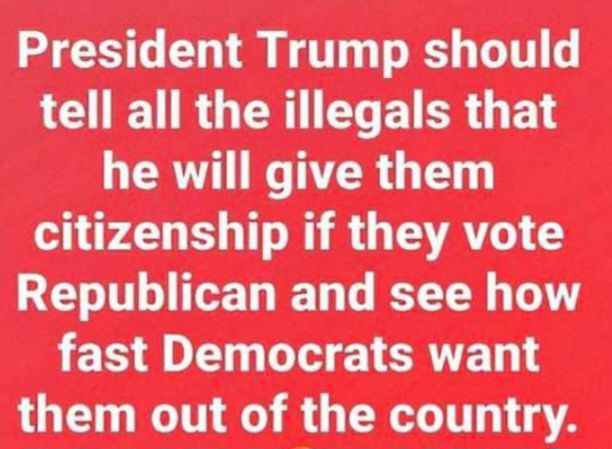
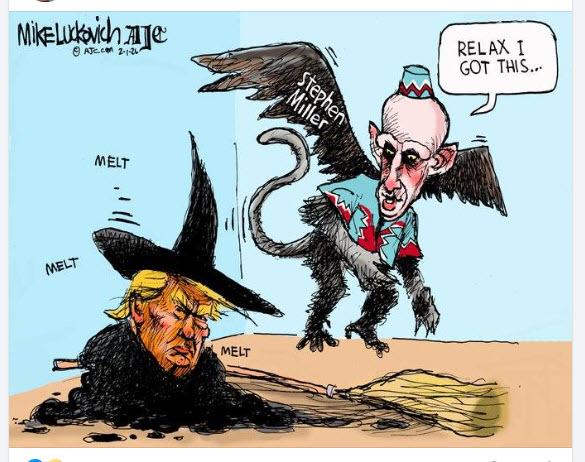
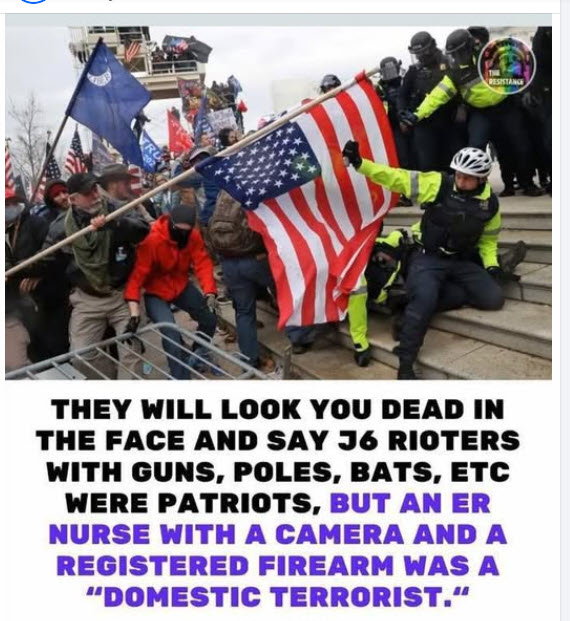








Related Discussions
- 58

What Do We Have Here? A Constitutional Crisis?
by Willowarbor 12 months ago
Vance's statement that "Judges aren't allowed to control the executive's legitimate power" has sparked concerns among legal experts, who suggest it could lead to a constitutional crisis or a breakdown of the American political system. This is due to the fundamental principle that...
- 49

Unelected Resistance: The Legal War Against President Trump’s Mandate
by Sharlee 7 months ago
Just a few months into President Trump’s second term, we’re witnessing an aggressive judicial campaign unlike anything in recent memory. Though elected by a majority of Americans hungry for change and committed to America First policies, President Trump’s ability to govern is being challenged not...
- 107

My Criticism of the Trump administration
by Jack Lee 7 years ago
As most of you know, I support many of Trump’s initiatives and I defend him here on hubpages when he is unfairly criticized by the media and others.You may also know I did not vote for Trump or Hillary in the 2016 election.Now, after over one year in office, and the signing of the latest Omnibus...
- 23

Presidential abuse of legal system
by Kathleen Cochran 7 months ago
"The Washington Post examined 337 lawsuits filed against the administration since Trump returned to the White House and began a rapid-fire effort to reshape government programs and policy. As of mid-July, courts had ruled against the administration in 165 of the lawsuits. The Post found that...
- 40

Trump: One way or another Mexico will pay for the wall? Yeah right..
by Credence2 9 years ago
https://www.yahoo.com/news/trump-threat … 40039.htmlMexico tells the Trump administration to 'take a hike'. Now the GOP is going to pay for it? How?Do we declare war on Mexico?https://www.yahoo.com/news/gop-leaders- … 42941.htmlI say that this whole thing was a 'crock' from the very...
- 103

Rogue Judges Contained
by Readmikenow 8 months ago
Thanks to the SCOTUS there will NO LONGER be any nationwide injunctions from rogue federal district court judges. I agree with the Supreme Court, these judges far exceeded their authority. There were also important rulings for parents and more.Nationwide injunctionsIn the most...