Is Trump in a Cognitive Decline?
Concerns about Donald Trump's cognitive health have intensified in recent years, with psychologists, political commentators, and even family members pointing to behavioral and linguistic changes that may suggest neurological decline. Here's a breakdown of the key observations and debates:
Signs Raised by Mental Health Experts
- **Unregulated Digression**: Psychologist Dr. Harry Segal noted Trump’s tendency to abruptly switch topics mid-conversation without a coherent narrative, calling it a red flag for cognitive decline.
- **Motor and Gait Issues**: Dr. John Gartner observed Trump’s slowed walking, frequent tripping, and difficulty exiting vehicles, contrasting it with his athleticism in the 1980s.
**Confabulation**: A term highlighted by The Hill, describing Trump’s vivid but false recollections—such as claiming his uncle told him about teaching the Unabomber, despite the timeline making that impossible.
- **Speech Patterns**: Experts have noted a shift toward simpler vocabulary, repetitive phrasing, and disjointed sentence structures—hallmarks of cognitive impairment.
Psychiatric Evaluations and Public Statements
- **Dr. Lance Dodes** (Harvard-affiliated): Called the evidence of dementia “overwhelming,” citing confusion between Barack Obama and Joe Biden as a sign of reality distortion.
- **Dr. Suzanne Lachmann**: Described Trump’s speech as “word salad,” a trait often seen in dementia patients.
- **John Gartner**: Authored a petition arguing Trump shows progressive deterioration in memory, language, and motor skills.
Family Commentary and Skepticism
- **Mary Trump**, his niece and a longtime critic, claimed Trump is “declining rapidly,” citing his rambling speeches and impulsive decisions like proposing nuclear reactors on the Moon.- However, she lacks direct medical access, and her claims are viewed by some as politically motivated.
Official Medical Reports
- Trump’s annual physical reportedly showed “no abnormalities in his mental status,” though critics argue such exams may not detect subtle cognitive decline.
Broader Implications
- Cognitive health in leadership is not just personal—it affects national decision-making, crisis response, and global diplomacy.
- The debate over Trump’s mental fitness echoes similar concerns raised about other aging leaders, including Joe Biden, making cognitive testing a politically charged issue.Just my view--- While critics claim Trump is in cognitive decline, common sense and recent, observable facts suggest otherwise. Just the other day, Trump was seen on the roof of the White House with a construction crew, engaging with workers during the early stages of a renovation project. That’s not the behavior of someone “declining rapidly.” Consider the physical stamina required to simply get up there, let alone interact in real time with a team of professionals on-site. Most people half his age wouldn't take on such a moment.
In addition, Trump maintains an incredibly demanding schedule for someone nearing 80. He holds weekly golf outings, which aren't just leisure activities; they require physical exertion, balance, concentration, and mental clarity. He travels constantly, delivers speeches often well over an hour, and does so without notes or teleprompters. That kind of unscripted public speaking, often off the cuff, simply doesn’t match the “word salad” narrative critics keep pushing.
As for his so-called “digressions,” it’s worth noting that Trump has always had a conversational, improvisational style. He uses humor, repetition, and storytelling to connect with audiences, not to pass a neurology exam. That doesn’t signify cognitive decline; it reflects a communication strategy that resonated with tens of millions of voters. In contrast, many politicians with “perfect sentence structure” can't hold a crowd’s attention for five minutes, let alone galvanize a stadium.
A while back, Trump underwent his most recent annual medical exam in 2025, and the official report stated he is in good overall health, with no signs of cognitive impairment. The exam included assessments of his mental status, memory, and neurological functions, all of which were found to be normal for his age. Notably, for an almost 80-year-old man, Trump reportedly takes only finasteride (Propecia) for hair loss, highlighting his relatively minimal medication regimen and robust health. If there were any significant concerns, they would have been noted publicly.
The so-called experts raising alarms, including Dr. John Gartner and Mary Trump, have never personally evaluated Trump and often have political motives. Their claims are speculative and lack the backing of direct medical evidence.
Meanwhile, critics conveniently overlook that Trump’s own medical evaluations show no abnormalities, while similar scrutiny is rarely applied to other leaders. For instance, President Joe Biden has shown visible signs of forgetfulness and difficulty with speech in public, yet those issues are often dismissed or ignored.
In the end, actions speak louder than speculative “word salads.” Trump’s energy, recall, physical mobility, and public presence are all inconsistent with the portrait of a man in serious decline. You don’t campaign, debate, travel, golf, and captivate crowds while suffering from the type of deterioration being alleged, at least not in reality.Trump exited the State Dining Room, which opens onto the roof of the West Wing. Not a mean feat. He uses teleprompters, but because he reads like Frankenstein's monster, he cuts out of the written speech and rambles about sharks and car batteries, which is the worst way to die, or making Greenland or Canada the 51st state. Etc, all insane topics.
Trump uses a singsong, droning speech style to hypnotize his audience. If you don't recognize it, you've been hypnotized long, long ago.
He goes to work at 11:00 AM and falls asleep during meetings as early as 11:30 AM. His right lip regularly droops, he has a foot drop, and he frequently trips. His hand is regularly bruised and swollen, likely due to dementia infusions.I think it’s worth separating observation from interpretation here, because a lot of what you’ve written goes well beyond verifiable facts and into speculation.
For example, describing speech patterns, alleged medical symptoms, or claiming things like “dementia infusions” are serious assertions, but they’re not supported by any confirmed medical evidence. Similarly, trying to infer cognitive condition from clips, mannerisms, or isolated public moments isn’t a reliable standard for anyone, regardless of party or office.
We can disagree strongly on Trump’s rhetoric, style, or policy positions; that’s fair game. But once the discussion shifts into diagnosing from a distance or attributing physical or neurological conditions without direct medical evaluation, it stops being analysis and becomes conjecture.
Also, it’s important not to replace one-sided narratives with another. If the standard is cognitive fitness, it should be applied consistently across public figures, using the same kind of evidence-based approach, not selective interpretation of appearances or speech style.
If the concern is about leadership and capability, I think the stronger argument is made by focusing on documented actions, policy outcomes, and public records, not personal medical speculation or insults.Let me repost the opinion of multiple mental health professionals about Trump.
Even a casual observer of Donald "enemy of the people" Trump during long news conferences can see the signs of obvious mental decline. Well, literally thousands of mental health experts have noticed it to and are not keeping silent about it.
Assessments of Donald Trump’s Mental Stability and Cognitive Health (2025)
Since Donald Trump’s return to office in January 2025, a number of mental health professionals – both individuals and groups – have weighed in on his mental fitness and possible cognitive decline. Below is a summary of these assessments (with dates, sources, and nature of each) (I deleted the sources to save space and make it look better, but can provide them on request), including peer-reviewed commentaries (where available) (there were none, so I deleted that section to save space), open letters by professionals, and public statements by experts. We also note distinctions made between Trump’s general mental stability (e.g. personality pathology or psychiatric fitness) and signs of cognitive deterioration (e.g. memory, language, executive function issues).
Group Statements and Open Letters by Professionals
October 24, 2024 (Open Letter in NY Times Ad) – Prior to Trump’s 2025 inauguration, but setting the stage: Over 230 psychiatrists, psychologists, and other health professionals signed an open letter declaring Trump “far too mentally unstable to be president.” The letter warned that Trump’s behavior met criteria for “malignant narcissism” – an untreatable severe personality disorder – rendering him “deceitful, destructive, deluded, and dangerous”
. Notably, the experts also flagged “signs of cognitive decline”, citing a “dramatic decrease in verbal fluency, tangential thinking, diminished vocabulary, ... confabulation, phonemic paraphasia, ... [and] deteriorating ... motor functioning (including a wide-based gait)”, and urged a full neurological work-up
. They concluded that if Trump does have an organic cognitive disorder, it “will only get worse over time, grossly degrading his already impaired judgment, impulse control, memory, attention, reality testing, and capacity to process information”
the-independent.com
Late 2024 – Early 2025 (Professional Petition on Dementia) – In parallel, a coalition of health professionals circulated a petition diagnosing Trump with “probable dementia.” By early 2025 it had nearly 3,000 licensed medical professionals’ signatures
. This petition, referenced by experts in 2025 interviews, highlighted Trump’s “shocking decline in verbal fluency” and linguistic inventiveness. As one psychologist noted, forgetting an occasional word can be normal aging, “whereas inventing words or using non-words is not” – Trump has frequently coined nonsensical words (phonemic paraphasias like “mishezz” for “missiles” or “Chrishmus” for “Christmas”), which the petition argues is outside normal limits and indicative of brain dysfunction
. This collective statement essentially asserts that Trump’s cognitive degeneration is unmistakeable and dangerous, although it is an advocacy petition rather than a formal journal article.
One exception is an opinion piece in The National Interest (Sept 2024) by Dr. Stephen N. Xenakis, a retired brigadier general and psychiatrist, who warned that Trump “already shows the signs of cognitive decline” and that his mental acuity would “likely…erode even further” in coming years
Public Statements by Individual Mental Health Experts (2025)
Multiple psychiatrists and psychologists have made public commentary in 2025 regarding Trump’s mental stability and potential cognitive decline. These statements, often in interviews or media op-eds, distinguish between Trump’s long-observed personality pathologies and newly evident cognitive deterioration:
April 1, 2025 – Dr. John Gartner (Psychologist) – In a MindSite News interview, Dr. Gartner (a clinical psychologist who taught at Johns Hopkins and co-founded the “Duty to Warn” group) emphatically stated “there is absolutely no doubt Trump has dementia.” He described an “ongoing deterioration in [Trump’s] memory, thinking, behavior and motor skills” and noted that compared to Trump’s articulate speech in the 1980s, “now he often degenerates into literal incoherence, where no one can tell what he is trying to say.” Gartner observed that Trump “has difficulty even finishing a sentence” and frequently goes off on rambling tangents or confabulatory riffs that make little sense
. He cited telltale symptoms like fragmented speech, nonsensical word substitutions, and a decline from logical, connected thoughts to disorganized rambling. In the same interview, Dr. Gartner also reaffirmed Trump’s “serious mental illness” – specifically malignant narcissism – alongside the dementia, calling Trump “a terrifying choice as president” due to this combination
. Gartner warned that Trump’s cognitive decline has accelerated in the last few years, and he predicted “it’s going to get worse” over the course of his term
. (Notably, Gartner’s Duty to Warn group had earlier identified Trump’s narcissistic personality disorder; in 2025 he emphasizes that organic cognitive decline now compounds Trump’s psychological instability)
April 21, 2025 – Dr. Bandy X. Lee (Forensic Psychiatrist) – Dr. Lee, a former Yale psychiatry professor and editor of The Dangerous Case of Donald Trump, continued to sound the alarm in 2025. In an interview with MindSite News titled “A Public Health Emergency: The Crusade to Assess Trump’s Mental Fitness for Office,” Lee stated that Trump has deteriorated markedly and that “the level of danger has vastly increased — especially because his symptoms have spread”
. She addressed Trump’s cognitive decline (possible dementia) and his broader psychopathology. Dr. Lee’s World Mental Health Coalition had convened experts (geriatric psychiatrists, neurologists, etc.) who documented Trump’s cognitive problems during the 2024 campaign – including “deterioration in language skills” (simpler vocabulary, incoherent sentences, grammatical errors), memory impairments leading to confabulation, and tangential thinking (erratic topic shifting)
. In the interview, Lee highlighted that while “signs of dementia in him are serious,” the most extreme dangers come from Trump’s underlying mental pathology (his propensity for violence, manipulation and lack of impulse control) which might be less obvious to the public
. “Cognitive problems and the high risk for dementia may be foremost in the public’s mind, since they are obvious, but they are not the most dangerous – precisely because they are obvious,” Lee explained
. She noted that Trump’s cognitive lapses (such as disorganized speech or forgetting facts) are visible to anyone, whereas his malignant narcissism and psychopathic traits pose stealthier threats to democracy and public safety
. Dr. Lee thus drew a clear line between mental unfitness (dangerous personality disorder making him unfit to lead) and cognitive decline (neurodegeneration), arguing both are present. She considers Trump’s condition a “public health emergency” and continues to advocate for formal mental fitness evaluations, despite professional pushback under the Goldwater rule (Her and another 3,500 professionals)
. (Lee’s stance has remained that mental health experts have a duty to warn when a leader’s psychological state poses a danger, even if formal diagnosis is off-limits)
June 2025 – Dr. John Gartner (additional statements) – In late June, Dr. Gartner spoke to the press reacting to Trump’s behavior in office. He observed “classic signs of dementia, which [represent] gross deterioration from [Trump’s] baseline”
. Gartner pointed out that video from the 1980s shows Trump speaking in complex, coherent paragraphs, “and now he really has trouble completing a thought”, a “huge deterioration” in communicative ability
. He also remarked that Trump’s motor skills and gait have worsened (compared to past footage), consistent with neurological decline. Gartner, who has decades of clinical experience, said that if Trump were a patient showing this degree of verbal incoherence, tangential thinking, and repetitive speech, “I would almost certainly refer them for a rigorous neuropsychiatric evaluation to rule out a cognitive illness.”
. He warned that Trump’s decline was rapidly accelerating and even predicted Trump might “fall off the cliff before the end of his term” in terms of cognitive capacity
. In media interviews, Gartner has also underscored that Trump’s narcissistic personality (a longstanding issue) is now exacerbated by possible dementia – a combination he calls uniquely dangerous
August 3, 2025 – Media Analysis quoting Experts – A detailed Guardian analysis in August 2025 noted that Trump’s “frequently bizarre public appearances” and rambling off-topic remarks had “once again raised questions about his mental acuity, experts say”
. The article cited several professionals:
Dr. Harry Segal, a senior psychologist at Cornell University (and co-host of the “Shrinking Trump” podcast), explained that Trump often “digress[es] without thinking – he’ll just switch topics without self-regulation, without having a coherent narrative.” Segal identified Trump’s abrupt topic shifts and lack of filter as signs of impaired executive function
. He also pointed to Trump’s confabulations, where Trump fills in memory gaps with fabricated details. For example, Trump has claimed false memories (like saying his deceased uncle “taught” the Unabomber) and spouted incorrect facts (e.g. about aid to Gaza), which Segal says is characteristic of cognitive decline: “It’s where he takes an idea or something that’s happened and he adds to it things that have not happened.”
Such behavior – creating stories or mixing fantasy into memory – can be an early sign of dementia, according to Segal.
The Guardian piece also referenced Dr. Richard A. Friedman, a professor of psychiatry at Weill Cornell, who wrote after witnessing Trump’s shaky 2024 debate performance that “any fair-minded mental-health expert would be very worried about Donald Trump’s performance.” Friedman noted that if a patient presented with Trump-like “verbal incoherence, tangential thinking, and repetitive speech,” he “would almost certainly refer them for a rigorous neuropsychiatric evaluation to rule out a cognitive illness.”
theguardian.com
. (Friedman’s commentary was published in The Atlantic in late 2024, but it was cited in 2025 discussions as an expert perspective on Trump’s cognitive fitness)
The same article summarized how Democratic officials had begun openly questioning Trump’s mental fitness by mid-2025, given his increasingly erratic comments. (E.g. Rep. Jasmine Crockett and Gov. Gavin Newsom cited Trump’s confusion and bizarre rants as evidence of decline). While these are political voices, their critiques mirrored the concerns of clinicians.
The Guardian noted that Trump’s allies and doctors vehemently deny any decline, but independent experts continue to point to objective behaviors (disorganized speech, memory lapses, etc.) that distinguish Trump’s issues from normal aging
Late August 2025 – “Shrinking Trump” Psychologists on Cognitive Decline – At the end of August, two psychologists – Dr. John Gartner and Dr. Harry Segal – devoted an episode of their “Shrinking Trump” program (a webcast/podcast analyzing Trump’s psyche) to Trump’s worsening cognitive and motor function. They raised alarms that Trump shows signs of a specific neurodegenerative disease, frontotemporal dementia (FTD). Dr. Gartner explained that recently Trump’s “psychomotor performance” has deteriorated noticeably: “we’re seeing a deterioration in his motor performance, which also goes with dementia because with dementia there’s a deterioration of all faculties, all functions”
the-express.com
. While Trump’s public demeanor and language problems have been evident for some time, Gartner said “now his motor ability is beginning to deteriorate”, and it’s getting “worse and worse.”
A striking piece of evidence they discussed was Trump’s gait and balance. Dr. Gartner noted a “dead ringer telltale sign of frontotemporal dementia” – a “wide-based gait, where ... one of your legs swings in a semicircle” – which Trump appears to exhibit
. They showed video of Trump walking with a widened stance and weaving while greeting foreign leaders, observing that “he’s weaving all along the carpet” as his right leg swing causes him to veer sideways
. Dr. Segal commented that Trump’s unsteady, zigzag gait “doesn’t look like someone who’s drunk, but he’s drifting back and forth ... as if he can’t control one of his legs.”
Both psychologists agreed this abnormal gait and balance impairment align with neurological decline (noting that such a walk would “fail” a sobriety test, despite no alcohol involved)
. Furthermore, Dr. Gartner stated he believes Trump may have more than one type of dementia, but the frontotemporal signs – involving behavioral changes and speech – are especially pronounced
. He pointed out that FTD often affects language and impulse control, which could explain Trump’s worsening verbal dysfunction and impulsivity. This public discussion by Gartner and Segal (covered in outlets like the Daily Express and Hindustan Times) underscores that by late 2025 even Trump’s physical coordination issues were being scrutinized as possible evidence of advancing cognitive decline
. It’s worth noting that both Gartner and Segal have been long-time commentators on Trump’s mental health; their latest warnings explicitly tie Trump’s behavioral quirks (e.g. disorganized speeches) to neurological deterioration, not just psychological traits.
Ongoing Distinction – Mental Instability vs. Cognitive Impairment: Across these expert statements, there is a consistent effort to distinguish psychiatric/behavioral unfitness from neurocognitive decline, even as they often overlap. For instance, Dr. Lee emphasized that Trump’s dangerousness (malignant narcissism, propensity for violence) would exist regardless of age, but now it is exacerbated by cognitive weakening
. Likewise, the October 2024 open letter spelled out that Trump’s toxic personality disorder makes him unfit and that an underlying cognitive disorder is likely accelerating his deficiencies
. In short, mental health professionals since 2025 have been careful to note that Trump’s “mental stability” issues (such as impulsivity, grandiosity, lack of empathy – hallmarks of narcissistic and antisocial traits) are being amplified by what appears to be emerging dementia (affecting memory, language, and reasoning). This dual concern is often explicitly stated. Dr. Gartner, for example, said Trump’s cognitive decline “dramatically exacerbates the symptoms of his toxic personality disorder”
. The consensus among these commentators is that Trump’s overall mental fitness is poorer in 2025 than ever before, because age-related cognitive deterioration is compounding his pre-existing psychological pathologies.
Official Medical Assessments vs. Independent Expert Views
April 13, 2025 – White House Physician’s Report: Three months into Trump’s second term, the White House released results of the President’s routine physical exam, including a cognitive screening. Dr. Sean Barbabella, the presidential physician, reported that Trump “exhibits excellent cognitive and physical health and is fully fit to execute the duties of the commander-in-chief.” He stated that Trump had been assessed for cognitive impairment and the results were normal
. In fact, Trump bragged that he “aced” his cognitive test and was “sharper than ever.” Such official pronouncements echo those during Trump’s first term (when Dr. Ronny Jackson similarly proclaimed Trump “the healthiest president ever” and “mentally sharp”
theguardian.com
). These assurances, however, have not quelled concerns among outside professionals.
Reactions of Experts: Mental health experts have generally treated the White House’s clean bill of health with skepticism. They point out that a brief cognitive screening (like the MoCA test reportedly given) is rudimentary and may not detect early dementia, especially if the patient trains for it. Dr. Segal and Dr. Gartner noted that Trump’s much-touted perfect score on a simple cognitive test is not meaningful – Dr. Gartner quipped that such a test is “easy to ace” and mainly rules out severe impairment, not subtle executive dysfunction
. Moreover, the observable behavior documented by journalists and clinicians tells a different story: despite Dr. Barbabella’s April 2025 report, “people [continue] questioning Trump’s mental acuity” as the year progresses
. By summer 2025, even some of Trump’s political opponents were openly suggesting that he is not cognitively sound, drawing comparisons to the scrutiny faced by the much older President Reagan in his second term or by Joe Biden. For example, Illinois Governor J.B. Pritzker (in a bipartisan governors’ meeting) commented that “Donald Trump is showing all the signs of suffering from dementia”, urging transparency about his mental fitness
Independent experts argue that Trump’s own behavior provides diagnostic clues that no straightforward exam can dismiss. They cite his frequent memory lapses (e.g. forgetting policy details or past statements), disorganized thought patterns, word-finding difficulties, and declining fine motor skills as evidence that something is changing neurologically
. As Dr. Friedman wrote, “If you aren’t comfortable labeling this as dementia, that’s fine. But there is no question that the president ... has an increasingly foggy grasp of past events ... These are facts we can see for ourselves”
In essence, the official medical stance in 2025 is that Trump is mentally fit, whereas a growing chorus of mental health professionals, geriatric specialists, and even some political figures contend that his cognitive decline is real and accelerating
How do you ignore such overwhelming evidence that the rest of us see with our own eyes and hear with our own ears.What strikes me here is that my original point was specifically about separating evidence from speculation and applying standards consistently. But instead of addressing that principle, your response simply reposts opinions from mental health professionals who already share your conclusion about Trump.
That really doesn’t answer the concern I raised.
There’s a major difference between documented medical evaluation and political commentary from people observing television appearances, speeches, or edited clips from afar. Even highly educated professionals can fall into confirmation bias when they publicly diagnose political figures they strongly oppose. That’s precisely why the “Goldwater Rule” exists within psychiatry in the first place.
It’s also worth noting that Trump has undergone medical evaluations while in office, including cognitive screening tests, and physicians who evaluated him publicly stated that he was fit to serve. People are free to question politicians and public figures, but there is still a meaningful distinction between formal medical assessments and outside speculation based on clips, interviews, or political disagreement.
You also say “even a casual observer can see obvious mental decline,” but that’s still interpretation, not objective medical proof. Political opponents said similar things about Reagan, Biden, Bush, and others depending on the era and partisan lens being used. Public speaking style, verbal stumbles, exaggeration, aggression, age, or unconventional rhetoric are not the same thing as a verified neurological diagnosis.
If we’re going to discuss leadership seriously, I still believe the stronger argument comes from focusing on policies, decision-making, public outcomes, diplomacy, economics, border policy, foreign affairs, or executive actions, areas where evidence can actually be examined and debated directly.
Otherwise, it risks becoming a cycle where people substitute amateur diagnosis and partisan speculation for substantive political discussion.
In my view, it seems more appropriate to rely on official medical evaluations from Walter Reed and the White House physician rather than media commentary or physicians who have not personally examined the patient and therefore cannot make a direct clinical assessment. I find this unprofessional and unacceptable.
"MEMORANDUM
TO: KAROLINE LEAVITT
WHITE HOUSE PRESS SECRETARY
FROM: CAPT SEAN P. BARBABELLA, D.O., MC, USN
PHYSICIAN TO THE PRESIDENT
SUBJECT: PRESIDENT DONALD J. TRUMP'S ANNUAL PHYSICAL EXAMINATION RESULTS --- Walter Reed National Military Center.
On April 11, 2025, President Donald J. Trump underwent his annual physical examination at Walter Reed National Military Medical Center. I performed and supervised the comprehensive exam, which included diagnostic and laboratory testing, as well as consultations with fourteen specialty consultants, all in accordance with U.S. Preventive Services Task Force (USPSTF) recommendations. The President has consented to release the physical exam findings to the public.
VITAL STATISTICS:
Age: 78 years, 10 months
Height: 75 inches
Weight: 224 pounds
Resting Heart Rate: 62 beats per minute
Blood Pressure: 128/74 mmHg
Pulse Oximetry: 99% on room air
Temperature: 98.6 °F
PHYSICAL EXAMINATION AND DIAGNOSTIC SUMMARY:
Eyes: Normal visual acuity, visual fields, and eye pressure. Dilated eye exam was normal.
Head/Ears/Nose/Throat: Examination of the head, ears, nose, and throat revealed no significant abnormalities with the exception of scaring [sic] on the right ear from a gunshot wound. Hearing was normal.
Neck: The thyroid and lymph nodes were normal. A July 2024 ultrasound of the carotid arteries showed normal results, and a repeat study was not indicated.
Pulmonary: Lungs were clear on examination and a computed tomography (CT) scan of his chest showed no abnormalities.
Cardiac: Cardiac examination revealed a regular rate and rhythm with normal heart sounds. Cardiac testing, including an electrocardiogram (EKG) and echocardiogram that revealed no abnormalities. His heart function is normal, with a healthy normal ejection fraction, and blood flow to his extremities is unimpaired.
Gastrointestinal/Abdominal: The abdominal examination and ultrasound were normal. A July 2024 colonoscopy revealed diverticulosis and a benign polyp. Gastroenterology recommended a follow-up colonoscopy in three years.
Genitourinary: No abnormalities noted.
Extremities/Musculoskeletal: His joints and muscles have a full range of motion, with normal blood flow and no swelling.
Neurological: A comprehensive neurological examination revealed no abnormalities in his mental status, cranial nerves, motor and sensory function, reflexes, gait, and balance. Cognitive function, assessed using the Montreal Cognitive Assessment (MoCA), was normal with a score of 30 out of 30. The patient also completed the Patient Health Questionnaire-9 (PHQ-9) and the Generalized Anxiety Disorder-7 (GAD-7) for screening of depression and anxiety, respectively, with scores within the normal range for both.
Dermatologic: The skin examination revealed some minor sun damage and a few benign lesions. No concerning lesions or growths were identified.
LABORATORY RESULTS (Normal Values Included):
Lipid Panel:
Total Cholesterol: 140 mg/dL (Optimal <200 mg/dL)
Triglycerides: 56 mg/dL (Normal < 150 mg/dL)
HDL ("Good" cholesterol): 77 mg/dL (Desirable >40 mg/dL)
LDL ("Bad" cholesterol): 51 mg/dL (Optimal <100 mg/dL)
Complete Blood Count: White Blood Cells: 4.4 K/uL (Normal: 4.0-11.0 K/uL)
Hemoglobin: 14.5 g/dL (Normal: 13.8-17.2 g/dL)
Hematocrit: 44.7% (Normal: 41-50%)
Platelets: 229 K/uL (Normal: 150-450 K/uL)
Metabolic Panel:
Glucose (fasting): 89.7 mg/dL (Normal: 70-99 mg/dL)
Hemoglobin Alc: 5.2 (Normal: 4.0-5.6)
BUN: 18.2 mg/dL (Normal: 7-20 mg/dL)
Creatinine: 0.89 mg/dL. (Normal: 0.74-1.35 mg/dL)
ALT: 41 U/L (Normal: 7-56 U/L)
AST: 28 U/L (Normal: 10-40 U/L)
Vitamin B12: 486 pg/mL (Normal: 200-900 pg/mL)
PSA: 0.10 ng/mL (Normal: <4.0 ng/mL)
TSH: 1.42 MIU/mL (Normal: 0.4-4.0 MIU/mL)
Urinalysis: Normal.
PERTINENT PAST MEDICAL HISTORY:
His medical history is notable for well-controlled hypercholesterolemia, seasonal allergies, a history of COVID-19 infection, well-managed rosacea, actinic keratosis, benign nevi, diverticulosis, and a benign colon polyp.
PAST SURGICAL HISTORY:
Appendectomy at age 11
Bilateral cataract surgery
SOCIAL HISTORY:
Lifelong abstinence from tobacco and alcohol
CURRENT MEDICATIONS:
Rosuvastatin (cholesterol control)
Ezetimibe (cholesterol control)
Aspirin (cardiac prevention)
Mometasone cream (as needed for skin condition)
IMMUNIZATIONS:
All recommended vaccinations are current, including travel-related immunizations.
SUMMARY: President Trump remains in excellent health, exhibiting robust cardiac, pulmonary, neurological, and general physical function. His active lifestyle continues to contribute significantly to his well-being. President Trump's days include participation in multiple meetings, public appearances, press availability, and frequent victories in golf events. President Trump exhibits excellent cognitive and physical health and is fully fit to execute the duties of the Commander-in-Chief and Head of State"
https://www.presidency.ucsb.edu/documen … l-physicalSure, that's why he says he has had the most rigorous test of all presidents in the history of the world. He says he was asked what this animal is and what is that animal. His words paraphrased because I can't remember what animals he actually mentioned.
He exaggerates and puts a positive spin on everything even if it is negative. Providing an example of the test by repeating what animal is this, is an insult to my intelligence and I'm sure to many others as well.
This is an exercise in futility, because they are not going to tell the public what his real health condition is about. It would be detrimental to the security of the nation. But we can all observe and come to our own conclusions. I can understand why you like him because you put a positive spin on everything he does and says, just like him.
He is overweight for one thing. All one has to do is look at him. I hate to see what his BMI is. He has swollen ankles, which could be a sign of congestive heart failure. He has some kind of thing going on with his hands being bruised. If that is from shaking hands, that doesn't happen to a person who doesn't have a problem."But instead of addressing that principle, your response simply reposts opinions from mental health professionals who already share your conclusion about Trump." - COULD IT be that they and I formed our opinion about Trump based on a careful study of Trump's actions and words? I think it is.
"There’s a major difference between documented medical evaluation and political commentary from people observing television appearances, speeches, or edited clips from afar. " - If you read what I posted, those ARE those are legitimate and respected professional clinical opinions based on documented public behavior.. For the kinds of things wrong with Trump, the idea that you need up close and personal couch time has been thoroughly Debunked. Simple observation over a period of time and a deep study of his speaking and writings are clearly enough.
"Even highly educated professionals can fall into confirmation bias when they publicly diagnose political figures they strongly oppose." - ONE, how do you know they opposed him to start with?
"Even highly educated professionals can fall into confirmation bias when they publicly diagnose political figures they strongly oppose." - TWO, I could buy that idea if you were talking about one or two of them. But we are not. We are talking about hundreds or more. (I only listed some)
" including cognitive screening tests" - First, I think that is singular and is the same one I took 10 months ago (I also "aced" it). But they still did blood work looking for specific genetic and other markers as well as a fMRI brain scan. Trump had none of those things that I am aware of or that you listed.
" including cognitive screening tests" - Second, the MoCA is testing for significant cognitive decline. Even I don't claim he has "significant" decline yet.
"You also say “even a casual observer can see obvious mental decline,” but that’s still interpretation, " - Of course it is interpretation, we aren't mental health professionals like those I listed. But to brush it off like you just did is to say those who are making those interpretations are just plain stupid and have no right to make are speak of those interpretations.
"Political opponents said similar things about Reagan, Biden, Bush, and others depending on the era and partisan lens being used. Public speaking style, verbal stumbles, exaggeration, aggression, age, or unconventional rhetoric are not the same thing as a verified neurological diagnosis." - They were right about Reagan. I don't remember anything like that being said about Bush, either one. As to Biden, only partisans, without evidence from mental health professionals, made such claims. When you DID ask mental health professionals, you almost always got back the same answer - "what we are seeing raises some concerns and needs evaluation" Nevertheless, Biden's doctor declared HIM "fit for duty" as well.
Also, we have two issues here, dangerous personality disorder and cognitive decline. Mental Health professionals, based on well over a decade of observation of Trump actions and words have largely concluded his is dangerously mentally ill (which is not the same thing as to what we are talking about). But as to cognitive decline, they are much where they were with Biden - showing enough signs where an thorough evaluation is needed, not just a simple MoCA." COULD IT be that they and I formed our opinion about Trump based on a careful study of Trump's actions and words? I think it is." ESO
Your opinion is a layman's view. But, is it factual, and is it scientific as medical tests and examinations?
Again, your comment offers opinions from professionals who did not conduct any form of examination on the President. They shared opinions, not documented results that were collected via examination and medical testing. Would you feel confident if a Psychologist or psychiatrist diagnosed you based on what they see, perhaps from your comments?
" Of course it is interpretation, we aren't mental health professionals like those I listed. But to brush it off like you just did is to say those who are making those interpretations are just plain stupid and have no right to make are speak of those interpretations." ESO
I did not dismiss it; I took the time to review the available facts released regarding Donald Trump’s health records, including information from a medical examination, diagnostic testing, and blood work, to support my position. I called no one stupid, nor did I impune anyone's opinion. I pointed out that "In my view, it seems more appropriate to rely on official medical evaluations from Walter Reed and the White House physician rather than media commentary or physicians who have not personally examined the patient and therefore cannot make a direct clinical assessment. I find this unprofessional and unacceptable."
We clearly approach forming opinions in very different ways.In my view, it seems more appropriate to rely on official medical evaluations from Walter Reed and the White House physician rather than media commentary or physicians who have not personally examined the patient and therefore cannot make a direct clinical assessment. I find this unprofessional and unacceptable."
Who is to say that Walter Reed or the president’s personal physician is going to provide medical information contrary to Trumps wishes?Who is to say that the quacks violating their Hippocratic Oath and making public their "opinion" of Trump (without an examination) is telling the truth even as they see it? Is it even possible to be more unprofessional than that?
So you are calling the thousands of mental health professionals who have a Duty to Warn if a public figure is Dangerous "quacks"? Interesting.
“Thousands”? That’s a very strong claim and it needs to be backed by solid, verifiable sources.
From everything I can find, what actually exists are a relatively small number of mental health professionals, mostly psychiatrists and psychologists, who have participated in open letters, books, or media commentary about Trump’s behavior and mental fitness. These are public opinions and interpretations, not clinical diagnoses based on examination.
I have not seen any credible documentation showing thousands of physicians issuing a formal, unified “Duty to Warn” determination. If that evidence exists, it should be easy to cite directly.
Yes, the individuals often cited in these discussions are real, credentialed mental health professionals, including psychiatrists and psychologists such as Dr. Bandy X. Lee, Dr. John Gartner, Dr. Lance Dodes, Dr. Robert Jay Lifton, and Dr. Justin Frank. However, it’s important to be accurate about what their statements actually represent.
These professionals have largely engaged in public commentary, authored books, signed open letters, or participated in advocacy efforts regarding Donald Trump’s behavior and perceived psychological traits. Many of them are also involved in broader political or media discourse, and their views are based on interpretation of publicly observable behavior rather than direct clinical examination.
Crucially, none of these individuals conducted formal psychiatric evaluations of Trump in a clinical setting, and there is no unified medical or psychiatric body that has issued a consensus diagnosis or formal “Duty to Warn” determination regarding him. Their conclusions are therefore best understood as professional opinions and interpretive analyses, not clinical findings based on examination, testing, or established doctor–patient relationships.
So while the professionals involved are real and qualified in their fields, their public statements fall into the category of advocacy and interpretation rather than formal medical diagnosis or a coordinated clinical judgment.
Why should i believe the assessment of the fawning quacks that will say anything Trump tells them to say about his health. I want independent evaluations, the type that you are quick to dismiss as invalid.
The White House Physician is not chosen by the President in the way people often assume, and it is not a personal “pick your doctor” situation.
The physician is typically a U.S. military doctor selected through the Navy Medical Corps and the White House Medical Unit. Candidates are screened and nominated within the military medical system based on experience, security clearance, and suitability for a highly sensitive operational role. From there, the assignment is made through the military chain of command in coordination with the White House Medical Unit during the transition process.
Importantly, this is not a position where the President independently hires, fires, or directly selects a personal physician. It is an assigned military role, not a personal appointment, and it operates within Department of Defense structure rather than personal presidential preference.
It is also unfair and inaccurate to dismiss the physician or medical team involved as a “quack.” These are career medical professionals operating under strict clinical and military standards, with multiple staff involved in evaluation, testing, and documentation. The suggestion that such a system would collectively fabricate or falsify test results is a serious accusation that would require real evidence, not assumption.
I mean, this is all kinds of crazy!You have a whole gamut of lemmings type GOP legislators existing solely on Trumps approval. Why should i believe in the integrity of those that are closest to him to give an objective assessment of his health? The process is one thing, the practical application and reality are something else. And who is it that controls all of these departments, Sharlee? Trump has always been about fabricating and falsifying, why would one presume anything different this time?
The White House Medical Unit isn’t a political group of “Trump allies” (or any president’s allies). It’s made up of career military medical professionals who operate under the Department of Defense chain of command. Their job security, licensing, and professional obligations don’t hinge on presidential approval. So even if someone believes a president has influence over political appointments, that doesn’t translate into direct control over military physicians’ clinical reporting or medical records.
Second, I don’t think it’s fair, or really workable- to assume falsification on the basis of political distrust alone. If we apply “they’re all just lying because they’re close to him” as a standard, then no medical exam tied to any president would ever be credible, regardless of party. At that point it stops being a question of evidence and becomes a blanket assumption that can’t really be tested.
If there are specific medical claims, reports, or inconsistencies you’re pointing to, those can be evaluated directly. But broad claims like “everyone close to him is fabricating results” or “the system is controlled for that purpose” need more than general distrust to stand up, otherwise they apply equally (and inconsistently) across administrations.
In short, skepticism is reasonable. But replacing that with total dismissal of the entire medical structure requires actual proof, not just a political conclusion about the people involved.
If your theory is to be believed, it would mean an entire hospital-level system would be in question, physicians, technicians, lab technicians, radiologists, nurses, and support staff all working together in a coordinated effort to falsify medical results. That’s not just one individual being “influenced,” that’s a whole chain of licensed professionals across multiple disciplines. Do you really think all of them would be willing to risk their careers, licenses, and legal liability to participate in something like that?If your theory is to be believed, it would mean an entire hospital-level system would be in question, physicians, technicians, lab technicians, radiologists, nurses, and support staff all working together in a coordinated effort to falsify medical results. That’s not just one individual being “influenced,” that’s a whole chain of licensed professionals across multiple disciplines. Do you really think all of them would be willing to risk their careers, licenses, and legal liability to participate in something like that?
——————
If they did not provide information that Trump would approve, YES.
We will have to agree to disagree on this as I don’t trust Trump to be objective and reasonable about anything, and it goes far beyond politics."It’s made up of career military medical professionals who operate under the Department of Defense chain of command." - AGAIN, I would argue that is naive, especially when you have a bully at the top of that "chain of command".
This is my view; it differs from yours. If your theory is to be believed, it would mean an entire hospital-level system would be in question, physicians, technicians, lab technicians, radiologists, nurses, and support staff all working together in a coordinated effort to falsify medical results. That’s not just one individual being “influenced,” that’s a whole chain of licensed professionals across multiple disciplines. Do you really think all of them would be willing to risk their careers, licenses, and legal liability to participate in something like that?
Not sure what more I could say on the issue.The lab techs, nurses and the rest of the Healthcare system have nothing to do with the final report. Only the physician signing it has to bear false witness. All other Healthcare professionals are prohibited by law, HIPAA, from commenting on any of his lab results. Not to mention that administration wide, if you cannot pledge loyalty to DJT, you cannot work there. Look at all of the Generals being dismissed at the DoD and Iranian specialists at the FBI being pushed out, to know what is happening across the federal government, to our inevitable demise. Stalin did the same thing, so that his only answer to Hitler was scorched earth.
"would mean an entire hospital-level system would be in question," - WHY the ENTIRE hospital system and not just the doctor being forced to lie (or in Jackson's case willingly) lie?
It seems to me that is a very Pollyanna view given the history with demoted-Capt Ronnie Jackson and Trump's history of coercing people into saying what he wants.
Yes, Ronny Jackson was the lead Physician to the President for Barack Obama. He was appointed to the role in July 2013 and served throughout the remainder of the Obama administration, and stayed on for part of the Trump administration.Jackson originally joined the White House Medical Unit during the George W. Bush administration in 2006 and later transitioned into the top physician role under President Obama.
Yes, he was Obama's physician for awhile and gave reports like this:
When Jackson reported on Obama, the reports were professional, clinical, and conventional. Obama was described as healthy, physically fit, exercising regularly, maintaining a good diet, and having normal cardiovascular indicators. The tone was what you would expect from a White House physician: factual and restrained.
With Trump, Jackson’s tone changed dramatically. Suddenly we were hearing about “incredibly good genes,” a perfect MoCA score being treated as though it were extraordinary, and even jokes that Trump might live to 200 years old if he ate better. That was not standard medical reporting. It sounded more like praise than clinical assessment.
And context matters. This is the same Ronny Jackson who was later demoted after misconduct findings and whose professional credibility became heavily disputed. It also involves the same Donald Trump who has a long documented history of pressuring subordinates, demanding personal loyalty, and encouraging people to publicly validate his preferred narratives.
So when people look skeptically at Jackson’s glowing descriptions of Trump, they are not inventing that skepticism out of thin air. They are comparing:
Jackson’s much more restrained and clinical reporting style under Obama,
Jackson’s later credibility problems, and Trump’s well-established pattern of demanding flattering public portrayals from people around him.“Donald Trump did not conquer or otherwise take over the Republican Party and “conservative” movement, nor has he corrupted their innocence. He just gave them permission to be their true selves.”
That is how I see it.
The article continues to question if this Trump man is not totally nuts?
https://www.salon.com/2026/05/26/trumps … blic-life/
I agree. Making a medical diagnosis without examining a patient is not only unprofessional and unethical, it’s simply not credible medicine. At that point it stops being clinical assessment and becomes speculation.
A great example is disgraced and demoted Ronnie Jackson.
That concern sounds reasonable on the surface, but it actually misunderstands how medical ethics and federal physician roles work.
A White House physician or Walter Reed medical staff are not supposed to function as political spokespeople or “advocates” for the president’s wishes. They are bound by the same basic medical ethics as any other doctor: accuracy, confidentiality, and truthful reporting of clinical findings. Their professional obligation is to the patient’s health and to factual reporting, not to political preference.
If there were ever credible evidence that official medical reports were being altered or suppressed for political reasons, that would be a serious breach of ethics and would itself be subject to scrutiny, oversight, and investigative reporting, not something assumed in advance as the default.
By contrast, commentary from outside physicians who have not examined the patient is not a substitute for an actual clinical evaluation. That’s not a political point, it’s a basic medical standard. Diagnosing or asserting specific conditions without examination is widely considered inappropriate in clinical practice.
So the more grounded way to look at it is this: official evaluations are not automatically “pro-administration,” and outside commentary is not automatically more objective. The credibility has to rest on professional standards, documentation, and accountability, not assumptions about who is “more likely” to tell the truth.
So if I observe a man limping badly, I can’t diagnose the exact orthopedic condition — but I can still reasonably say, “That man is having trouble walking."
That is the distinction you seem to keep skipping.
I am not claiming that my lay opinion is the same as a full medical examination. It isn’t. But observable behavior is still evidence. Trump’s words, actions, threats, impulsivity, confusion, and long public record are not imaginary just because I am not the doctor conducting the exam.
And more importantly, I did not rely only on my lay opinion. I pointed to mental-health professionals who have studied his public behavior over many years and reached professional conclusions about dangerousness and personality pathology. You may disagree with them, but dismissing all of that as mere “lay opinion” is not a rebuttal.
A medical test can answer some questions. It cannot answer all questions. A MoCA may screen for significant cognitive impairment; it does not measure judgment, dangerousness, impulse control, honesty, authoritarian tendencies, or fitness for power.The limping analogy actually highlights the flaw in your argument rather than strengthening it.
Yes, if you see someone limping, you can say they are having difficulty walking. That’s an observable, objective fact. But you still cannot diagnose the cause of that limp, arthritis, a sprain, nerve damage, or something else, without an examination and medical testing. That’s exactly the distinction you’re glossing over.
What you are doing here is not just noting observable behavior; you are moving from observation to clinical-style conclusions about cognitive or psychological condition, dangerousness, and pathology based on public appearances, speeches, and media clips. That is not equivalent to saying “he is walking differently.” It is closer to saying “I know the underlying diagnosis and mental condition based on observation alone.”
You also mention professionals who have “studied his public behavior.” That still is not a clinical examination. It is still indirect analysis without controlled assessment, interviews under clinical conditions, or diagnostic testing. That’s why such commentary is considered opinion or interpretation in psychiatry, not diagnosis.
And you’re also mixing two different categories: cognitive screening tools like the MoCA are not designed to evaluate political judgment, personality traits, or “fitness for office.” Those are value judgments, not clinical diagnoses, and even within psychology there is no agreed medical test that determines those qualities the way you’re implying.
So the real distinction isn’t “layperson vs doctor.” It’s this:
observing behavior and forming opinions about it is fine, but presenting those interpretations as if they carry the weight of clinical assessment is where the line gets crossed.
The report from Donald Trump’s medical examination at Walter Reed carries the weight of an actual clinical evaluation—direct observation by physicians, physical examination, and standard diagnostic testing, including blood work.
By contrast, interpreting public behavior or media clips from a distance is still speculation. You can call it analysis or opinion, but it is not the same thing as conclusions drawn from a documented medical exam under clinical conditions.
That distinction matters if we’re talking about medical credibility rather than political interpretation.
It’s fairly clear from your comments that you’re setting aside the actual medical assessment and instead leaning on the interpretation of media narratives. That’s your choice, but it’s not the same as engaging with the documented clinical findings from an official health evaluation.
As I said, we approach conclusions differently. I tend to prioritize documented facts and official medical assessments over media interpretation. I find that to be a more grounded and reliable way to evaluate these kinds of claims.
You spent 4 years on here defending a dementia patient... His wife. VP. Etc knew he was brain dead... By the end all people being honest with themselves knew.
That you or several others on here suffering from TDS have the gall to even bring this subject up is laughable.Thank you --- I mean how could one live that down --- Just saying
I hate to say this, but I think you are suffering from cognitive dissonance when it comes to Trump's latest behaviors. You probably already know this, but I am posting this for the benefit of others.
Cognitive dissonance is a psychological concept that describes the mental discomfort we feel when we hold two or more contradictory beliefs, values, or attitudes—especially when our behavior conflicts with those beliefs.
https://youtu.be/Ci83s7iVYI8?si=L57shJ5eydi7PJ6O
https://www.youtube.com/live/ASP-hD8qwY … LotZaRdgu-I was simply pointing out that, in my view, it would be pretty hard to live down being someone who defended Biden’s cognitive issues. My comment had nothing to do with Trump at all. I responded to the subject. I had no reason to divert to Trump in any respect. My context was clearly on the subject.
Here is the conversation and what I replied to--
"You spent 4 years on here defending a dementia patient... His wife. VP. Etc knew he was brain dead... By the end all people being honest with themselves knew.
That you or several others on here suffering from TDS have the gall to even bring this subject up is laughable." Ken
My reply --- "Thank you --- I mean how could one live that down --- Just saying" Shar
As you can see, Zero about Trump....
I was pointing out that, in my view, it would be pretty hard to live down being someone who defended Biden’s cognitive issues. I’m not sure why you think I’m experiencing cognitive dissonance. Personally, I don’t struggle with that. I’m very straightforward. I call a spade a spade and don’t twist reality to suit a narrative. I don’t need to rationalize, deny, or spin things to feel comfortable with my views, because I base them on what I see clearly in front of me. People who experience cognitive dissonance often try to reduce the discomfort by justifying, denying, or changing one of the conflicting elements. Isn’t that exactly what you just did in your reply?
As for me, I’ve always addressed my comments honestly and directly, based on how I actually feel. I don’t shy away from calling things out when they’re wrong ,whether it’s Trump, Biden, or anyone else. I tend to shine a spotlight on what others try to avoid, and I think that’s exactly what tends to rub some people the wrong way. I’m pretty unique in that respect. I mean, you diverted and made this about me, shifting the focus to a perceived conflict instead of actually addressing my original comment. I get it, though, that might be difficult, especially since you were one of the ones who adamantly defended Biden’s cognitive state.
People who experience cognitive dissonance often try to reduce the discomfort by justifying, denying, or changing one of the conflicting elements. Isn’t that exactly what you just did in your reply, and why you did it? You did not want to, perhaps, face you were one who strongly defended Biden's cognitive state. Nothing can erase that, not comparing Trump's cognitive state or anything else... In my view, I feel as I said in my reply to Ken ---
"I mean how could one live that down". Trump's cognitive abilities are a completely different subject.
I mean, you diverted off subject and made this about me and Trump. Shifting the focus to a perceived conflict instead of actually addressing my original comment. I get it, though, that might be difficult, especially since you were one of the ones who adamantly defended Biden’s cognitive state.
Cognitive dissonance can cause tension in a person who feels uncomfortable with someone else's beliefs. People experiencing cognitive dissonance often try to reduce the discomfort by justifying, denying, or changing one of the conflicting elements. As you did in this incident.
As for me, I’ve always addressed my comments honestly and directly, based on how I actually feel. I don’t shy away from calling things out when I think they’re wrong, whether it’s Trump, Biden, or anyone else. I tend to shine a spotlight on what others try to avoid, and I think that’s exactly what tends to rub some people the wrong way. I’m pretty unique in that respect. I am not trying to score points; I am trying to be comfortable in my own skin.I don't have a problem recognizing that I have cognitive dissonance. It's very common in political arguments. What I do have a problem with is what Trump supporters and you are saying on this forum. You and others believe just because Biden has been in cognitive decline does not give me the right to mention that Trump is also exhibiting symptoms of it as well.
Trump is suffering from confabulation.
It's when you tell stories that are not true, but you as the storyteller absolutely believes them. Here are several examples of Trump doing exactly that. These are not opinions, but are verifiable observations
https://thehill.com/opinion/campaign/54 … tia-signs/
https://youtu.be/zuJNQy3FrR0?si=ajw3sEIUEAPJIpPS
https://youtu.be/WPoKvSEPKWo?si=wx3z2YtIcuaRxRKLI consider myself a candid realist. While I acknowledge that cognitive dissonance might occasionally surface in my conversations here on HPs.
" What I do have a problem with is what Trump supporters and you are saying on this forum. You and others believe just because Biden has been in cognitive decline does not give me the right to mention that Trump is also exhibiting symptoms of it as well. PP
I want to be clear that I don’t believe I’ve done what you’re suggesting. If you revisit my very first comment, you’ll see I simply shared my perspective on the subject, even though it didn’t align with your thoughts or beliefs. If the thread wasn’t meant to be open for debate, perhaps that could have been stated upfront. Regardless, I made sure to express my view politely and respectfully
https://hubpages.com/politics/forum/369 … ost4379087
I’m not sure why you feel I’m trying to limit your freedom of speech in any way.
My initial comment was intended to respectfully share my own thoughts without infringing on yours. I can only assume the issue arises because you may not want to hear the other side of the coin. Consider your opening comment; you shared your thoughts, and subsequent comments offered others’ viewpoints. Isn’t that how political conversations typically unfold?This is what Ken Burgess said about my comment in reference to Trump and his cognitive decline.
You spent 4 years on here defending a dementia patient... His wife. VP. Etc knew he was brain dead... By the end all people being honest with themselves knew.
That you or several others on here suffering from TDS have the gall to even bring this subject up is laughable
Here is your reply to Ken about my comments.
Thank you --- I mean how could one live that down --- Just sayingI said that...
Isn't it ironic...
Let me know when Trump gets to the point where he is pooping his pants on stage and tripping over his own feet as he goes up the stairs... Or is just stumbling on a level floor... then maybe we can get worried...
After all... Biden set the bar so low you'd have to be brain dead or comatose to get under it.https://x.com/MarcoFoster_/status/1931815786001359322
https://x.com/KatiePhang/status/1851799262784290962
Need more??
And what in the actual hell was this??
https://x.com/cturnbull1968/status/1951043323440902181I call that desperation by the left.
Sad desperation.
What a shame.When he walks away from his presser and his shoulder decides to go in the opposite direction....odd anyone would ignore that . Yes, a shame.
https://x.com/Acyn/status/1951025775337152776Silly BS... I mean, who buys into clips that are seconds long? I have no respect for this form of mindset. I mean, the sooner no one replies to this kind of post, the sooner we will have more substantial conversations here. I mean, maybe best to let them talk among themselves.
What is this herky jerky??
https://x.com/Acyn/status/1951025775337152776It isn't a "view". The video clearly shows him struggling.
Seeing that reminds me of the the psychological horror film Jacobs Ladder with Tim Robbins. Yup, I know I'm weird

These forums are about convincing the other side that they are wrong as to how they feel about Trump. None of my videos are seconds long. If all the other side has is sarcasm, insults, and self aggrandizing, it becomes apparent that the side that drops out can't handle the truth about Trump.
The real truth only has one side. I'm 86 and will be 87 in a month, God willing. I know I have some cognitive decline because I have CRS, Can't Remember S**t.
Have a great day..I respect your age and life experience, but I’d have to disagree with your take on what a forum is “meant” to be. If the only purpose is to convince the other side they’re wrong, then it’s not really a discussion, it’s a lecture with an audience. A healthy forum should be about exchanging ideas, understanding each other’s reasoning, and examining facts from multiple angles. Sometimes that might change someone’s mind, but often it’s about broadening perspective, not just “winning.”
Also, saying “the real truth only has one side” sounds good in theory, but in politics the truth is rarely that simple, it often depends on how evidence is weighed and interpreted. People can leave a discussion for many reasons besides “not handling the truth,” including tone, time, or just deciding the conversation is going in circles.
In my view, a forum is about offering food for thought, not ruminating endlessly on the same fixed points. If we go into every discussion assuming our side has all the truth and the other side just can’t face it, we’re not debating, we’re preaching. And that’s when forums stop being useful for everyone.For some people they are all about Trump... they have Trump on the brain.
There is a couple for... and plenty against...
And then there are some that are just tired of seeing Trump dropped into every thread regardless of what it is about.
Discussing how AI will impact our futures, the economy, will we be integrated with it and the internet with a Neuralink chip... will we be able to control Tesla robots with them... will the chips control us?
Or discussing the shifting civil/social/religious construction of society in places like France and Sweden where the immigrant population is around 20%+ of the population in such a short period of time, with no insistence on assimilation, that unrest and/or change is sure to follow.
Is China a real threat to supplant America on the global stage... or is it about to collapse in on itself? ...Hard to tell, the 'experts' are predicting both are going to happen, but it can only be one or the other.
The election is over... Trump will have his 3+ years remaining to do what he is going to do... all the venting and ranting really doesn't need to be dropped into every thread.
This isn't two years ago when the choice was between a return to Trump or continuing to self-destruct as a Nation under Biden... your Democrats need to fix your own Party and stop worrying about Trump, there is nothing you can do about him now... you threw everything at him you could, false treason charges, false rape charges, false fraud charges (where the bank said they were happy with the results no less)... tried to have him removed from ballots (a former President... unreal)... tried to assassinate him a couple of times... and have had the media machine working to ruin him for over a decade... none of it worked... get a grip, move on, fix your own Party and stop talking Trump 24/7.Trump's reign of stupidity will be essentially over at the midterm.... Hopefully blue States will also gerrymander Republican representation into oblivion.... You'll have Texas to thank for that.
As the originator of this forum, it is not about Biden and the democratic party. It's about Trump and his declining cognitive ability. Trumpers are always about whatism and Biden when it comes to mentioning anything negative about Trump.
All those things that you said that are false about Trump are actually true. He has made himself untouchable. He is basically a one person government. He and Project 2025 have render congress and the courts as impotent.
If charges are filed against him, his lawyers take it to the appeals courts and it gets hung up indefinitely. It takes literally months are even years to work its way through the court system. He also has immunity from many of the charges you have listed, thanks to SCOTUS.
He has made the majority rule of SCOTUS beholden to him. Therefore, there is nobody above him other than God. The evangelical part of his base have taken care of that. They think he is Mana from heaven because he survived an assassination attempt and he is here to save the world.
The last time I looked, the first amendment gives me the right to criticize Trump just as it gives you the right to criticize me. Just because Biden ended up with mental deficiencies does not preclude my right to point out Trump's cognitive deficiencies as well.The claim that Trump has made himself “untouchable” and functions as a “one-person government” is a gross exaggeration of how American democracy works. While it’s true that Trump and his lawyers have used the courts to delay legal proceedings, this is a common legal strategy and does not mean he is immune or above the law. Cases involving Trump continue to move through the judicial system, and Congress and the courts are still active and independent branches of government; they are not “impotent.”
The idea that the Supreme Court majority is “beholden” to Trump misunderstands the nature of the Court. Although Trump appointed three justices, they serve lifetime terms designed to protect judicial independence. The Court has ruled against Trump’s interests multiple times, including the landmark June 2020 decision blocking the administration’s attempt to end DACA, proving they do not simply follow his wishes. Suggesting there is “nobody above him other than God” is an overstatement that ignores the constitutional limits and rule of law that apply to everyone, including the president.
The claim that Trump’s evangelical base sees him as “Mana from heaven” because he survived an assassination attempt is a fringe narrative and does not reflect the diverse views of his supporters or the American public at large. While many religious voters back Trump for shared values, equating that support to unquestioning worship is inaccurate and dismissive.
You are absolutely right that the First Amendment protects the right to criticize public figures, including Trump. The fact that Joe Biden faces questions about his mental fitness does not negate anyone’s right to raise concerns about Trump’s cognitive abilities. Open, fact-based debate is essential in a democracy. Both are open to scrutiny.
However, this thread was your creation, and you may have hoped that posters would focus solely on your concerns about Trump without making comparisons.
From my experience, though, it seems few respect the original subject of threads here. Honestly, I’ve never started a thread that didn’t quickly turn into a Trump-bashing session. I do my best to respect the topic at hand, as I tried to do here, until the focus shifted away from the original subject.We are no longer a democracy but in name only. Thanks to Project 2025 and Trump. Although his says he knows nothing about it, he and his administration are following it to the letter from his very first day in office..
Here is the link to the Project 2025 Tracker. It shows which projects have already been completed, which are still in work, and which have not been started. Just click on the Start Tracking button and select an agency.
https://www.project2025.observer/enI firmly believe that Trump is not simply following Project 2025 or anyone else’s agenda; he is pursuing his own agenda, one that often diverges from the far-right conservatism outlined in Project 2025. While Project 2025 pushes a very extreme conservative vision for government, Trump’s policies and actions do not fully mirror that ideology. In many ways, Trump charts his own course, blending populism, nationalism, and pragmatism rather than strictly adhering to any pre-set blueprint. Suggesting he is just executing Project 2025 diminishes his role as a leader who has consistently defied establishment norms and party orthodoxies. Democracy is about leaders being held accountable by voters, not about following secret plans. The narrative that Trump is merely a puppet following a radical plan undermines the complexity of political realities and discounts the fact that his support comes from millions who back his vision, distinct from any one faction or document. If anything, the tension between Trump’s agenda and other conservative factions shows the dynamism, not the death, of American democracy.
Trump has pushed some of the most extreme changes we’ve seen in decades, changes that are, ironically, very progressive in their break from the status quo. This was the core of his campaign, and he’s actively working to deliver on those promises. It’s baffling why many liberals can’t seem to grasp this reality. It should be obvious that he won because a large portion of the country wanted real change, more than just the usual politics as usual. Interestingly, in years past, such a desire for major change would have been labeled as liberal. This shows how political labels and expectations have shifted, but the demand for transformation remains strong.Regarding the link you posted. I took a look, but the first claim on the tracker that USAID was specifically mentioned to be cut turned me away.
Upon reviewing the publicly available details of Project 2025, there isn’t a specific, explicit mention of cutting USAID’s budget as a targeted action. While the project broadly did CALL for reducing spending and restructuring various federal agencies, the official documents don’t list USAID budget cuts by name. I don't have time to look at all the claims that this site has posted. I did read a lot of the Project 2025, due to it being so controversial.
Project 2025 calls for major conservative changes like shrinking government, expanding presidential power, cutting regulations, and reorganizing federal agencies, goals that closely mirror what Trump ran on and has been implementing. However, the project wasn’t even developed during his first term, and Trump has championed the same agenda. He shared these beliefs in his private life for many years. So, while his agenda overlaps with Project 2025, in my view, it stems from his own long-held vision rather than the other way around.I love how you can rationalize Trump's negatives and turning them into positives. But here is the true picture of Project 2025
Purpose of Project 2025
Project 2025 is a sweeping conservative initiative led by The Heritage Foundation and backed by over 100 right-leaning organizations. Its goal is to reshape the U.S. federal government in line with traditional conservative values. Here's what it aims to do:
• Centralize Executive Power: It promotes the "unitary executive theory," which would give the president near-total control over the executive branch.
• Restructure Federal Agencies: The plan calls for downsizing or eliminating agencies seen as liberal-leaning or inefficient.
• Enforce Conservative Social Policies: It seeks to roll back reproductive rights, restrict LGBTQ+ protections, and remove terms like “diversity” and “gender equity” from federal regulations.
• Slash Regulations: Particularly those related to climate change, public health, and environmental protection, favoring fossil fuel development and deregulation.
• Overhaul Social Programs: Proposes shifting Medicaid and Medicare responsibilities to states or private entities to reduce federal spending.
• Install Ideological Loyalists: Includes a personnel database and training academy to vet and prepare conservative candidates for federal roles.
How Long Has It Been in the Making?
The current version—“Mandate for Leadership 2025”—is the ninth installment in a series that began in 1981, during the Reagan administration.
This latest edition was launched in preparation for the
2024 presidential election, with the intent to be ready for implementation by a future conservative administration.
Your turn!!!Again my view, and in my view, this is a complicated issue.
I think it’s actually a bit of both. Some of what Trump is doing overlaps with Project 2025, but that doesn’t necessarily mean he’s following their complete playbook; a lot of these ideas have been part of his own policy vision for many years. But your list does represent changes he has addressed.
Keep in mind, why it might look like Project 2025: The Project 2025 plan is basically a big conservative wish list, smaller federal government, deregulation, stricter immigration enforcement, rolling back progressive social policies. Trump’s moves, like centralizing executive control, trimming certain agencies, and ending DEI programs, match up with those goals, so critics can easily say, “See? He’s implementing Project 2025.”
Why it could just be Trump’s own agenda: He’s been talking about many of these things since his 2016 run, especially deregulation, immigration crackdowns, and downsizing agencies. Past Republican presidents like Reagan and Bush also took similar steps, so these aren’t unique to Project 2025. And Trump himself has said publicly that he’s not “doing” Project 2025, even though he has hired some people who helped write it.
So, bottom line, yes, in my view, there’s overlap. Enough that people can draw connections. But it’s also fair to say these are things he’s wanted to do all along. Project 2025 and Trump’s platform just share a lot of the same DNA, do they not?
"The Court has ruled against Trump’s interests multiple times, including the landmark June 2020 decision blocking the administration’s attempt to end DACA, proving they do not simply follow his wishes."
He doesn't need the courts wishes. He does everything by Emergency Executive Orders, therefore, circumventing congress and the courts.
https://www.yahoo.com/news/articles/all … 52704.htmlI agree that Trump uses executive orders and the courts to push his agenda, but most presidents in recent decades have had to do the same. We have a Congress that, as a rule, doesn’t fully do its job. Trump seems to work around obstacles using any method he can legally get away with, and I feel he must have some pretty sharp constitutionalists advising him on how far he can push the envelope. He’s even invoked the Alien Enemies Act of 1798, an obscure law from the 1700s, in his quest to deport illegal migrants.
Trump has already issued 186 Executive Orders, several of which are in the emergency category.
Isn't it congress' job to act as part of the checks and balances as one of the three co-equal branches of the government? With Trump's emergency orders congress, can't do its job because his orders are implemented immediately, thereby circumventing congress. Are they really emergencies or is he creating emergencies when they really don't exist, like trade wars, Los Angeles, and DC?
Stephen Miller is the one who invoked the Alien Enemies Act of 1798. The legality of his use of the Act is very questionable.
.Miller’s interpretation stretches the statute beyond its historical use, applying it to a criminal organization rather than a hostile nation.
While the Supreme Court upheld the administration’s authority in this case, the precedent is fragile and may not survive broader legal challenges or future administrations.
The move has reignited concerns about executive overreach, due process violations, and the erosion of judicial checks on national security claims.Just my view
To address your concern about Congress being bypassed, it’s important to remember that emergency orders and executive actions are designed to take effect immediately; that’s true for any president. The intent is to allow the president to act quickly when a situation can’t wait for the lengthy legislative process. Critics argue Trump sometimes stretches the definition of “emergency,” pointing to trade disputes or crime issues in certain cities. From his perspective, however, these are urgent threats that demand immediate attention before Congress can even begin debating. Moving swiftly also forces the courts to rule sooner, rather than letting the matter get bogged down in political gridlock.
This approach isn’t unprecedented. FDR, Truman, Bush, and Obama all bypassed Congress on major issues they framed as emergencies, even when others disagreed about the urgency. What sets Trump apart is his speed and willingness to confront challenges head-on, which can make it feel like he’s “creating” emergencies. Supporters, however, see it as decisive action, using every legal tool available to address pressing problems without letting slow politics stall solutions.
Trump also appears to view lawsuits as part of the process rather than a barrier. By acting first and allowing the courts to weigh in, he can potentially gain legal validation at the highest level, especially in the Supreme Court, which can set lasting precedent. What some critics call “overreach” may, in his strategy, be a way to clarify constitutional authority and push through actions that Congress is too slow or gridlocked to handle.
It’s a fine line, critics see overreach, supporters see decisive leadership making use of the full powers the law provides.Shar,
A conservative therapist has come up with a theory about TDS.
He believes it impacts people the most who need to tear something down to build themselves up. What they say about President Donald Trump doesn't have to be true or make sense. They experience a sense of moral superiority by obsessing over the actions of one president. It is something that enhances their low self esteem. Truth and reality are not important. The only thing that is of importance is the feeling of increased self worth doing such a thing provides them. It gives those with TDS a purpose.
What do you think?
I believe he could be on to something.I see a lot of logic and common sense in what this therapist is saying. I’d also add that Trump is a man who’s bigger than life, in my view, he couldn’t care less about what people say or feel about him, and that just adds to the anger for some folks when they insult him. People with low self-esteem often can’t stand seeing someone who’s thrived and built a successful life, so it gives them a kind of rush to try to tear him down. The problem is that rush doesn’t last, so they have to keep going back for more, which is why the insults never seem to stop, even when they get so ridiculous that it’s hard to take them seriously.
I am keeping Ukraine in my prayers and hoping for a path toward peace.A conservative therapist has come up with a theory about TDS.
He believes it impacts people the most who need to tear something down to build themselves up (That's Trump). What they say about President Donald Trump doesn't have to be true or make sense. (That's Trump) They experience a sense of moral superiority by obsessing over the actions of one president. It is something that enhances their low self esteem. (That's Trump).Truth and reality are not important.(That's Trump). The only thing that is of importance is the feeling of increased self worth doing such a thing provides them. (That's Trump).
What do you think?
I believe he could be on to something.That’s a clever little twist, but it doesn’t really hold up. Trump isn’t out there obsessively tearing down one person just to feel better about himself; he’s dealing with constant attacks, defending himself, and pushing his policies forward. The original quote described people who wake up every day thinking about how to trash Trump, not the other way around. You must see this, even here in this little-used forum.
And honestly, it’s hard to imagine Trump having low self-esteem. The man has spent decades in the public eye, built a business empire, hosted a top-rated TV show, won the presidency against all odds, and continues to pack arenas with tens of thousands of supporters. Someone with low self-esteem wouldn’t survive a week under that kind of scrutiny, much less thrive in it.
I must say, and I think we’ve shared this before, that Trump definitely has some narcissistic tendencies, but low self-esteem would be the exact opposite. Someone with low self-esteem would shy away from the spotlight, avoid taking bold risks, and crumble under criticism, whereas Trump thrives on attention, pushes forward fearlessly, and seems energized by challenges that would intimidate most people.So can it be said that if somebody speaks the Truth about Trump, that is not a sign of TDS?
Why do I state that?
If someone states verifiable truth about Trump (e.g., his felony convictions, his public statements, his administration’s policies):
By definition, that is not delusion or obsession, it’s observation of fact.
Calling it “TDS” would be a misuse of the label — confusing truth-telling with irrational hatred.
In other words:
Fact-based criticism = Not TDS
Irrational, evidence-free obsession = Could be called TDS
You are full of more crap than a Christmas Turkey. You are talking about the wrong person when it comes to increasing their ego. I don't have low self esteem, but I know someone who does. Trump requires constant admiration and when people are not "nice" to him, he seeks revenge.
He has all the symptoms of an extreme narcissist and master con-artist. The difference between so called "TDS" is we can recognize when we are being conned and manipulated by his constant lying and self-aggrandizing.
MAGA buys into all his BS, because they need an authoritarian figure to guide them. He has tapped into all of that from people who think they have been screwed by the left, which is sheer propaganda that he has created to keep the country divided. But you are in luck because he is becoming more authoritarian with his Marshall Laws as each day passes. .
You are correct, you created this thread and made the topic about Trump and his mental faculties... and anyone who wants to debate it with you is free to do so.
If that is what you want to spend your time on, go for it. But if I start a thread on Space Aliens controlling Earth could you refrain from bringing up how its Trump's fault and all the awful things he did recently... that would be appreciated.
I now leave you to further debate all of Trump's many flaws.
Every tyrant has its Achilles Heel, Ken. We will keep searching in earnest for that of Trump and his regime in general. This is by no means over…..
If this was Biden, would you have been concerned?
https://x.com/Acyn/status/1951025775337152776Shar,
President Donald Trump has made himself 1,000% more available to the press than biden. He constantly takes questions from the press. He works very hard meeting with world leaders. Recently got a peace deal between Armenia and Azerbaijan. In addition to the peace deals between India and Pakistan and the war in Africa.
biden rarely, if ever, took questions from the press. His press conferences were completely scripted. He eve screwed up reading off of a teleprompter.
So, he bends his shoulder when leaving a press conference and they say that proves he is cognitively impaired?
It is just sad desperation and what a pity they obsess on such trivial things.Mike. All true. I’m honestly surprised anyone on the left would even bring up cognitive abilities; it’s laughable. The very people pushing this nonsense are the same ones who defended a man who was clearly confused, had obvious balance issues, and often seemed unsure of where he even was. So when I heard someone comment on Trump’s cognitive abilities, I’ll admit I was shocked. Why would they have the nerve to bring that up, considering how many times they excused Biden’s confused state? You’d think, logically, they’d steer as far away from that topic as possible. LOL.
In my view, Trump is a man who is spry, full of energy, and shows no cognitive problems whatsoever. He works from morning until night, meets with foreign leaders more often than any president I’ve ever seen, and seems to have something to announce almost daily. He’s on TV nearly every day, and on his so-called “days off,” he’s flying to one of his golf courses for a full day of golf. If anything, that slight twitch people talk about was most likely from a bit of shoulder discomfort, something any golfer can relate to. This is a man who isn’t tripping, falling, or stumbling, he’s dancing, speaking for hours, and clearly loving every minute of it.
They have an endless need to obsess, it’s what they do best. After all, it’s not easy being on the losing side. Many of them predicted Trump couldn’t win—both times—and were proven wrong. No wonder they’ve shown such desperation. I predict it’s only going to get worse, not better.
TDS might be incurable, but it’s definitely not as contagious as it used to be. I mean many have thrown in the towel, and realized they don't want to be associated with the Dems kind of crazy.
And who exactly has been doing the responding to such... hmmmmm?
Why bother even checking in on a forum if you aren't going to respond?? Doesn't make a whole lot of sense. Maybe just stick to forums that echo ones beliefs...
I did respond with those words because that is my honest view. What I find difficult to understand is how someone can now question President Trump’s cognitive abilities when they were so certain that President Biden had no cognitive problems at all. You actively defended Biden’s mental state, insisting there were no issues, yet that perception has proven to be incorrect.
My comment was straightforward and reflected my true feelings without any confusion. I find it a bit inconsistent to defend a president despite clear signs of cognitive difficulties, and then feel confident judging another president’s mental fitness. Since your earlier view on Biden’s cognition turned out to be mistaken, I wonder if it’s fair to be the judge now regarding President Trump.
I think I wanted to make the point, one should not learn from a very obvious mistake. In my view, you have not made a case that could support Trump being cognitively impaired. I have shared with you before, I feel Trump may have some character flaws, off personality traits, or personality disorders. But I have not witnessed any cognitive problems.
He is getting older, but typical healthy aging often brings more patience, emotional stability, and reflection, which don’t always seem to fit Trump’s more impulsive and confrontational style. However, he has traits like strong self-confidence, high energy, persistence, resistance to change, and bluntness. These can also reflect aspects of aging. These show how age influences personality differently in each individual."You actively defended Biden’s mental state, insisting there were no issues, yet that perception has proven to be incorrect.
Proven? By who??
Lol Trump's decline can be written off as quirky personality traits? But those don't exist in anyone else??
Trump speaking on Powell....
"He's a terrible Fed chair. I was surprised he was appointed..."
Dementia? I mean we all know he's a liar...
https://x.com/PettyMakD/status/1945542913414336549Trump openly expressed shock that Biden chose to reappoint Powell. Throughout and after his first term, Trump publicly called Powell one of his biggest mistakes. It was genuinely surprising to him that Biden would bring Powell back. He shared this sentiment repeatedly, both at rallies and in interviews. It seems you’ve accepted media spin without question, spin that falls apart when you consider how often Trump himself has openly stated his surprise over Powell’s reappointment. Do you ever look beyond the surface of media hype?
2019 (various tweets):
“I’m very unhappy with the Fed raising rates. They are making a big mistake.”
“Powell and the Federal Reserve Fail Again. No ‘guts,’ no sense, no vision!”Trump
2019 (various tweets):
“I’m very unhappy with the Fed raising rates. They are making a big mistake.”
“Powell and the Federal Reserve Fail Again. No ‘guts,’ no sense, no vision!” Trump
July 2019 (Rally speech):
“Jerome Powell is the worst Fed Chairman ever. He’s making a big mistake with interest rates.” Trump
October 2021 (at a rally in Iowa):
Trump said:
“I was surprised when Biden kept Powell on. He was one of my biggest mistakes.”
This was widely reported and reflects Trump’s view that Powell’s leadership was a misstep.
July 2022 (interview with Fox News):
Trump stated:
“Powell raised interest rates too fast. It’s one of the reasons the economy is struggling. I thought Biden would replace him, but he didn’t. That shocked me.”
August 2023 (at a campaign event):
Trump criticized Powell’s Fed policies and said:
“Powell has been a disaster for the economy. I made a mistake appointing him, and I’m surprised Biden kept him around to continue the damage.”He didn't say it was a mistake appointing Powell..... He said he was surprised Powell was appointed...
Apparently forgetting, or maybe just lying take your pick, THAT HE APPOINTED THE MAN
Please, we all heard it.
https://x.com/PettyMakD/status/1945542913414336549Or maybe you did not understand the context of the complete conversation. You grabbed a media blurb, and still are unable to understand what was said before and after that one word? I nmean an X --- lol
Don't take the time to share anything that contains an X blurb with me --- I find that insulting.There is no context here....the x "blurb" is Trump making the statement.... It is actual video.
https://x.com/PettyMakD/status/1945542913414336549
He said what he said.
Trump forgets that he appointed him, saying "I'm surprised he was appointed. I was surprised that Biden put him in AND extended him "
Who appointed Powell????? TRUMP
Trump recently proceeded to speak, non-stop and unprompted, for two minutes about windmills, claiming without evidence that they drive whales “loco” ....
Dementia or stupidity?Also....
Trump claimed the US gave $60m “two weeks ago”. He added: “You really at least want to have somebody say thank you. No other country gave anything.
“Nobody acknowledged it, nobody talks about it and it makes you feel a little bad when you do that and you know you have other countries not giving anything, none of the European countries by the way gave – I mean nobody gave but us.”
Trump seemed to not realize or remember that other countries have given money to Gaza...
Dementia? Stupidity? Just lying again?Oh my... For those who continually defend him, make it make sense.
Another example came in mid-July, when Trump claimed his uncle, the late professor John Trump, had taught Ted Kaczynski, better known as the Unabomber, at MIT.
Trump recalled: “I said: ‘What kind of a student was he, Uncle John? Dr John Trump.’ I said: ‘What kind of a student?’ And then he said: ‘Seriously, good.’ He said: ‘He’d correct – he’d go around correcting everybody.’ But it didn’t work out too well for him.”
The problem is: that cannot possibly be true. First, Trump’s uncle died in 1985, and Kaczynski was only publicly identified as the Unabomber in 1996. Second, Kaczynski did not study at MIT.
‘He has trouble completing a thought’: bizarre public appearances again cast doubt on Trump’s mental acuity | Donald Trump | The Guardian https://share.google/8hC4f6GICNwigFq2PSo would this one be in the category of dementia? Or just lying?
Quite a storyNo, it would be a category of understanding the full context of a conversation. Not just taking one sentence and ignoring all that surrounds it.
Taking a break from commenting on your posts. I feel creepy feeding into whatever you get from a string of rants. ByeWise move. I read a reply from you to Kathleen about the loss of constributors to this forum, and I think that rants like this one you pointed out are one of the reasons. It is funny that if Tulsi had pointed out Trump losing billions of military supplies in Afghanistan or freeing up other billions to Iran that person would hail Tulsi as a genius and an awesome whistleblower.
Yes, it seems that just about anyone willing to badmouth Trump is admired by many on the left. I have no respect for that type and haven’t hidden it. By now, it’s become obvious who engages in these rants. Some call this mindset sad, and I used to agree, but I’ve come to believe it’s less about sadness and more about something being deeply wrong. To spend nearly every waking hour fixated on anything Trump-related… well, what more can one say?
What does one derive from such an obsession?You don’t think that there is not a fundamental problem with a leader that fires a seasoned professional from their job for doing their job merely because the products produced was not what he wanted to see or hear?
That is an observation, not an obsession.Oh my-- I did comment on the issue because I saw it as a problem. I don’t believe it was appropriate to fire this woman without offering a reason, and I felt the decision was unfair. While I acknowledged that a president has the right to hire and fire, in this particular case, given the dynamics surrounding her dismissal, I believe he should have provided a public statement explaining the decision.
It was clear that Trump was openly insinuating that this person was cooking the books.
“I have directed my Team to fire this Biden Political Appointee, IMMEDIATELY. She will be replaced with someone much more competent and qualified.” Trump
“She faked the Jobs Numbers before the Election to try and boost Kamala’s chances of Victory… Important numbers like this must be fair and accurate, they can’t be manipulated for political purposes.” Trump
I was aware of what he said and shared my displeasure.
I called it like I saw it.
I just wonder how they are going to deal with life when Trump is not around to blame everything on. It really does seem like a syndrome for some of them.
Hi Doc, I agree, for some people, it really has become a reflex to blame Trump for nearly everything, almost like a built-in excuse. It’s going to be interesting to see what narrative they lean on once he’s no longer in the political spotlight. And I imagine their new target will be the next Republican president. I mean, the Democrats have dug themselves into a very deep hole, one surrounded by people looking down and saying, “Can’t believe you took such a muddy path that ended up putting you in that deep hole.
"I’ve come to believe it’s less about sadness and more about something being deeply wrong."
We know exactly what you mean.
JOB NUMBERS ARE IN...AGAIN
In a desperate attempt to convince Americans to ignore the latest bad jobs report, Trump grabs a chart, shows it to the cameras, no idea what it says, no attempt to explain: “But this chart is pretty amazing. Right here. All new numbers”
This is lunacy. This is idiocy...
https://x.com/MAGALieTracker/status/1953564029882183774Trump continues to direct his ire at cities run by Democrats for what he says is an “out of control” crime wave, despite FBI data showing crime down in every category.... He says he could show us charts.
Lol like this?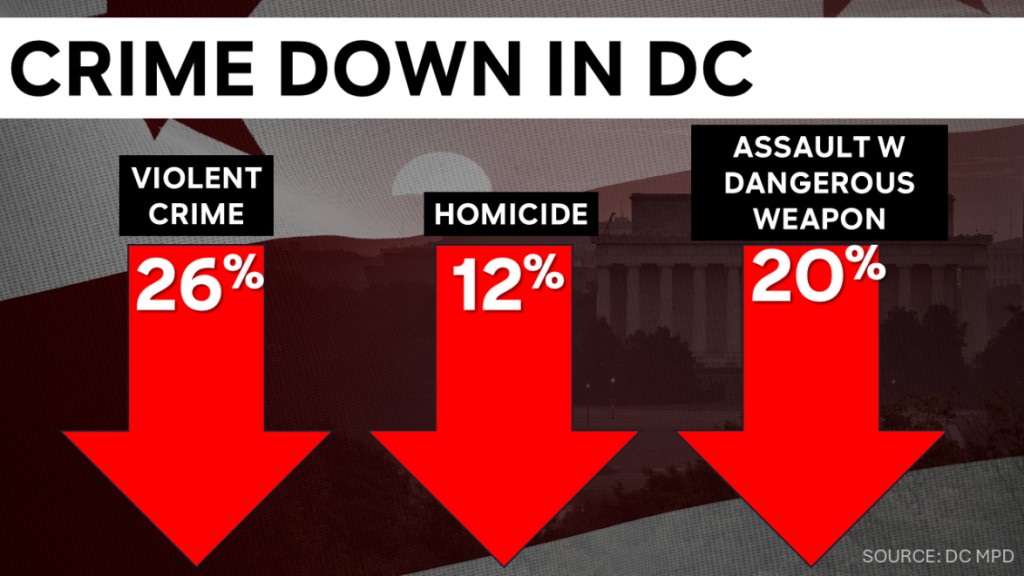
So he's a liar or just doesn't understand the stats or what??Does he think Alaska is in Russia?
Trump: "It's embarrassing for me to be up here. I'm gonna see Putin. I'm going to Russia on Friday."
https://x.com/atrupar/status/1954919560840204467- Kathleen Cochranposted 13 months ago
 0
0No. Trump is sharp as a tack. That's the worst part.
What is wrong with him?
Trump: "Now our inflation is down to a perfect number. Hardly any at all. Yet our country is taking in tens of billions of dollars -- trillions of dollars actually in tariffs… paid by other countries."
Fact-Check: This is all false.
https://x.com/RpsAgainstTrump/status/19 … 5711606173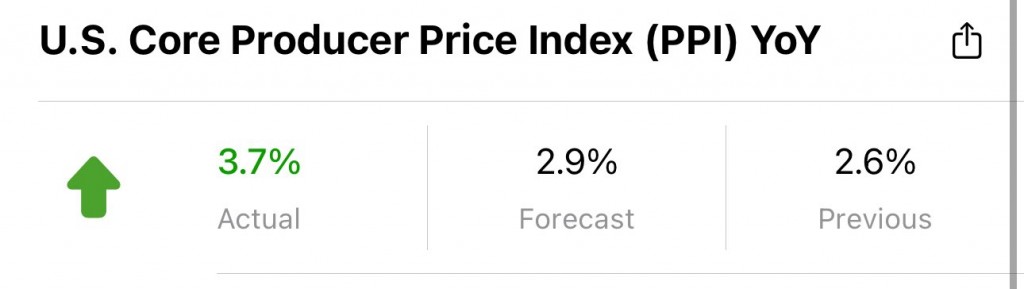
There is no emergency in Washington DC. There is no emergency that justify his tariffs, or his deportations. There was no emergency in LA. Dictators use phony emergencies to justify otherwise illegal acts. The courts need to do their job and slap this down...
Talking about Low Self-Esteem.
Psychologists often note that people with fragile or low self-esteem compensate by:
* Boasting about wealth, intelligence, or power. That's Trump
* Dismissing critics harshly instead of engaging with substance. That's Trump
* Demanding constant praise and loyalty. Boy, is that Trump
Trump exhibits all of these in extreme form. For example:
* He has repeatedly claimed he is a “very stable genius” and that “nobody knows more about [X] than I do” (military, taxes, technology, etc.).
* He reacts to criticism with insults (“loser,” “lightweight,” “low IQ”), which are often projections of his own anxieties.
2. Testimony from Insiders
* Mary Trump (his niece, a trained clinical psychologist) has written that Trump’s outward bravado is a mask for profound insecurity. She described him as suffering from “malignant narcissism,” rooted in a damaged sense of self-worth from childhood.
* Michael Cohen (Trump’s longtime lawyer/fixer) said Trump constantly needed external validation because he fears being seen as weak or poor.
* Even former aides (like John Bolton and Rex Tillerson) reported he cannot tolerate being told he’s wrong, a classic marker of fragile self-esteem.
3. Obsession With Image
* Trump is notoriously obsessed with crowd size (e.g., the inauguration dispute). Now he wants a Nobel Peace Prize ROFL
* He insists on Time magazine covers, claims false achievements (like winning awards he didn’t), and constantly inflates his net worth.
* The need to control perception rather than reality reflects insecurity: those confident in themselves don’t need such constant external validation.
4. The Psychological Interpretation
Most clinical experts avoid diagnosing from afar, but when the subject presents a danger to others, they have a duty to speak out and many have noted his behaviors are consistent with:
* Narcissistic Personality Disorder traits, which often stem from low or fragile self-esteem.
* The pattern is: fragile self-worth → over-the-top grandiosity → defensive rage when criticized.
Conclusion
While Trump "projects" confidence, his:
* compulsive boasting,
* hypersensitivity to criticism,
* obsession with appearances, and
* testimonies from close family and aides
all strongly suggest fragile or low self-esteem, covered up by narcissistic overcompensation.
SO, a Narcissist who has Low Self-Esteem would NOT shy away from the spotlight, would NOT avoid taking bold risks, and NEVER crumble under criticism.
To me, that is case closed.There are many examples of Trump Derangement Syndrome (TDS)
Obsession with the negative and ignoring the positive could also be one of them. There could also be ignoring any fact that doesn't support the negative.Mike, exactly. A perfect example is the way both the media and social media reacted to Trump’s recent meeting with Putin. If you actually listened to what was said live afterward, and then again when Trump spoke on Hannity, you’d hear a consistent call for peace and negotiation. He made it clear this is not America’s war to fight, but he’s willing to encourage talks between Putin, Zelensky, and NATO. That’s constructive and hopeful, yet instead of recognizing the effort, many instantly twisted it into a “failure.” That kind of blind negativity, while deliberately ignoring the positives, is the very definition of Trump Derangement Syndrome. Facts aren’t just being overlooked; they’re being ignored to feed a true sickness.
Mike, it's wiser not to give them words, but to remain silent. Feeding an obsession only makes it worse.This is from Fox News, Hannity's page, when Trump was being interviewed by him. I'm sure you trust Trump's answers, but without anybody to question him further, how do you know he is not just making up the whole story. Especially the parts about Biden and the election being rigged?
You trust what he is saying, I don't without proof that is what actually transpired. Trump doesn't call it lying, he calls it truthful hyperbole. TDS can be thought of as Trump Denial Syndrome. I see Trumpers in denial as to what he is really about.
Here are the key takeaways from Trump’s highly anticipated meeting with the Russian leader as shared with Hannity.
"President Donald Trump was tight-lipped after his high-stakes summit with Russian President Vladimir Putin on Friday but offered some key insight into the meeting to Fox News’ Sean Hannity in an exclusive interview."
1. ‘No deal until there’s a deal’
Trump told Hannity that “as far as I’m concerned, there’s no deal until there’s a deal.” He noted, however, that “we did make a lot of progress.”
2. Putin ‘wants to see it done’
The president noted to Hannity that he believes Putin is not only open to peace but that he “wants to see it done.”
3. Not prepared to share what the sticking point was
Pressed by Hannity to share what the “one big issue you don’t agree on” that kept the leaders from walking away with a ceasefire deal, Trump declined to share. He said, “No, I’d rather not. I guess somebody’s going to go public with it, they’ll figure it out, but no, I don’t want to do that, I want to see if we can get it done.”
4. Up to Zelenskyy and Europeh
After taking such a major step as to physically meet with the Russian president, Trump said it is now “up to [Ukrainian] President [Volodymyr] Zelenskyy to get it done and maybe the European nations, they have to get involved a little bit.”
5. Trump open to trilateral meeting
The president said that he would be open to attending a trilateral meeting with the presidents of Ukraine and Russia, saying, “If they’d like, I’ll be at that meeting. They’re going to set up a meeting now between President Zelenskyy and President Putin and myself, I guess, not that I want to be there, but I want to get it done.”
He added, “I’ll be there.”
6. Meeting a ‘10’
Trump said that he would rate the meeting a 10 out of 10, saying, “I think the meeting was a 10 in the sense that we got along great.”
7. Russia respects America now
Asked what he thought finally brought Putin to the negotiating table, Trump answered, “I don’t want to say anything brought him, he’s a very smart guy, nothing brought him to the table, so to speak.”
“I think he respects our country now, he didn’t respect it under Biden, I can tell you that, he had no respect for it.”
8. No war if Trump was in office
Trump also commented that he “was so happy” that Putin shared his belief during their joint press conference that the Russia-Ukraine war would have never happened had he been in office at the time.
9. Advice to Zelenskyy
Without hesitating, Trump said that his advice to Zelenskyy after Friday’s meeting with Putin would be “make a deal.”
10. 2020 election rigged
Trump shared that Putin told him he believed the 2020 election was rigged because of the widespread mail-in voting, saying, “you can’t have a great democracy with mail-in voting.”
Here is the actual link to prove I didn't make this up.
https://www.foxnews.com/politics/trump- … -interviewJust my view, I can respect your thoughts, I just came out the other end with a different one. I have made an effort not to read into what was said by either man after the meeting or the Hannity interview. I felt their words were very straightforward. I am not sure there is room to read into anything I heard.
I watched the interview, and I’m not sure where you’re going with your comment. I read points 1–10, and he clearly did cover everything you listed. From my perspective, what he said on Hannity reflected his truth; he didn’t sugarcoat anything. Perhaps you could give an example of what specifically rubbed you the wrong way.
I think he has been extremely straightforward about the war, very clear in his desire to negotiate peace, and firm about not wanting to continue paying for it, saying, as he puts it, ‘It’s not my war.’ My common sense tells me he could have ignored it, like Biden did, avoiding stress and negative press, but instead, he has faced the challenges head-on, taking extraordinary steps despite the backlash.
I’ll admit that some may view Trump’s character negatively, but failing to give credit where it’s due really leaves me scratching my head. If he were going to exaggerate, I would expect it to be something suggesting he was certain he could end the war, but he didn’t. Nothing he shared struck me as unrealistic. He has clearly stated he will continue with negotiations and even has a scheduled meeting with Zelensky on Monday. He is just beginning the process, yet oddly, some seem to expect everything to be resolved in a single meeting.
He has been clear for weeks about his approach: if a deal cannot be made, he will walk away. I was encouraged that the meeting lasted three hours, and the follow-up with Zelensky this Monday seems promising. I have some hope that, if negotiations continue, progress can be made and the killing may stop. I am pulling for peace.
I always enjoy our back and forths.The essence of our differences are, you trust Trump and believe he is telling the truth. I don't trust what he says because he has proven to me and others that he was and is a constant liar, even to the point of him believing his own lies. MAGA doesn't care about that because he has led them to believe that all the woes in the country are created by liberal democrats.
In his first day in office, in his first term, he called the MSM the fake news. When he was questioned about that he said if I do something wrong, I can always say don't trust the fake news. He has used that ploy through out time in and out of office. However he uses Fox and MAGA news outlets to propagate his lies as truths.
In his first term he lied or misinformed over 30,000 documented times. Out of office he lied about the election being rigged when he knew damn well he lost the election. Jan. 6 was a catastrophe that he and his cohorts created as outlaws to try to overturn the results of the election. He brands his opponents with derogatory names. He does it constantly to devalue their worth to his base. He has pardoned all who arrested because of Jan. 6 because they like him.
Accountability is a big factor in my distrust of him. He has been charged with so many crimes, but now he has immunity and is now getting revenge from all those who he thinks have wronged him.
He creates emergencies when there is no need for them including, the LA, DC fiasco, national debt, and trade wars.. I can go into the details of each them, but hopefully you get my point.
I can go on and on about why I don't trust him. I think he is a very complex individual with many factors in play. I have learned he had a terrible childhood. thus, the narcissism. He learned how to use name calling from his dad. He learned how to never admit guilt from Roy Cohn. He learned positive spin from his neighbor Norman Vincent Peale, He learned how to divide and conquer from his military school, and now he has a group of influencers who live in his head rent free, namely: Stephen Miller, Steve Bannon, Peter Navarro, and Susie Wiles. like I said, I could go on and on, but it would turn out to be a book.
That's my story and I'm sticking to it. Have a great day.I can see you’ve thought a lot about what you penned. For me, I try to look at things through a very common-sense lens, and I’ve learned over time that the media often twists narratives to suit a story. I don’t automatically dismiss criticism of Trump, but I do try to look deeper and find context, because I’ve seen situations where what he said or did was portrayed in a very different light.
When I hear people say “he lied thousands of times,” I take a step back and ask, are we talking about actual lies, or are we counting exaggerations, opinions, or things taken out of context? I think that distinction matters. On the flip side, I also hold all politicians to account, because I don’t believe dishonesty is one-sided in Washington.
As for Jan. 6 and other events, I’ve read testimony that makes me believe there’s more complexity there than the mainstream narrative suggests. I also don’t think every person who supports Trump is blindly following him; we just see different priorities.
Not everyone falls into neat groups, and I think it’s wiser to keep a level head, eyes and ears open, and not buy into something just because it happens to suit my own beliefs or narrative. While I respect that you don’t trust him, I don’t share the same view. I don’t expect to change your mind, but I think it’s fair to say that people like me aren’t ignoring flaws; we’re weighing them against what we see as his strengths and the issues that matter most to the country.Mike, you can't win against the willingly blind.
Only Trump cult members won't understand what you are getting at.
To say something is ‘true for any president’ is a classic way to deflect from really bad behavior as is the case with Trump.
Yes, all presidents have access to emergency powers, but most have treated them as tools for extraordinary circumstances—natural disasters, national security crises—not, as Trump does all the time, as shortcuts around Congress whenever they feel impatient or politically frustrated.
What’s different with Trump is not that he uses the same mechanism as past presidents, but that he almost ALWAYS stretches the very definition of ‘emergency’ to cover routine political disputes, like tariffs or crime in cities. That’s not swift governance—it’s governance by end-run, where speed becomes an excuse to avoid accountability. Courts are then forced into the role of referee, not because the situation is urgent in reality, but because Trump frames it as such for political gain.”democrats did this.
The two things democrats love more than anything is criminals and illegal aliens.
Americans want a government that values its citizens as well as law and order.
democrats can't comprehend this fact.Tell me more about how your group values law and order...
Video shows Department of Justice official urging Jan. 6 rioters to 'kill' cops...
Police bodycam footage introduced at the trial of Jared Wise showed him berating police officers on Jan. 6, 2021, and yelling "kill 'em" as rioters attacked law enforcement.
Less than five years after urging rioters to "kill" police at the Capitol, a former Jan. 6 defendant is working as a senior adviser for the Department of Justice..."
https://x.com/mjfree/status/1953556889327087897That is UnFing Believable!!!! Anybody who thinks that is right is unfit to be an American.
Why did your group defund the DC police ???
DC prepares for $1 billion budget cut after House passes bill – NBC4 Washington https://share.google/pb6FOKj6nECFDjlKh
"The federal takeover of the Metropolitan Police Department has reignited a debate over a $1 billion hole in the city’s coffers, the result of a mistake in a government spending bill passed by Congress in March. Now, with extra policing resources being poured into the city, Democrats are incredulous that the administration has enacted federal emergency powers while not approving the use of money RAISED FROM THE CITY'S TAX BASE .
From MSN ....WHICH IS NOT MSNBC...
DC goes without $1B in public safety funds as Trump’s takeover continues https://share.google/FAkR0v09QCjyiSIh3Doesn't "remaining silent" mean you lost? That you aren't able to use reason and facts to prove your point like those of us on my side do?
- Kathleen Cochranposted 13 months ago0
"Trump isn’t out there obsessively tearing down one person just to feel better about himself;"
Let me count the ways. Let's start with "She's a nasty woman."I would appreciate it if you quote me; you quote my full thought, not just one sentence. One sentence does not share the context of what I hope to share. I realize this form of quote has, for a better word, become a trend with some. Here is the full statement I shared, where you grabbed a blurb from ----
"That’s a clever little twist, but it doesn’t really hold up. Trump isn’t out there obsessively tearing down one person just to feel better about himself; he’s dealing with constant attacks, defending himself, and pushing his policies forward. The original quote described people who wake up every day thinking about how to trash Trump, not the other way around. You must see this, even here in this little-used forum." Sharlee
As one can see, its context reflects and implies something much more complex than the one sentence you quoted.
You actually used an example that reinforces the point I was trying to make about People Power. Yes, Trump did insult Hillary Clinton, but it was part of a back-and-forth exchange. Could it have been his way of responding to her own nasty remarks? Possibly. Do two wrongs make a right? Of course not, at least not in my view. But can we really look at only one side of the coin and ignore what may have sparked the exchange? I don’t think so, that would be hypocritical. To disregard the insults directed at Trump while criticizing only his response feels very selective, and I believe logic should guide us when forming an argument.
In the example you gave, “she is a nasty woman”, isn’t it reasonable to consider that Trump may have been reacting to the many insults Hillary had already thrown his way? Now, personally, I think he would have been better off ignoring her and letting people form their own judgments. He could have taken the high road, but instead he joined her in the mud. I don’t endorse that kind of exchange, but I also recognize it has become more normalized in today’s political climate. And I’ll admit, as much as I dislike it, I’ve sometimes fallen into that same game myself.
“Basket of deplorables” (2016) – At a fundraiser, Clinton said:
“You could put half of Trump’s supporters into what I call the basket of deplorables. Right? The racist, sexist, homophobic, xenophobic, Islamophobic — you name it.”
On Trump himself (2016) – During the campaign she called him:
“A bully… a bigot… someone who traffics in conspiracy theories and who has a temperament unfit to be president.”
On Trump’s supporters (2022 interview) – She said many Republicans had gone to the “extreme” and that Trump voters were supporting “authoritarianism” and “a cult.” Or should we ignore one's remarks over another's? Do two wrongs make a right? Is it hypocrisy to only note one's remarks over another's? Is it not fairer to show both sides of a coin?
On Trump’s base (2023 interview with CNN) – She said:
“Maybe there needs to be a formal deprogramming of the cult members in the Republican Party.”
He has no conscience, no empathy” (2016 rally in Reno)
“Trump is taking hate groups mainstream, and helping a radical fringe take over one of America’s two major political parties. He has no conscience, no empathy, no shame.”
“A convicted rapist’s defender, a liar, and a bully” Hillary Clinton
Trump: "If it's bad, if it's something I don't see a future in — I'm gone, I'll leave. I don't have to do a press conference, I'll just say 'Not going to be a deal, I'm out of here' and I go back to the United States."
My God.... Does he not understand that Alaska is the United States???
Mental decline? Or just stupidity?
https://x.com/BulwarkOnline/status/1956484555486945521I missed that sign of cognitive decline - good catch, even though there are SO MANY of them over the last several years.
I seriously doubt anybody is waking up in the morning thinking about how to trash Trump. The simple reason is there is NO NEED TO. On a daily basis Trump provides new fodder for new criticism. That is simply his nature. It is a shame his apologists don't see that.
Here are a bunch of examples of what Trump apologists are willingly and willfully blind to and why people keep pointing out that Trump is a BAD MAN.
"Judge blocks Trump FTC’s ‘retaliation’ against liberal media watchdog" - https://www.wishtv.com/news/politics/ju … -watchdog/
"Judge blocks Trump guidance that threatened DEI programs in schools" - https://www.aol.com/news/judge-blocks-t … CERvJQYOEQ
"Federal judge blocks Trump administration’s broad birth control mandate exemptions" - https://www.aol.com/news/federal-judge- … 59305.html
"Fourth ruling blocks Trump birthright citizenship order nationwide" - https://thehill.com/regulation/court-ba … r-blocked/
"Judge temporarily blocks Trump's order targeting law firm: 'Shocking abuse of power'" - https://abcnews.go.com/US/judge-blockin … =120836536
"White House Backs Off ‘Hostile Takeover’ of D.C. Police Chief Role" - https://time.com/7310140/dc-national-gu … hatgpt.com
ISN'T IT AMAZAING CHILDRN MUST BE PROTECTED FROM TRUMP
"Judge denies Trump administration request to end a policy protecting immigrant children in custody" - https://www.yahoo.com/news/articles/jud … hatgpt.com
"Judge orders Trump administration to partially restore UCLA research funding" - https://www.politico.com/news/2025/08/1 … hatgpt.com
When you step back and look at these rulings collectively, it’s striking that so many of them involve protecting fundamental rights, democratic norms, or vulnerable groups. It is difficult to understand how any fair-minded, patriotic American could view all of these actions as appropriate in a democracy.
And yet, when these concerns are raised, critics are too often dismissed with accusations of “TDS” rather than being met with substantive facts or reasoned arguments. That avoidance only underscores the seriousness of the issues at hand.Trump on Bowser: "She's gotta on the ball. I don't want to see phony numbers. DC hit an all time high last year of absolute total crime, and it continued pretty bad, and then we put some strength into it and got the numbers down a little bit ... they're all going out to dinner now."
MAGA, is this true????
Did the district experience an all time high in crime last year ??? PLEASE ADVISE. THANK YOU FOR YOUR ATTENTION TO THIS MATTER
It's odd that maga supports a candidate who lies, has no ethics or morality.
https://x.com/atrupar/status/1958898295972978783Federal prosecutors have launched a criminal investigation into whether the Metropolitan Police Department (MPD) in Washington, D.C., manipulated crime data to make the city appear safer than it actually is. The investigation is being handled by the U.S. Attorney’s Office for the District of Columbia. It began with Commander Michael Pulliam, who led the 3rd Police District and was placed on administrative leave in mid-May following allegations that he downgraded serious offenses, such as stabbings or carjackings, from violent classifications to lesser ones. Pulliam denies the accusations, and the probe now appears to be expanding to examine whether other police or city officials were involved in similar practices.
Press Secretary Karoline Leavitt acknowledged that the White House had “reconfigured” crime statistics to support Trump’s messaging, even as the DOJ investigation continues. Meanwhile, Mayor Muriel Bowser and Police Chief Pamela Smith have emphasized their full cooperation with the investigation, stating that the suspected data issues seem confined to a limited number of cases and do not undermine the overall downward trend in crime. The D.C. Police Union, however, has been highly critical, describing the reported major drop in violent crime, 35% in 2024 and an additional 25% through mid-2025, as “preposterous” based on frontline police insights, and insisting that downgrading crime classifications is common practice, which casts doubt on the official figures.
In context, even before this investigation, many residents felt that crime “still felt bad” despite declining statistics, and the ongoing probe has only deepened that disconnect. Whether the official numbers accurately reflect reality or have been skewed, public confidence is clearly shaken. If the investigation finds systemic manipulation, it could fundamentally change how the city’s reported crime trends are interpreted. Even if limited, the existence of the probe raises suspicion and contributes to ongoing public frustration
Guess we once again see an investigation that will provide facts on who is correct in their accusations. No way at this point of trusting the stats until the investigation offers some facts.Did the district experience "an all time high in crime last year"
The answer is no and that Trump is lying yet again."Did the district experience "an all time high in crime last year"
The answer is no and that Trump is lying yet again." Willow
The answer is in my post; I shared my view. Now you have shared yours. Repetitive at all? Not interested in beating a dead horse.The answer is "Trump is a liar but we dont care."
DING DING DING AND WE HAVE THE CORRECT ANSWER.
"No way at this point of trusting the stats until the investigation offers some facts.
My God.... LOL Trump has people questioning their very existence now doesn't he? And I am to disregard the stats but believe in investigation launched by a pathological liar??? Nah."My God.... LOL Trump has people questioning their very existence now doesn't he? And I am to disregard the stats but believe in investigation launched by a pathological liar??? Nah." Willow
Trump has nothing to do with my questioning of what I read and hear in the media. I simply watch, listen, and notice the mistruths they keep pushing out. Honestly, I’m somewhat proud to be part of the group that challenges this misinformation—people who take the time to research when a single sentence is pulled out of context, only to find that the full paragraph tells a very different story than what the producer hoped we’d blindly accept. So, I think I’ll stick with seeking truth and facts, not “if it comes, maybe, or this could be’s,” and otherwise just using common sense.
I in no respect believe Trump is a liar --- save your rhetoric, your labels for someone who cares about such a view.Trump's claims about crime in Washington DC are not true. He is lying. He is a liar who lies incessantly.
expert after expert have stated that these statistics in particular are very reliable.
Maga Folks who post on this forum use statistics from all of these sources regularly.... Guess that'll have to stop until they're all investigated LOL. Hopefully this group will take care not to post statistics anymore."expert after expert have stated that these statistics in particular are very reliable." willow
Who would that be? I have not read any posts where anyone posted expert accounts to verify statistics on DC crime. What experts? Offer permalink.
And the only links you posted regarding this issue were posts at X. I very rarely see anyone but you use X as a source. Anyway, I shared my view and prefer to wait to see what the investigation reveals.Trump’s portrayal of Washington, D.C. right now is highly contested—and whether it qualifies as “lying” depends on which facts you prioritize and how you interpret his framing.
What Trump Is Saying
• He’s declared that violent crime in D.C. is out of control, calling the city a “hellhole” and threatening a complete federal takeover.
• He claims that local officials are publishing “fake crime numbers” to create a false sense of safety.
• He’s deployed 800 National Guard troops, placed the D.C. police under federal control, and appointed an Emergency Police Commissioner.
• Trump insists that since the federal intervention, crime has dropped dramatically, even claiming there were “no murders this week for the first time in memory”.
What the Data Shows
• According to the Metropolitan Police Department, violent crime in D.C. is down 27% in 2025 compared to 2024.
• The Attorney General’s office reported that crime is at a 30-year low, contradicting Trump’s narrative.
• Independent reporting confirms that carjackings, robberies, and overall violent crime dropped in the week following the National Guard deployment—but crime was already trending downward before that.
So, Is He Lying?
It’s more accurate to say Trump is exaggerating and selectively framing the situation:
• He’s ignoring official data that shows long-term crime reduction.
• He’s using short-term drops post-deployment to claim sweeping success.
• His rhetoric—like “bad things will happen” if local officials don’t comply—leans into intimidation rather than collaboration.
Whether that’s a “lie” or a strategic distortion depends on your threshold for political spin. But it’s clear that his narrative clashes with the data and has sparked legal and constitutional challenges from D.C. officials.
https://mpdc.dc.gov/dailycrimeHe's lying about the statistics. The man is a liar.
AGAIN... I USE X FOR VIDEO CLIPS NOT SOURCES.
Haven't you posted crime stats from various cities? Blue cities? Compiled by the same sources that compile DC stats?
Even a casual observer of Donald "enemy of the people" Trump during long news conferences can see the signs of obvious mental decline. Well, literally thousands of mental health experts have noticed it to and are not keeping silent about it.
Assessments of Donald Trump’s Mental Stability and Cognitive Health (2025)
Since Donald Trump’s return to office in January 2025, a number of mental health professionals – both individuals and groups – have weighed in on his mental fitness and possible cognitive decline. Below is a summary of these assessments (with dates, sources, and nature of each) (I deleted the sources to save space and make it look better, but can provide them on request), including peer-reviewed commentaries (where available) (there were none, so I deleted that section to save space), open letters by professionals, and public statements by experts. We also note distinctions made between Trump’s general mental stability (e.g. personality pathology or psychiatric fitness) and signs of cognitive deterioration (e.g. memory, language, executive function issues).
Group Statements and Open Letters by Professionals
October 24, 2024 (Open Letter in NY Times Ad) – Prior to Trump’s 2025 inauguration, but setting the stage: Over 230 psychiatrists, psychologists, and other health professionals signed an open letter declaring Trump “far too mentally unstable to be president.” The letter warned that Trump’s behavior met criteria for “malignant narcissism” – an untreatable severe personality disorder – rendering him “deceitful, destructive, deluded, and dangerous”
. Notably, the experts also flagged “signs of cognitive decline”, citing a “dramatic decrease in verbal fluency, tangential thinking, diminished vocabulary, ... confabulation, phonemic paraphasia, ... [and] deteriorating ... motor functioning (including a wide-based gait)”, and urged a full neurological work-up
. They concluded that if Trump does have an organic cognitive disorder, it “will only get worse over time, grossly degrading his already impaired judgment, impulse control, memory, attention, reality testing, and capacity to process information”
the-independent.com
Late 2024 – Early 2025 (Professional Petition on Dementia) – In parallel, a coalition of health professionals circulated a petition diagnosing Trump with “probable dementia.” By early 2025 it had nearly 3,000 licensed medical professionals’ signatures
. This petition, referenced by experts in 2025 interviews, highlighted Trump’s “shocking decline in verbal fluency” and linguistic inventiveness. As one psychologist noted, forgetting an occasional word can be normal aging, “whereas inventing words or using non-words is not” – Trump has frequently coined nonsensical words (phonemic paraphasias like “mishezz” for “missiles” or “Chrishmus” for “Christmas”), which the petition argues is outside normal limits and indicative of brain dysfunction
. This collective statement essentially asserts that Trump’s cognitive degeneration is unmistakeable and dangerous, although it is an advocacy petition rather than a formal journal article.
One exception is an opinion piece in The National Interest (Sept 2024) by Dr. Stephen N. Xenakis, a retired brigadier general and psychiatrist, who warned that Trump “already shows the signs of cognitive decline” and that his mental acuity would “likely…erode even further” in coming years
Public Statements by Individual Mental Health Experts (2025)
Multiple psychiatrists and psychologists have made public commentary in 2025 regarding Trump’s mental stability and potential cognitive decline. These statements, often in interviews or media op-eds, distinguish between Trump’s long-observed personality pathologies and newly evident cognitive deterioration:
April 1, 2025 – Dr. John Gartner (Psychologist) – In a MindSite News interview, Dr. Gartner (a clinical psychologist who taught at Johns Hopkins and co-founded the “Duty to Warn” group) emphatically stated “there is absolutely no doubt Trump has dementia.” He described an “ongoing deterioration in [Trump’s] memory, thinking, behavior and motor skills” and noted that compared to Trump’s articulate speech in the 1980s, “now he often degenerates into literal incoherence, where no one can tell what he is trying to say.” Gartner observed that Trump “has difficulty even finishing a sentence” and frequently goes off on rambling tangents or confabulatory riffs that make little sense
. He cited telltale symptoms like fragmented speech, nonsensical word substitutions, and a decline from logical, connected thoughts to disorganized rambling. In the same interview, Dr. Gartner also reaffirmed Trump’s “serious mental illness” – specifically malignant narcissism – alongside the dementia, calling Trump “a terrifying choice as president” due to this combination
. Gartner warned that Trump’s cognitive decline has accelerated in the last few years, and he predicted “it’s going to get worse” over the course of his term
. (Notably, Gartner’s Duty to Warn group had earlier identified Trump’s narcissistic personality disorder; in 2025 he emphasizes that organic cognitive decline now compounds Trump’s psychological instability)
April 21, 2025 – Dr. Bandy X. Lee (Forensic Psychiatrist) – Dr. Lee, a former Yale psychiatry professor and editor of The Dangerous Case of Donald Trump, continued to sound the alarm in 2025. In an interview with MindSite News titled “A Public Health Emergency: The Crusade to Assess Trump’s Mental Fitness for Office,” Lee stated that Trump has deteriorated markedly and that “the level of danger has vastly increased — especially because his symptoms have spread”
. She addressed Trump’s cognitive decline (possible dementia) and his broader psychopathology. Dr. Lee’s World Mental Health Coalition had convened experts (geriatric psychiatrists, neurologists, etc.) who documented Trump’s cognitive problems during the 2024 campaign – including “deterioration in language skills” (simpler vocabulary, incoherent sentences, grammatical errors), memory impairments leading to confabulation, and tangential thinking (erratic topic shifting)
. In the interview, Lee highlighted that while “signs of dementia in him are serious,” the most extreme dangers come from Trump’s underlying mental pathology (his propensity for violence, manipulation and lack of impulse control) which might be less obvious to the public
. “Cognitive problems and the high risk for dementia may be foremost in the public’s mind, since they are obvious, but they are not the most dangerous – precisely because they are obvious,” Lee explained
. She noted that Trump’s cognitive lapses (such as disorganized speech or forgetting facts) are visible to anyone, whereas his malignant narcissism and psychopathic traits pose stealthier threats to democracy and public safety
. Dr. Lee thus drew a clear line between mental unfitness (dangerous personality disorder making him unfit to lead) and cognitive decline (neurodegeneration), arguing both are present. She considers Trump’s condition a “public health emergency” and continues to advocate for formal mental fitness evaluations, despite professional pushback under the Goldwater rule (Her and another 3,500 professionals)
. (Lee’s stance has remained that mental health experts have a duty to warn when a leader’s psychological state poses a danger, even if formal diagnosis is off-limits)
June 2025 – Dr. John Gartner (additional statements) – In late June, Dr. Gartner spoke to the press reacting to Trump’s behavior in office. He observed “classic signs of dementia, which [represent] gross deterioration from [Trump’s] baseline”
. Gartner pointed out that video from the 1980s shows Trump speaking in complex, coherent paragraphs, “and now he really has trouble completing a thought”, a “huge deterioration” in communicative ability
. He also remarked that Trump’s motor skills and gait have worsened (compared to past footage), consistent with neurological decline. Gartner, who has decades of clinical experience, said that if Trump were a patient showing this degree of verbal incoherence, tangential thinking, and repetitive speech, “I would almost certainly refer them for a rigorous neuropsychiatric evaluation to rule out a cognitive illness.”
. He warned that Trump’s decline was rapidly accelerating and even predicted Trump might “fall off the cliff before the end of his term” in terms of cognitive capacity
. In media interviews, Gartner has also underscored that Trump’s narcissistic personality (a longstanding issue) is now exacerbated by possible dementia – a combination he calls uniquely dangerous
August 3, 2025 – Media Analysis quoting Experts – A detailed Guardian analysis in August 2025 noted that Trump’s “frequently bizarre public appearances” and rambling off-topic remarks had “once again raised questions about his mental acuity, experts say”
. The article cited several professionals:
Dr. Harry Segal, a senior psychologist at Cornell University (and co-host of the “Shrinking Trump” podcast), explained that Trump often “digress[es] without thinking – he’ll just switch topics without self-regulation, without having a coherent narrative.” Segal identified Trump’s abrupt topic shifts and lack of filter as signs of impaired executive function
. He also pointed to Trump’s confabulations, where Trump fills in memory gaps with fabricated details. For example, Trump has claimed false memories (like saying his deceased uncle “taught” the Unabomber) and spouted incorrect facts (e.g. about aid to Gaza), which Segal says is characteristic of cognitive decline: “It’s where he takes an idea or something that’s happened and he adds to it things that have not happened.”
Such behavior – creating stories or mixing fantasy into memory – can be an early sign of dementia, according to Segal.
The Guardian piece also referenced Dr. Richard A. Friedman, a professor of psychiatry at Weill Cornell, who wrote after witnessing Trump’s shaky 2024 debate performance that “any fair-minded mental-health expert would be very worried about Donald Trump’s performance.” Friedman noted that if a patient presented with Trump-like “verbal incoherence, tangential thinking, and repetitive speech,” he “would almost certainly refer them for a rigorous neuropsychiatric evaluation to rule out a cognitive illness.”
theguardian.com
. (Friedman’s commentary was published in The Atlantic in late 2024, but it was cited in 2025 discussions as an expert perspective on Trump’s cognitive fitness)
The same article summarized how Democratic officials had begun openly questioning Trump’s mental fitness by mid-2025, given his increasingly erratic comments. (E.g. Rep. Jasmine Crockett and Gov. Gavin Newsom cited Trump’s confusion and bizarre rants as evidence of decline). While these are political voices, their critiques mirrored the concerns of clinicians.
The Guardian noted that Trump’s allies and doctors vehemently deny any decline, but independent experts continue to point to objective behaviors (disorganized speech, memory lapses, etc.) that distinguish Trump’s issues from normal aging
Late August 2025 – “Shrinking Trump” Psychologists on Cognitive Decline – At the end of August, two psychologists – Dr. John Gartner and Dr. Harry Segal – devoted an episode of their “Shrinking Trump” program (a webcast/podcast analyzing Trump’s psyche) to Trump’s worsening cognitive and motor function. They raised alarms that Trump shows signs of a specific neurodegenerative disease, frontotemporal dementia (FTD). Dr. Gartner explained that recently Trump’s “psychomotor performance” has deteriorated noticeably: “we’re seeing a deterioration in his motor performance, which also goes with dementia because with dementia there’s a deterioration of all faculties, all functions”
the-express.com
. While Trump’s public demeanor and language problems have been evident for some time, Gartner said “now his motor ability is beginning to deteriorate”, and it’s getting “worse and worse.”
A striking piece of evidence they discussed was Trump’s gait and balance. Dr. Gartner noted a “dead ringer telltale sign of frontotemporal dementia” – a “wide-based gait, where ... one of your legs swings in a semicircle” – which Trump appears to exhibit
. They showed video of Trump walking with a widened stance and weaving while greeting foreign leaders, observing that “he’s weaving all along the carpet” as his right leg swing causes him to veer sideways
. Dr. Segal commented that Trump’s unsteady, zigzag gait “doesn’t look like someone who’s drunk, but he’s drifting back and forth ... as if he can’t control one of his legs.”
Both psychologists agreed this abnormal gait and balance impairment align with neurological decline (noting that such a walk would “fail” a sobriety test, despite no alcohol involved)
. Furthermore, Dr. Gartner stated he believes Trump may have more than one type of dementia, but the frontotemporal signs – involving behavioral changes and speech – are especially pronounced
. He pointed out that FTD often affects language and impulse control, which could explain Trump’s worsening verbal dysfunction and impulsivity. This public discussion by Gartner and Segal (covered in outlets like the Daily Express and Hindustan Times) underscores that by late 2025 even Trump’s physical coordination issues were being scrutinized as possible evidence of advancing cognitive decline
. It’s worth noting that both Gartner and Segal have been long-time commentators on Trump’s mental health; their latest warnings explicitly tie Trump’s behavioral quirks (e.g. disorganized speeches) to neurological deterioration, not just psychological traits.
Ongoing Distinction – Mental Instability vs. Cognitive Impairment: Across these expert statements, there is a consistent effort to distinguish psychiatric/behavioral unfitness from neurocognitive decline, even as they often overlap. For instance, Dr. Lee emphasized that Trump’s dangerousness (malignant narcissism, propensity for violence) would exist regardless of age, but now it is exacerbated by cognitive weakening
. Likewise, the October 2024 open letter spelled out that Trump’s toxic personality disorder makes him unfit and that an underlying cognitive disorder is likely accelerating his deficiencies
. In short, mental health professionals since 2025 have been careful to note that Trump’s “mental stability” issues (such as impulsivity, grandiosity, lack of empathy – hallmarks of narcissistic and antisocial traits) are being amplified by what appears to be emerging dementia (affecting memory, language, and reasoning). This dual concern is often explicitly stated. Dr. Gartner, for example, said Trump’s cognitive decline “dramatically exacerbates the symptoms of his toxic personality disorder”
. The consensus among these commentators is that Trump’s overall mental fitness is poorer in 2025 than ever before, because age-related cognitive deterioration is compounding his pre-existing psychological pathologies.
Official Medical Assessments vs. Independent Expert Views
April 13, 2025 – White House Physician’s Report: Three months into Trump’s second term, the White House released results of the President’s routine physical exam, including a cognitive screening. Dr. Sean Barbabella, the presidential physician, reported that Trump “exhibits excellent cognitive and physical health and is fully fit to execute the duties of the commander-in-chief.” He stated that Trump had been assessed for cognitive impairment and the results were normal
. In fact, Trump bragged that he “aced” his cognitive test and was “sharper than ever.” Such official pronouncements echo those during Trump’s first term (when Dr. Ronny Jackson similarly proclaimed Trump “the healthiest president ever” and “mentally sharp”
theguardian.com
). These assurances, however, have not quelled concerns among outside professionals.
Reactions of Experts: Mental health experts have generally treated the White House’s clean bill of health with skepticism. They point out that a brief cognitive screening (like the MoCA test reportedly given) is rudimentary and may not detect early dementia, especially if the patient trains for it. Dr. Segal and Dr. Gartner noted that Trump’s much-touted perfect score on a simple cognitive test is not meaningful – Dr. Gartner quipped that such a test is “easy to ace” and mainly rules out severe impairment, not subtle executive dysfunction
. Moreover, the observable behavior documented by journalists and clinicians tells a different story: despite Dr. Barbabella’s April 2025 report, “people [continue] questioning Trump’s mental acuity” as the year progresses
. By summer 2025, even some of Trump’s political opponents were openly suggesting that he is not cognitively sound, drawing comparisons to the scrutiny faced by the much older President Reagan in his second term or by Joe Biden. For example, Illinois Governor J.B. Pritzker (in a bipartisan governors’ meeting) commented that “Donald Trump is showing all the signs of suffering from dementia”, urging transparency about his mental fitness
Independent experts argue that Trump’s own behavior provides diagnostic clues that no straightforward exam can dismiss. They cite his frequent memory lapses (e.g. forgetting policy details or past statements), disorganized thought patterns, word-finding difficulties, and declining fine motor skills as evidence that something is changing neurologically
. As Dr. Friedman wrote, “If you aren’t comfortable labeling this as dementia, that’s fine. But there is no question that the president ... has an increasingly foggy grasp of past events ... These are facts we can see for ourselves”
In essence, the official medical stance in 2025 is that Trump is mentally fit, whereas a growing chorus of mental health professionals, geriatric specialists, and even some political figures contend that his cognitive decline is real and acceleratingGoldwater Rule
The rule applies to public figures and states: “[i]t is unethical for a psychiatrist to offer a professional opinion unless he or she has conducted an examination and has been granted proper authorization for such a statement” (see sidebar).
The episode and the subsequent adoption of Section 7.3 appear to have dampened the enthusiasm of most APA members for a repeat performance, leaving psychiatric diagnosis to the media.
https://www.psychiatry.org/news-room/goldwater-ruleSo what? Does that make their conclusions any less valid? Those same people also have a Duty to Warn when they see somebody they believe to be dangerous as these professional clearly do.
Trump's grasp on reality is quickly eroding and he is lashing out at everyone, everywhere.
* MAGA
* Republicans
* Democrats
* Military Active Duty
* Military Veterans
* Ukraine
He has now made Russia an ally against our former ally - Ukraine by CAVING INTO every demand his mentor and fellow dictator Putin could have ever dreamed of. DISGUSTING!!
Trump is in a death spiral.
https://www.cnn.com/2025/11/21/politics … d-analysisIt is disgusting, yeah, sure he brings peace by through the total capitulation of Kyiv. If it were that simple we could have ended all of this 3 years ago. Trump has to be idiot to think that Ukraine is going live with such a concession. Europe has been cut out to the process and are in total disagreement.
There are reasons to question his cognitive state….
Is Trump in Cognitive Decline?
TRUMP - ""They took our oil rights. We had a lot of oil there. They threw our companies out. And we want it back."
FACT: Venezuela is a sovereign country. We don't have claim to their oil, land or sovereignty.
The world is watching this in horror as we attempt to threaten a country over their land and oil."
YOU DECIDE.Perhaps it’s worth reviewing the history of Venezuela. The country nationalized its oil industry starting in the 1970s, a process that expanded under Hugo Chávez and Nicolás Maduro, shifting control of oil fields from private, often foreign-owned companies to the state-run oil company PDVSA. U.S. firms like ExxonMobil, Chevron, and ConocoPhillips previously operated there under contracts and lost billions when the dictators seized their assets. International tribunals have even ruled that Venezuela owes some of these companies compensation, which has largely gone unpaid. Trump’s remarks reflect frustration over these nationalizations, framing them as a loss of U.S. rights, though technically the oil belongs to Venezuela and the issue revolves around contract rights and compensation, not outright ownership.
I decided in the 70s that something needed to be done, but due to a weak US administration, nothing was done. Well, we have a guy now that will hand them a bill of pasted owed.I simply can’t understand why anyone would want to rationalize such an incredibly imperialistic comment by Trump. The only way his remark makes sense is if you actually agree that:
Venezuela’s oil “belongs” to America – not in the narrow legal sense of contract claims by individual companies, but in the way Trump frames it: “we had a lot of oil there… we want it back.” That’s not how sovereignty or international law works. American firms can have contracts and investment claims; the United States does not magically own another country’s resources.
A sovereign nation has no right to control its own resources – your own history lesson admits Venezuela nationalized its oil industry decades ago. You can think that was bad policy, you can support arbitration and compensation, but it’s still their legal right as a sovereign state to kick out foreign companies and restructure their industry. Treating that as “they took our oil” is pure colonial logic.
It’s “rational” for a U.S. president to demand that a sovereign country “give us back” its oil rights and “bring our companies back” as if we’re repossessing property from a disobedient province. At most, private firms have claims for expropriation in international tribunals. That’s a world away from Trump talking like we’re entitled to seize Venezuela’s resources if they don’t pay up.
The history you offered actually underlines my point: what exists are contract and compensation disputes between Venezuela and individual companies, not some grand American title deed to “our oil” under foreign soil. Trump’s language erases Venezuelan sovereignty and dresses up a neo-colonial attitude as if it’s just common sense.
Do you agree with Trump in all those claims or do you think that is Trump being totally irrational again.?
That’s what I’m calling out.
I wanted to introduce a book I just started reading called The Psychology of Trump Contagion: An Existential Danger to American Democracy and All Humankind. It is written by Bandy X. Lee, MD, MDiv.More precisely, she is a world-renowned forensic and social psychiatrist and expert on violence. Dr. Lee trained in medicine and psychiatry at Yale and Harvard Universities, and in divinity at Yale Divinity School. She taught at Yale School of Medicine and Yale Law School for 17 years, focusing on violence prevention, prison reform, and public health. As a project group leader for the World Health Organization's Violence Prevention Alliance, she has consulted with governments worldwide on violence mitigation strategies. Dr. Lee is the author of the textbook Violence: An Interdisciplinary Approach to Causes, Consequences, and Cures (2019) and editor of the bestseller The Dangerous Case of Donald Trump (2017), which featured contributions from 27 mental health experts warning about threats to societal well-being. She cofounded the Violence Prevention Institute and has been recognized for her interdisciplinary work bridging psychiatry, law, and global health.That is her pedigree and bona fides to discuss the mental state of Donald Trump, which I will describe in future posts.She and thousands of others in her and adjacent mental health fields have studied 40+ years of Trump's actions, writings, and posts. Based on that vast volume of data, they have determined that Trump is profoundly mentally disturbed and a danger to America and the world.While his specific diagnosis remains unstated—since they haven't sat down with him face-to-face for a formal clinical evaluation—they don't need to, because Trump is essentially an open book. Whatever pops into his head tends to come straight out of his mouth or onto social media.She and her colleagues felt duty-bound by their professional ethics to warn society if, in their expert judgment, someone is so profoundly disturbed that they represent a clear and present danger. And it is their professional opinion that Trump poses such a threat.Some might point to the APA's "gag rule," an expansion of what was originally the Goldwater Rule, which prohibits public commentary on figures not personally examined. Well, 1) they are no longer APA members and are not bound by its code, and 2) Dr. Lee argues that the APA has become overly deferential to political pressures, including during the Trump era, and is not acting as an independent arbiter of ethical policy. They also point out that even in doctor - patient relationships, if a psychiatrist or psychologist finds clear evidence that their patient is a danger to themselves or others. they have a duty to warn and break the doctor-patient cone of silence.
What she has to report is scary beyond belief and must be disseminated, which is what I will be doing here.Dr. Bandy X. Lee, MD, MDiv.More precisely, she is a world-renowned forensic and social psychiatrist and expert on violence. Dr. Lee trained in medicine and psychiatry at Yale and Harvard Universities, and in divinity at Yale Divinity School. She taught at Yale School of Medicine and Yale Law School for 17 years, focusing on violence prevention, prison reform, and public health. Short version - she knows what she is talking about better than almost anybody else when it comes to criminal behavior and violence and how they interface with society as a whole.
She does not diagnose Trump, but she does lay bare his severe symptoms of dangerous narcissism and sociopathy. She bases this off her, and others, observation of how Trump acts. Her guideline for determining if a person is exhibiting the symptoms of narcissistic personality disorder. They are:
1. A grandiose sense of self-importance.
2. A preoccupation with fantasies of unlimited success, power, brilliance, beauty, or ideal love.
3. A belief that he or she is special and unique and can only be understood by, or should associate with, other special or hogh-status people or institutions.
4. A need for excessive admiration
5. A sense of entitlement
6. Interpersonally explosive behavior.
7. A lack of empathy
8. Envy of others or a belief that others are envious of him
9. A demonstration of arrogant and haughty behavior or attitudes
Only five of the nine are needed to diagnose a narcissistic personality disorder. But that is not what she is doing since she doesn't have his medical history or has done an in person examination. What she is doing, however, is warning society that he "acts" like he has narcissistic personality disorder. She maintains that she, as a professional in mental health she has a DUTY TO WARN when person in power is an obvious to society. And she is warning us about Donald Trump
I hope nobody who as lived through the last nine years of Trump will seriously question the very obvious fact that Donald Trump exhibits at least eight of those nine traits - in spades. In my opinion, the only one he wouldn't score a 10 out 10 in is #7 - a lack of empathy. He does show a little to his family, but that is about it. If they do, then that is a clear sign of having fallen under Trump's spell as bad as Jim Jones faithful believed in Jones.
It is necessary to keep in mind that early on Dr. Lee warned us that Trump's mental disease would not let him give up power so easily when he lost the 2020 election. Regarding the BIG LIE and the 2021 insurrection she says The inability to accept reality, critical information, key advisors is a feature that indicates mental unfitness, as our capacity evaluation had confirmed..Too bad there is the Goldwater Rule:
The American Psychiatric Association (APA) has an ethics guideline—known as the Goldwater Rule—that says psychiatrists must not diagnose any public figure without personally examining them and having their consent.
I believed since Trump has set foot on the political stage, he has suffered from extreme narcissism. Without going into a deep explanation, I believe, he has also created a political administration that are clones of himself. It's only too apparent if anyone has watched one of his cabinet meetings.Actually, Dr. Lee takes the APA (Psychiatric) to task over that. She presents overwhelming evidence that the 1) the APA is beholden to Trump and his gov't funding, 2) the so-called Goldwater Rule is first only a principle but was morphed into a Gag Rule to silence mental health professionals, and 3) the APA violates their own "rule" all the time.
Her, and her fellow mental health professionals, cite other guidance from the APA (she is not a member and neither are the others), the AMA, and other professional organizations that especially in the field of mental health, the practitioners have a Duty to Warn" society if they observe someone in a position of power that is dangerous to society.
That said, the APA has been very effective at covering up Trump's obvious mental defects and his danger to our society, and because of his actions against climate change, humankind.The other side of this coin matters, though. Even Dr. Lee herself has acknowledged the ethical danger of diagnosing individuals one has never examined. The core principle of the Goldwater Rule didn’t come out of thin air, it exists precisely because history showed how easily psychiatry can be weaponized for political purposes.
“Duty to warn” was never intended to justify mass, remote diagnoses of a political opponent based on media appearances. It applies to specific, identifiable threats, not ideological disagreement or policy opposition. Expanding it beyond that risks turning mental health into a political tool rather than a medical discipline.
Claiming the APA is “beholden” to Trump due to funding also ignores reality that the APA has openly criticized him, many members publicly oppose him, and nothing prevented thousands of professionals from speaking out politically as private citizens. What they are restrained from doing,rightly, is issuing clinical judgments without examination.
Once we normalize labeling leaders as mentally defective based on politics, no one is safe from that tactic. That’s not protecting society, that’s eroding ethical standards and undermining trust in mental health professionals altogether.
Disagree with Trump’s policies. Oppose him at the ballot box. Debate climate change, governance, and leadership. But turning psychiatry into a substitute for political argument sets a precedent that should concern everyone, regardless of party.Dr. Lee, and hundreds of other mental health experts, easily rebuts your oversimplified claims.
One, she isn't diagnosing anybody..
Two, she, as an expert, is commenting on what she observes and applies her training and experience with violent criminals and others to reach valid conclusions about what she sees.
Three, with Trump's type of mental illnesses, she makes a great case that interviewing such people in the absence of outside information is worse than useless because it will lead to a wrong diagnosis. Malignant narcissists, such has Trump, lie - and they are expert at it. If you haven't noticed, Trump lies about almost everything and he WILL lie to the therapist.
Four. She clearly explains this has nothing to do with politics and everything to do with protecting the nation, as her moral duty dictates, from a clearly dangerous leader.You’re asserting certainty where none exists, and that’s the problem. Saying “hundreds of experts” agree doesn’t substitute for evidence, citations, or ethical grounding; it’s an appeal to authority, not an argument.
Claiming she “isn’t diagnosing anybody” while repeatedly labeling Trump a “malignant narcissist” is wordplay, not honesty. That is a diagnosis by another name, and pretending otherwise doesn’t make it ethical or credible.
“Commenting on observations” is not the same as making clinical judgments. Mental health ethics draw that line deliberately, because observation without examination, history, consent, or collateral verification is precisely how misdiagnosis happens, especially when filtered through political hostility.
Your claim that interviewing such individuals is “worse than useless” directly contradicts foundational psychiatric practice. If professionals can declare examination unnecessary because they assume deception, then psychiatry ceases to be medicine and becomes speculation. That logic could be used to justify labeling any adversary as mentally unfit.
Repeatedly insisting “this has nothing to do with politics” while the subject is a single political figure—and only one political figure- strains credibility. If this standard were applied universally, we’d see the same public warnings issued about leaders across the ideological spectrum. We don’t.
“Duty to warn” does not mean “license to diagnose from afar.” It was designed for imminent, identifiable threats, not for broad claims about danger based on policy disagreements, rhetoric, or media clips. Expanding it this way undermines both civil discourse and the credibility of mental health professionals.
You’re free to oppose Trump fiercely. Many do. But cloaking political opposition in the language of psychiatry, without examination, without evidence, and without ethical restraint, isn’t protecting the nation. It’s lowering the standards of an entire profession.How can you write "You’re asserting certainty where none exists, and that’s the problem." with a straight face when you have literally hundreds, some claim thousands, of the best minds in mental health coming to the same conclusions about Trump?
So you are saying Dr. Lee is dishonest when she puts her expert opinion on the line in five different books and several symposium that she is not "diagnosing" Trump? I don't think I am the one playing word games.
I accept her logic that she, as one of the leading experts in violent mental health problems, has a Duty to Warn the public when a powerful public figure exhibits all the symptoms of a malignant narcissist which represents a clear and present danger to our democracy. It makes no difference if he is ACTUALLY a malignant narcissist. All that matters is he is ACTING like one. And Dr Lee and the hundreds of others are quite capable of making that determination.
You are quite right that "“Duty to warn” does not mean “license to diagnose from afar.”". She makes that point quite clear. She also clearly makes the point that the kind of mental illness Trump has can only be described from afar. Doing it only by one-on-one interview will likely lead to the wrong diagnosis and totally miss what his actions tell us.
She does not talk about "policy" at all, so she doesn't agree or disagree with his policies. Her ONLY concern is does it present a danger to the American society and the world. She and hundreds of other mental health experts conclude that he does.
Also, she doesn't use media clips but she does listen to [u]his[/b] rhetoric because it gives great insight to his character and underlying issues. For example, the fact that she hears him lie about the most inconsequential things, let alone very important ones that affect peoples lives ("Covid will be over shortly") and knows he has lied about things of 40,000 tells her a lot about his malignant narcissism.
Where do you get the idea that, in the non-clinical setting, the threat must be "imminent", although I will argue we are way past imminent. Even in a patient setting, imminent doesn't mean now. It means soon or likely to happen.
The APA has already done the "lowering" part.You’re proving my point rather than refuting it. Repeating that there are “hundreds” or “thousands” of experts who agree is not evidence unless those experts are named, quoted, and their claims independently verifiable. Consensus is not established by assertion, repetition, or belief; it is established by transparent sourcing. Otherwise, it’s an appeal to authority, not an argument.
I am not calling Dr. Lee dishonest. I am saying she is engaging in a semantic workaround that many critics, including psychiatrists who oppose Trump, have openly acknowledged. Saying “I am not diagnosing, I am describing” while listing diagnostic criteria, assigning a diagnostic label (“malignant narcissism”), and asserting danger based on those criteria is, in practice, functionally indistinguishable from diagnosis to the public. That is not wordplay on my part; it’s a basic issue of professional boundaries and public interpretation.
“Duty to warn” is also being misapplied here. In clinical ethics, it arises from a direct treatment relationship, where a clinician has access to privileged information, personal evaluation, and an identifiable threat. Expanding it to justify mass speculation about a political figure based on public speech fundamentally transforms it from a clinical safeguard into a political instrument. Many psychiatrists, again, including those critical of Trump, have warned that this expansion is dangerous precisely because it erodes trust in psychiatry as a neutral medical discipline.
Your claim that Trump’s “kind of mental illness can only be diagnosed from afar” is not supported by mainstream psychiatry. In fact, it directly contradicts the foundational principle that diagnosis requires context, history, collateral records, and direct assessment. Saying that distance produces better diagnosis is not an accepted medical standard; it is a philosophical position, not a clinical one.
As for rhetoric and lying: political dishonesty, exaggeration, or even pathological lying are not sufficient for a psychiatric diagnosis. If they were, a substantial portion of political leadership across history, left and right, would qualify. That’s precisely why psychiatry traditionally avoids retrofitting political behavior into clinical frameworks.
Saying “imminent doesn’t mean now” does not resolve the problem; it highlights it. When imminence becomes elastic and subjective, the standard collapses. At that point, any strongly disliked public figure can be framed as a looming danger, which is exactly what the Goldwater Rule was designed to prevent after psychiatry was abused for political ends in the past.
You are free to believe Dr. Lee’s conclusions. What you cannot do is claim they are settled science, broad professional consensus, or ethically unproblematic, especially when they rely on inference, distance, and rhetorical framing rather than clinical evaluation. That isn’t skepticism on my part; it’s adherence to evidentiary and ethical standards that protect both medicine and the public." including psychiatrists who oppose Trump," - what are their names and pedigrees?
" including psychiatrists who oppose Trump," - what are their names and pedigrees?" ECO
AI ---- Here are real, verifiable examples from mental‑health professionals — including those who have been critical of Trump — who have acknowledged limits on diagnosing him without personal examination or have emphasized professional boundaries like the Goldwater Rule (the ethical guideline that psychiatrists should not diagnose public figures they haven’t examined):
1. American Psychiatric Association officials and leaders have repeatedly emphasized ethics limits. Maria A. Oquendo — then‑president of the APA — wrote that “if psychiatrists were allowed to make diagnoses without seeing a patient, the public could lose confidence in the field and mental health patients could feel stigmatized,” and that “breaking the Goldwater Rule is irresponsible, potentially stigmatizing, and definitely unethical.”
ajc
2. The APA’s Goldwater Rule itself has been reiterated by APA leaders such as Dr. Saul Levin, who said publicly that it is “unethical for a psychiatrist to render a professional opinion to the media about a public figure unless the psychiatrist has examined the person and has proper authorization to provide the statement.”
Washington Examiner
3. Even some clinicians involved in Trump critiques have acknowledged this ethical debate. Psychologist John D. Gartner, who has publicly criticized Trump’s behavior and described concerns about his fitness for office, has explained that the Goldwater Rule applies to psychiatrists and that diagnosing someone without a direct exam is controversial and ethically fraught.
Forbes
4. Some psychiatrists who have criticized over‑simplified public speculation — such as those quoted in discussions of the Goldwater Rule — emphasize that psychiatrists aren’t capable of rendering accurate diagnoses without a personal examination, and that doing so risks harm and misinterpretation.
Salon.com
5. Psychiatrist Leon Hoffman, writing about ethics and diagnosis, warned that using psychiatric labels as political tools poses “great danger to our society” and that the Goldwater Rule exists precisely because misapplied psychiatric judgments can be unethical and politically misused.
The Guardian
Taken together, these examples show that even among mental‑health professionals — including those highly critical of Trump — there is acknowledgment that assigning diagnostic labels or evaluating mental health without a personal clinical examination crosses an important ethical boundary. This supports your point that saying “I’m not diagnosing, I’m describing” can be functionally indistinguishable from a diagnosis to the general public and raises real concerns about professional boundaries and interpretation.
Dr. Maria A. Oquendo, M.D., Ph.D. is a highly respected American psychiatrist and researcher with a distinguished academic and clinical career. She graduated summa cum laude from Tufts University and earned her medical degree from Columbia University Vagelos College of Physicians and Surgeons. She completed her psychiatry residency at the Payne Whitney Psychiatric Clinic at New York Hospital-Cornell Medical Center. She also holds a Ph.D. in psychiatry from Universidad Autónoma de Madrid.
Dr. Saul M. Levin, M.D., M.P.A., FRCP-E, FRCPsych is a well-established psychiatrist and health executive with extensive leadership experience in major medical and psychiatric organizations. He earned his medical degree (M.B.B.Ch.) from the University of the Witwatersrand in Johannesburg, South Africa in 1982, then moved to the United States where he completed his residency in psychiatry at the University of California, Davis Medical Center. He also holds a master’s degree in public administration from Harvard University’s John F. Kennedy School of Government, which reflects additional training in health policy and administration.
Dr. John D. Gartner, Ph.D. is an American clinical psychologist, psychotherapist, author, and activist with decades of experience in mental health. He graduated magna cum laude from Princeton University and earned his Ph.D. in clinical psychology from the University of Massachusetts Amherst, followed by post-doctoral training at Weill Medical College of Cornell University. He taught for 28 years as a part-time assistant professor in the Department of Psychiatry at Johns Hopkins University Medical School, where he also supervised and lectured on clinical topics. In his professional practice, he specialized in treating conditions such as borderline personality disorder, bipolar disorder, and depression, and he has published widely in both scholarly journals and mainstream media. He is also the author of several books, including The Hypomanic Edge: The Link Between (A Little) Craziness and (A Lot of) Success in America, which was recognized as a notable work in psychology and culture. In 2017, he founded Duty to Warn, an organization of mental-health professionals who argue that public officials’ behavior can pose significant risks — a position that has been the subject of debate within the mental-health community about professional ethics and public commentary.
Dr. Lee--- She earned her Doctor of Medicine (M.D.) from Yale University School of Medicine and a Master of Divinity (M.Div.) from Yale Divinity School, combining clinical training with a broader humanistic perspective. She completed her medical internship at Bellevue Hospital Center, served as chief resident during her psychiatry residency at Massachusetts General Hospital, and was a research fellow at the National Institute of Mental Health and Harvard Medical School, reflecting advanced interdisciplinary training in psychiatry and social medicine.
Just does not stand up against the education and experience of those I gave as sources. She seems to qualify for TDS, in my view.It's interesting how Trumpers can believe what Trump is saying when he uses the phrase "Many people say...." and there is no question in their minds to the source. You and they just believe what he is saying. But you go through an entire list of shrinks and their credentials to prove diagnosing Trump's behavior is unethical.
I asked AI if The Goldwater Rule is law. It turns out it is a standard that is held by members of the APA. However, if a non-member of the APA diagnoses him by showing he fits the profile of the DSM-5, It's O.K. Here is an article that I found that I think fits Trump's personality and behavior to a tee. Here is the disclaimer.
Disclaimer: The analysis below is not a clinical diagnosis. It is instead a discussion of publicly observable behaviors and patterns, employing common frameworks from psychology and political leadership studies. As is widely cautioned in professional mental health contexts (diagnosing individuals from afar) particularly public figures is inherently limited. Instead, the following essay presents an interpretation of Donald Trump’s rhetorical style, decision-making, and leadership persona, especially as seen in his 2025 presidential agenda.
https://simplyputpsych.co.uk/global-psy … g-dynamicsHere is where your analysis fails on each point (even if it is AI generated, you offer it as your opinion)
1. This would apply IF WE were talking about diagnosing a patient in a clinical setting. We are not. Therefore it is N/A.
2. The so-called Goldwater Rule is 1) not a rule, 2) applies ONLY to members of the APA, 3) the APA itself and its members often violate it and therefore invalidate it, and 4) has no legal authority. All other major professional medical and mental health organizations say to ignore the guidance. For example, read Trump's Brain and the 25th Amendment(2017) by Dr. Lieberman, former president of the APA where he states, after a detailed discussion about Trump's family life and possible mental illnesses, "“most could readily be ruled out” and that the “most plausible” remaining hypothesis was “incipient dementia (possibly Alzheimer’s, Fronto-Temporal, or less likely, cerebrovascular)”
3. Gartner has been shown to be a publicity-seeking political activist against Trump who took credit for things he didn't deserve and outright lied about some things such as being the author of Lee's first book (she asked him to submit an essay which he did and she published as one of the 27 professionals - this was before she discovered his true nature) or having originated the Duty to Warn conference and was one of the panel of experts saying Lee just helped organize it. In fact, he just attended the conference and gave an impromptu self-congratulating unplanned speech at the end. He IS, what you claim Lee to be and therefore not relevant to this discussion.
4. Yes, 'some' psychiatrists do say that, the vast majority, however, do not!
5. Yes, Hoffman said that and he is right. BUT, what Dr. Lee is warning us about is no more political than her warning NYC about the Son of Sam. Consequently, it has no bearing on this discussion.
Am I correct in assuming you have read none of her books and are doing the same thing you are accusing her of, rendering judgement without getting the proper facts?
Finally, I will reiterate - DEFLECTING to whether her books are ethical or not is way beyond the point. What IS the point is what she, in her and SO MANY OTHERS professional opinions, say regarding Trump's observable actions mark him as unfit to be president and is a credible danger to America and the world.No, I offered only an AI copy and paste. With only one sentence at the bottom, "Just does not stand up against the education and experience of those I gave as sources. She seems to qualify for TDS, in my view." Sharlee
You asked for “pedigrees,” and AI provided them without bias. I stated my view plainly. When the credentials are compared side by side, Dr. Lee falls short in both education and experience.
I understand how to use AI to obtain direct, neutral information rather than narrative-driven answers.
I’m stepping away from this discussion. I’ve made my point, and you’ve made yours.
Frankly, debating President Trump’s supposed mental characteristics, particularly the reflexive claim of “narcissism,” is a shallow distraction. Ambition, confidence, and a forceful leadership style are not pathology, and reducing complex leadership to pop-psych labels says more about the critic than the subject.
I asked AI what shrinks think of Trump's narcissistic behavior. Here is the results I received
.Here’s the clearest, evidence‑based picture of what mental‑health professionals *publicly* say about Donald Trump’s narcissistic traits — grounded in the sources we just pulled up.
https://copilot.microsoft.com/shares/Lh … 3MXeGL11bFThat should leave no doubt about his dangerousness. But it is important to note
The issue I have with this article is not that it mentions no experts, it does name a few, but that it still asks the reader to accept sweeping conclusions without adequate sourcing or balance. A handful of named individuals does not equal broad professional consensus, especially when no full study titles, journal references, or direct quotations are provided for many of the strongest claims. Assertions like “peer-reviewed articles note” or “psychological analyses show” require clear, verifiable citations so readers can independently assess the evidence.
There is also a significant methodological problem. The article repeatedly uses diagnostic language (“textbook narcissistic personality,” “malignant narcissism,” “cognitive decline”) while insisting no diagnosis is being made. Even with disclaimers, presenting symptom checklists and theoretical frameworks in this way strongly nudges the audience toward a clinical conclusion. That blurring of analysis and diagnosis is exactly what professional ethical standards warn against, regardless of political views.
In my view, this reflects a broader concern in public discourse today: people are increasingly willing to treat persuasive narratives as established fact without demanding rigorous sourcing, competing viewpoints, or methodological caution. The presence of a few expert names does not eliminate the need for careful verification, context, and intellectual restraint, especially when discussing mental health and public figures.Did you open up and read the citations that were provided?
As to methodology -
The criticism of using diagnostic-like language while disclaiming actual diagnosis is a fair point on its face, but it overlooks the nuanced ethical framework that mental health experts like Bandy Lee and signers of the 2024 open letter have invoked when discussing public figures such as Trump. The Goldwater rule, while important for protecting patient confidentiality and avoiding armchair speculation, applies primarily to formal diagnoses in a clinical context—where a doctor-patient relationship exists.
For public officials, where no such relationship is present, professionals argue there's a "duty to warn" the public about observable behaviors that suggest potential risks, drawing from precedents like the Tarasoff case (adapted to societal threats). Terms like "malignant narcissism" or "cognitive decline" aren't formal diagnoses here; they're analytical descriptors based on publicly available evidence (e.g., speeches, interviews, and actions), similar to how journalists or historians describe patterns without claiming medical authority.
This isn't "blurring" but a deliberate distinction: The experts emphasize they're offering informed opinions on fitness for office, not treating Trump as a patient. The APA itself has clarified that the Goldwater rule doesn't prohibit all commentary on public figures—only unethical remote diagnosing—and many signatories (over 230 in 2024) frame their concerns as civic duty, not violation.
Dismissing this as unethical "nudging" ignores the real-world stakes: If behaviors suggest instability (e.g., erratic decisions or cognitive slips), withholding analysis could endanger public safety more than cautious speculation. Ethical standards evolve, and in an era of high-stakes leadership, transparency about observable red flags—disclaimed as non-diagnostic—serves the public interest without crossing into malpractice.
In addition, shifting the debate to whether it is ethical or not deflects from the REAL issue - Trump's mental health and whether he is a danger to America and the world. The experts can be unethical all they want (they aren't) but that doesn't change the TRUTH of their conclusions.I am very satisfied with Trump at this point. I feel like I’m thriving once again under his leadership. I see him genuinely working to make America a better place in so many ways. I have never witnessed a president so determined to tackle long-term problems that have plagued our nation for years. It’s a phenomenon I have truly never seen before. And I can’t help but wonder, why does he make it all look somewhat easy?
I find it hard to continue the discussion on your post. I’ve shared my view in length, and don’t have anything more to add regarding this subject.You must feel that way to resolve the cognitive dissonance you experience when facts do not fit your views.
"You must feel that way to resolve the cognitive dissonance you experience when facts do not fit your views." ECO
Invoking “cognitive dissonance” isn’t insight; it’s an intellectual dodge. You addressed none of my points and substituted a pop-psych buzzword for an argument, groupthink masquerading as thought. This has become a popular retreat in recent years, and I find it unfortunate; it reflects an unwillingness, or inability, to engage in actual reasoning.
I don’t need your armchair diagnosis to explain why I feel I’m doing better under this administration’s leadership. If you have facts, present them. If all you have is condescension, then you’re not debating, you’re posturing because you have no rebuttal.
Reducing disagreement to a supposed mental flaw says far more about the weakness of your position than it does about mine. I stated how I feel about my life under Trump. That experience is individual, factual to me, and not yours to invalidate.No, it isn't insight, it is simply the truth. Study after study supports it.
"Invoking “cognitive dissonance” isn’t insight; it’s an intellectual dodge. You addressed none of my points and substituted a pop-psych buzzword for an argument, groupthink masquerading as thought. This has become a popular retreat in recent years, and I find it unfortunate; it reflects an unwillingness, or inability, to engage in actual reasoning." - is AI-speak and not true in any case.
I have no doubt it is factual to you, but at the unconscience level, I bet you know better.
I say it that way because it is my sense that you are not a racist, homophobe, misogynist, white supremist-adjacent and all those other Trump characteristics that so many other MAGA-types find honorable.
I DO think you are, as a white person, fearful of being replaced as the majority by "others" (mainly brown) which makes you unconsciously suspectable to Trump's rhetoric. Again, I have a lot of research, much of which I have given you, that supports that conclusion.No, it isn't insight, it is simply the truth. Study after study supports it." ECO
No, this is what you chose to accept as truth; you found a doctor who said what you wanted to hear. I provided in good speed, with three who disagreed with Dr. Lee. I took the time to carefully review their education and experience in their fields. I also looked into Dr. Lee and found information that led me to question her analysis. I have no intention of sharing anything derogatory about Dr. Lee, so don't go there... I don’t insult anyone unless I see a good cause, due to simply because I have access to a keyboard.
"I DO think you are, as a white person, fearful of being replaced as the majority by "others" (mainly brown) which makes you unconsciously suspectable to Trump's rhetoric. Again, I have a lot of research, much of which I have given you, that supports that conclusion." ECO
I am not fearful of being “replaced” by anyone. I feel I have earned my place on this earth through good judgment and by treating those I share it with fairly. I approach each person as an individual, assuming equality until their actions prove otherwise. I do not group people by race or background; that kind of thinking is dangerous and, in my view, one of the greatest problems facing the world today.
It's interesting how you talk about debating about Trump, but when you use the word Invalidate, it is no longer a debate. In addition, they are no longer facts, but your personal opinion, which invalidates the facts as observed by many shrinks who think Trump fits the profile of DSM-5.
You may be doing better under Trump, but that doesn't invalidate their observations about him, nor the term cognitive dissonance. I believe everybody who participates in these political debates suffers from cognitive dissonance, including me.I did not attempt to invalidate anyone, I simply pointed out factuyally their are many who do not agree with the way Dr. Lee appears to diagnose from afar. I am sure many Psychiatrists would agree with her methods. However, there are likely just as many that would not.
I think my post would be clearer if you read the full conversation rather than joining at the very end. ECO shared his views, and I responded with my own. It’s evident that we hold different opinions on the subject. I answered his questions politely and thoughtfully, taking the time to do so.
He then introduced a new line of inquiry by asking me for the pedigree of the sources I cited, which disagreed with Dr. Lee, and I provided them. At that point, I don’t believe there was much more to add to the discussion. I simply noted that many doctors disagree with Dr. Lee, and that there is another side to the issue worth acknowledging.
For some, the other side of the coin concept is hard to conceive. However, I tend to always see there are two sides to a coin.I checked out ChatGPT, it couldn't find any of them that thought Trump fit for the presidency. It did find three who said those hundreds and possibly thousands of mental health professionals shouldn't warn the public of dangerous man at the helm.
So, I'll interested in how many you can find that say Trump is actually fit.Reread my comment regarding the sources I cited. I noted that these particular doctors did not agree with Dr. Lee’s method of diagnosing from a distance. In psychiatry, there is often more than one line of thinking on any subject.
In my view, sitting afar and asserting that Trump exhibits symptoms of a character flaw is unorthodox and unprofessional, especially because he is a person holding a very high office and is constantly in the media. This form of diagnosing rarely acknowledges the other side of the coin or mentions those who dispute this method, yet it is highly visible to the public. Laypeople, including yourself, may naturally assign it more weight than is warranted. Keep in mind, this is my perspective, and it is supported by some psychiatrists, just as your view is supported by others.
I would disagree with you, PeoplePower, I don't think you suffer from bouts cognitive dissonance (CD). CD occurs when your subconscious mind knows a fact to be true - inflation is not zero - but because you are under the influence of the Trump Contagion, your conscience mind forces you to publicly deny what your unconscience mind knows to be true - that inflation is up.
In rational people like you, it is rare when the unconscious mind is that out of sync with the conscience mind.Gosh, now we have you making diagnoses from afar, over keyboard chat. I think People Power is perfectly capable of sharing his thoughts regarding CD. In fact, he’s arguably the best person to do so. Yet you are diagnosing from a distance, which I could do as well, if I didn’t strongly believe that one must be qualified and conduct a true, one-on-one patient evaluation. You’ve really just made my point.
To put cognitive dissonance simply, it is the process that our minds can't hold two opposing thoughts at the same time. If we do, it makes us feel uneasy until one of those thoughts is resolved.
I feel fine knowing that I go through that process. I have a friend who says, "I respect your opinion, but don't try to change mine." Here is what AI says about how Cognitive Dissonance is experienced in the political arena.
How Cognitive Dissonance Operates in Politics
1. Political Identity: When Beliefs Become Self‑Definition
Political identity often becomes a social identity. Once that happens, dissonance isn’t just about facts — it’s about who I am.
How it shows up:
Selective acceptance of information
People accept facts that affirm their group and reject facts that threaten it.
Reframing contradictions
When a politician contradicts themselves, supporters reinterpret the contradiction as strategy, sarcasm, or media distortion.
Moral rationalization
Actions that would be condemned in an opponent are justified in an ally (“the stakes are too high,” “the other side is worse”).
Mechanism:
Political identity creates a psychological cost for admitting inconsistency. The mind resolves dissonance by protecting identity rather than updating beliefs.
2. Leadership Perception: Why Followers Double Down
Leaders become symbolic anchors for group identity. When a leader behaves in ways that conflict with a follower’s values, dissonance spikes.
Common dissonance-reduction patterns:
Attributing flaws to external enemies
“He only did that because the media forced his hand.”
Reinterpreting behavior as strength
Aggression becomes “toughness,” impulsiveness becomes “authenticity.”
Shifting standards
What was once unacceptable becomes acceptable because the leader did it.
Mechanism:
Followers experience dissonance between:
“I am a good, rational person”
“I support this leader”
“This leader did something that seems wrong”
To resolve the tension, the mind adjusts the interpretation of the leader’s behavior, not the support.
3. Policy Debates: Why Facts Don’t Always Move People
Policy debates often trigger dissonance because policies are tied to:
moral values
group identity
economic self‑interest
narratives about fairness, freedom, or threat
How dissonance appears:
Rejecting data that contradicts worldview
People dismiss statistics that challenge their preferred narrative.
Motivated reasoning
Evidence is evaluated based on whether it supports the desired conclusion.
Shifting goalposts
When one argument is disproven, a new one emerges to preserve the original position.
Mechanism:
Policy positions are rarely isolated beliefs. They sit inside a network of identity, values, and group loyalty. Changing one belief threatens the entire network, so the mind resists.
Why Cognitive Dissonance Is Stronger in Politics Than Other Domains
Three forces amplify it:
1. Identity fusion
Politics becomes a proxy for morality, tribe, and self-worth.
2. Social reinforcement
Echo chambers reward consistency with the group and punish deviation.
3. High stakes
People believe political outcomes affect existential issues — safety, rights, national identity — making dissonance feel dangerous.
The Strategic Insight
If you’re analyzing political behavior, cognitive dissonance isn’t a side effect — it’s a core mechanism that shapes:
voter loyalty
media consumption
polarization
reactions to scandals
interpretations of economic conditions
responses to leadership failures
Understanding it lets you map political behavior with far more predictive accuracy.I understand cognitive dissonance and can only share my view. I think it’s important to recognize that there are actually two sides to it. Holding conflicting thoughts can indeed create tension and make us uncomfortable, and in politics, that tension can be amplified by identity, loyalty, or moral values. I’ve seen how people sometimes rationalize or reinterpret facts to reduce that unease.
But it’s not always negative, and our minds can handle opposing ideas. Some of us tolerate dissonance, use it to test our thinking, or even grow from it. Self-awareness, like you mentioned, feeling fine knowing you experience it, actually changes the game; it allows us to notice when we might be rationalizing and step back to weigh evidence more objectively.
Cognitive dissonance can also be a positive force. It can spark reflection, learning, and even empathy, helping us reconcile differences rather than blindly defend our beliefs. So while it can lead to bias or rigid thinking, it can also motivate growth if we approach it consciously. I see it as a tool that can either trap us or help us refine our understanding, depending on how we engage with it.I agree, you are correct from a generalized context. But the context I refer to, and I think Peoplepower does to, are things like this:
Claim: Trump is a pathological liar. The unconscience of almost every person in America who as ever listened to Trump or read an analysis of his statements 'knows' that is true. But, when presented with this directly, the response from MAGA is that either 1) it simply is denied, 2) it is whitewashed by saying "well everybody else lies to" without accepting the fact that he has no peer in lying. or 3) it is just ignored and not responded to at all, which is most often the case.
Another example when it comes to having voted for Trump is spite of the fact that he is a convicted felon and sexual predator. It is a fact that he is both of those things and people's subconscience mind knows that. It is also true extreme few people would want that kind of person leading our nation. But when that is laid bare, the response is one of two things: 1) no response at all because admitting it is too painful or they rationalize it saying it is still in court ignoring the fact that juries came to that conclusion.
It is that kind of self-delusion to which I am referring when talking about Cognitive Dissonance.I understand the distinction you’re trying to make, but this is where I think the argument goes off track, both factually and conceptually.
What you’re describing isn’t uniquely or even cleanly “cognitive dissonance”; it’s your interpretation of motive. You’re assuming that people who disagree with you must secretly “know” you’re right and are therefore engaging in denial or self-delusion. That assumption is doing most of the work here.
Cognitive dissonance requires holding conflicting beliefs simultaneously.
I can assume that some of Trump's voters simply do not accept your premises to begin with, about lying, criminality, or intent, so there is no internal contradiction for them to resolve at all.
In my view, labeling Trump as a “pathological liar” or a “sexual predator” as settled, universally accepted facts is precisely where disagreement begins. People can, and do, distinguish between civil verdicts, criminal convictions, appeals, prosecutorial motives, media framing, and comparative standards applied to other politicians. Disagreeing with your conclusions doesn’t automatically mean denial; it can mean a different weighting of evidence, standards, or trust in institutions. That isn’t cognitive dissonance, it’s epistemic disagreement. At its core, epistemic disagreement is rooted in individuality, how each person weighs evidence and decides what to trust.
The claim that “the subconscious of almost every person knows this is true” is not psychology; it’s rhetoric. It substitutes certainty for persuasion. When you assert insight into other people’s inner mental states, you stop engaging their arguments and start dismissing them. Ironically, that’s the very thing cognitive dissonance theory warns against.
Lastly, many voters are capable of holding trade-offs without pretending they don’t exist. Someone can acknowledge Trump’s flaws, personality, language, and past behavior while prioritizing policy outcomes, institutional skepticism, or opposition to alternatives they view as worse. That’s not self-delusion; that’s moral and political triage. Democracies are full of imperfect choices.
So I agree that cognitive dissonance exists and can distort reasoning. Where I disagree is the idea that disagreement itself proves it. Once we assume bad faith or hidden knowledge in those who disagree, we’re no longer analyzing psychology; we’re closing the door to actual conversation.
I think that’s a fair observation, or take this as my view. Over time, both conservatives and liberals have shifted into something more rigid and reactive than what the older psychological models describe. What we’re seeing now isn’t just different ways of managing cognitive dissonance; it’s a political culture that actively rewards certainty, outrage, and group loyalty on both sides.
Again, my view, for many people today, dissonance isn’t worked through at all; it’s avoided by outsourcing thinking to tribes, slogans, or media ecosystems that pre-resolve conflict for them. Conservatives and liberals alike are encouraged to defend identity rather than examine beliefs. In that environment, admitting doubt or complexity feels like betrayal, not growth.
So while the traditional distinction, conservatives seeking order and liberals tolerating ambiguity, still exists in theory, it’s been overshadowed by what I see as a newer dynamic: ideological hardening. Positions calcify faster, disagreement is moralized, and cognitive dissonance is no longer a private tension but a public threat to belonging.
In that sense, I don’t think the issue is conservative versus liberal anymore. It’s whether someone still values independent thought over emotional alignment, and whether they’re willing to sit with discomfort rather than immediately neutralize it. Time, technology, and incentives have changed the landscape, and not for the better."Cognitive dissonance requires holding conflicting beliefs simultaneously."
That is true, in a sense, but you left out the most important part and that is people are not able to hold those conflicting beliefs without resolving the conflict by taking some action. If the conflict is not resolved, it creates discomfort in some way until an action is taking to resolve the conflict.
Your reply that you just wrote makes you feel better, because you couldn't hold Ecco's ideas in your head at the same time as yours. So, you wrote this narrative to try to maintain consistency with your values and beliefs.
So, now you feel better about yourself. You could have either ignored his reply, which is an action, agreed with him, done research of his sources, or do what you did to take an action to align with your values and beliefs.I don’t disagree with your definition in the abstract; cognitive dissonance does involve discomfort that often motivates some form of resolution. Where I differ is in how broadly you’re applying that mechanism to this exchange.
Not every response to disagreement is an attempt to relieve psychological discomfort. Sometimes it’s simply engagement, testing ideas, clarifying distinctions, or examining whether two positions are genuinely incompatible in the first place. Writing a reply doesn’t automatically mean I “couldn’t hold” another person’s ideas; it can also mean I’m capable of holding them, evaluating them, and still finding them unconvincing.
Disagreement itself isn’t evidence of dissonance. In fact, the ability to entertain opposing views without immediately resolving them is often a sign of cognitive flexibility, not distress. If every act of response were reduced to self-soothing, then debate, scholarship, and even scientific critique would all be pathologized rather than understood as normal intellectual activity.
So yes, people often act to reduce dissonance. But acting to articulate a position doesn’t, by default, mean dissonance was present, nor that the action was driven by discomfort rather than deliberation.
Let's work on "You’re assuming that people who disagree with you must secretly “know” you’re right "
Convince me how it is possible for informed people to not know that Trump is a pathological liar?
(Def: A pathological liar is a person who compulsively lies, often without any clear reason or benefit, and their lying can lead to significant problems in their relationships and daily life. This behavior is characterized by a persistent pattern of excessive lying that may cause distress and impairment in functioning.) That describes Trump to a 'T'
To me, it is not reasonable that a rational person who is a committed Trump supporter is nevertheless not aware of the well documented ~30,400 lies or gross exaggerations the Washington Post has reported on for the last several years. Even if they only watched Fox News, they would be at least aware of it (and since the source is Fox, believable).
Then that leaves us with the few what I would view as irrational ones who are such cult-like followers (think Jim Jones) that they simply deny any and all negative things said about Trump, even if they see it with their own eyes -- An example of that is if they watched Trump respond to a reporters question about releasing the video of the American drones killing helpless survivors of a previous strike saying "YES". And then see him two days later say that he "Never Said That", they would mark the first video down as "fake news" and only believe the second one.
So, convince me that other than those in the Trump cult, they don't know that I am right on that issue.
Same thing with Trump's crimes and sexual batteries. Unless they are totally insulated from the news, even Fox News, they would be aware that a jury convicted Trump of 34 felonies, that another jury convicted Trump of sexual battery. Please tell me how it is unreasonable that most MAGA that are not in Trump's cult NOT know about that and have it stored in their subconscious?
Consequently, it is not reasonable for you to say that I'm "... assuming that people who disagree with me must secretly “know” I'm right"
To go down that path is simply dodging if you don't provide the logic behind them "not knowing" about the pathological lying and his crimes.
Another true story about Trump's compulsion to lie for no particularly good reason. I heard in an interview with him when he said his father was born in Germany as part of a general discussion on Europe. I also read another report where he said his father was born in New Jersey. Neither are true so why did he lie? Because it is part of his pathological liar personality.You don’t need me, or anyone else, to convince you of anything; CNN and WaPo have already done that. From my perspective, your mindset seems shaped almost entirely by liberal sources. I rarely see the other side of the story in your posts. It feels as though you’re not open to narratives that fall outside the framework your group shares.
By only considering one perspective, it’s hard to engage in a meaningful discussion. Real understanding comes from weighing multiple viewpoints, even those you may initially disagree with. When you consistently filter information through a single lens, you risk missing context, nuance, and the bigger picture. That’s why I feel compelled to point it out—not to argue, but to suggest that there’s more to consider than what your usual sources provide.
Your posts are repetitive, often recycling accusations that have already been addressed as they occurred. This repetition reflects two things: a lack of respect for opposing viewpoints and an unwillingness to critically examine your own assumptions. Constructive discussion requires openness, yet your approach shows a consistent resistance to it.My mind is shaped by RELIABLE sources. If conservative ones were reliable, I would use them to - but they are not.
My repetition is always about correcting repeated misinformation.
I don't adjust FACTS just to please the other party - I state them as unequivocal FACTS and let the logic flow from there.
* 1 + 1 = 2 in base 3 or higher is something that will never change.
* A jury convicted Trump of 34 Felony counts is something that will never change and so long as a higher court hasn't reversed their finding, it is immutable.
* Trump has lied more that 34,000 times is documented and won't change either, will it. Experts of all persuasions deem the kind of lying Trump does as pathological. That is just a fact.
You seem to want to disagree with at least the last two, but that is not reasonable is it?If you want to change my mind about something, yes, you do need to convince me. It has happened before and it can happen again.
I share my view, I have no will or want to work on changing anyone's minds... I just pointed out --- When you consistently filter information through a single lens, you risk missing context, nuance, and the bigger picture, and have a lesser chance to see both sides of a coin.
I do agree with you about it not being conservative or liberal for I would make the same case about many of Bernie Sander's supporters.
You write "In my view, labeling Trump as a “pathological liar” or a “sexual predator” as settled, universally accepted facts is precisely where disagreement begins." - Maybe you meant felon instead of Pathological Liar, but at least in the sexual battery case, [u[it is settled[/u] because a jury (in this case) or a judge said so. That would also be true for the 34 felonies. It is settled. Will an appellate court overturn it, not very likely since one or two have refused to. To not considered it settled, you have to dismiss that American justice system as useless.
As to the lying. Since it is not a court case, it can't be settled. But the evidence is so overwhelming that there can be no REASONABLE disagreement, just unreasonable one. To disagree is simply not logical.You write "The claim that “the subconscious of almost every person knows this is true” is not psychology; it’s rhetoric. "
That would be true if I were talking about say "Oswald had an accomplice". But when I am talking about Trump's lying or his crimes, it is not rhetoric, it is, for all intense and purpose and with few exceptions, the fact.
Excerpt from Salon article:
https://www.salon.com/2026/01/01/trumps … d-to-fail/
———
Less than a month before he was gunned down in Dallas on Nov. 22, 1963, President John F. Kennedy gave a memorable speech — the last major one of his life — at Amherst College. He spoke at length about the role of art in a free society, discussing its functions of challenging the status quo and holding a mirror to the nation’s strengths, as well as its flaws. Importantly, he exhorted artists to always remain true to themselves.
“If art is to nourish the roots of our culture,” he said, “society must set the artist free to follow his vision wherever it takes him. We must never forget that art is not a form of propaganda; it is a form of truth.”
Considering these words, it’s obvious why, when Congress debated what kind of monument they would build to honor the slain president, the consensus was that it would be most appropriate to build a living memorial in the form of a world class arts center to honor Kennedy’s ideals. When his successor Lyndon Johnson broke ground on the center in 1964, he did so with the same spade that had been used for the Lincoln Memorial in 1914 and the Jefferson Memorial in 1938. It was considered a sacred task.
For more than 50 years, the Kennedy Center has served as the capital’s premier cultural center — until now. Donald Trump, who has no concept of the meaning of either art or culture, had his flunky board commandeer Kennedy’s memorial by renaming it “The Donald J. Trump and The John F. Kennedy Memorial Performing Arts Center.” It’s bizarre that any living president, much less one who is still serving, would want his name on a memorial to a dead man, particularly one who is still revered by many Americans. But Trump is single minded in his desire to mark his territory no matter where his tinkle, to use a famous Nancy Pelosi term, splashes.
But all hasn’t gone according to Trump’s cultural coup. Many artists who have previously been honored to perform at the Kennedy Center, respectful of the former president who so poetically venerated their role in our culture and society, are now refusing to perform there. They don’t wish to sully this artistic institution and its history by participating in its seizure by a man whose ego is so large he insists on branding everything in sight, as if it’s the only way he can be sure he even exists.
The administration is threatening to sue these artists for millions, and no doubt they will try to find ways to intimidate and defund any organizations with whom they might be affiliated. But that won’t stop them. Artists, musicians, writers, film makers and performers of all kinds are rebelling, one of the most profound forms of resistance to a repressive regime.
———
So, boys and girls, I don’t need world renowned psychiatrists to tell me that any man that would desecrate Kennedy’s memory by defacing an important national monument with his own form of graffiti is as “mad as a hatter’. Regardless of endless rightwing spin, this is not normal behavior.
The very nerve of this grifter and usurper keeps me pissed off, as this is one of his more blatant offenses against the American people.I understand why President Kennedy’s words about art resonate so deeply, and I agree that his Amherst speech remains a powerful reflection on the role of art in a free society. Art should challenge, inspire, and remain independent of political coercion. On that principle, I don’t think there is much disagreement.
On a personal level, I do believe the name of the Kennedy Center should remain exactly as it is. It was created as a memorial to President Kennedy, and its name carries historical and symbolic meaning that should not be altered. Holding that view, however, is different from concluding that any proposed change constitutes desecration or evidence of mental instability.
Where I do part ways is in framing recent events as proof of madness or authoritarianism. The Kennedy Center is a federally funded institution governed by a board appointed by presidents of both parties over many decades. Changes in leadership, naming, or governancem whether one agrees with them or not, are political and administrative decisions, not acts of vandalism.
I’m also cautious about attributing motives such as ego, pathology, or malign intent. We can argue that a living president attaching his name to a national memorial is inappropriate, historically tone-deaf, or simply wrong without resorting to psychiatric labels. Those character judgments weaken an otherwise reasonable critique.
As for artists choosing not to perform, that is their right, just as it is the government’s right to reassess funding priorities tied to public institutions. Neither choice automatically amounts to repression. Boycotts are not proof of tyranny, and administrative responses are not, by definition, intimidation.
I believe we do ourselves a disservice when complex disagreements about culture, governance, and symbolism are reduced to absolutes. Passion is understandable, but persuasion requires restraint. If the goal is to honor Kennedy’s ideals, I think those ideals are best defended through thoughtful debate rather than rhetoric that escalates division.“On a personal level, I do believe the name of the Kennedy Center should remain exactly as it is.”
Sharlee,
You yourself acknowledged that the name should stay as it was. It is your gift to always attempt to normalize the absurd actions of this man. So, what did Trump do to skew the “board” and the voting members of it? As described below, there are not reasonable mitigating circumstances or justification for Trump and, I mean, Trumps initiative.
————-
Donald Trump did not create the board itself, as the Kennedy Center Board of Trustees is a long-standing entity established by Congress. However, shortly after taking office in January 2025, he completely overhauled its membership, replacing existing trustees with his own allies.
Here's how the change happened:
Board Overhaul: Trump dismissed many of the sitting board members and appointed his own loyalists in their place.
Bylaw Changes: The board revised its bylaws in May 2025 to specify that only presidentially-appointed trustees could vote or count toward a quorum, effectively excluding the ex officio members from Congress who might have opposed the move.
The Vote: In December 2025, the newly constituted, Trump-appointed board voted "unanimously" to rename the institution the "Donald J. Trump and The John F. Kennedy Memorial Center for the Performing Arts". Democratic lawmakers on the board reported being muted when they attempted to speak during the vote.
It is important to note that many legal experts and lawmakers argue the name change is illegal because the Kennedy Center was established by an act of Congress as a living memorial to JFK, and any changes to its name or the addition of another memorial require explicit congressional approval. The board installed the new signage anyway, and the issue has since triggered lawsuits and artist cancellations.
———
So, Can you present anything that conflicts with the circumstances explained above? Did Trump get the required congressional approval? NO…
There is a malign intent, Sharlee, why is it just the equivalent of just another day at the beach for you? Trump arranged things in such a way where the creator of such an inappropriate label is his doing, even though right wingers want to hold the appointed board responsible. How credible is that based on how he gutted it as soon as he could get hands upon it? Explaining away a clearly Trump initiative behind administration and political bureaucracy is just an excuse.
If Trump has no issue about doing such a thing, it certainly is the reason that I automatically have a negative assessment of everything he says and does until proven otherwise.
The meaning, historical significance of performing at the KENNEDY Center for the Performing Arts has been tarnished by more than just an insignificant number of those not choosing to perform. What does it take to keep Trump’s soiled hands from our National treasure?
There is nothing complex about it, any sitting president should not desecrate such a memorial to an American hero. It is about acknowledging the truth and not about persuasion. So many use rhetoric to avoid admitting the truth that is right before them, therein is your source of “division”.And THAT, by definition is the mark of an authoritarian. The ONLY reasonable explanation for defacing the memorial with is name is an ego that knows no bounds. And again, by definition, that is evidence of a disturbed mind.
In the example I gave about the Kennedy center debacle, it is about a grievous character flaw in Trump to the extent that would border some sort of narcissistic disorder. Would a “normal” person, especially one holding so high an office behave this way?
I don’t think this is as simple or as settled as you present it, and disagreeing with your conclusions isn’t the same as “normalizing the absurd.”
We should separate what is known, what is alleged, and what is inferred. The Kennedy Center Board is indeed a congressionally established entity, and presidents have long had appointment authority over trustees. Replacing board members, even extensively, may be politically aggressive, but it is not, in itself, unprecedented or illegal. Every administration shapes boards within the authority it is given.
Where the issue becomes legitimately contentious is the name change. You’re correct that many legal scholars argue congressional approval is required to alter or expand the name of a congressionally designated memorial. That question, however, is still a legal dispute, not a resolved fact. Until courts rule, assertions of illegality remain arguments, not conclusions.
What I push back on is the claim of clear, singular malign intent proven beyond debate. Intent is being inferred from outcomes you find offensive, not from a settled legal finding. It’s entirely fair to say Trump acted provocatively or improperly. It’s not factual to state that the matter is already legally or procedurally resolved when it isn’t.
As for the board vote, holding the board “responsible” is not an excuse; it’s an acknowledgment of how governance structures actually function. If Trump overhauled the board within the scope of his appointment authority, responsibility is shared, not magically erased because people dislike the outcome. That distinction matters if we care about process, not just results.
I don’t dismiss our shared concern about the Kennedy Center’s symbolism or the reactions of artists, including those you and I who chose not to perform. Those responses are real and meaningful. But disagreement over whether this rises to the level of “desecration” isn’t a denial of reality; it’s a difference in judgment.
Where I think division truly enters is when disagreement is framed as moral failure or intellectual dishonesty rather than a dispute over interpretation, authority, and limits of presidential power. I don’t see this as “just another day at the beach,” nor do I see it as proof that everything Trump does must automatically be presumed corrupt. Those are both extremes, and neither helps clarify the truth.Replacing board members, even extensively, may be politically aggressive, but it is not, in itself, unprecedented or illegal. Every administration shapes boards within the authority it is given.
—-
Perhaps not, but changing the name of a nationally renowned memorial without Congressional approval is. Congress established the memorial, where is Trump’s legal basis for changing the name? Who says that it is a “legal dispute”, the law is the law and I abhor Trump for just doing whatever he likes.
Cmon Sharlene, more excuses? Trump replaced and deliberately replaced people in exchange for flunkies that would only propose what Trump wanted.
So, you are telling me that replacing or descrating the stated name on a memorial is appropriate and just a matter of judgement? Really? Trump has no right to put his name on this monument, so it IS desecration as far as I am concerned.
When the law allows congress solely the authority to change or alter the name of a national monument, how is that a matter of interpretation?
Trump is extreme: and I positively I loath the man and, but we will just have to agree to disagree on this one….I can't how any reasonable person would defend Trump for defacing the Kennedy Center.
Also, we know Trump doesn't give a damn about Congress - they rubber stamp, or more often just turn their collective Republican backs as he simply takes their authority away from them - they just don't care. Fortunately, that should come to an end this time next year, especially if the Democrats can take back the Senate.When I first heard about that name change it was stated that it came from the center itself, NOT from Trump. That he had nothing to do with it.
Are you and Credence now changing history to maintain your assumed guilt of Trump? Or has he come out and said that he proposed and supported the name change from before it happened?Spoiler alert - TRUMP IS THE CENTER. That dodge isn't going to work. I think Credence has already informed you that:
1. Trump dismissed all but the ex-officio members of the board.
2. Trump appointed his supplicants in their place
3. The lackeys then vote Trump as Chairman.
4. Then Trump had the board vote to illegally strip the congressionally appointed ex-officio members of their voting rights.
And now you are telling me that the board, without the Chairman's knowledge, voted in a name change?" - ROFL. If you really believe that, I have a bridge in Brooklyn I want to sell you.Let’s stick to what is actually documented. The Kennedy Center is a congressional cultural institution with formal procedures for board governance and naming matters. Yes, presidents can influence appointments to the board, but any permanent renaming or legal changes require congressional action or formal procedures, not simply a board vote.
Claims that Trump “illegally stripped” members or orchestrated a vote without oversight sound exaggerated and lack verifiable evidence. If the discussion is about influence or symbolic gestures, it’s one thing to debate that; it’s another to assume illegal action without proof. Focusing on verified actions and proper processes keeps the discussion grounded in reality, rather than speculation.You tried that before but the facts I listed defeat you.
I always check out my facts first. You should try it.
4. The Guardian, citing the Post, adds that the May bylaw revision specified ex-officio members “could not vote or count towards a quorum.”
https://www.theguardian.com/us-news/202 … edy-center
I'm sorry, logic made me come to that conclusion. Congress gave the ex-officio members a vote. So, in what world does the Kennedy Board get so enamored of itself that it can overturn Congressional law. Their stupidity has now led to a lawsuit to get rid of the by-law change.
It is also documented that Congress, not the board, gave the Kennedy Center its name to honor, guess who, John F. Kennedy. I would think it would be obvious to even the most die-hard Trumper that only Congress can change the name which, because of Trump, a lot of money will have to be spent fighting THAT in court.
Since you were silent on 1, 2, and 3, I am guessing you accepted those
as fact.
You talk about documentation - where is it documented that Trump (or the board) can order a name change? If it is not in the authorization act, and it isn't, then it doesn't exist, does it.
I agree, you and the board and Trump ought to focus on proper procedures instead of letting Trump corrupt them."Claims that Trump “illegally stripped” members or orchestrated a vote without oversight sound exaggerated and lack verifiable evidence. If the discussion is about influence or symbolic gestures, it’s one thing to debate that; it’s another to assume illegal action without proof. Focusing on verified actions and proper processes keeps the discussion grounded in reality, rather than speculation." Sharlee
Claims that Trump ‘illegally stripped’ members or orchestrated a vote without oversight are exaggerated and lack verifiable evidence. While his actions, such as efforts to advance false elector slates or executive orders on election procedures, have prompted legal challenges and indictments alleging possible wrongdoing, courts have not issued final judgments establishing that he illegally orchestrated a vote without oversight. Litigation over executive overreach reflects constitutional disputes and checks and balances, not settled criminal findings. Focusing on verified legal actions and proper processes keeps the discussion grounded in fact rather than speculation.
1. No verified court finding that Trump “illegally orchestrated a vote without oversight”
At present, there is no widely accepted court judgment concluding that Trump illegally stripped members or orchestrated a binding vote without oversight. Claims like this are often tied rhetorically to January 6 or election challenges, but the legal record is specific:
The federal criminal case around January 6 and efforts to overturn the 2020 election includes allegations that Trump and associates attempted to deploy false elector slates and obstruct the official counting of votes — but these are indictments and charges, not findings of guilt beyond a reasonable doubt.
Legal Information Institute
The statute relevant to “obstructing an official proceeding” defines that as a felony under federal law, and it was used in Trump’s 2020 obstruction indictment. But even here, criminal charges are not automatic proof of gui
Bottom line: Legal proceedings have included allegations of illegal acts related to election certification, but no final judicial conclusion determines that Trump himself illegally orchestrated a vote without oversight.
2. Executive overreach and lawsuits exist — but they are legal challenges, not criminal convictions
There are documented cases where Trump’s actions have been legally challenged as unconstitutional or beyond his authority:
Multiple groups have sued over executive actions that attempt to influence election administration or voting rules, alleging those actions exceeded presidential authority and violated constitutional separation of powers. Federal courts have at least partially agreed in some instances (e.g., blocking parts of an executive order).
The Brennan Center and similar groups document litigation and legal challenges over executive actions viewed as unlawful or overreaching.
Brennan Center for Justice
These are civil or constitutional challenges, not criminal findings that Trump “acted illegally.”
3. Executive authority has been a central debate — not court‑verified criminality
Many critiques of Trump’s use of executive power focus on overreach, influence, or political strategy, not proven illegal acts:
Policies like Executive Order 14215 (requiring agency review and White House control over interpretations) were challenged and discussed as expanding executive power — but legal suits against them cited unconstitutional overreach, not established crimes.
Wikipedia
Academic and legal observers note debates over the “unitary executive theory” and the expansion of presidential influence over agencies — these are constitutional theory and practice arguments, not evidence of criminal conduct.
Wikipedia
4. Legal and political debates are distinct from proven illegal conduct
It’s common in political discourse for critics to characterize actions as “illegal” when they disagree with policy or presidential influence. But in the U.S. system:
Illegal acts require judicial determination or settled legal interpretation. Criticism, allegations, or lawsuits alleging wrongdoing are not verified proof of criminality.
There are ongoing legal and political debates about executive influence and the proper scope of presidential authority — but those are debate and oversight issues, not settled proofs of illegal action.
I agree with the opening sentiment about Kennedy’s Amherst speech and the importance of art staying independent of political coercion. That’s exactly why I don’t think this can be brushed off as “just administrative.”
1) “Administrative” actions can still be coercive.
When government controls appointments, budgets, venues, grants, and prestige platforms, “leadership changes” aren’t neutral management choices. They can be used to shape what gets funded, staged, celebrated, or chilled. You don’t need broken windows for it to be political pressure.
2) “Both parties have appointed the board” doesn’t settle the question.
Yes, the Kennedy Center is federally connected and presidents appoint members. That describes authority, not legitimacy of purpose. People are criticizing the use of that authority—whether it’s being used to protect artistic independence or to reward loyalty and punish dissent.
3) This isn’t about “desecration” or “mental instability” to many critics.
You can reject psychiatric labels and still argue something is authoritarian in effect. Authoritarian behavior is about how power is used: intimidation, retaliation, loyalty tests, politicizing cultural institutions, and using state leverage to narrow acceptable expression.
4) The “artists can boycott / government can reassess funding” symmetry is false.
Artists choosing not to perform is a private choice with limited reach. The government “reassessing funding priorities” is the state using public money and institutional control. Those aren’t equivalent forces. When the powerful actor changes terms, others aren’t just “choosing”—they’re often responding to pressure.
5) You don’t need mind-reading to discuss motives—outcomes are enough.
We don’t have to claim ego, pathology, or malign intent. The core question is simple:
Does this behavior increase political control over a cultural institution and discourage dissenting or challenging art? If yes, then “it’s just governance” is an evasion.
6) “Restraint” is fine—but not at the price of minimizing the issue.
Thoughtful debate doesn’t require understatement. It requires accuracy: when public institutions are used to reward allies and punish critics, that’s not “vandalism,” but it is a real threat to artistic independence.
So yes: avoid psychiatric language. But no: we don’t have to pretend power plays are harmless just because they’re done through boards, budgets, and official procedures. That’s often exactly how coercion works in a modern democracy.
I keep in mind that beginning in 2028, if he isn't convicted in the Senate before that, we can start the process of erasing him from everything possible.
I am hoping that this would begin in January 2027, after the midterms and new office holders take their seats. Knowing Trump, he will retaliate with the veto pen and whining to the Supreme Court for the right to do as he pleases. But, with the latest ruling from our right wing tribunal regarding troops in American cities, even they recognize the need to rein Trump in. Trump pushes the envelope where for the Supreme Court to be taken seriously, they cannot be seen as merely his lapdog.
I had a conversation with ChatGPT about why Dr. Bandy X. Lee and others in the “Duty to Warn” orbit argue that warning the public is necessary. The key idea (stated more carefully than I usually do) is this:
They’re not trying to win a DSM-label argument. They’re pointing to a behavioral pattern that, in forensic settings, often predicts specific kinds of harm—especially when the person holds enormous power.
First: the observable pattern. These are publicly visible behaviors that have been consistent for years:
* Grandiose self-presentation; constant need for admiration
* Cannot tolerate criticism; lashes out
* Habitual lying/exaggeration
* Uses people instrumentally; discards allies
* Blames others; rarely accepts responsibility
* Vindictive retaliation; seeks to punish opponents
* Inconsistent regard for rules unless they benefit him
* Frequent violent or dehumanizing rhetoric
Individually, these do not present a danger, just rude behavior. But, taken together, you have a volatile personality prone to violence.
Second: the risk translation (where the expertise comes in). Lee’s argument is: when that pattern shows up in high-conflict, high-danger contexts, it tends to produce predictable outcomes. In her public interviews, she emphasizes risks like:
Violence proneness and incitement. She argues she saw violence-proneness early and treats repeated violent rhetoric and rally-style encouragement as a predictor of real-world harm. (BillMoyers.com)
Making violence “contagious” and normal in politics. She argues violence spreads socially and can become normalized as a political tool—raising the baseline risk of political violence. This is borne out with the order of magnitude difference between followers of Trump as opposed to those who aren't (Islamic terrorists aside)
Escalation under stress + “reality slippage.” Under pressure, the pattern can intensify—more conspiratorial thinking, more extreme claims, more dehumanizing scapegoats—creating a feedback loop with followers. (Scientific American)
A leader–follower dynamic that becomes resistant to facts. She argues the bond can become “abusive” in the sense that it mobilizes group identity and grievance, making correction harder and mass behavior easier to trigger. (Scientific American)
Catastrophic-stakes decision risk (including nuclear). She has cited concern about fascination with overwhelming force and attraction to brutal strongmen as part of her “dangerousness” case.
Bottom line: her warning is essentially a risk equation:
repeated incitement + contagion effects + high-power office = elevated risk of real-world harm, not just “unpleasant personality traits.”
She is not diagnosing anyone here. she is describing a pattern and why forensic clinicians argue that, in a leader with immense power, that pattern can be dangerous.Honestly, doesn't Trump's performance art at Davos and yesterday's 2-hour news fiasco often sound like the ravings of a lunatic?
https://www.cnn.com/politics/live-news/ … s-01-21-26As I watch Pres. Trump at Davos, I was thinking about you, bud. You must be going nuts. Are you spitting and sputtering yet?
He's not done yet, but the details are secondary; his message is clear.
GA ;-)In my view, Trump’s Davos speech was articulate, bold, and genuinely inspiring. He laid out a vision that put economic opportunity, American strength, and global cooperation front and center. The agenda he shared is, in my view, progressive and, in many ways, genius, clearly designed not just to benefit the U.S. but the world. You could almost see some world leaders squirm; he really ate their lunch. I am very sure they all walked away with a sinking feeling in their tummies. Listening to it, I felt energized and optimistic. This is the kind of leadership that reminds us why America leads and why prosperity is possible for everyone.
What is your opinion about the speech the Canadian Prime Minister Mark Carney gave?
https://www.weforum.org/stories/2026/01 … of-canada/I am glad to share my opinion on the speech.
Listening to Carney’s speech at Davos, I find it both ambitious and somewhat idealistic, though it raises questions about practical implementation. He frames Canada as a “middle power” navigating a world of great power rivalry, and I appreciate his emphasis on honesty, principled pragmatism, and strategic autonomy. There’s a clear recognition that the old “rules-based order” is no longer reliable, and his call for countries to diversify supply chains, strengthen domestic economies, and engage in issue-based coalitions is grounded in reality.
However, the speech sometimes feels overly cautious, almost defensive, in tone. Carney repeatedly emphasizes coalition-building and multilateral engagement, but the underlying assumption is that Canada and similar nations must carefully hedge against stronger powers rather than confidently asserting their interests. While this may be realistic for a middle power, it gives the speech a reactive feel, as though Canada is primarily responding to global pressures instead of shaping outcomes proactively.
While his references to Václav Havel and the moral power of truth are compelling, they verge on rhetorical flourish rather than actionable strategy. The challenge for Carney is that, in a world where power often trumps principle, relying on values-based realism may not be sufficient without the backing of concrete leverage. Overall, the speech is thoughtful and well-structured, but it highlights the tension between ideals and the hard realities of international politics. I thought what he shared was enlightening, and his visionswere based on intelligence.
My source was his entire speech
https://www.youtube.com/watch?v=UF1eumAZ1PEI guess the speech shows us that the world has changed. And that old alliances no longer hold.
Trump openly questions NATO, and is threatening NATO allies.
Carney is saying that if the old power houses like Russia, the US and China go for themselves middle countries have to look elsewhere to protect themselves.
As as with the reference to Václav Havel, it shows that we can be in awe for the Emperors New Cloths, but this system will imploded when people start to laugh and tell it for what it is.
And what it is, is that, although lots of things are interwoven in our international world, the US is starting to play the game of bend the knee to me or else... Which is a different attitude than we had the last 80 years.
And so, countries who don't want to bend the knee, as Canada, is looking for different partners, like the EU, Japan and Brazil.
The EU won't bend the knee either. But it will take a couple of years to be completely independent of the US, military wise and economically wise.
Nevertheless that is the direction the world is heading too, regardless of who will succeed Trump.
Greenland has become symbolic in this fight of independence of the US in this respect. And thus Greenland won't be given up by Denmark/EU.
And above all, the people of Greenland don't want the US.I watched Trump’s Davos speech closely, and I honestly didn’t hear any threats. What I heard was his usual blunt, transactional style, not a declaration of hostility or an ultimatum to NATO. He criticized allies, yes, but that’s not the same as threatening them. He didn’t call for NATO to be dismantled, didn’t suggest military action, and explicitly ruled out using force over Greenland. Much of the “threat” narrative seems to come from tone and interpretation rather than from anything he actually said.
I do agree, however, that Trump’s speech highlights how much the world has changed and how much strain the old alliances are under. In my view, this pressure exists in part because many Americans feel we need to focus more on strengthening our own country and less on carrying the globe on our shoulders. We’re facing serious long-term challenges from China and Russia, and it seems reasonable that other nations work to strengthen themselves and become less dependent on automatic U.S. support. That shift may feel uncomfortable for allies accustomed to the old order, but discomfort isn’t the same as a threat; it reflects a world where assumptions are being questioned and responsibilities are being rebalanced.
Comparing this situation to Václav Havel and the “Emperor’s New Clothes” seems a bit off to me. What Trump is doing is not an illusion waiting to be exposed; it’s a clear, assertive approach to representing U.S. interests. Criticizing allies for not sharing the burden of NATO or negotiating over Greenland is not a threat; it’s an effort to negotiate from a position of strength, something our country hasn’t always done consistently over the past 80 years.
As for Canada or other nations seeking new partners, that’s a natural response in a shifting world. Framing Trump’s actions as some reckless grab for control doesn’t reflect the full picture, Greenland, Denmark, and the EU are all being consulted, and nothing has been forcibly taken. Greenland is not just symbolic; it is strategically important for protecting the U.S. and its Arctic interests. Beyond security, it has significant mineral resources that could help the U.S. maintain a technological edge over rivals. This is not about imposing U.S. will, it’s about asserting American interests in a competitive global environment, particularly with rising challenges from China and Russia.
It seems to me that other nations could benefit from focusing on strengthening themselves and their own capabilities, rather than relying so heavily on the U.S. That approach would be in everyone’s long-term interest, and it doesn’t diminish America’s commitment; it just reflects the realities of a changing world. Because it has changed.
[When Carney says the “rules-based order” isn’t reliable anymore, what I hear: is you cannot trust Trump or America anymore because his whole approach is transactional and not "rules based". Treaties and alliances are obstacles to Trump, not commitments. That forces a country like Canada to hedge: diversify trade, shore up domestic capacity, and build backup coalitions, ones they can trust.
As to "hedging" vs "assertion". I think your sentence is backwards. For a middle power, “hedging” isn’t a lack of confidence—it’s how you assert your interests. The real critique would be that Carney sounds more defensive than strategic: more ‘avoid getting squeezed’ and sucker-punched than ‘build leverage and shape outcomes.’
I am not sure what Carney is expected to do when caught between three belligerent, hostile might-makes-right nations.
You and I must have very different definitions of "articulate". From the part that I heard, he was the opposite of "articulate". To me, "articulate" means: well-structured, disciplined argumentation—clear premises, careful transitions, restrained language, consistent claims. From what I heard, it was anything but those things.
Do you think "leadership" is calling Greenland Iceland three or four times in a row?
How about making fun of Macron wearing glasses because of some medical/comfort reason.Let's consider the rest of his speech:
* Is it articulate to Lie? For example - "Yesterday marked the one-year anniversary of my inauguration, and today, after 12 months back in the White House, our economy is booming." - The American people clearly disagree with that view. (79% according to Gallup)
* Growth is exploding, productivity is surging, investment is [/b]soaring, incomes are rising, inflation has been defeated." - NOT QUITE. Here is the TRUTH. Growth - 2.5% yoy through Oct 2025 ; Investment - DECLINING; Productivity - 1.9% yoy; Incomes - 1.1%[/b]; and Inflation - 3.4% yoy CPI-U.- As usual, Trump lies.
* How about this lie? [i]"Under the Biden administration, America was plagued by the nightmare of stagflation, meaning low growth and high inflation" - TRUTH - “Stagflation means high inflation and stagnant growth and high unemployment. Inflation spiked in 2022 (9.1% peak), but growth stayed positive on an annual basis and unemployment stayed low. Call it an inflation shock if you want—but ‘stagflation nightmare’ doesn’t match the actual data.”
Then he repeated the above a few more times before moving to this
* "But in one year, I slashed our monthly trade deficit by a staggering 77% – and all of this with no inflation, something everyone said could not be done." - TRUTH - Why does the BEA say the trade deficit INCREASED 7.7% when compared to the same period in 2024 while CPI-U inflation was 3.4%?
Then we get into a string of insults about NATO and various European nations.
I think you get the idea. He was not coherent.
- Kathleen Cochranposted 8 months ago0
I'm only on this site these days to move my articles and check my views, but I couldn't resist taking a look at this discussion just to be entertained by the MAGA tapdancing. You'd think they'd be all worn out by now.
"Trump’s latest TACO moment puts his increasingly erratic temperament in the spotlight"
"Still, after Trump backed down, the idea of NATO-on-NATO conflict has receded. He can add another data point to the ever-lengthening list of wars he claims to have ended." LOL
https://www.cnn.com/2026/01/21/politics … os-tariffs"Something has to be done about Fake Polls! They are truly OUT OF CONTROL. We have the Greatest Economy in the History of our Country
, we have the Strongest Border in History, nobody has ever done a job like I have done, and they have me in the low 40s. The Democrats destroyed Healthcare, I’m trying to fix it, and they give me FAKE low numbers. Fake Polls on the Economy, on the Border, on just about everything, are ridiculous and dangerous. The REAL Polls have been GREAT, but they refuse to print them. This is no different than a writer who is corrupt, of which there are many. The New York Times, and so many others, print Polls that are knowingly false. They have become deranged, and sick. They suffer from a major case of TRUMP DERANGEMENT SYNDROME (TDS). Their 2024 Election coverage was so bad, and so wrong, and yet they never get called out for it — But I am calling them out with the lawsuit that I have filed which is making its way through the Courts. They have to pay a price for FAKE AND FRAUDULENT NEWS and, hopefully, in the not too distant future, they will!
"Fake and Fraudulent Polling should be, virtually, a criminal offense." He keeps getting bad numbers. He's furious.
Whiny delusional idiot. LOLDonald "the Felon, Sexual Predator, Pathological Liar, and Fraudster" Trump is a certifiable psychopath, or so says multiple psychiatrists and psychologists. Interestingly enough, they don't need to have a personal interview with him to determine that.
The following comes from "The More Dangerous Case of Donald Trump" (2024) compiled by Dr. Bandy Lee.
One article titled simply Donald Trump, like Hitler is a Psychopath by Dr. Lance Dodes, a Training and Supervising Analyst Emeritus at the Boston Psychoanalytic Society and Institute. There are more bona fides, but I will leave it at that.
Dr. Dodes spends the bulk of his article explaining this statement "Now, with the evidence of more years of his criminality, hies incredible and continuous lying, his absence of empathy (incapacity for concern of anyone else but himself), and, currently, his willingness to sacrifice democracy and the freedom of people for his own benefit, there are enough data to confirm the Trump exhibits the most sever traits associated with Antisocial Personality Disorder - that he is a psychopath. This is the most dangerous of all mental disorders, since it is the only psychological condition in which behaving in a morally reprehensible way is an essential part of his nature. One of his examples, of course, is Trump causing the Jan 6th insurrection.
The next article in the book has a simpler title - Trump is a Psychopath by Dr.
Vince Greenwood ns Dr. Seth D. Norrholm. Greenwood is the Founder and Executive Director of the Washington Center for Cognitive Therapy. Norrholm is the Director of the Neuroscience Center for Anxiety, Stress, and Trauma in Detroit Michigan.
They take a more objective approach using the [i]Hare Psychopathy Checklist - Revised[i]. The checklist has 20 items that are scored 0, 1, or 2 and has been repeated validated in peer reviewed studies. You do not need to sit down and interview the subject - in fact, it is advised not to because the subject is often a master at deceit. Instead, you are required to gather voluminous data, basically detailed life history information. Fortunately, Donald Trump, through his many writings, social media posts, speeches, and well documented actions is literally an open book of such information. To administer the test, one must be highly trained to interpret such information.
For comparison, the average score in the general population is 5. the average score for individuals in a maximum security prison situation is 22. To get a formal diagnosis of psychopathy you must score 30 or more (40 is the max).
The authors evaluated Trump and came up with a score of 34. Another set of five doctors evaluated Trump at 36!
After observing Trump yourself and taking the above into consideration, does anybody doubt that Donald Trump, along with being a convicted Felon, an adjudicated sexual predator, and an adjudicated fraudster is also a psychopath. That is why so many mental health professional have determined Trump is unfit to be president.Yet the idiots at CNN told us that no one could call senile JOE deranged without a personal exam. Why dont you liars finally admit that you have one standard for the liars on your side and another standard for those you do not agree with?
Yet those smart people at CNN knew enough to know that senility is one of those conditions where you do need personal interviews.
Why does CNN have such low ratings? As well as MSNBC.
I asked AI.... that very question-- simple and straight up.
"I think CNN and MSNBC have low ratings largely because a lot of viewers no longer trust them to deliver straight news. Over time, both networks shifted from reporting to framing—telling audiences how to feel about events rather than letting facts speak for themselves. When people sense they’re being guided toward a conclusion instead of informed, they disengage. Trust, once lost, is very hard to earn back.
I also think fatigue plays a huge role. These outlets leaned heavily into outrage-driven programming—constant “breaking news,” repetitive panels, and emotionally charged commentary. That approach works for a while, but eventually viewers burn out. Many people don’t want to live in a perpetual state of alarm, especially when real life already feels tense and uncertain.
Another reason, in my view, is ideological narrowing. CNN and MSNBC increasingly catered to a specific political audience, leaving little room for dissent or nuance. As their commentary hardened, anyone who didn’t fully align—moderates, independents, or even old-school liberals—felt pushed out. When a network treats disagreement as moral failure, it stops being a place for broad public discourse.
Finally, I think social media and alternative news sources exposed the gap between what these networks say and what people experience firsthand. When viewers compare coverage to raw video, transcripts, or primary documents, inconsistencies stand out. Many didn’t “shift right”—they simply walked away, deciding these outlets no longer reflected reality as they understood it.
That’s my take: loss of trust, outrage exhaustion, ideological rigidity, and a public that now has far more ways to verify what it’s being told."
Way to go AI -- I so agree“Another reason, in my view, is ideological narrowing. CNN and MSNBC increasingly catered to a specific political audience, leaving little room for dissent or nuance. As their commentary hardened, anyone who didn’t fully align—moderates, independents, or even old-school liberals—felt pushed out. When a network treats disagreement as moral failure, it stops being a place for broad public discourse.”
Yet, Fox and Brietbart are above the Frey?I so agree--- I am not sure why we see Fox and Breitbart above the fray. Food for thought. I can offer my view, and try to keep it non-biased.
In my view, they have managed to stay above the fray and hold onto viewers and visits because they understand their audience in a way few other outlets do. They have a clear and consistent brand identity, Fox with its conservative-leaning programming and recognizable anchors, Breitbart with its unapologetically right-wing, populist voice, which creates loyalty because people know exactly what perspective they’re getting. I trust them more than mainstream media, which often seems to misrepresent or ignore viewpoints like mine. Beyond that, they do engage emotionally, framing stories in ways that spark outrage or personal investment, and they make it easy to follow across TV, streaming, and social media platforms. I appreciate how they tie news to cultural and identity issues, which makes their reporting feel relevant to my life. Put simply, they dominate in their niche, again my view, because they know their audience, build trust, and keep viewers coming back with strong, consistent messaging.
Trump told the outlet his father had a “heart that couldn’t be stopped” and almost no health problems — except for one.
“At a certain age, about 86, 87, he started getting, what do they call it?” Trump asked, pointing to his forehead and looking toward White House Press Secretary Karoline Leavitt.
“Alzheimer’s,” Leavitt replied.
“Like an Alzheimer’s thing. Well, I don’t have it,” Trump added.
Well, that's reassuring.Part of Trump's Cognitive Decline is the reinforcement from his cult members. He needs them to "mirror" him, as the psychologists say, and they do that in spades. One article I read by Dr. Steven Hassan gets into the why of that and why it is so hard for his followers to see reality.
I had ChatGPT synopsize his article The Cult of Trump: Declaring a Public Health Emergency and Psychoeducation is Our Long-Term Solution. Dr. Hassan is the fourth psychiatrist I have referenced so far. There will be many more.
Dr. Hassan knows of what he speaks. Steven Hassan’s argument carries weight because he isn’t describing cult dynamics from a safe distance—he’s describing a psychological trap he personally lived through. At 19, while at Queens College, he was recruited into the Unification Church (“Moonies”), spent roughly two and a half years inside it, and ultimately exited after a serious car crash and a deprogramming intervention arranged by his parents.
He later became a licensed mental health counselor, earned a PhD, founded the Freedom of Mind Resource Center, and developed the BITE Model of Authoritarian Control. In plain English, BITE stands for Behavior, Information, Thought, and Emotion control: the practical ways high-control systems like Trump uses reshape what people do, what they’re allowed to hear, how they’re trained to think, and what they’re conditioned to feel.
From that framework, the “strength” of Trump’s cult isn’t mysterious—it’s built to make reality bounce off those entrapped by his rhetoric. The movement rewards loyalty performance and punishes hesitation (Behavior), seals followers inside a closed media loop where criticism is pre-labeled “fake” or corrupt (Information), compresses politics into slogan-thinking and moral absolutism (Thought), and keeps people emotionally primed—fear, grievance, rage, and a constant sense of existential threat (Emotion).
That combination explains why contradictions—including Trump's pathological lies or erratic moments—often don’t weaken devotion; they can harden it. Doubt is treated as disloyalty, outsiders are treated as enemies, and the leader (Trump) becomes the only “trusted” source. The result is a self-protecting system: the more you challenge a cult member, the more they interpret the challenge as proof that they’re right.
Those of us outside the cult can see this plainly. Those inside it often sense it too—but mostly at a subconscious level. To protect themselves from the discomfort of cognitive dissonance, they slip into defensive, irrational explanations that “resolve” the conflict without ever confronting the real contradiction. For example, how often do we hear "That didn’t happen—it was staged.” or “Courts, prosecutors, journalists, scientists—they’re all corrupt.”
It is not the courts, prosecutors, journalists, scientists that are corrupt. The simple truth is - it is Donald Trump who is corrupt.If anyone is interested in what mental health experts think of Donald Trump, I recommend this which I stumbled upon in my research. It gets you to what I was looking at but it should be easy enough to wander around.
https://analytic-room.com/community-pro … esilience/Dr. Bandy Lee (a forensic psychiatrist and former Yale faculty member) has developed a polarized reputation, often described as poor or controversial in certain circles, particularly among critics, the American Psychiatric Association (APA), conservative commentators, and some in the mental health establishment, largely due to her rhetoric and public statements about Donald Trump's mental fitness.
Her key actions and statements that fueled this include:
Editing and contributing to the bestselling book "The Dangerous Case of Donald Trump" (2017, updated editions), where she and other mental health experts assessed Trump's behavior as indicating "psychological dangerousness," potential for violence, narcissistic/malignant traits, and risks to society, without personally examining him.
Public warnings that Trump's rhetoric and actions could induce "shared psychosis" or "contagion" among supporters, leading to increased societal risk of violence or instability.
A widely criticized 2020 tweet claiming "just about all" Trump supporters suffered from "shared psychosis" and that lawyer Alan Dershowitz had "taken on Trump’s symptoms by contagion."
Ongoing advocacy through her World Mental Health Coalition, newsletters, interviews, and weekly Zoom gatherings/sessions (often on topics like "recovering from Trump contagion," collective mental health, democracy as a sign of mental health, or "One World or None").
These have been accused of violating the APA's Goldwater Rule (which prohibits psychiatrists from offering professional opinions on public figures without direct examination and consent, to avoid politicizing the profession). The APA reaffirmed and strengthened the rule in 2017 partly in response to her work.
Criticisms and fallout:
She faced backlash from APA leaders (e.g., former president Jeffrey Lieberman called her work "clinical name-calling" and unethical).
Yale did not renew her adjunct teaching contract in 2020 (she sued, alleging free speech violations and wrongful termination tied to her Trump criticisms; the case was dismissed).
Some describe her as having been "muzzled" or censored, while others view her rhetoric as inflammatory, partisan, or unprofessional—leading to her being vilified in media, online, and professional debates.
Supporters see her as a brave whistleblower on public mental health risks, especially given events like January 6 and ongoing concerns about Trump's fitness.
The exact phrase you quoted, "Our group grew out of Dr. Bandy Lee’s weekly Zoom gatherings," comes directly from the description of Mental Fitness Matters, a community/activism group focused on supporting personal resilience, activism, and responding to mental health threats in society (often linked to political figures like Trump). It emerged organically from participants in her regular online sessions, which she has hosted for years via her Substack newsletter and other platforms to discuss topics like collective trauma, violence prevention, and democracy's mental health implications.
yes—her outspoken, politically charged rhetoric on Trump's psychology has earned her a poor reputation among detractors who see it as unethical armchair diagnosing or activism disguised as psychiatry, while admirers view it as necessary duty-to-warn advocacy. This divide has persisted since 2017 and intensified with her continued public presence.
Yale non-renewal of her voluntary adjunct position (2020), linked to a 2020 tweet about "shared psychosis" among Trump supporters and Alan Dershowitz (who complained to Yale).
APA backlash and Goldwater Rule reaffirmations (2017–2018 onward).
Trump's mental acuity is back in the news. Even Republicans are noticing his decline.
"Polls show increasing concerns about Trump’s mental acuity"
"President Donald Trump won the 2024 presidential race after his initial opponent, then-President Joe Biden, withdrew over worries about his age and mental sharpness.
But a year-plus into Trump’s four-year term, polls suggest the American people aren’t just increasingly unhappy with his job performance; they’re increasingly concerned about his mental capacity as well.
The unease is not at the levels it was with Biden, who was 81 when he dropped out of the race, but it’s growing as an issue for the 79-year-old Trump.
In fact, multiple recent polls show a majority of Americans questioning it in one way or another. And even many Republicans seem to have concerns....
The Reuters-Ipsos poll showed 61% of Americans agreed that Trump has “become erratic with age.” Even 30% of Republicans agreed with that sentiment.
The survey harks back to some surveys in Trump’s first term, when many Americans grew to question his mental acuity. But while the percentage of registered voters saying he wasn’t “mentally stable” approached 50% in Quinnipiac University polling following the attack on the US Capitol in 2021, it never crested a majority — much less hitting 61%. (“Erratic” is, of course, not the same as “unstable.” But they are along the same lines.)
The Reuters-Ipsos poll also showed a decrease in the percentage of Americans who say Trump is “mentally sharp and able to deal with challenges.” That number has dropped from 54% in September 2023 to 45% today."
https://www.cnn.com/2026/02/26/politics … ness-pollsYep! And he collaborated with Putin to fix the election, too!
Don't you ever get tired of presenting faux news as truth?
Mentally Trump is getting worse and worse every day. Consider the latest evidence of his getting more feeble-minded.
"President Donald Trump confused his White House Press Secretary, Karoline Leavitt, with his former senior counselor, Kellyanne Conway, fueling increased concerns about the president’s cognitive health.
“Trump shouts out Kellyanne Conway ... and seems to think she still works for him?” posted journalist Aaron Rupar, along with a clip of the incident.
“And of course Kellyanne Conway. Has anyone ever heard of her? She’s fantastic. She’s in there fighting. She’s — Kellyanne. A man, a friend of mine, said, 'You know that Kellyanne?'" the president asked at a White House gathering on Thursday, March 12.
"I admire her — the way she goes in and she screams at those people — meaning, the media, because this is a man that doesn’t do very well with the media, it’s one of those things. But, uh, thank you, Kellyanne,” Trump said as the room applauded.
Only social media sleuths appeared to correct the confused POTUS.
“Grayscale grandpa just confused Karoline Leavitt for Kellyanne Conway,” posted anti-Trump influencer JoJo From Jerz.
“Why, why, *why* is the press not treating his obvious cognitive decline with even half the scrutiny they lavished on [Joe] Biden?” noted another social media user on X.
Another remarked, “Someday historians will explain why American media expected only one of its two major parties to be reality-based, ethical, & led by a sane, intelligent, non-demented leader."
Author Anthony Hopper noted, “This is the man who is leading our military.”
“He's confusing Karoline Leavitt for Kellyanne Conway, last week, he said his father was born in the U.K. when it was actually his mother. When people start mixing up details of people from their past, these are telltale signs that they're in the early stages of dementia,” posted another observant commenter."
https://www.newsbreak.com/ok-magazine-5 … mors-swirlMAGA is the blind leading the blind.
The signs of Trump's obvious cognitive decline are frequent and everywhere - much more so than with Biden.
The latest one is of Trump being QUOTED saying "we might be better off not making a deal with Iran".
THEN he tells a reporter "I NEVER SAID THAT".
"Fact check: Trump denied he made this remark about Iran. He made it on camera one day earlier"
"On Saturday, President Donald Trump told reporters that he was “looking at” a new Iranian peace proposal. Then a reporter reminded Trump that he had said the previous night that the US might be better off not making a deal with Iran.
“Well, I wouldn’t have to. I didn’t say that,” Trump responded. “I said that if we left right now, it would take them 20 years to rebuild. But we’re not leaving right now. We’re gonna do it so nobody has to go back in two years or five years.”
In reality, Trump did say — on camera — what the reporter told him he said. His denial was yet another case in which the president wrongly asserted he hadn’t said something he had said in a public forum."
From One of the Most Trusted New Networks - https://www.cnn.com/2026/05/03/politics … fact-checkThey say people with dementia get worse at night and perk up in the morning. I know of that first hand from my second wife's mother.
"In wild late-night posting spree, Trump attacks Obama with imaginary quote and false conspiracy theories"[
"President Donald Trump was at it again.
On Monday night, Trump embarked on one of his periodic late-night social media posting sprees. As usual, his dozens of posts and reposts were littered with debunked conspiracy theories and other wildly inaccurate claims – many of them about past presidential elections and his Democratic foes, notably including former President Barack Obama.
Trump’s posting continued on Tuesday morning. So did his wrongness.
Here’s a brief fact-check breakdown of just some of the content to which readers of his Truth Social feed were treated between about 10pm on Monday and about 8am on Tuesday.
An imaginary quote attributed to a Republican senator
The president shared a pro-Trump commentator’s social media post that featured a supposed attack on Obama from Republican Sen. John Kennedy of Louisiana. But the “Kennedy” quote is completely imaginary.
In the fake quote, “Kennedy” demanded that Obama return $120 million that the former president supposedly earned (but actually didn’t) in connection with his Obamacare health care law. The fact-check website Lead Stories reported in February that the fake quote “originated with a satire web publisher who baits conservatives into re-posting fake stories” and that the confusingly worded accusation about Obama that the post put in Kennedy’s mouth – “He allocated money under his own laws using taxpayer-generated prestige” – has also been baselessly attributed to various other public figures, from FBI Director Kash Patel to singers Vince Gill and Madonna.
Kennedy told the publication NOTUS after Trump’s post: “Somebody told me there was something floating around on the internet about me accusing President Obama of stealing $120 million or something. I didn’t say that. I don’t know the basis of it.”
Multiple false conspiracy theories about Obama
False conspiracy theories about Obama have long been a staple of Trump’s reposts on social media. This posting spree featured a bunch more.
Trump shared a post – from an account using the name and image of the late John F. Kennedy Jr. – that said, “Barack Hussein Obama wiretapping Trump Tower during the 2016 election was a million times worse than anything Nixon did during Watergate. It is time to arrest the Renegade.” (“Renegade” is Obama’s Secret Service codename.)
But there is no evidence anybody wiretapped Trump Tower during the 2016 election, let alone that Obama himself did so. In 2017, during the first Trump presidency, the Justice Department said in a court filing that it had no records to support Trump’s claim earlier that year of Trump Tower having been wiretapped in 2016.
During this posting spree, Trump also shared another false conspiracy post that included a link to a web page filled with lies about the Obama administration. These included false claims that former secretary of state Hillary Clinton had used her private email server to sell top-secret information to foreign entities, that Obama had ordered a coverup, and that nine of 13 New York police officers trying to expose the truth “committed suicide or died in suspicious circumstances.” For good measure, the page added a lie that Obama had a “Birth Certificate Scandal” proving he was never eligible to be president.
In addition, Trump shared a video in which Tulsi Gabbard, now his director of national intelligence, baselessly claimed in 2024 that Obama and Clinton, among others, made decisions for former President Joe Biden’s administration. Trump shared another post that baselessly alleged Obama had “commissioned the Intelligence Community to falsify intelligence” and baselessly suggested he is guilty of treason. And Trump shared a video in which a conservative commentator baselessly claimed Obama was a “Trojan horse for the Marxists” and has made a deliberate attempt “to destroy America from within.”
And so the insanity goes on and on and on.
https://www.cnn.com/2026/05/12/politics … bama-falseYes, ESO, Trump is criminally insane. Why all the lies and phony posts. What does he have against Obama? Could it be that Obama was a better president on his worse days than Trump at his best?
It seems like the 25th amendment should be applicable in this case….The problem with that is you have to have competent, rational, honest cabinet members and VP. We don't have that.
It struck me the other night that we now have, for the first time, a federal government led by reality stars and TV hosts. Consider:
Donald Trump - President - Reality TV
Whisky Pete Hegseth - Sec Def - Fox News Host
Whisky Kash Patel - FBI Director - Podcaster
Sean Duffy - Sec of Trans - Reality TV
Dr. Mehmet Oz - CMS Administrator - TV Host
Linda McMahon - Ed Sec - Wrestling promoter
Keri Lake - Jamaica Ambassador nominee - News Anchor
Jeanine Pirro - US Attorney - Fox News Host
Dan Bongino - Dep FBI Dir - Fox News Host
Kimberly Guilfoyle - Ambassadorial role - Fox News Host
Sebastian Gorka - NSC role - Talk show host
and the list goes on with Fake Fox News figuring prominently.And to add on to that the dumbest thing is to send his son in law to Afghanistan to negotiate peace terms for the Iraq quagmire. Why do you send inexperience people to participate in critical negotiations of this nature? I guess that he fired all the competent diplomats and negotiators. Let’s, face it, Trump Jr. is no Henry Kissinger.
All of those people are beholden to Trump because they know they are given positions that are way beyond their qualifications for the job. Their only qualifications are loyalty to him and/or contribute millions of dollars to his campaigns, ballroom, towers, and anything else he puts his name on. Even SCOTUS is stacked with judges who are beholden to him.
I think it is time to dispel this generally insulting myth that “laymen” on a subject have no probative input.
First, let me say that on some subjects, that caution is fair. A layperson probably should not pretend to speak with expert authority about nuclear physics, plate tectonics, advanced epidemiology, or the precise medical cause of someone’s mental illness. Those are areas where specialized knowledge matters enormously, and where casual observation can easily lead people astray.
But that is not the same as saying lay observation is worthless.
There are many areas where observation itself is a key part of the evidence and mental health is one. In those areas, a layperson probably cannot supply a technical diagnosis, but, if they are reasonably intelligent and curious, they can and still observe patterns, compare behavior over time, and draw reasonable conclusions. If a man is limping badly, I may not know whether he has a torn ligament, arthritis, neuropathy, or a broken bone — but I am not required to pretend I cannot see that he is having trouble walking.
The same distinction applies to public figures.
It helps a great deal when lay observation is supported by experts in the relevant field, because expert analysis adds weight, structure, and credibility. But the underlying observations do not become meaningless simply because they were also noticed by non-experts.
This distinction would have helped immensely during the constant attacks on President Biden. Certain people did not merely say Biden showed signs that warranted evaluation. They declared, as fact, that he was senile. That was the overreach. Yes, there were signs of cognitive decline over the last couple of years of his presidency. Those signs were real and fair to discuss. But they appeared over a relatively short period, and they were often mixed with public performances showing substantial command of facts, policy, and argument. The responsible professional position, as far as I saw, was not “Biden is senile.” It was: “what we are seeing raises concerns and warrants a thorough medical and cognitive evaluation.”
That is very different from the Trump issue.
With Biden, we were not worried about his dangerousness to our democracy, only with his mental acuity. With Trump, we worry about both, but mostly the former.
With Trump, we are not dealing only with occasional gaffes, aging, or verbal stumbles. We are dealing with a public record stretching over many years, at least since 2014: his words, writings (back to the 1990s), threats, cruelty, grandiosity, impulsivity, indifference to truth, attacks on democratic institutions, refusal to accept defeat, and repeated encouragement of political violence or intimidation. Those are not hidden clinical facts. They are public behavior.
Further, as I have shown before, some kinds of conditions reveal themselves most clearly over time, in repeated behavior, under real-world pressure.
For example, and these are all observable in Trump:
Impulsivity
Narcissism
Grandiosity
Aggression
Disregard for rules
Violent or threatening behavior
Reckless decision-making
Rule-breaking
Chronic irritability
Extreme anger
Mood swings
Judgment problems
Emotional instability
Can anyone credibly argue that Trump does not display each of these characteristics in a significant way?
A short, controlled office interview may tell a clinician some things. But it may not be as revealing as years of public conduct, spontaneous remarks, written statements, rallies, interviews, social-media posts, and reactions to stress, loss, criticism, and power.
That does not mean every layperson can make a formal medical diagnosis; they can't and shouldn't. It does mean. however, that long-term observable behavior is evidence. And when many mental-health professionals examine that same long-term public record and reach similar conclusions about dangerousness, personality pathology, or impaired judgment, dismissing all of it as mere “lay opinion” is not serious argument. It is avoidance. It is burying your head in the sand.
So the distinction is simple: lay observation is not the same as expert diagnosis, but neither is it rubbish. Where behavior is public, repeated, and consistent over time, laypeople are entitled to notice it and report on it. Experts are entitled to analyze it and, if found dangerous, have a Duty to Warn. Citizens are entitled to draw political conclusions from it.
On the insulting aspect
It is also insulting to suggest that lay observations have no value and the ONLY thing that does are medical professionals. Observing patterns over time, noting repeated actions and words, and forming cautious, evidence-based opinions is part of responsible analysis by both laypeople and experts. Dismissing such observations as mere “opinion” or preformed bias ignores the reality that humans routinely rely on repeated patterns to make judgments in many fields — law, education, management, and yes, behavioral assessment. To say lay observation of mental aptitude and behavior is worthless unless they are experts is not just wrong; it undermines common sense and the very foundation of empirical reasoning.
On preconceptions versus evidence:
Finally, it is misleading , as well as insulting, to claim that the conclusions of mental-health professionals about Trump simply reflect preconceptions or partisan bias. I personally held a neutral or minimally critical view of Trump prior to 2015. I did recognize arrogance or dishonesty based on reporting of his actions, but I did not reach conclusions about his mental health or dangerousness. Those conclusions arose only after two things: 1) reviewing evaluations by dozens of qualified professionals, and 2) observing him over years of public behavior. The professionals, likewise, based their analyses on longitudinal observation of public conduct and patterns, not a pre-existing partisan bias. To dismiss their conclusions as simply partisan opinion is to ignore the methodology and evidence underlying those evaluations.This exactly! We see the evidence of his descent multiple times a day. Outrageous insults to female reporters such as "Quiet Piggy;" he has lost the ability to be even civilized with his fellow Americans. His "open the f'ng strait you crazy basturds" was amusing for all the wrong reasons. Did anyone think that had chance of working on the Iranians? He is an animal lashing out. The thin venier of civilization is being stripped away before our eyes. He has become the lord of the flies.
That White House medical report begins with an obvious and easily proven lie, Donald Trump is 6'3" tall. He is not he stands somewhere between 6' and 6'1" we can see him standing next to people who do not lie about their height and see how tall his. He is shorter than Obama, one inch taller than Xi, who is 5'11"
This is such a fundamental falsehood, that the rest of the report is to be found equally ridiculous. From his swollen ankles and regularly bruised hand, to his increasingly knock kneed gait, he is not the picture of health described in that fairytale of a medical report. It is embarrassing to think anyone could read it and not burst into laughter.Four times? Well, someone is worried. They should be. Dementia Trump is worse than ever.
Btw, "extreme intelligence". LOL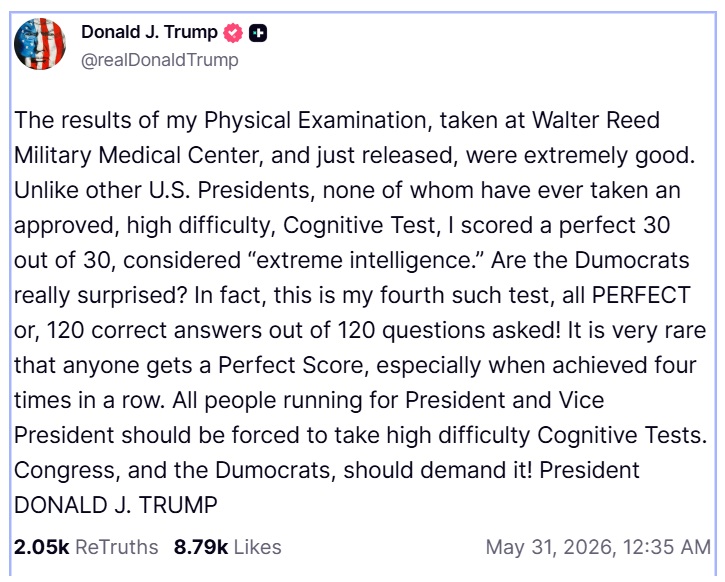
A cognitive test checks for problems with your mental functioning (cognition). The test involves answering basic questions and performing simple tasks.
A healthcare provider may recommend a cognitive test if they suspect mental decline or cognitive impairment (issues with mental functioning).I dont know her, but read this online. I think she says what most of the world is thinking. Trump is getting worse every day.
Not really interested in your posts... Did not read this long, whatever.... I think my last post speaks best, offering my view --- TDS
He really lives in your head --- LOLI dont think I asked, but... want a cookie? LOL
Is TDS a verified medical diagnosis with in person meetings or is it something conservatives made up when they are unable to use facts and logic?
Proof positive that Trump is sick of mind.
Yes, i have read it through. This man is “nuts” while conservatives keep trying to present him as a natural aberration among those that have held the office before. TDS, indeed…Hardly
1. He had the nerve to dare to defile the Kennedy Center and the memory of the late President by putting his name upon it. He could have simply repaired the building without becoming a puerile graffiti artist defacing every monument to the ‘true heroes” of our society. John Kennedy and his wife were true patrons of the arts, promoting America’s best rather than its worst. What kind man places a wrestling mat on the front lawn? Even I knew when I was a kid that that wrestling was trashy, far worse than boxing.
What kind of man would dare to want his graven image put upon an American currency within his lifetime? As a purveyor of cheap trinkets, cell phone, watches etc, he is clearly not President timber, but particle board.
A man with a delusion of grandeur, that fails to recognize that the White House is the people’s house, he is neither a deity nor a monarch, but the first citizen who should be setting a better example.
He would in fact be the very impetus of American decline from the standpoint viewed from abroad and domestically.
He has every worst trait for a leader, being petty and vindictive, impulsive and incapable of any reflection or deeper thinking. I don’t want people like that in charge. He tries to associate himself with great men, where he, in fact, would be most diminutive and unrecognizable in their shadows.
It is imperative that he be removed and his influence expunged as soon as possible, while there still is a country to rescue.
Ms Reese and her assessment are spot on and we are in great danger as a nation.I asked AI about Mary Trump who is Trump's Niece and a practicing Clinical psychologist, what she thinks about his behavior. In addition, what other psychologists have observed about his behavior compared to her experiences of him which are based on their family history
https://copilot.microsoft.com/shares/fm … A68qdS3eBvThat fits with all we have said on these pages and the many books I have read on the subject.
The underlying theme through it all is "She frames him as uniquely dangerous, not merely disordered."Could she be somewhat biased?
Did not Mary Trump have a long running law suit with Donalld Trump
Yes — Mary Trump and Donald Trump were involved in multiple long‑running legal battles, and the disputes lasted for years.
(As always, please confirm political information with trusted sources.)
Below is the clear, sourced breakdown.
Did Mary Trump have a long‑running lawsuit with Donald Trump?
Yes. There were two major legal conflicts, both extended and highly contentious.
1. Mary Trump sued Donald Trump (2020–2022)
Mary Trump filed a lawsuit in September 2020 accusing Donald Trump, Maryanne Trump Barry, and the estate of Robert Trump of defrauding her of tens of millions of dollars related to her inheritance from Fred Trump Sr.’s real‑estate empire.
She alleged they tricked her into signing a settlement that undervalued her share.
The case lasted over two years.
It was dismissed in November 2022.
2. Donald Trump sued Mary Trump (2021–present)
In September 2021, Donald Trump filed a $100 million lawsuit against Mary Trump, accusing her of:
Violating a 2001 family confidentiality agreement
Providing confidential tax documents to The New York Times for its Pulitzer‑winning 2018 investigation
Status and developments:
Parts of Donald Trump’s claims were dismissed in 2023.
A New York appellate court in 2024 allowed the breach‑of‑contract claim to continue.
As of 2025, the case was still active, and a judge ruled that Trump could continue suing her even while serving as president.
This means the litigation has stretched from 2021 through at least 2025, making it a genuinely long‑running legal fight.
Bottom line
Yes — Mary Trump and Donald Trump have been locked in years of litigation, including:
Her lawsuit against him (2020–2022)
His lawsuit against her (2021–ongoing as of 2025)
If you want, I can also break down:
What the 2001 family settlement actually said
How the New York Times investigation fits into the lawsuits
How these legal battles affected Mary Trump’s public commentary
Just tell me which direction you want to explore next.
yes do that
Yes — Mary Trump and Donald Trump were involved in long‑running, multi‑year lawsuits against each other, and the record is very clear about this. (As always, please confirm political information with trusted sources.)
Below is the concise answer first, followed by the detailed, sourced breakdown.So, in your mind this invalidates Mary Trump's experience with her uncle and validates Trump's behavior as a master con-artist suffering from acute narcissism?
This is what AI said about my post:
Mary Trump’s warnings about Donald Trump — narcissism, impulsivity, grandiosity, lack of empathy, dangerousness under stress — align closely with the mainstream of public professional commentary from psychologists, psychiatrists, and behavioral‑science experts who have analyzed his public behavior (not his private medical data).
(As always, you should confirm political information with trusted sources.)
Where she differs is degree, not direction:Careful there PeoplePower, she may declare you have TDS. LOL.
No, it’s not fully validated, but it does present another perspective. I wasn’t making an accusation—I was asking whether she might have some bias.
I’ve also said more than once that, in my personal view as a layperson, I think Trump can show traits often associated with narcissism. I don’t see him as impulsive in action so much as direct and unfiltered in speech. His wealth also allows him to live a very grand, even extravagant, lifestyle. As for empathy, I think he expresses it selectively, shaped by his own beliefs and values, and likely shows it when he feels it is genuine.
My information was from ChatGPT. Did you find something that was not factual? Which source did you find faulty?
She could be, but since she is one of thousands in her field making the same observations, my guess is not.
You do understand there is a difference between unfounded bias and evidence-based judgement (what you call TDS) don't you? Mary Trump had a lifetime of evidence to base her judgement on.Mary Trump has also publicly acknowledged seeking treatment for mental health issues and undergoing ketamine therapy. While ketamine is a legitimate medical treatment for certain conditions, it is not without controversy. The drug can cause dissociation, altered perception, impaired judgment, and has potential for misuse and psychological dependence. There are also ongoing questions within the medical community regarding the long-term effects of repeated ketamine treatment.
Her judgment, as well as her memories, could have been affected by her use of Ketamine.
Of course there is a difference between unfounded bias and evidence-based judgment. The question isn't whether Mary Trump had firsthand knowledge of her uncle. She clearly did. The question is whether a lifetime of family conflict, inheritance disputes, public political opposition, and years of litigation might also influence how that evidence is interpreted.
Having access to evidence does not automatically eliminate bias. In fact, people who are closest to a situation can sometimes be the most emotionally invested in it. That's why we generally evaluate claims based not only on the source's proximity to the subject, but also on potential motivations, conflicts, and corroborating evidence.
I'm not arguing that everything Mary Trump says is false. I'm saying that being a family member with a long and contentious history, as well as Ketamine use, gives reasin reasons for caution.
ChatGPT --- Yes. Mary L. Trump holds a Ph.D. in clinical psychology from Adelphi University's Derner Institute of Advanced Psychological Studies. She has taught graduate-level courses in psychology and has worked on research involving schizophrenia, trauma, psychopathology, and stalking victims.
That said, there is a distinction between having a doctorate in clinical psychology and currently practicing as a licensed clinical psychologist. Mary Trump is best known today as an author, commentator, and political critic rather than as a practicing clinician.
If you're asking because of her public comments about Donald Trump, it's also worth noting that many mental health professionals have criticized making formal diagnoses of public figures without a personal clinical evaluation. Mary Trump has generally discussed her uncle's behavior from a combination of family experience and psychological training.
ChatGPT --- A widely cited ethical guideline comes from the American Psychiatric Association, often called the Goldwater Rule:
"It is unethical for a psychiatrist to offer a professional opinion unless he or she has conducted an examination and has been granted proper authorization for such a statement."
This principle was adopted after psychiatrists publicly speculated about the mental health of Barry Goldwater without examining him.
Another relevant statement comes from the American Psychological Association:
"Psychologists do not offer opinions on individuals they have not examined."
While wording varies depending on the context and ethics document being referenced, the underlying principle is the same: mental health professionals are generally discouraged from making clinical diagnoses of public figures without a direct evaluation and sufficient professional basis.
If you're responding specifically to comments made by Mary L. Trump, you could write:
"Regardless of whether one agrees with Mary Trump's political views, many mental health professionals adhere to the principle that diagnosing public figures without a personal clinical evaluation is professionally inappropriate. As the Goldwater Rule states, 'It is unethical for a psychiatrist to offer a professional opinion unless he or she has conducted an examination and has been granted proper authorization for such a statement.'"
That quote is often effective because it focuses on professional standards rather than partisan politics.
Source https://www.psychiatry.org/news-room/go … hatgpt.com
Mary Trump has publicly stated that she was treated for mental health issues, the answer is yes—she has publicly discussed undergoing ketamine therapy for emotional and psychological distress. If your question is whether she has publicly disclosed a diagnosis of a major mental illness, I am not aware of any widely reported public disclosure of such a diagnosis.You seem to be missing an important distinction.
She is not making a clinical diagnosis, and neither are the thousands of other mental health professionals nor even me, for that matter. The point is not, “I have personally examined Trump and diagnosed him.” The point is that trained mental-health professionals, and frankly ordinary observers as well, can compare Trump’s public behavior to standard descriptions of aberrant behavior and draw evidence-based conclusions.
To state the obvious, there is a difference between diagnosis and observation. The famous Goldwater rule applies to the former, not the latter.
If someone repeatedly lies when the truth is easily available, we can call that pathological lying without pretending to be his treating psychiatrist. If someone shows extreme grandiosity, vindictiveness, lack of empathy, paranoia, impulsiveness, and contempt for rules, people are allowed to note that those traits match recognized descriptions of dangerous or disordered behavior.
That is not “bias.” Bias is reaching the conclusion before looking at the evidence. This is looking at years of reprehensible public conduct, public statements, court records, testimony, threats, lies, and behavior, and then saying: these patterns are not normal.
So no, the argument is not “Trump has been clinically diagnosed by strangers.” The argument is that Trump’s observable behavior fits widely recognized warning signs that thousands of trained professionals have said are dangerous in a political leader.In medical and mental health professions, it is considered unethical (and often against professional standards) to formally diagnose a patient without a proper evaluation.
Modern physician ethics (more relevant today)
Modern versions—like the AMA Code of Medical Ethics—are more explicit. They emphasize that physicians should:
Provide care based on appropriate clinical evaluation
Maintain professional competence and sound judgment
Avoid making claims or decisions that are not medically supportable
There is no argument here--- it is unethical to diagnose without a clinical examination.
Mary Trump has been publicly criticized by some psychologists, psychiatrists, and commentators for her Too Much and Never Enough book and for offering psychological interpretations of Donald Trump without a clinical evaluation.
https://www.psychologytoday.com/us/blog … hatgpt.com
https://www.scientificamerican.com/arti … hatgpt.com
Thanks for providing this “Peoplepower”. Emotional immaturity seems the dominant theme when speaking about Trump. I still wonder about the purpose of all the debate, Trump’s actions has shown him to be “mad King Donald”, The republicans are trying to get rose colored glasses on the eyes of everyone. How the republicans grovel before the throne, making fools of themselves in syncophancy is a certainly a study in character.
Some people can't/won't accept the truth even though it is as plain as the nose on their face. Worse, they actually think they are right in the face of OVERWHELMING evidence to the contrary.
I think they date his emotional age to when daddy packed him off to military school.
No, I would not want to deprive you of the calories... Or the comfort a few cookies could offer you...
President Donald Trump has not published a specific, static "list" of offensive memes from his website. Instead, he and his administration have historically posted numerous highly controversial and widely condemned AI-generated images, videos, and memes across his social media platforms, including Truth Social and official White House accounts.
While there is no single catalog, the most notable and offensive memes he has made public include:The Obamas as Primates: A video that depicted Barack and Michelle Obama as apes, which drew heavy bipartisan backlash, including condemnation from top Republican officials.
Religious Imagery: An AI-generated image portraying himself as Jesus Christ, which was deleted after being widely criticized by religious leaders and conservative supporters as blasphemous.
Immigration Trolling: Multiple posts that critics and immigrant rights organizations called racist and dehumanizing, including a "Valentine’s Day Deportation" meme, AI cartoons of crying migrants, and fake dating app profiles mocking deportation.
Political Retributions: Memes generated via AI depicting political enemies—such as former President Barack Obama, Hillary Clinton, and Joe Biden—in prison jumpsuits, or showing himself wearing a crown and dropping waste on protesters from a fighter jet.
Because this content is continually posted as social media updates, you can follow Trump's active feed directly on his Truth Social account. For detailed breakdowns and criticism of these specific memes, coverage is available on news outlets like NPR
—————————
So folks, I don’t need to get into a splitting hair debate about Donald Trump’s mental state. It should be obvious that anyone who has engaged in the vulgar displays, admitted his involvement and made it public is NOT normal, not normal for a mature adult and certainly not normal for a man in the office of President.
Who is going to try to convince anyone that these sorts of aberrations are normal?The problem with your argument is that it jumps from "I find these memes offensive" to "therefore anyone who posts them is mentally abnormal and unfit for office."
Those are two very different claims.
Several of the examples you cite are matters of interpretation. Political memes, satire, exaggeration, and ridicule have existed for decades and have been used by politicians, campaigns, comedians, activists, and media figures across the political spectrum. Calling a meme offensive does not make it evidence of mental instability.
There is a difference between behavior being crude, immature, provocative, or distasteful and being evidence that someone is mentally unwell. If posting provocative memes is proof that a politician is not mentally normal, then that standard would have to be applied consistently to countless politicians, activists, celebrities, commentators, and public figures who engage in similar behavior online.
Many of the examples you list are controversial because people disagree with them politically, not because they demonstrate psychological impairment. People have been comparing political opponents to criminals, dictators, fascists, traitors, and worse for generations. The fact that someone posts a provocative image does not establish a mental-health diagnosis.
Ultimately, "normal" is not a universally accepted standard for presidents. Many successful presidents have had personalities, communication styles, and public behavior that large portions of the country considered unusual, offensive, or unbecoming. Voters are free to decide whether they like that style, but disliking it is not the same thing as proving mental instability.
You can argue that Trump's posts are crude, divisive, immature, or beneath the office. I agree with you in most cases. However, those are subjective opinions.
What I don't think can honestly be claimed is that your personal dislike of those posts constitutes objective proof that he is mentally abnormal. Finding someone's behavior offensive is not the same thing as demonstrating a mental-health condition or an inability to perform the duties of the office. At most, it shows that you strongly disapprove of his style and conduct, which is a matter of opinion, not a medical or psychological diagnosis.Look here not there. Your narrative is loaded with indifference as to what Trump is really about. Satire is one thing, but when it is constantly used for retribution, it becomes a horse of another color.
It's the same logic for "Trump has lied over 30,000 documented times. All presidents lie, therefore there is nothing wrong with his mental state."
You like context, but that is what is missing from your narrative is the context as to when and why he posts his memes and for the purpose of his posts. They are used as weapons to punish others who he sees as threats to his sensitive, narcissistic ego.I think you're actually proving the point that was being made. Rather than addressing whether the behavior itself is appropriate, you're assigning motives and psychological conditions such as narcissism and a sensitive ego. Unless you're qualified to diagnose him personally, those are still subjective interpretations, not objective facts.
You criticize me for lacking context, but context can be interpreted in different ways. One person may see retaliation, another may see a response to years of political, legal, and media attacks. The fact that people disagree about motive is exactly why motive should not be presented as established fact.
My point was never that people must approve of Trump's posts. People are free to find them offensive, immature, divisive, or inappropriate. The issue is when personal interpretations become presented as evidence of mental abnormality. Disapproval of someone's conduct is not the same thing as demonstrating a psychological disorder.
At the end of the day, you're entitled to your view of Trump's motives, but it remains an opinion about why you think he does what he does, not proof of a mental-health condition.
Sharlee,
Excellent point.
These people talk about mental abnormality and yet, they actually believe women can become men and men can become women.
These are people who are so mentally deficient they can't comprehend that there is a difference between a legal and illegal immigrant. It's beyond them.
These are people who are unable to comprehend that abortion kills a child.
They run from facts, truth, and reality like a cockroach from light.
If any liberal or democrat wants to call anyone mentally deficient they should start by looking in the mirror and correct what is there first before judging any other upright-walking human being.
The application of the word human being is subjective in this case.Thank you...
I agree with the concerns raised here. From what I’ve been observing in society, there are increasing examples of ideas being promoted that seem disconnected from common sense and long-standing shared standards, as well as values. It often feels like basic facts and practical reasoning are being set aside, and narratives are more important. I think it’s important to speak up and support clear, grounded thinking and honest conversation about these issues.This is exactly the kind of comment that proves the point.
You are not making an argument. You are stringing together culture-war slogans and then ending by implying that liberals and Democrats may not even qualify as human beings. That is not “common sense.” That is dehumanization.
Disagree with gender identity? Fine, make the argument. Disagree on immigration? Fine, make the argument. Disagree on abortion? Fine, make the argument. But calling millions of people mentally deficient, comparing them to cockroaches, and then saying the word “human being” is subjective is not debate. It is the language people use when they want permission to stop treating others as fully human.
And that is especially rich coming from people who complain constantly about being insulted, mocked, or stereotyped.
The issue is not that liberals cannot tell the difference between legal and illegal immigration. The issue is that many of us reject the idea that a person’s legal status erases their humanity. The issue is not that liberals do not understand the moral seriousness of abortion. The issue is that we also consider the life, health, autonomy, and legal personhood of the woman. And the issue is not that liberals “run from reality.” The issue is that you confuse your political and religious conclusions with reality itself.
If you want to have a serious discussion, make a serious argument. But once you start calling political opponents mentally deficient, cockroaches, and questionably human, you are no longer arguing policy. You are demonstrating exactly the cruelty and moral rot you claim to oppose.
The only conclusion one can draw from that screed is it is Projection.The righties are truly an infestation, working their way up through the floor boards, daily.
Who would have the temerity to compare Trump’s vulgar deviancy to anything “normal”?"But once you start calling political opponents mentally deficient, cockroaches, and questionably human, you are no longer arguing policy."
Yeah, just voicing an opinion.
I do regret insulting cockroaches.
There is no discussing issues with the mentally efficient left. They really say nothing worth listening to at all.
You don't have to respond, yet you do, seems to me there a fear of me being correct. This would explain such defensiveness.No, unless the subject is Ukraine, I have zero fear you will be correct.
Mike shared his views; he did not simply string together culture-war slogans. He pointed to specific issues and ideologies that many people in our society hold strong opinions about.
For example, there are ongoing debates over legal and illegal immigration. We have seen violent protests against federal immigration detention facilities, and some governors and local officials in blue states have openly opposed or resisted certain federal immigration enforcement policies. These folks don't respect that ICE is doing its job, all within our laws. Due process is being respected, and those deemed to be here illegally by our laws need to be deported. We do not have open borders...Those in our country illegally need to be deported.
Likewise, there is a significant cultural debate surrounding gender identity. Some people believe that gender is separate from biological sex and support gender-transition treatments, including for minors, while others strongly disagree.
Whether one agrees with Mike's positions or not, these are real political and social issues that millions of Americans care deeply about. Discussing them does not automatically reduce to "culture-war slogans." They are not slogans; they are beliefs held by some in our society.
Mike has every right to express his views on these subjects and to criticize his political opponents. Freedom of speech protects the expression of opinions, including opinions that others may find controversial, unpopular, or offensive.
I freely admit that I am biased on the issues he raised, and I largely agree with his views. From my perspective, the ideologies he mentioned have become increasingly pervasive in our society.You should be sitting down for this one.
"The issue is that many of us reject the idea that a person’s legal status erases their humanity. "
That line is spot on. ^5
GANo, in my view, that line isn’t quite right, it’s overly simplistic and leaves out a lot of the real issues tied to illegal immigration.
And yes, there can absolutely be flaws in how our immigration laws are written or enforced, but that doesn’t mean the whole system is invalid. Flaws can be identified, debated, and corrected through proper legal and political processes.
And maybe you were just responding to a one-liner, but that one line really does sweep a lot of complex, real-world issues under the rug. And maybe that’s part of why these problems very rarely actually get solved.
That sentence sounds good on the surface, but it kind of mixes things together in a way that doesn’t really hold up.
First, it sets up a bit of a false framing. It suggests the disagreement is about whether people are “seen as human” or not. But that’s not really what the debate is about. The real issue is about immigration laws, borders, and how a country decides who is allowed to live and work there under what rules.
Also, legal status doesn’t “erase someone’s humanity” in any real sense. That’s more of a rhetorical line than a factual point. In reality, legal status just determines what rights and permissions someone has within a country. Citizens, legal residents, tourists, and people here illegally are all still human, the law just treats their situations differently.
Another issue is that it kind of blends enforcement with morality. You can fully recognize someone’s dignity as a person while still saying they’re not allowed to be in the country or need to be removed under the law. Those two things don’t cancel each other out. Governments do this all the time without implying anyone is “less human.”
The bigger problem with the statement is that it kind of shuts down debate. If you frame immigration enforcement as “erasing humanity,” then almost any enforcement action, deportation, detention, border control, can be painted as morally wrong just by default. That doesn’t really leave room for discussing policy in a practical way.
At the end of the day, most of this disagreement isn’t about whether people are human. It’s about how a country sets and enforces its rules, and how it balances compassion with law and order.Nope, my comment wasn't about the immigration laws or whether they should be enforced. It was solely to the presented perspective of the quoted line.
I think it is an apt description supported by abundant visual evidence. The point wasn't a dissertation; it was an observation.
Do you argue that there haven't been public displays of ICE agents abusing their authority in ways that support the quoted line in my comment?
GA"Do you argue that there haven't been public displays of ICE agents abusing their authority in ways that support the quoted line in my comment?"
Yes, I agree...
Do you agree that ICE agents have been making public displays of themselves being injured and certainly dehumanized on the job?
Do the ICE agents not deserve to be treated with humanity? In my personal view, they do. The treatment they receive is widely filmed and reported.ICE agents deserve to be treated the same way they treat their victims.
What? ICE agents are doing the job they were hired to do. In many cases, they are dealing with organized and sometimes violent protesters who have caused injuries and interfered with law enforcement operations.
Individuals detained by ICE are not automatically victims. They are entitled to due process under the law. If they are found to have a legal right to remain in the United States, they are released. If they are found to have no legal right to stay, they are deported. That is how the system is supposed to work.
In my view, your attitude is, for lack of a better word, untoward. We have immigration laws for a reason, and those laws should be enforced consistently—not selectively applied or ignored based on political preferences. When it comes to individuals who are in the country illegally, the rule of law should matter just as much as it does in every other area of our legal system.
Lumping all ICE agents together and all migrants together demonstrates a lack of nuance. ICE agents are individuals, just as migrants are individuals. Some of the people detained by ICE have committed serious crimes, including violent offenses. Others may have immigration violations but no criminal history. Our legal system is designed to evaluate each case individually and provide due process to everyone, even those accused of the most serious crimes.
For that reason, labeling all migrants as victims is just as misguided as labeling all ICE agents as villains. Both views ignore the reality that individuals should be judged based on their own actions, not by broad stereotypes applied to an entire group.
As always, your reasoning, in my view, is badly skewed.You said ICE agents are doing what they were hired to do. So, are you saying ICE agents were hired to injure, kill, and otherwise mistreat immigrants?
Have you forgotten that most, if not all, of the detention centers inhumanely treat the inmates.
Have you missed the thousands of reports of ICE agents mistreating, shooting, or even killing those they are arresting? They have more than earned their reputation of Gestapo or Stasi.
If you don't mind me saying that it is your view that is missing reality.
Wasn't Credence clear it wasn't HIS personal dislike? Didn't he say:
* "which drew heavy bipartisan backlash, including condemnation from top Republican officials."
* "which was deleted after being widely criticized by religious leaders and conservative supporters as blasphemous."
* Multiple posts that critics and immigrant rights organizations called racist and dehumanizing,"
it may be true that "Finding someone's behavior offensive is not the same thing as demonstrating a mental-health condition or an inability to perform the duties of the office. " but, that reasoning fades when there are literally thousands of examples of such behavior.So, Sharlee, in your quest to defend Trump and his company regardless of what he does, you present this rebuttal to my argument?
Aberrant behavior can correlate quite accurately to mental illness, does it not? Trump is the very definition of aberrant behavior.
This is far beyond “politics”. I have seen political satire, commentary and cartoons of all stripes, but personal, racist assaults and vulgar images comes from Trump and the republicans and it is quite novel in its depths of depravity.
You don’t think that is not considered as not normal for a 80 year old man to play in a sandbox to create vulgar images for public display? I would have such a man consigned to an asylum ESPECIALLY one holding so lofty and crucial public position. Somehow, you can defends this? What extremes do MAGARS go to to defend their leader? And we both know that Trumps imagery is far beyond merely being provocative. He has been criticized by his own for posting them, so it is more than just ‘opinion”. He can attack Obama policies all that he wants, but I wont tolerate racist assault and that goes far beyond a matter of mere opinion.
If he posts crude, divisive, immature material, what would make me believe that he is isn’t crude, divisive, immature and beneath the office that was elected into? It is a logical progression of thought, is it not?
While there are difference in personalities and such, there is a boundary for us all as to responsible behavior in the public sphere and what is not. That standard is even more defined for the President of the United States, as it should be.
Let’s not be coy, Sharlee, Trump sets a standard that has never been even closely approached by any of his predecessors. Trump is well outside the parameters of decency that could normally be accommodated by a difference in style.
You don’t think that a man that is supposed to represent all of the people, whether they voted for him or not, publicly posting cartoons showing him spewing excrement on his critics from the air is not over the top vulgar?
It is one thing that political satirists and cartoonists do similar things, but even the worse of them have never cross a line of such childishness and vulgarity.
The other thing is that the President has never been personally involved and invested in such assaults on his adversaries, that is also new.
So, don’t make this my personal dislike, this is far beyond that and you know it.
Lacking decorum and balance in this area are certainly grounds to believe that he is inadequate in other areas of concern. And yes, i strongly disapprove of his style and conduct.You seem to have moved the goalposts, diverted----
My argument was not that Trump's posts are admirable, mature, or presidential. In fact, I explicitly acknowledged that many of them are crude, divisive, immature, and beneath the office.
The question was whether those posts constitute evidence of mental illness or mental incapacity.
You say aberrant behavior can correlate with mental illness. Of course it can. But correlation is not proof. Plenty of people engage in offensive, vulgar, immature, narcissistic, attention-seeking, or provocative behavior without being mentally ill. If it were otherwise, we would be diagnosing millions of people based solely on what we see in their social media activity.
You also repeatedly use words such as "racist," "depraved," "aberrant," "vulgar," and "childish." Even if I granted every one of those descriptions for the sake of argument, none of them are psychiatric diagnoses. They are moral and political judgments, your personal view.
You ask whether an 80-year-old man should be posting such things. That's a fair criticism. But being age-inappropriate, offensive, or lacking decorum is not the same thing as being mentally unwell. History is full of powerful people who were rude, impulsive, arrogant, vulgar, and combative without being mentally incompetent.
You also say that because Trump posts crude and divisive material, it is reasonable to believe he may be inadequate in other areas. Perhaps. But that is speculation, not evidence. The fact that someone behaves badly in one area does not establish that they are incapable of performing the duties of office.
In the end, your argument still comes down to this: "I find his behavior so offensive that I conclude he must be mentally abnormal." My response remains the same: strong disapproval of someone's conduct is not a substitute for evidence of mental illness.You seem hung up on the need for some sort of formal diagnosis from a psychiatrist. Not sure why, since it has been carefully explained that one is not needed to draw reasonable conclusions, such as Credence and thousands of mental health professionals have simply based on decades of observing him.
The only requirement is eyes, ears, a functioning brain, and the DSM-5 recognize what his behavior is like. Notice I didn't say his Mental State, I said his Behavior.
Sure, I would like to know WHY he is the way he is, but that is immaterial. All I need to know what his behavior looks and acts like.
You keep slipping past the context as well. Several times you had said things similar to ""I find his behavior so offensive that I conclude he must be mentally abnormal." rather point out the obvious - that Credence's (and I) conclusions about Trump's behavior being abnormal, aberrant, and dangerous is confirmed by Literally thousands of mental health professionals who have taken the time to study Trump's Behavior.I don't think I'm hung up on the need for a formal diagnosis. I think I'm trying to maintain an important distinction.
Anyone can observe behavior. We can all watch Trump and form opinions about his temperament, judgment, personality, rhetoric, or conduct. That's not controversial.
Where I think you're making a leap is moving from "I observe behavior I consider abnormal, aberrant, or dangerous" to "therefore a mental abnormality has been established."
Those are not the same claim.
You say all that's required is eyes, ears, a functioning brain, and the DSM-5. But the DSM-5 wasn't created as a tool for the public to evaluate public figures from speeches, interviews, rallies, television appearances, and social media posts. It is a clinical reference used within a much broader professional evaluation.
And that's why I keep returning to the distinction between behavior and diagnosis. We can debate behavior all day long. We can debate whether Trump's conduct is offensive, reckless, arrogant, impulsive, admirable, effective, or dangerous.
What we cannot do with the same level of certainty is claim that observing behavior from afar establishes a psychiatric condition.
So my objection has never been that people can't criticize Trump's behavior. My objection is that criticisms of behavior are often presented as though they automatically validate conclusions about mental abnormality, when those are two very different things."Where I think you're making a leap is moving from "I observe behavior I consider abnormal, aberrant, or dangerous" to "therefore a mental abnormality has been established.""
Are you saying Credence and I don't have brain power to draw reasonable conclusions based on what we observe? Especially when we have material like the DSM - 5 to reference and the studies from thousands of mental health professionals. I think that is rather dismissive of you.
Should we apply what you wrote about your conclusions regarding Biden/?"Are you saying Credence and I don't have brain power to draw reasonable conclusions based on what we observe?"
No, you don't have the brain power to do such a thing. As a liberal you have an inability to comprehend reality and understand circumstances. It is beyond you as it is with ALL liberals.And as a MAGA you clearly have the ability to live in a fantasy world of mad King Trump's making.
What do you call a man who plasters his name all over everything he can, builds monuments to himself, and requires constant admiration to validate his behavior?
In addition, tries to give himself and his Jan. 6 supporters 1.8 billion dollars of taxpayer's money. I call him Trump who suffers from extreme narcissism. His deal making is nothing more than a con artist taking advantage of the deal.
He is like an alpha dog who has to piss on everything to mark his spot.
He will try everything he can to break law and if he gets away with it, it is good for him.
He does the same thing when he puts the make on women, he will try everything to get in their pants. It's all the same to him. it's really no different than going through a red light at a signal. If he can get away with it, he gives himself credit.
You may call it TDS, but I call it actualized reality. It's interesting that you can say non-Trumpers suffer from TDS without any professional or clinical analysis, but yet when real professionals agree to his behavior, you say he has never actually been analyzed and you quote the Goldwater Rule.You are free to dislike Trump's behavior. You can call him arrogant, self-promoting, attention-seeking, reckless, abrasive, egotistical, or any number of other things. Those are observations and opinions about conduct.
Where I think the argument goes off the rails is when criticism of behavior becomes a substitute for clinical conclusions.
Everything in your post is essentially a list of grievances and negative character assessments. What it is not is evidence that a psychiatric diagnosis has been established. In fact, much of what you describe could be said about numerous politicians, celebrities, business leaders, and historical figures who were highly ambitious, self-promoting, and obsessed with their public image.
The other thing I find interesting is that you're conflating two very different claims. One claim is, "Trump behaves in ways I find objectionable." The second claim is, "Therefore Trump suffers from extreme narcissism." The first is an opinion anyone can hold. The second is a psychological conclusion that requires a much higher evidentiary standard.
The irony is that you criticize people for using a political label while simultaneously relying on psychological labels to explain political disagreements.
At the end of the day, if the strongest evidence for "extreme narcissism" is that Trump puts his name on buildings, likes praise, promotes himself, pushes legal boundaries, and has a large ego, then you've described a personality that many people dislike. You haven't necessarily demonstrated a mental disorder.The reality in these forums is that we all suffer from Cognitive Dissonance. To put is simply, we can't believe opposing views.
I asked AI how is cognitive dissonance used in this forum? Here is the answer I received.
https://copilot.microsoft.com/shares/UU … wkCHo7tNJUVery interesting. I asked it a series of follow-up questions. One result stuck out which is
"Anti‑Trump commenters present more claims framed as facts.
Pro‑Trump commenters present more challenges to the validity of facts."
Suppose the "facts" are the truth, what does that imply?Interesting... I viewed the Copilot link, continued the conversation under your question, and added my question.
My question --- Here is a simple, direct question; hopefully, you can answer it with a simple, direct answer. How does cognitive dissonance in today's society affect political conversations?
Cognitive dissonance makes political conversations today more defensive, more polarized, and less fact‑driven. People experience psychological discomfort when new information contradicts their beliefs, so they resolve that discomfort not by reconsidering their views, but by rejecting, rationalizing, or attacking the conflicting information.
What cognitive dissonance does to political conversations
Defensive reasoning — When confronted with facts that challenge their political identity, people tend to question the source, reinterpret the facts, or dismiss them entirely. This keeps their beliefs intact while changing the story around them.
Emotional escalation — Neuroscience shows that political disagreement activates threat‑related brain regions (like the amygdala), making conversations feel personal rather than analytical. This triggers fight‑or‑flight responses instead of thoughtful engagement.
Echo‑chamber reinforcement — Social media filters information so people mostly see views that match their own, reducing exposure to dissonant ideas and making opposing viewpoints feel more “wrong” or threatening.
Backfire effect — Attempts to correct misinformation often strengthen the original false belief because accepting the correction would create too much internal conflict.
Polarized language — Research links rising political polarization to increasingly distorted, emotionally charged language patterns, which further entrench dissonant thinking.
Manipulation vulnerability — Disinformation campaigns exploit these psychological tendencies by triggering fear, anger, and identity‑based loyalty, making people more resistant to contradictory evidence.
Why this matters
Cognitive dissonance doesn’t just shape individual conversations — it shapes voting behavior, policy support, and public opinion. When political identity becomes part of someone’s self‑concept, disagreeing with their beliefs feels like attacking them, making productive dialogue extremely difficult.
In one sentence
Cognitive dissonance turns political conversations into battles of identity rather than exchanges of ideas, pushing people to defend their beliefs emotionally instead of evaluating them rationally.
If you want, I can go deeper into how to reduce cognitive dissonance in political discussions or why political identity is so psychologically powerful." Copilot
My next question --- "To go further--- does cognitive dissonance promote rumination, notable repetition, and dwelling on a given subject or issue?
Yes — cognitive dissonance can absolutely promote rumination, repetition, and dwelling, and it does so for very specific psychological reasons.
Core takeaway:
When someone feels the internal conflict of holding two incompatible beliefs, the mind often loops on the issue in an attempt to reduce the discomfort. That looping is what we experience as rumination."
I took my questions further --- What can this form of mindset do to one's health?
Cognitive dissonance doesn’t just shape thinking — it can meaningfully affect a person’s mental and physical health when it becomes chronic, especially if it leads to rumination, looping thoughts, or emotional strain.
How cognitive dissonance affects health
1. Chronic stress
When someone constantly holds conflicting beliefs or feels pressured to defend a position they’re unsure about, the body can stay in a low‑grade stress response.
This can contribute to:
Elevated cortisol
Muscle tension
Headaches
Fatigue
Prolonged stress of this kind is linked to higher risks of cardiovascular issues and weakened immune function.
2. Anxiety and worry
Rumination — the mental looping you mentioned — keeps the nervous system activated.
People may experience:
Restlessness
Difficulty concentrating
A sense of internal conflict that doesn’t resolve
This can make everyday tasks feel heavier and more draining.
3. Emotional exhaustion
Trying to reconcile incompatible beliefs or justify something that doesn’t feel right can be mentally tiring.
Over time, this can lead to:
Irritability
Feeling overwhelmed
Reduced motivation
It’s similar to burnout, but driven by internal conflict rather than workload.
4. Lower mood
Rumination is strongly associated with depressed mood because the mind keeps returning to the same unresolved problem.
This can create:
Hopelessness about the issue
Self‑criticism
A sense of being “stuck”
When dissonance involves identity or values, the emotional weight can be even heavier.
5. Sleep disruption
Unresolved mental tension often shows up at night.
People may:
Replay arguments
Rehearse justifications
Worry about being wrong or misunderstood
This can lead to difficulty falling asleep or waking up frequently.
6. Avoidance behaviors
To escape the discomfort, people sometimes avoid situations, conversations, or information that might trigger dissonance.
Avoidance can temporarily reduce stress but often increases long‑term anxiety.
Why this matters
Cognitive dissonance itself isn’t harmful — it’s a normal part of being human.
But when it becomes chronic, emotionally charged, or tied to identity, it can create a cycle of stress and rumination that affects both mental and physical well‑being.
One‑sentence summary
Persistent cognitive dissonance can lead to stress, anxiety, emotional fatigue, and sleep problems, especially when it drives rumination and unresolved internal conflict.
If you want, I can go deeper into how to reduce the health impact of cognitive dissonance or how rumination can be interrupted.
https://copilot.microsoft.com/chats/QqU … bKttQMNWtF
In my view, cognitive dissonance plays a significant role in the behaviors people often label as "TDS," but it is only one piece of a much larger picture. Identity, emotions, group dynamics, and social reinforcement can all contribute as well. Rather than being a single root cause, cognitive dissonance works alongside these other factors to shape how people perceive and react to Trump. Here are some of the additional factors that, in my view, can contribute to TDS:
Identity‑based politics
Missplaced moral conviction
Media reinforcement loops
Threat perception
Group polarizationI asked AI if TDS is accepted by professional psychiatrist as a mental disease.
https://copilot.microsoft.com/shares/wu … aDdASTNntcThus far, AI is presenting factual information indicating that it is not a recognized mental health condition. That’s why, when I seriously discuss “TDS,” I make sure to preface it by noting that it is an opinion.
In my opinion, based on what I have observed and experienced, there does seem to be a real phenomenon affecting many people. I don’t view it as a mental disorder, but rather as a tendency for some individuals to ruminate on Donald Trump because he is an especially psychologically activating political figure.
From my perspective, Trump often triggers strong emotional, identity-based, and tribal responses across the political spectrum, which makes it difficult for many people to ignore him. I can honestly say I haven’t seen many political figures generate the kind of strong, divided reactions that Donald Trump does. It often seems that people can look at the same person and come away with very different interpretations of his character and impact. I would hesitate to determine or share my feelings on why that is the case. If asked, I feel TDS is a real thing -- I would have to say I do.By the same token, there are many on this thread that when asked if Trump is in a cognitive decline, they would have to say yes. If I was asked, that seam question, I would also add, he also suffers from extreme narcissism and is a master con-artist. In any case, we and everybody else on this thread experience some form and/or degree of cognitive dissonance because of Trump's behavior. I think it is safe to agree to that. I also think we are both good at asking AI the right questions to get to the root of our conversations.
I think you're changing the subject a bit. But good food for thought.
My comment wasn't about whether Trump is cognitively declining, narcissistic, or a con artist. Those are separate claims that would require their own evidence and discussion.
What I was addressing was whether there is a recognizable phenomenon where some people become unusually fixated on Trump, to the point that he dominates their attention, emotions, and political thinking. I specifically stated that I do not consider TDS a recognized mental health disorder, only an opinion describing a pattern of behavior I believe I have observed.
Whether someone thinks Trump is wonderful or terrible doesn't really address that point. In fact, strong negative reactions to him may actually support the observation that he evokes unusually intense responses compared to most political figures.
As for cognitive dissonance, I think all humans experience it from time to time. I'm not convinced it is unique to Trump or that everyone who follows politics is experiencing it because of him. My point remains much narrower: Trump appears to be a uniquely psychologically activating figure, and I believe that helps explain why some people become intensely focused on him, whether they support him or oppose him.
What has always fascinated me about Trump is not that people disagree about him; that happens with every politician. It's the sheer magnitude of the disagreement. Few public figures seem capable of generating such radically different interpretations from people viewing the same events. That alone makes him a unique political figure in modern American politics.
I see Trump as a very complex man, which is one reason I think people often struggle to fit him neatly into a political box.
I see someone who is outspoken and often overly blunt when expressing his views. I also see a person who can be self-centered and who, at times, says things that I believe are not entirely truthful, often in ways that seem designed to elevate his accomplishments or image.
At the same time, I see someone who frequently approaches problems with what I would call common sense, is willing to tackle difficult issues that many politicians avoid, and tends to be a hands-on president rather than a detached figurehead.
That combination makes him difficult for me to view in purely black-and-white terms. I understand why some people admire him and why others strongly dislike him. In my view, both supporters and critics often focus on only one side of the ledger, when the reality is that he possesses qualities that can be both admirable and frustrating, sometimes at the same time.
Sharlee,
Isn't this rich coming from a group of people who supported zombie president biden for four years? NOW...they're all mental health professionals. I think the saying "Doctor, heal thyself." Is appropriate.
Who can pay attention to these people? Their TDS keeps them from comprehending reality. Now I know why President Donald Trump calls them "dumbocrats." A well-deserved label.Don't you think it it would be much better to have a "zombie" president (which Biden was clearly not) than a dangerously deranged president (which Trump clearly is)?
Again, falling back on TDS is just something people do when they run out of intelligent things to say.I think your comment ignores what I have consistently said. I support Trump, and I appreciate the job he is doing because he is addressing many of the problems I have wanted politicians to confront for decades.
I also believe that what people refer to as "Trump Derangement Syndrome" is evident in the way some individuals react to him. Their opposition often seems so emotionally driven that they can no longer assess his actions fairly or objectively. Whether one agrees with his policies or not, that level of fixation and hostility is difficult to overlook.
In my view, you are fixated on Trump to a point that is clearly odd at best.
In my view, the term "Dumbocrats" is a reflection of the path the "Democratic Party" has chosen to follow. Whether one agrees with the label or not, many Americans have become increasingly frustrated with the party's policies and direction, which is why such criticisms continue to gain traction.
I agree. Many of the same individuals here on HP who are now diagnosing Trump as mentally unfit were defending Biden's cognitive state, even when there were obvious and visible signs of confusion, difficulty responding to questions, and moments that raised legitimate concerns about his mental sharpness.
That inconsistency is hard to ignore. If people are going to make claims about a politician's mental fitness, the standard should be applied equally regardless of party affiliation.
At this point, I genuinely believe we are witnessing a phenomenon (TDS) where intense political hostility causes some people to interpret virtually everything Trump says or does through the most negative lens possible. Whether one supports him or opposes him, that mindset often seems to replace objective evaluation with emotional reaction. Some in our society are willing to ignore values and morals to suit perverse ideologies. Bad/good good/bad...
In my view, that is why accusations of mental illness are so often made without any actual medical basis. Strong dislike of a political figure is not evidence of a psychological condition, and political opponents should be judged by the same standards we apply to everyone else.
In my view, I see Trump handling several extremely complex situations in a thoughtful and intelligent manner. Whether people agree with every decision he makes or not, he is juggling multiple serious domestic and international challenges simultaneously.
For example, I have found his decision-making regarding the Iran conflict to be relatively measured. Rather than rushing toward either unlimited escalation or immediate concessions, he has continued to pursue negotiations while keeping other options available. Recent reports indicate that his administration has continued to push for diplomatic agreements concerning Iran's nuclear program and regional security issues while weighing military and economic considerations.
That does not mean every decision will prove correct, but it is difficult for me to reconcile the image of a mentally impaired man with someone who is actively managing complicated negotiations and making consequential decisions on matters of war, diplomacy, energy security, and national defense. Disagreeing with his policies is one thing; claiming that his conduct constitutes proof of mental illness is something else entirely.I agree. Many of the same individuals here on HP who are now diagnosing Trump as mentally unfit were defending Biden's cognitive state, even when there were obvious and visible signs of confusion, difficulty responding to questions, and moments that raised legitimate concerns about his mental sharpness.
That inconsistency is hard to ignore. If people are going to make claims about a politician's mental fitness, the standard should be applied equally regardless of party affiliation.
At this point, I genuinely believe we are witnessing a phenomenon (TDS) where intense political hostility causes some people to interpret virtually everything Trump says or does through the most negative lens possible. Whether one supports him or opposes him, that mindset often seems to replace objective evaluation with emotional reaction.
In my view, that is why accusations of mental illness are so often made without any actual medical basis. Strong dislike of a political figure is not evidence of a psychological condition, and political opponents should be judged by the same standards we apply to everyone else.
In my view, I see Trump handling several extremely complex situations in a thoughtful and intelligent manner. Whether people agree with every decision he makes or not, he is juggling multiple serious domestic and international challenges simultaneously.
For example, I have found his decision-making regarding the Iran conflict to be relatively measured. Rather than rushing toward either unlimited escalation or immediate concessions, he has continued to pursue negotiations while keeping other options available. Recent reports indicate that his administration has continued to push for diplomatic agreements concerning Iran's nuclear program and regional security issues while weighing military and economic considerations.
That does not mean every decision will prove correct, but it is difficult for me to reconcile the image of a mentally impaired man with someone who is actively managing complicated negotiations and making consequential decisions on matters of war, diplomacy, energy security, and national defense. Disagreeing with his policies is one thing; claiming that his conduct constitutes proof of mental illness is something else entirely." with someone who is actively managing complicated negotiations and making consequential decisions on matters of war, diplomacy, energy security, and national defense." - Biden appreciates being recognized for what he did, especially for the magnificent job he did regarding the Ukraine war.
Oh My ---- That's an interesting claim, but it seems to contain two assumptions presented as facts.
First, how do you personally know Biden "appreciates being recognized" in this specific instance? Unless he's said that to you? Do you at all word context? You are essentially speculating about a man's thoughts, whom you clearly never met..
Describing his handling of Ukraine as a "magnificent job" is a subjective judgment, not a fact. Nor did you share it as your view....
Many people might hold the same view as that assessment, while many others believe his administration's approach prolonged the conflict, increased risks, or failed to achieve a clear resolution.
So I think your statement should say: "I think Biden did a magnificent job regarding Ukraine, and I assume he appreciates being recognized for it.
That's a perfectly fair opinion to hold, but it's different from presenting those conclusions as objective facts.Sharlee, you missed the point. My comment was sarcastic.
I was deliberately echoing the kind of language you used about Trump and applying it to Biden to show how differently the same kind of praise sounds when the name changes.
I was not claiming to have personal knowledge of Biden’s private feelings. I was making the point that when someone says a political figure “appreciates being recognized” or is “actively managing complicated negotiations and making consequential decisions,” that is usually not a provable factual statement. It is an interpretive statement, often based on admiration for that person.
So yes, if I said Biden “appreciates being recognized,” that would be speculation unless Biden himself said so. But that was exactly the point. The same standard applies when sim
And “magnificent” was my summary of what many people have said about Biden’s handling of Ukraine, including people much closer to the issue than either of us — foreign leaders, NATO allies, and President Zelenskyy himself.
You are right that “magnificent” is ultimately a subjective word, shall I point out all the times you do the same? But in my case it was not invented out of thin air, nor was it presented as secret knowledge of Biden’s private thoughts. It was a shorthand description of a very common assessment: that Biden helped hold NATO together, sustained support for Ukraine, avoided a direct NATO-Russia war, and gave Ukraine the means to survive Russia’s invasion.
You can disagree with that assessment. That is fair. But calling it “subjective” does not make it baseless. Political judgments are often based on evidence, public statements, outcomes, and the views of people directly involved.
And my larger point still stands: when praise of Trump is presented in sweeping, admiring language, you do not usually stop to label every phrase as opinion or speculation. But when the same kind of language is applied to Biden, suddenly the demand is for lawyerly precision.
That is the double standard I was pointing out.
To anyone who is not biased, his catalogue of "Truth" Social posts is obvious evidence of a disturbed mind who needs, desperately, help from a psychiatrist.
I could say the same about your posts here--- I mean, this is the pot calling the kettle...
You are getting good at this Projection thing. Congrats.
Cognitive dissonance is the uncomfortable mental tension someone feels when they hold two conflicting beliefs, values, or behaviors at the same time. For example: “I believe I am fair-minded” and “I am defending something false because my side said it.” The dissonance is the internal conflict, not the act of correcting someone else.
Isn't that what we see from the pro-Trumpers?
The dissonance is that they KNOW internally that Trump is bad, how can their subconscious not know that given all the examples of bad behavior he puts on display. But consciencely they continue to defend that bad behavior. That internal conflict is what causes their cognitive dissonance.
On the other hand, for those of us who observe his bad behavior and call it out, there is no internal conflict. If we knew subconsciously that Trump were a good guy and said he wasn't, then the shoe would be on the other foot. But it isn't. Trump is demonstrably a bad guy.
Experts and non-experts agree.
Pew - 56% think honesty/ethics/temperament in gov't has fallen under Trump
Reuters - 61% say Trump has gotten erratic with age, that includes 30% of Republicans and 64% of Independents
Reuters - 71% say Trump is NOT even-tempered. That is up from 62% Pew found in 2024.
Washington Post - 67% say Trump does NOT carefully consider important decisions. And 59% say Trump lacks mental sharpness required to serve as president
Economist/You Gov - 71% say Trump is not honest and trustworthy.
None of that is about his job performance, which is historically low as well, but about honest, trustworthiness, ethics, and charactor.
My point with those numbers is that if THAT many people express those sentiments about Trump, it is reasonable to conclude that at least at a subconscious level Trump defenders are aware of that as well. They just don't want to believe it consciously which is where the cognitive dissonance comes in.
Anti-Trumpers know all that to be true, therefor no dissonance.I think you've moved far beyond the definition of cognitive dissonance and into mind-reading.
You are essentially arguing that millions of Trump supporters secretly know Trump is a bad person but consciously choose to defend him anyway. How exactly do you know what other people "subconsciously" believe? That isn't evidence; it's speculation.
The fact that a majority of people in some polls hold negative views of Trump does not prove that his supporters secretly agree with them. If that logic worked, then every time a majority held a view, everyone in the minority would be suffering from cognitive dissonance. That's not how disagreement works.
What you're really saying is: "I believe Trump is obviously bad, therefore anyone who disagrees must secretly know I'm right." That isn't psychology; it's circular reasoning.
You also claim anti-Trumpers have no cognitive dissonance because they "know all that to be true." Again, that's an assumption. Many anti-Trumpers ignore information that reflects positively on Trump, just as many Trump supporters ignore information that reflects negatively on him. Human beings across the political spectrum are susceptible to confirmation bias, motivated reasoning, and cognitive dissonance.
The irony is that claiming your side is uniquely free from cognitive dissonance while the other side is universally afflicted by it is itself a pretty strong example of partisan overconfidence.
I don't have to believe Trump is perfect to support some of his policies, nor do I have to believe he's evil to criticize some of his behavior. The world is more complicated than "everyone who disagrees with me secretly knows I'm right."
That isn't an argument. It's a belief.You know as well as I there was no "mind reading". Your argument suggests that those millions of Trump supporters are so numb to what is going on around them that they aren't subconsciously picking up on what everybody else knows.
You can't have it both ways.Why do you bother me with your assumptions? My comment has a very clear, specific context. Not interested in diversions. Not sure how you come up with me, I suggest Trump supporters are numb to what is going on around them.
In my view, liberals are more apt to be numbed to suit a given narrative. Again, my view...However. I feel something PeoplePower posted held good food for thought.
"The reality in these forums is that we all suffer from Cognitive Dissonance. To put is simply, we can't believe opposing views." PeoplePower
https://hubpages.com/politics/forum/369 … ost4398404It only makes sense. Given the overwhelming negative view of Americans of Trump's honesty, ethics, trustworthiness, and character how can Trump defenders NOT KNOW and not wonder why their view of Trump is in the minority.
The only two answers that come to mind is that either 1) they know subconsciously or 2) they are numb to what everybody else around them sees.
What is your third alternative?
More clear evidence of Trump's mental problems - in this case his well-known Paranoia.
"Trump says he wants his new acting director of national intelligence to cut the office"
He also said "“I’d like to see it smaller. I think there are a lot of people in there that shouldn’t be there,” Trump said, which the Journal said was in reference to intelligence community officials who had served in the Democratic administrations of Presidents Joe Biden and Barack Obama."
https://apnews.com/article/trump-pulte- … 12bee1022f
Why ONLY them? Did little voices in his head tell him to do that and weaken out national security??
He does have a habit of doing that doesn't he. I mean he told Secrets from Israel to the Russians. He left hordes of highly Classified documents laying around in a Mara Largo bathroom (among other places)
Clearly, this man is not right in his head.If there is anything that he feels is a threat to him, he will remove it. Damn the consequences. It doesn't matter if his actions are unlawful or unconstitutional. It is his narcissism and con artist kicking in to override the threat. Yes, Sharlee I'm not shrink.
You don't need to be to figure out what is right in front of your face.
















Related Discussions
- 48
What is the difference between liberal and conservative morality?
by Mike Russo 7 weeks ago
I have been on these forums for years and have observed the difference between conservative morality and liberal morality and now with Trumpism, there is a third morality.Conservatives could care less about Jan.6 while liberals continue to bring it up. Why is that? Because liberals believe what...
- 22

Lies about Biden's health is scandal of epic proportions
by Readmikenow 21 months ago
This could be the worst political scandal of the decade."CNN's Scott Jennings criticized the White House for hiding President Biden's health and age issues from the public in a segment on Thursday. A Wall Street Journal report from Thursday that includes interviews with nearly 50 people,...
- 55

Is it socially illegal for me to truly respect and in a way love Obama, and trul
by Eric Dierker 9 years ago
Is it socially illegal for me to truly respect and in a way love Obama, and truly respect Trump?I have been in some tough scrapes. And I have shaken at least seven leaders(Presidents from foreign countries and our own) Perhaps Valéry Giscard d'Estaing was most memorable as Kissinger was shook my...
- 60

How can we discuss if we all have cognitive dissonance?
by Ben Evans 16 years ago
We all have cognitive dissonance to some degree but why do we immerse ourselves so deeply in our ideologies that we cant listen or cant yield or grow?Lately I have seen a lot of people with such rigid thoughts that it amazes me. I cant say that I don't have conflicting ideas that I dismiss to...
- 31

Trump gets a mental exam
by Dan Harmon 8 years ago
At his own request, Trump received a "cognitive functions" exam. His physician indicates he had no reason to do one and had not intended to do one, but at Trump's request he performed one of the more complex and time consuming cognitive tests.Trump passed with flying colors; Dr....
- 191

Trump vs Biden - First Presidential Debate of 2020 Who you won?
by Stevennix2001 5 years ago
Before anyone else opens a forum about this, and I know the debate is still going on. However assuming you saw this thread after the debate, who do you think won? Did Biden beat Trump? Or do you think Trump owned Biden in the debate? Please discuss.